 ChatGPT Ads
You should not expect access to a customer's private ChatGPT conversation when you test ChatGPT Ads. If your plan depends on knowing everything that person researched, the problem begins before you spend anything.
It's easy for a retailer to approve an experiment expecting detailed explanations of the customers who respond. Meanwhile, nobody has confirmed which reports the advertiser can access or which website actions are reliably recognised. The review then becomes an argument about missing insight.
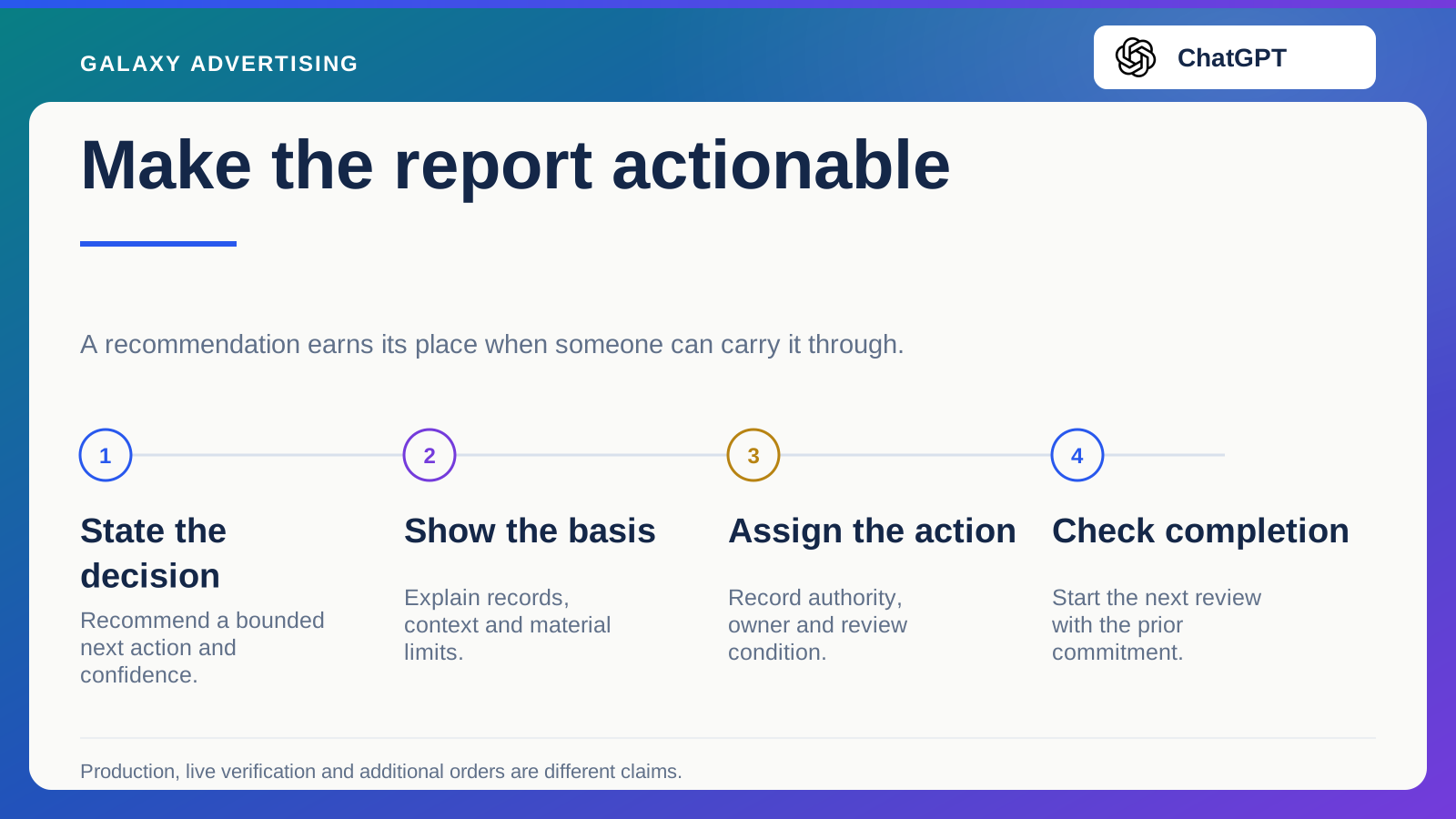
Give the test an evidence brief first. Write down what you can observe, what those observations support and which commercial question remains unanswered. Do it before a proposal promises more certainty than the implementation can deliver, while you can still narrow the work.
Which decision needs an answer?
Start with what you need to choose afterwards. Take a hypothetical specialist espresso retailer deciding whether to keep promoting a particular machine family to people researching equipment for a compact kitchen. That's a decision you can work towards.
Now identify the minimum evidence that would help. Relevant product exploration and well informed enquiries could matter while customers are still considering the purchase. A long list of metrics adds little if nobody can explain how it informs that choice.
Write the boundary beside the purpose. You might learn whether this route attracts suitable interest without establishing the eventual cost and value of acquiring customers. Get the budget owner's agreement to that limitation before the experiment relies on it.
Check what your account actually gives you
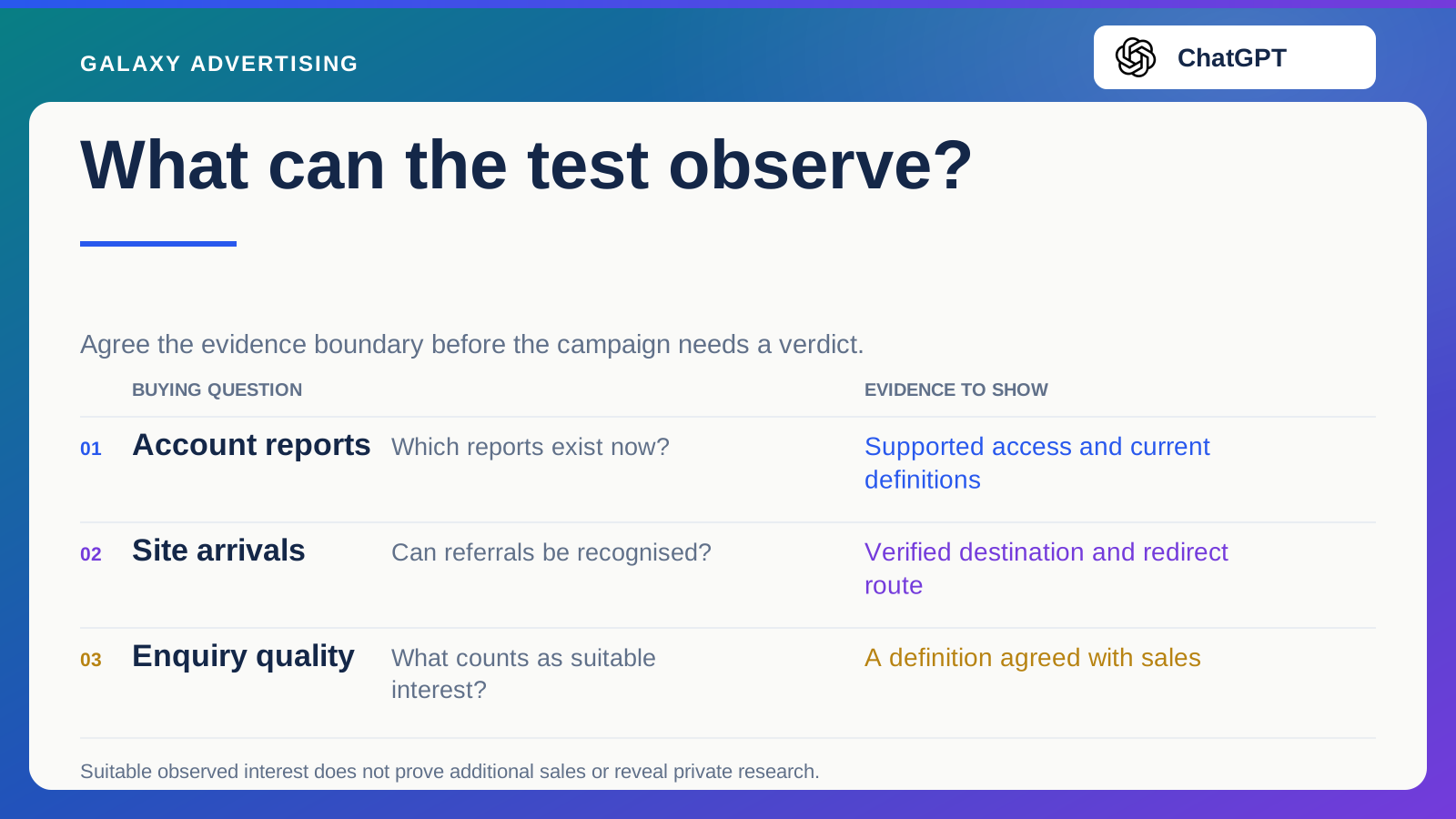
Ask the account owner to document the reports and definitions currently available through the advertiser's supported access. Keep an example view or a clear description that the authorised team can inspect. Everyone needs to know what the proposed report rests on.
Use current OpenAI advertiser and measurement documentation for platform facts. A reporting feature available in another advertising system doesn't become available here because it would fill an awkward gap in your dashboard.
Treat anything unconfirmed as an unresolved dependency. If you cannot verify a necessary observation, narrow the claim or change the experiment. A feature you hope to find later isn't a task somebody can definitely finish.
Can you recognise the arrivals?
Agree how supported methods will distinguish relevant campaign referrals within your website's existing measurement setup. Have the person implementing it follow the route from the submitted destination to the page the customer actually reaches.
Check redirects, option selections and other normal website behaviour. You're looking for dependable classification of observed arrivals. You're not claiming to identify every possible visit or every later return perfectly.
Keep paid campaign activity separate from other identifiable ChatGPT or AI related referrals where the available method allows it. If your records cannot separate them reliably, say so. A broad source label shouldn't quietly turn into an exact count of paid test visits.
Agree what a useful enquiry looks like
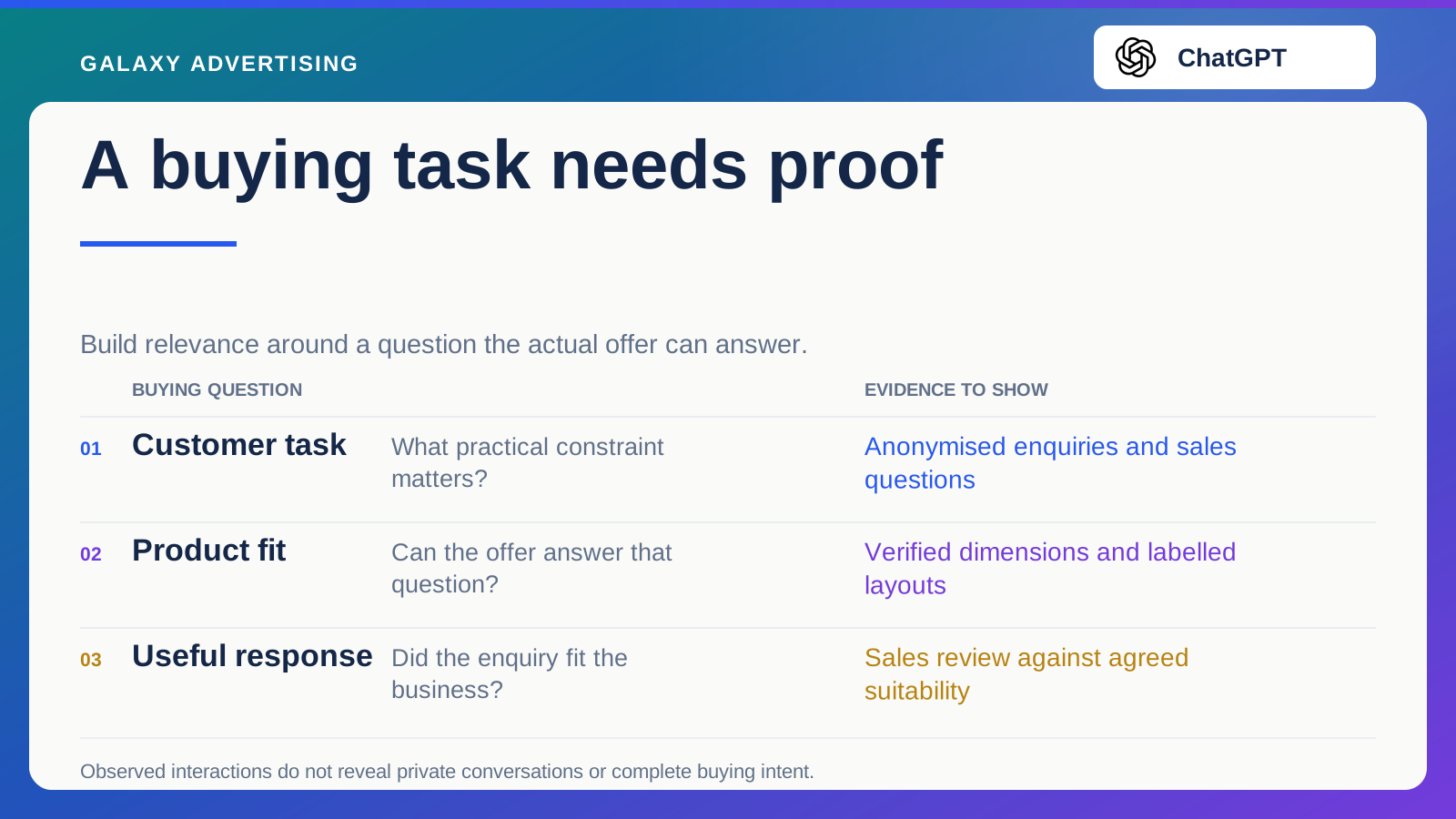
Bring sales or customer service into this discussion. Describe an interaction relevant to the promoted offer. For the espresso retailer, that might mean a question about the advertised machine family and a practical requirement the business can help assess.
Relevance and readiness to order are different. Someone asking a sensible equipment question may still be comparing alternatives. A completed form, meanwhile, can be unsuitable because the person wants a product or service you don't supply.
Keep the definition consistent when reviewing responses. Moving the threshold after seeing the result makes the lead count easier to flatter and the next offer harder to judge. Agree what useful means before the enquiries arrive.
Read a sample people can actually manage
Choose enough interactions to inspect the questions and misunderstandings that matter. Volume and complexity determine the appropriate scope. There isn't a universal sample size that every retailer should copy.
Remove identifying details where they aren't needed. Your team needs to understand the buying task and the quality of the route, rather than circulate personal circumstances unrelated to evaluating the campaign.
Record disagreements too. If sales and the account manager classify the same enquiry differently, revisit the definition before averaging their judgements. An unclear offer or inconsistent commercial expectation won't be resolved by another chart.
For each enquiry reviewed, keep the relevant product family, question category, suitability judgement and reason. Use a simple record somebody can maintain. An elaborate customer profile is extra work if the decision doesn't need it.
Say what the evidence cannot show
Build the plan around available campaign and business observations. Don't promise to reconstruct a customer's undisclosed personal research from a private conversation you should not expect to access.
Website activity has limits as well. Looking at dimensions is consistent with a question about fit, but it doesn't prove everything the visitor intended. Keep the action you observed separate from your interpretation of it.
Additional sales are another question again. Suitable observed interest can justify more investigation without proving how much demand would otherwise have been absent. Put that distinction in the brief so a larger causal claim doesn't slip into the eventual performance summary.
Decide how you'll judge it before launch
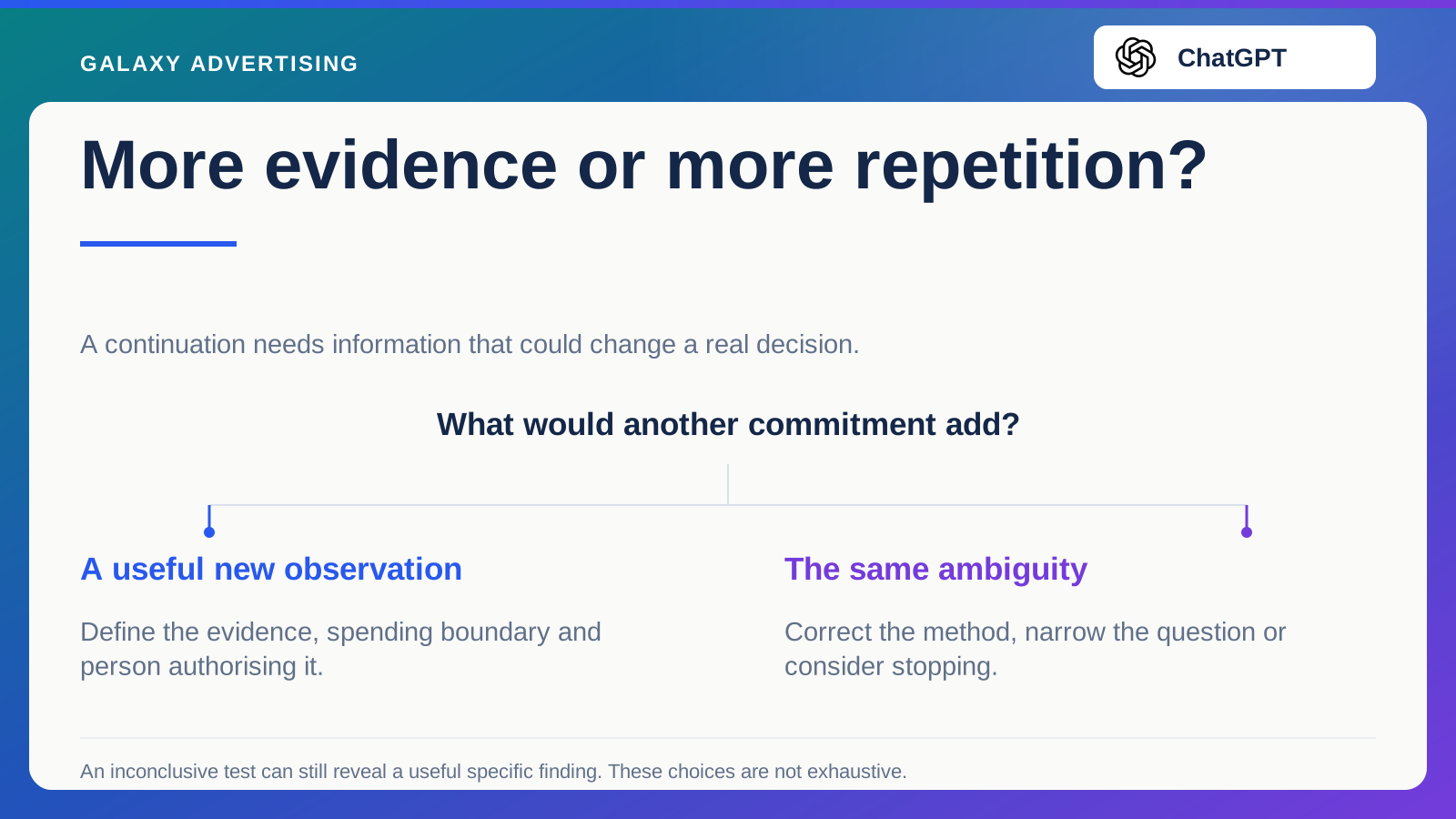
Describe the conditions for a bounded continuation, a correction or stopping. Relevant responses accompanied by repeated package confusion may call for a better destination. An accurate offer attracting unsuitable enquiries may need a different proposition or product selection.
Name the missing information that would prevent a confident conclusion. Then ask whether obtaining it deserves another commitment. Repeating an experiment without changing the uncertain question doesn't automatically buy useful learning.
Keep the evidence brief with the campaign record and return to its original expectations at the end. Making access limits visible early gives you an affordable way to judge the response you can observe. You can ask a smaller, useful question now, rather than buy an answer the available systems cannot supply.