 ChatGPT Ads
Do we need a discount to give people a reason to investigate our ChatGPT Ads offer? A premium cookware retailer could easily decide yes before checking whether price is actually the uncertainty customers need resolved.
A reduction might attract attention. It doesn't establish whether the resulting orders leave enough money behind, or whether a clearer package would help more.
Treat the offer as the complete proposition a customer assesses. A discount is one way to change it. First decide which commercial problem you're addressing and how the advertised promise will stay accurate through purchase and fulfilment.
What is the promotion supposed to solve?
Read the questions customers ask about the range. They may be unsure which pieces they need, what is included or whether the product suits their use. A lower price doesn't necessarily answer any of those questions.
Describe the behaviour you want to change. More suitable first orders, a different product mix and purchases of a complete package are different purposes. Each needs its own way of judging the offer.
Don't choose a promotion simply because it fits neatly into a headline. You can increase interest and leave exactly the same confusion waiting on the destination. Your brief should explain why the incentive is expected to help a suitable customer decide. A recognisable saving isn't yet a complete reason to buy.
Work out what remains from an order
Use a consistent basis for net revenue and variable costs, the costs that change when you take the promoted order. Include relevant product cost, payment processing and fulfilment subsidies where they apply.
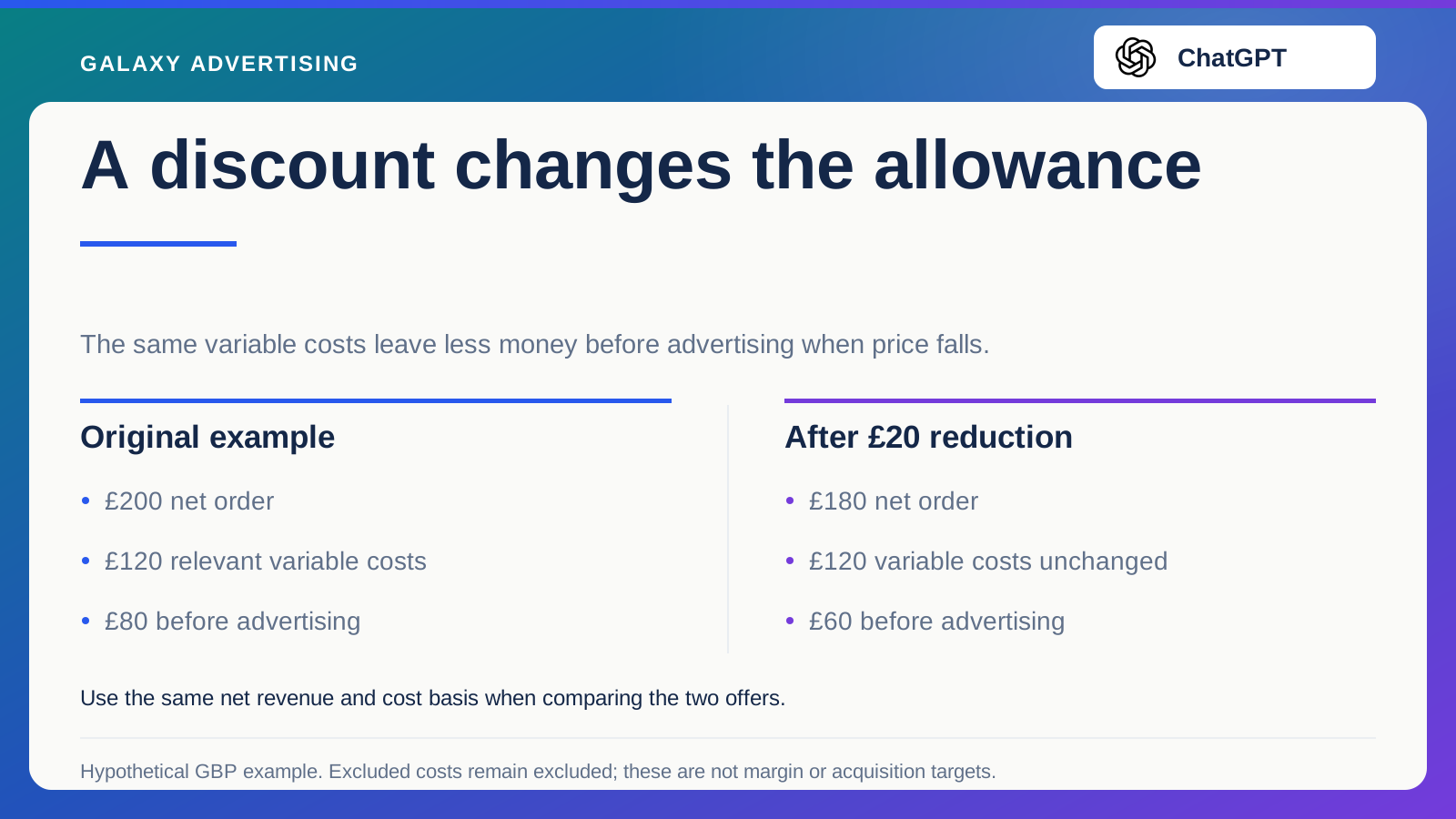
Take a hypothetical £200 net order with £120 of relevant variable costs. That leaves £80 before advertising and the costs excluded from this calculation. Reduce the price by £20 with variable costs unchanged and £60 remains on the same basis.
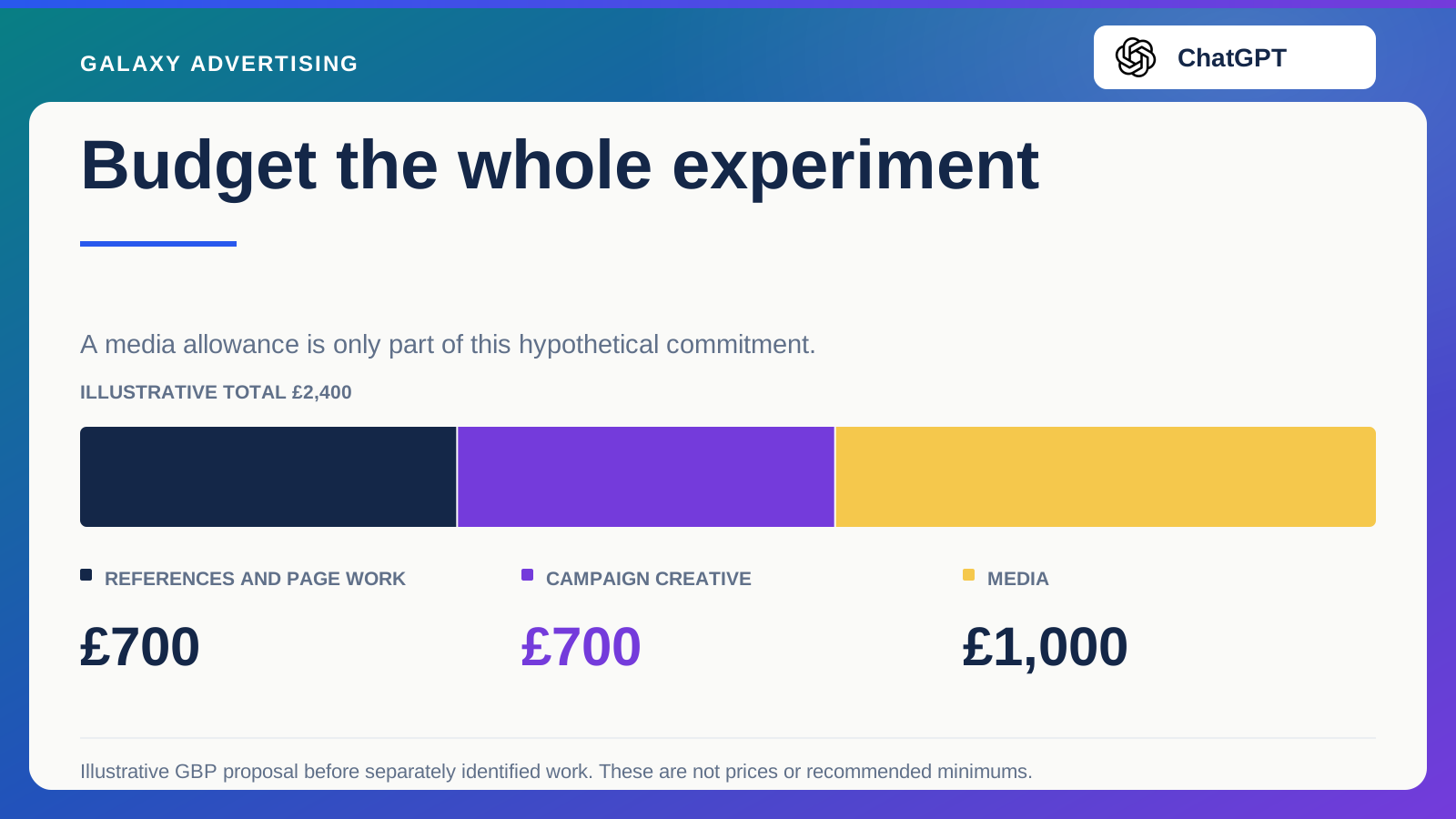
Those figures illustrate the calculation. They aren't recommended margins or acquisition targets. Decide how much contribution, the money left after the costs included in your calculation, must remain after advertising. A higher conversion rate won't automatically compensate for less available money per order. Know the commercial allowance before sending more traffic to the promotion.
Would a bundle make choosing easier?
A bundle can simplify selection when the components genuinely belong together. For the hypothetical cookware retailer, ask whether the package gives customers equipment they need without making them pay for irrelevant additions.
Explain every component and the basis of any claimed saving. Don't use a reference price you cannot support. A bigger package isn't automatically better value for somebody who needs fewer items, however attractive it looks in the advert.
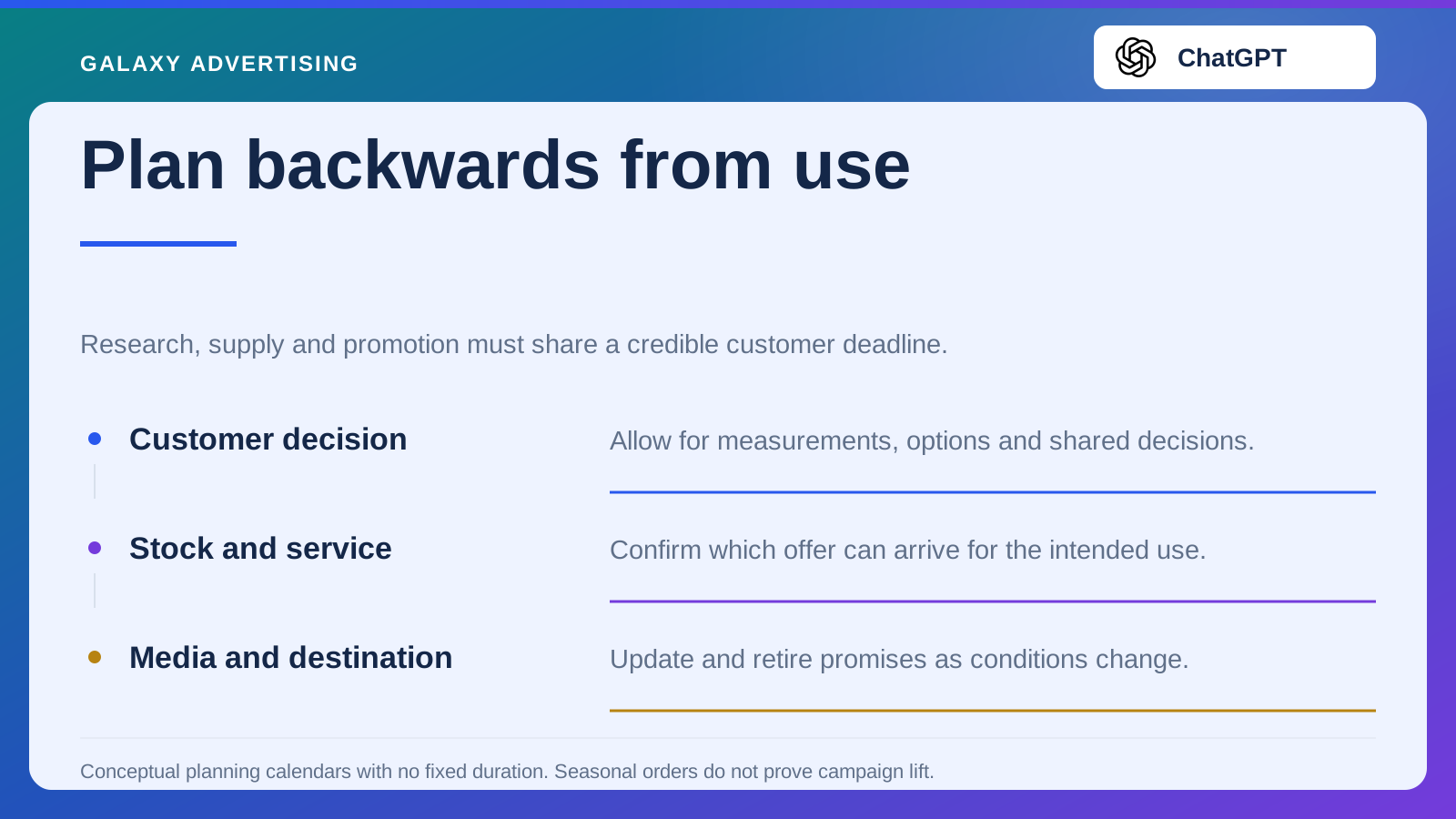
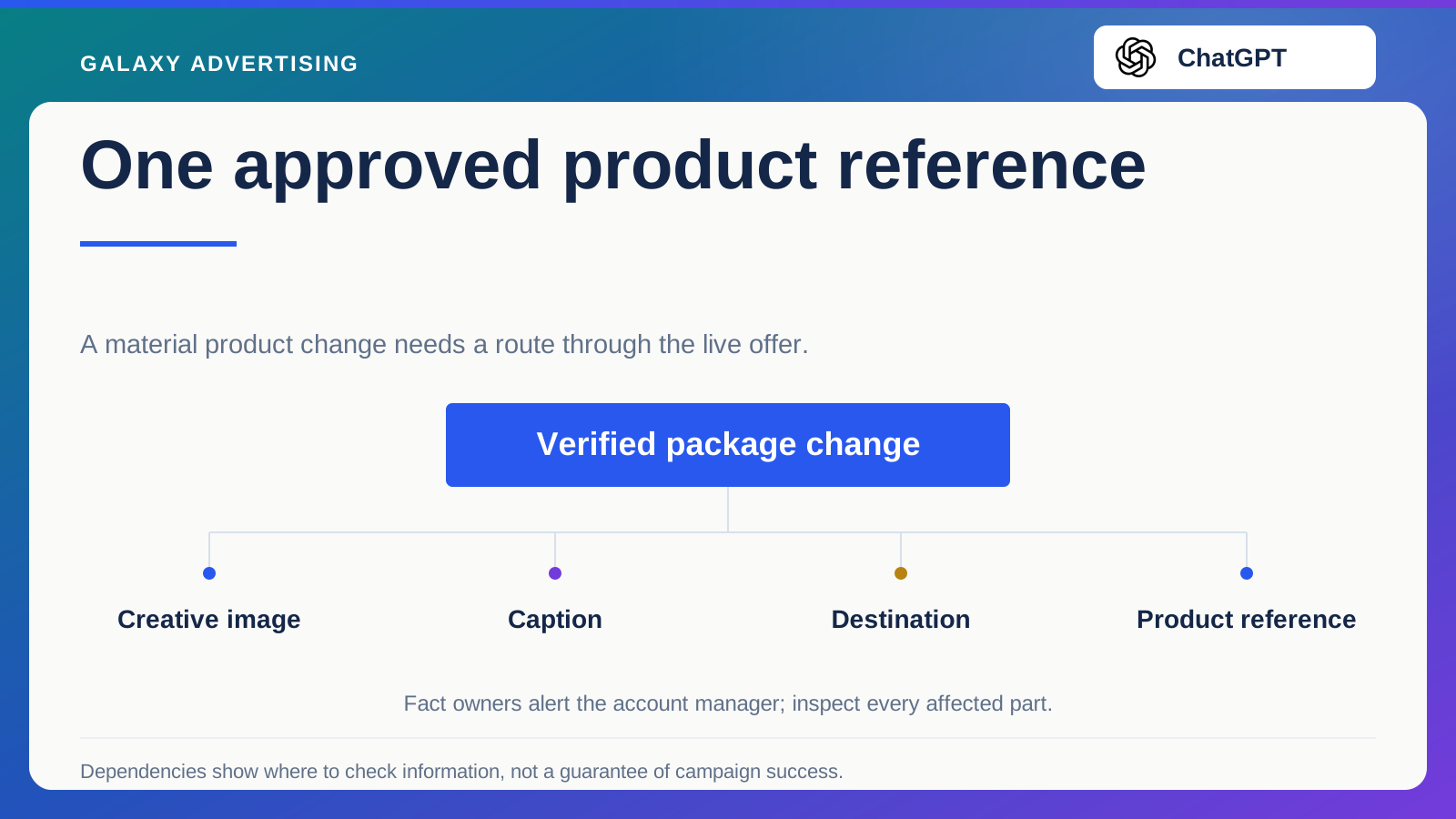
Check availability and fulfilment across the whole package. One unavailable component can make the offer difficult to supply. The campaign team needs to know what happens when the package changes while its advert and destination remain accessible. The customer still sees a single promise, even if several products sit behind it.
Is the value already there but poorly explained?
Sometimes the useful difference is a real service. Accurate delivery information, a documented support route or a useful selection process can help someone understand what they're buying without changing the price.
Ask the operational owner to confirm exactly what you provide, the conditions and the cost. Don't invent a benefit to make the campaign more reassuring. A comforting phrase isn't evidence that the customer will receive a particular service.
Distinguish a new benefit from an existing fact made clearer. Showing an included service more visibly may improve understanding. If nothing has changed operationally, don't present it internally as though the business created a new package. That distinction matters when you're explaining what the campaign actually tested.
Make the conditions easy to understand
Keep eligibility, package contents and material limits close to the offer. People should be able to see what the advertised price buys and whether it applies to their chosen configuration, the particular option they want.
Follow the phone route from advert through product selection to checkout. A correct condition buried on an unrelated page may not undo the dominant impression of the creative. If understanding the conditions takes extensive explanation, rewrite the proposition itself.
Assign somebody to retire the promotion. Ending the media schedule doesn't prove that saved destinations, cached messages and related assets describe the ordinary offer accurately. Check the customer route after the change, as well as the underlying source. Closing a campaign is also a job of putting the offer back in order.
Judge it against the original purpose
Review available campaign observations beside consistently defined orders, product mix and contribution. Keep stock, seasonality and simultaneous promotions through other channels visible. They can change the circumstances around the result.
Higher attributed revenue isn't the whole commercial outcome. Were the promoted orders worthwhile on the agreed cost basis? Did they achieve the purpose you set before launch? Those questions deserve space beside the sales figure.
Don't call every promoted sale additional. Some people might have bought without the incentive. Others may have changed their product choice. If the evidence cannot distinguish those effects confidently, explain the limit rather than assigning a precise incremental return. Uncertainty doesn't disappear because a promotion generated orders.
Let the next offer follow what you learn
If customers respond to a bundle but misunderstand a component, clarify the package. If a discount attracts unsuitable orders, reconsider the range or incentive before increasing the reduction.
Keep the cost assumptions and actual offer conditions in the campaign record. A result that looked successful under one supplier cost or service arrangement may not justify repeating the promotion after those conditions change.
Compare questions about the incentive with questions about the product. Customers can understand the discount perfectly and still not know which package they need. Then a clearer selection route may be the useful next offer. A suitable customer needs a clear reason to investigate, and you need an acceptable outcome. Price, selection or service can provide that reason. The discount shouldn't make the decision for you.