What if every figure in your beauty marketing report is accurate, but you still can't decide whether to replenish a shade or commission a comparison image? Impressions, clicks, attributed revenue and attractive creative examples can describe activity without telling you what deserves attention next.
A report needs to bring that evidence into a commercial conversation. Explain what happened, what you can reasonably infer and which action follows. Even a technically correct dashboard needs judgement beside it. The useful output is a decision people can understand and complete.
Put the important decision first
Lead with the most consequential issue in ordinary language. Perhaps a promoted variant is unavailable, a package promise is unclear or retained contribution from acquisition needs investigating. A variant is the selected shade, size or configuration. Describe the business issue before the detail takes over.
State the proposed action and its supporting evidence. Readers shouldn't have to work through a catalogue of activity to discover a material product condition has changed. Give them the main point, then the detail they need to assess it.
Keep the response proportionate. A small sample of enquiries might justify checking a label rather than redesigning the whole range. Distinguish the size of the observation from the size of the action it can support. A forceful recommendation isn't automatically a better one.
Make order values comparable
Show your approved revenue and contribution definitions. Contribution is the money remaining after the costs included in the calculation. Explain relevant treatment of discounts, promotional additions, fulfilment and refunds. A figure labelled profit shouldn't quietly exclude costs on which the decision depends.
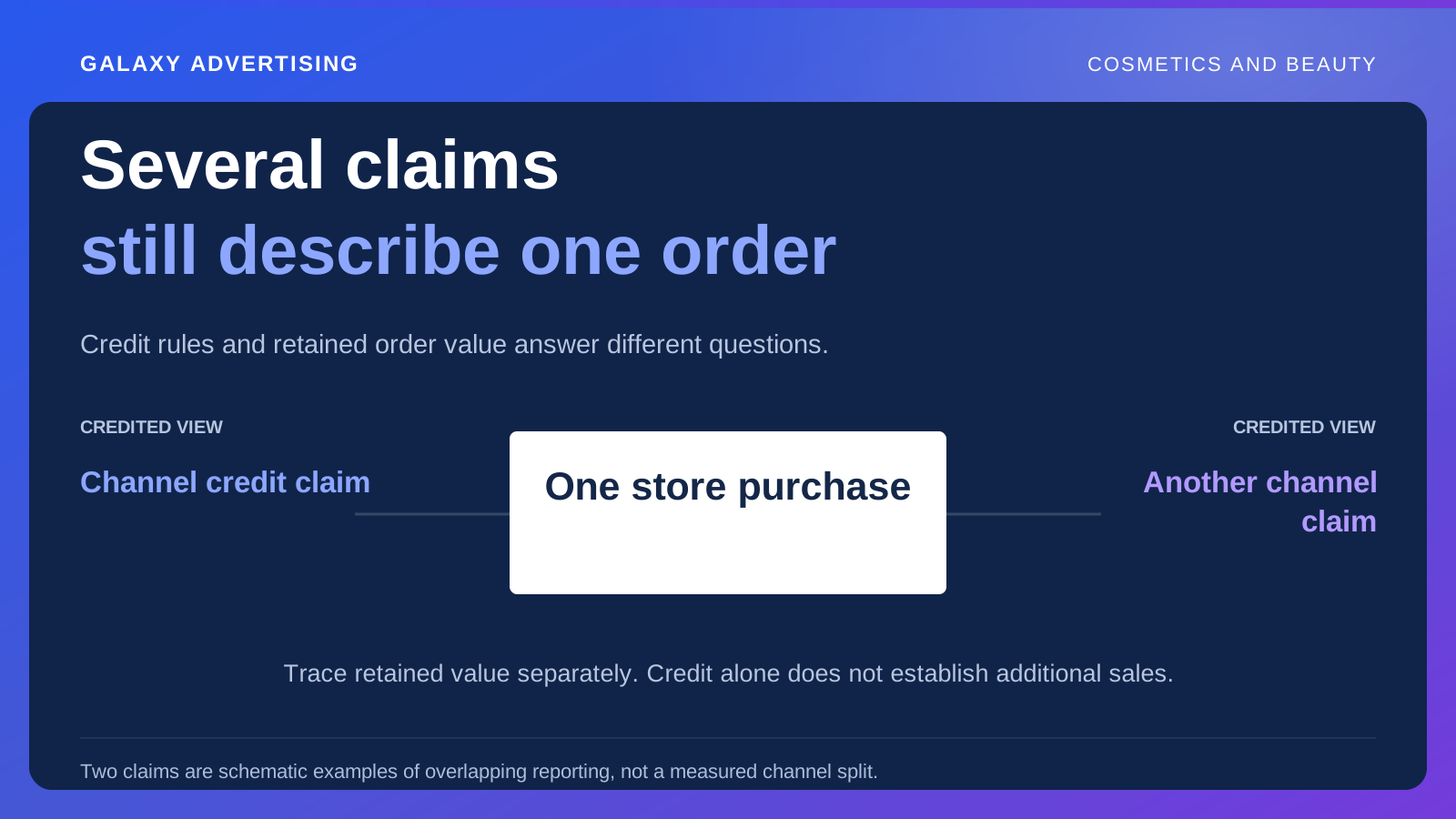
Keep actual store orders separate from channel attribution claims. These are related views with different meanings. Several channels can associate themselves with the same transaction, so adding their claims together doesn't establish that each represents another purchase. The report needs to preserve that distinction.
Check whether later order changes have had comparable time to appear in the periods under review. A recent order group and a mature one can have different adjustment histories. Explain that limit before announcing improved retained value. Otherwise, timing can make unlike results look comfortably comparable.
Show which products sit behind the average
Break out distinctions large enough to change the next decision. For a range where shade matters, variant availability and the promoted product may tell you more than an aggregate category rate. Choose the view that answers a commercial question, rather than the one that fills the page neatly.
Don't divide the report into so many tiny segments that none supports a useful interpretation. Explain why each group matters and label small or incomplete observations honestly.
Include packaging changes, stock gaps and new incentives where relevant. A stronger result associated with a different offer doesn't necessarily show that the same campaign became more effective under unchanged conditions. Keep the product and version history visible so readers can understand what was actually being compared.
Explain what the creative comparison tested
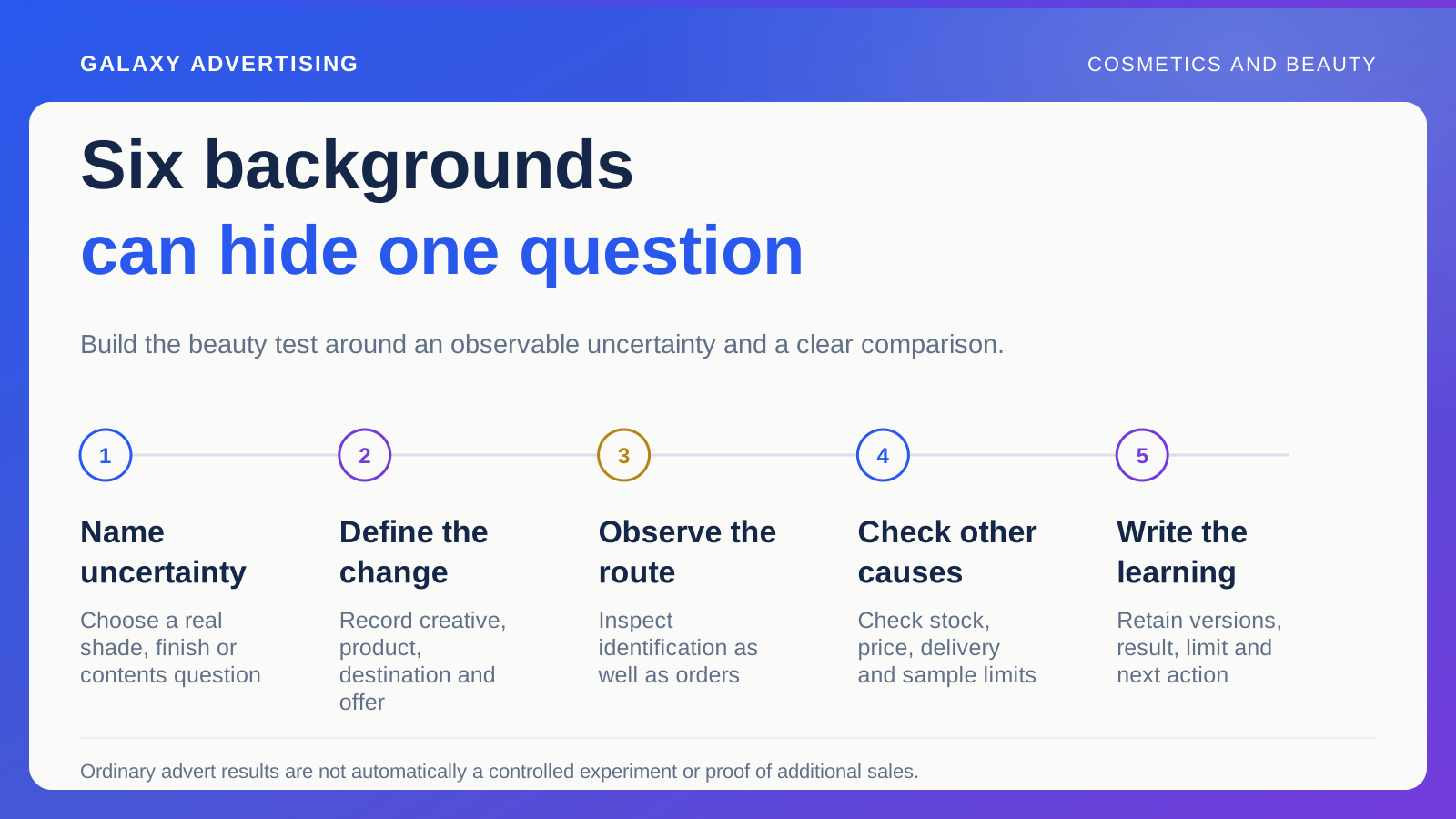
For meaningful production and testing decisions, state the customer uncertainty, the evidence shown and the observation available. A ranking of winning files doesn't explain the next brief. The business needs to know what those assets were trying to help someone understand.
Separate an argument from an execution detail. A clearer shade demonstration investigates a different question from a change in music. Both can matter, but the conclusion needs to match the comparison you actually made. Don't stretch a narrow result into a broad rule about customer preferences.
Keep inconclusive outcomes in the record. If delivery or the order sample can't answer the question, say what remains unknown and whether another bounded step is justified. Removing uncertainty can make the programme look decisive while depriving the next brief of useful context. An honest unresolved question is still useful information.
Show exceptions that affect the interpretation
Highlight material mismatches between advertising and the available offer. That might be an obsolete image, an unavailable demonstrated shade or promotional conditions that differ across the route. These belong beside results they could help explain, rather than hidden in a separate activity list.
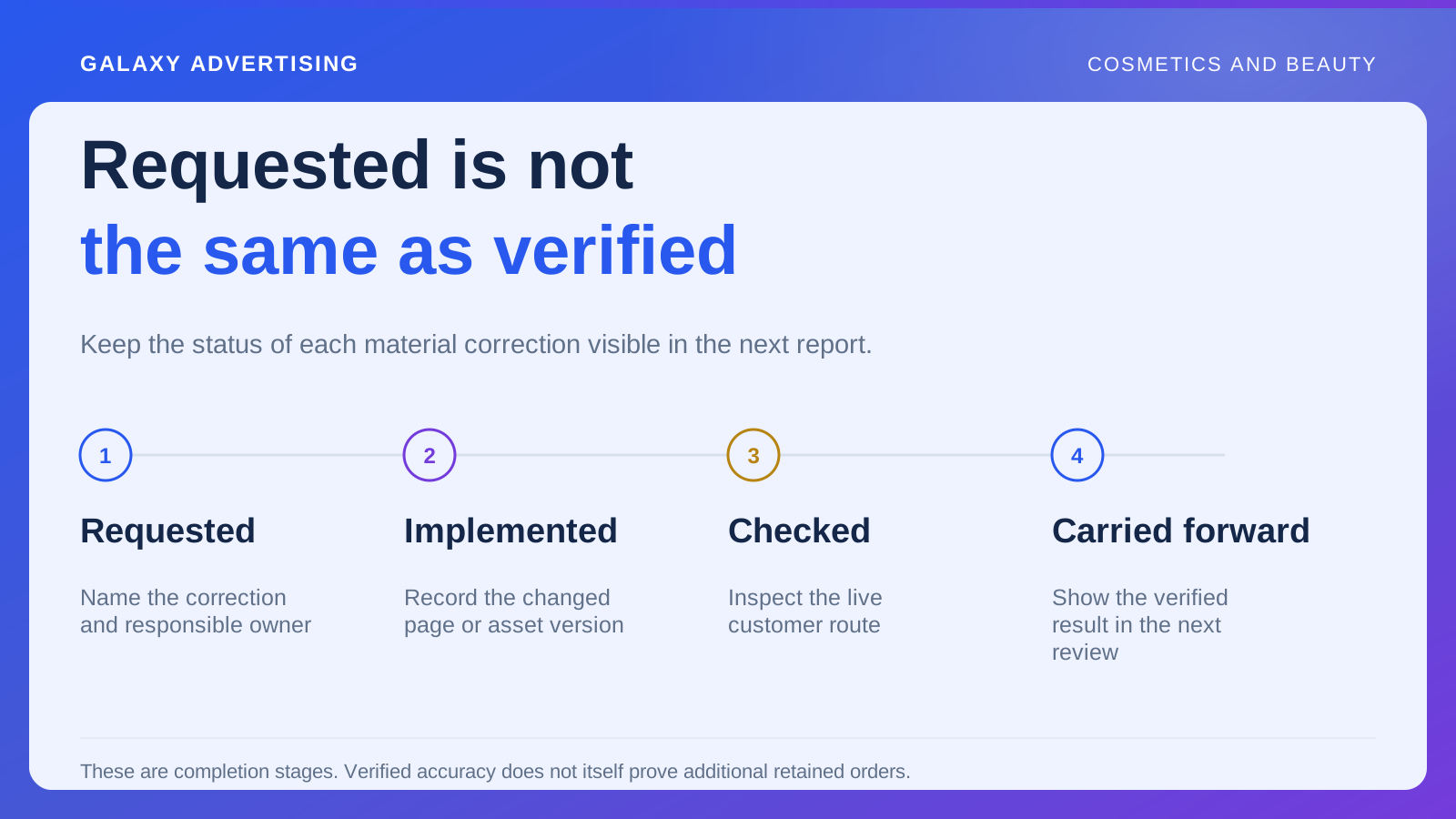
Describe the correction and whether it's been verified. A completed project task doesn't establish that the customer sees the new promise. Distinguish requested work, implemented work and checked work. Those stages tell the retailer something different about whether the issue is resolved.
Prioritise exceptions affecting customer understanding, commercial interpretation or the next investment decision. Every minor issue doesn't need a place in the main narrative. Keep detailed records accessible without overwhelming the review.
Give customer questions context and an owner
Summarise recurring product and purchase questions with enough context to act on them. Identifying the shade in an advert differs from asking about personal suitability that the retailer isn't equipped to establish. Don't put both under a vague instruction to add reassurance.
Avoid treating anecdotes as a complete explanation of nonpurchase. Customer service observations can reveal hypotheses and verify particular misunderstandings, while their wider prevalence remains uncertain. Keep both the usefulness and the limit of those observations visible.
Connect the issue to its owner. Product accuracy may belong with the manufacturer information owner, presentation with content and transaction conditions with operations. “Customers need more confidence” gives none of them a specific brief. Name the question that each can actually address.
Carry material decisions into the following review. If you agreed to replace an inaccurate package reference, show the checked result next time or explain the unresolved dependency. This prevents the story resetting every month and gives a fairer view of delivery. The useful evidence is an agreed change reaching the customer's route, not a similar task reappearing in a longer activity list.
Leave a few actions people can complete
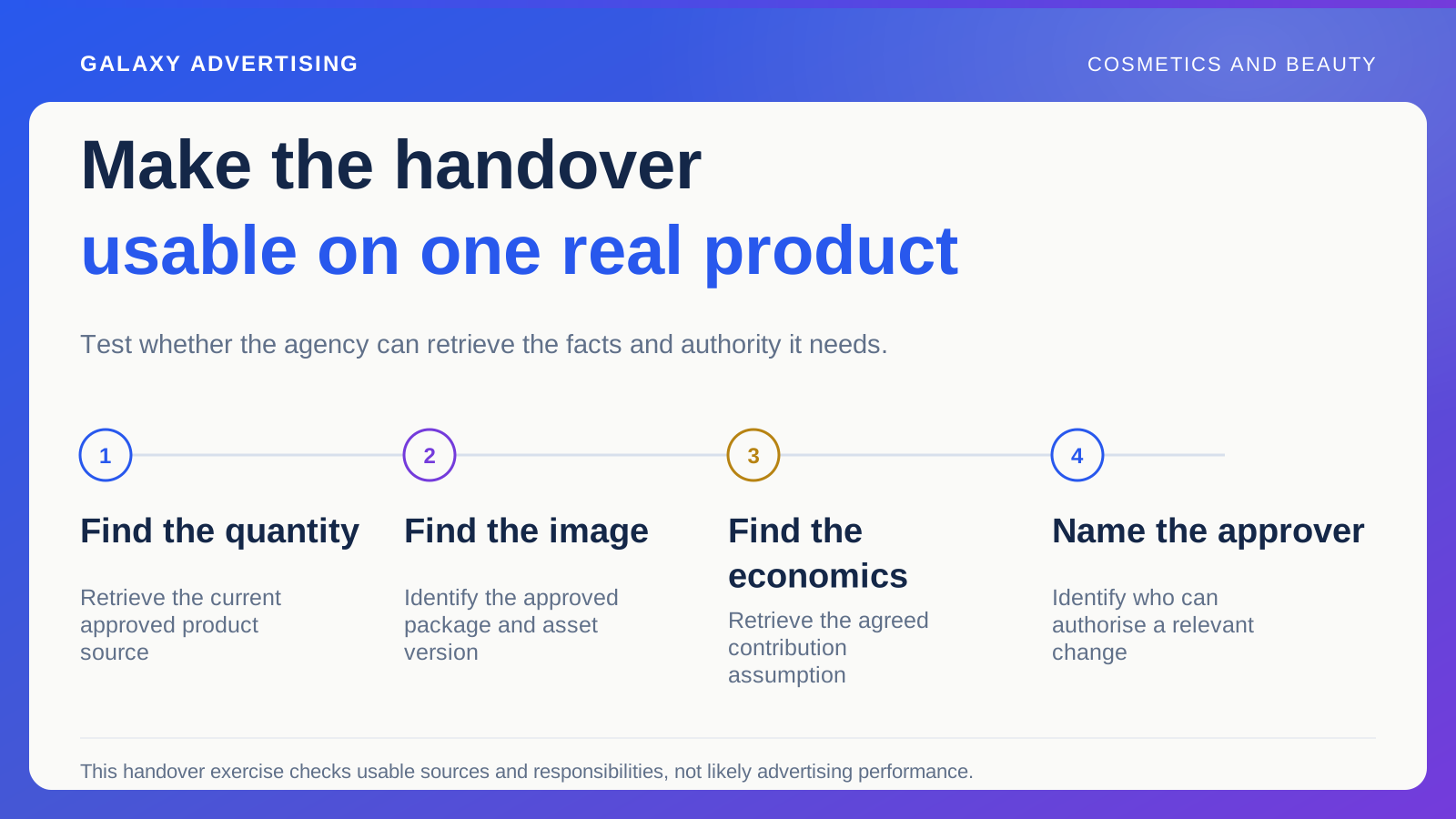
For each priority, name the action, responsible person and evidence that will establish completion or inform review. Separate urgent corrections from broader experiments so the team can act without confusing their purposes.
Record choices needing the retailer's approval, including spend and offer changes. The agency can't complete a commercial decision outside its authority, but a pending choice should stay visible instead of silently recurring.
Good reporting gives the business an operational memory of the product offered, work delivered and commercial evidence. Its value shows up when people can make and complete a better decision. Another page in the reporting file doesn't establish that on its own.