A beautiful generated room can distract us from the wrong chair sitting in it. Approving the overall impression before checking the product is a production mistake worth admitting early.
The statement armchair looks expensive and the camera movement is polished. Then somebody spots different legs, a deeper seat and a seam the real model does not have.
If the appeal depends on an invented feature, you are inviting customers to investigate something you cannot supply. Product accuracy belongs in the brief from the start. Treat the video as a representation of the offer, rather than leaving that judgement until the final approval round.
Give the team exact references as well as a mood
Supply clear references for the product and configuration. Include available front, side and rear views, distinctive feature details, dimensions and approved material information. Identify the finish or variant, meaning the particular colour, size or configuration, to be represented.
Separate fixed facts from creative choices. Room, lighting and composition may allow interpretation. Arm profile, leg construction and upholstery pattern may not. Write that distinction before a polished scene makes the boundary harder to challenge.
Record approved references and the person who can resolve factual questions. A photograph of an unrelated model is not a suitable substitute because it happens to communicate the desired mood. The creative team needs a dependable account of what must remain recognisable.
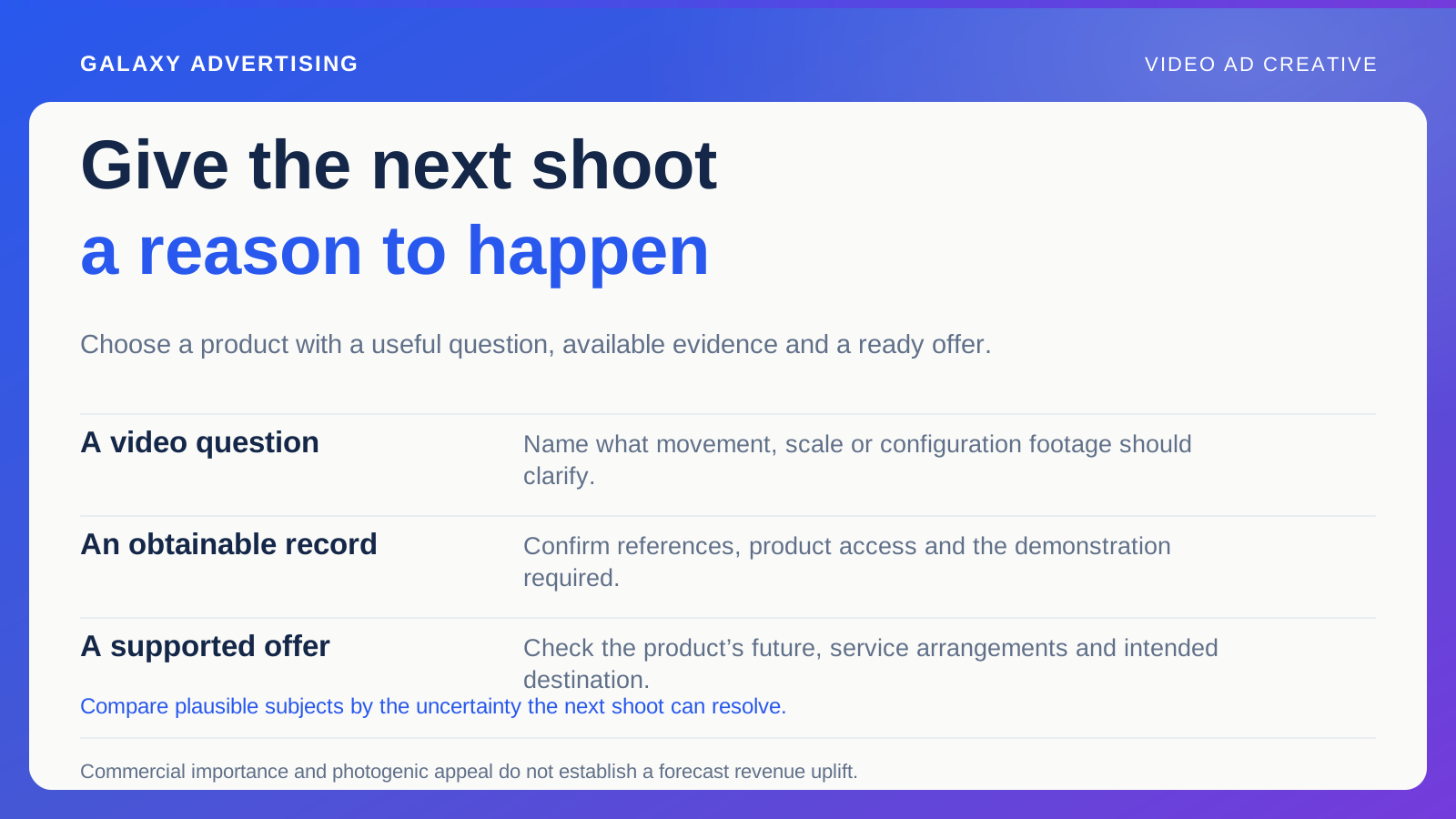
Choose the buying question the video should answer
Does the customer need to judge scale, inspect material or imagine the chair in a room? Those purposes need different shots.
For scale, retain recognisable reference points and check dimensions. For material detail, use accurate close references instead of invented texture presented as evidence. A styled scene should support the product without quietly altering it.
A generated room can illustrate a setting. It should not be treated as proof of physical performance. If the story depends on a mechanism or real capability, decide whether original footage or a controlled demonstration is necessary. Match the production method to what the asset needs to establish, rather than asking an appealing scene to prove something it cannot.
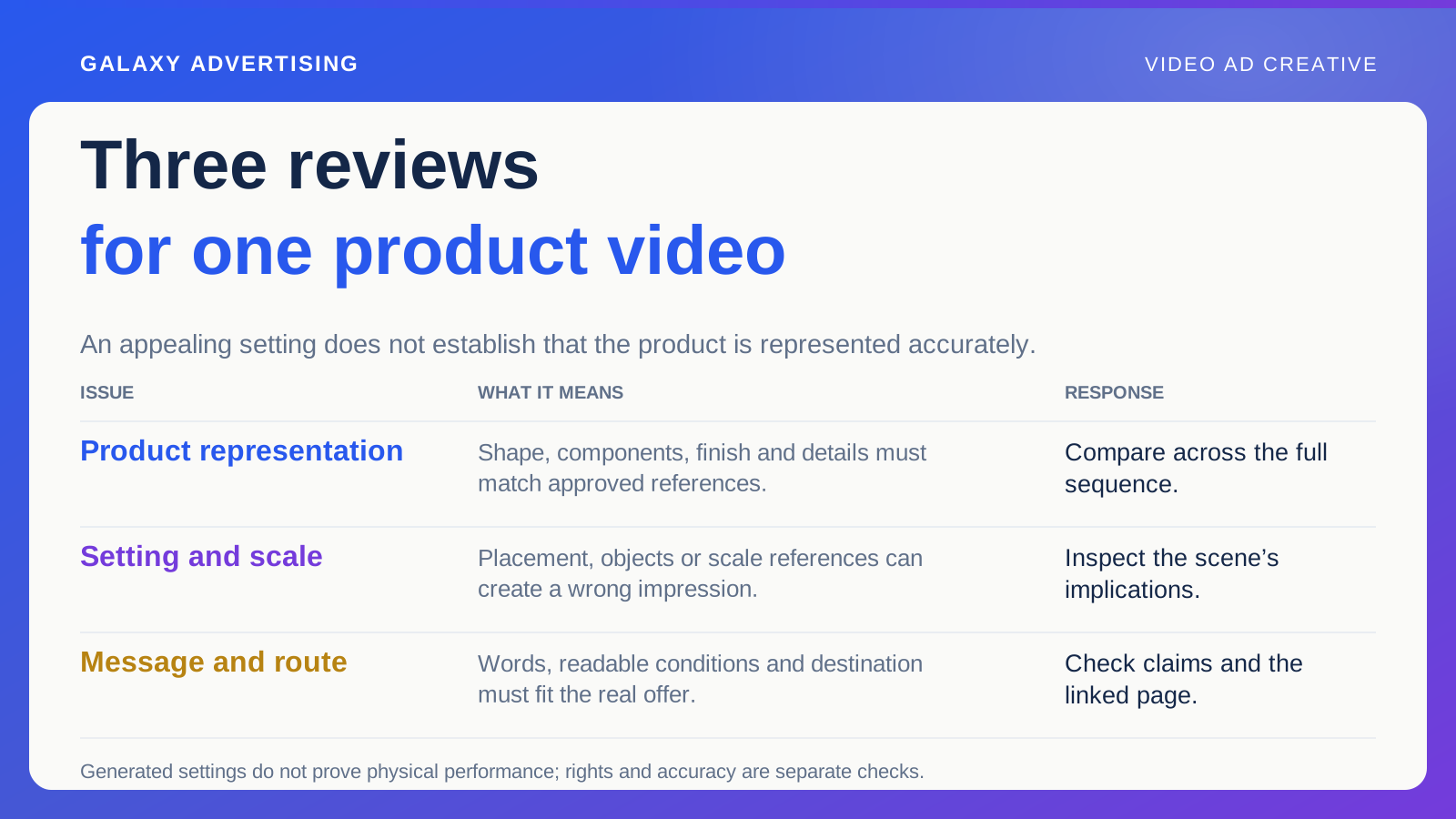
Review product, setting and message separately
First compare the item with its approved references across the sequence. Inspect shape, proportions, components, finish and distinctive details. Getting the opening frame right does not establish accuracy throughout.
Next examine the setting for misleading scale, impossible placement, unwanted objects and distracting changes. A believable room is not proof that the product is correct.
Finally judge the communication. Can viewers recognise the item and understand the intended point? Is essential text readable, and does the closing action lead to the relevant offer? Separate passes help prevent a pleasing impression from hiding a defect. Each asks a different question and gives the reviewer something specific to approve.
Watch what changes as the camera moves
A correct still image can turn into an inaccurate sequence. Inspect transitions, close views and moments when objects pass behind something else. Handles, seams, legs and accessories should not appear and disappear.
Watch at normal speed and inspect important frames closely. Playback tests the communication. Frame inspection can expose defects visible when somebody pauses or reuses a still elsewhere.
Short duration is no reason to assume an error will go unnoticed. A distinctive detail may be exactly what an interested shopper studies before clicking. Treat that detail with the same care as the wider scene rather than assuming movement will conceal it.
Keep the offer aligned with the linked page
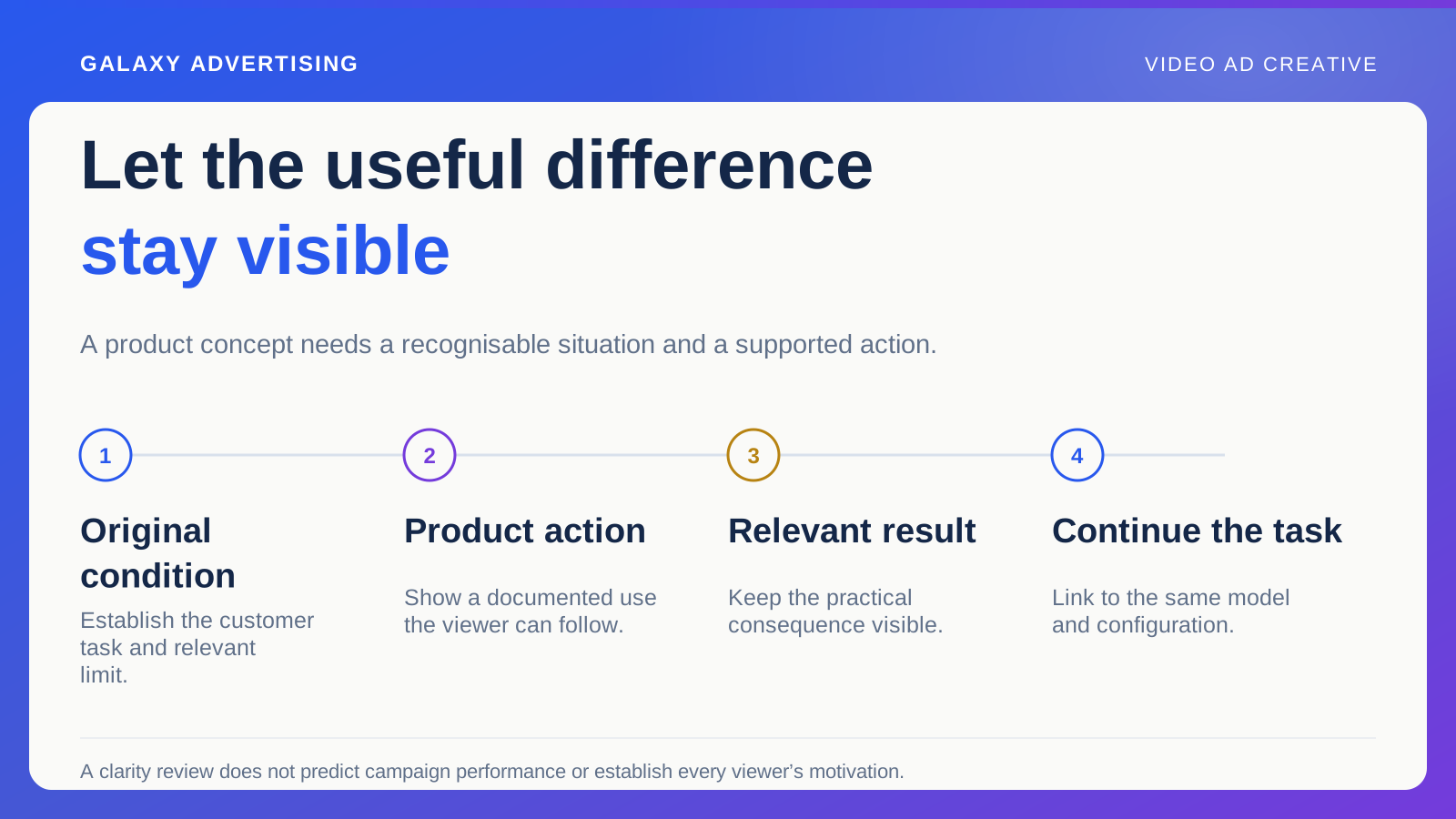
The destination should show the same model and explain the selected configuration. Make included accessories clear. Production should not choose a more attractive finish that the store does not actually sell.
Check captions and overlays against approved claims. Words can misrepresent the offer as readily as imagery. Necessary qualifications must remain readable and relevant to the presentation.
Retain asset rights and production inputs too. Accuracy and permission to use material are separate checks. Passing one does not resolve the other. Keep both available so the approved asset has a clear factual and production basis when somebody later wants to use it again.
Keep an approval sheet for the actual product
Use one sheet for the approved model and configuration. List fixed visual characteristics, source images and permitted claims. Add the reviewed output filename and the person responsible for factual checking.
Record implications the scene could create without words: extra accessories, another size or a service suggested by the presentation. Review them explicitly. When rejecting a version, name the defect so production can act. “The back leg changes shape during the camera movement” gives a correction; “make it more realistic” leaves the issue unresolved.
Keep accepted references with the final asset. Later crops, still frames and edits can then be checked against the same standard. Reviewers need a manageable approval record, without reconstructing the full production history from an unrelated collection of drafts.
Make approved versions easy to recognise
Give each approved asset a stable name recording product, concept and version. Keep a simple note of who checked accuracy and what they approved. If a revision changes wording or scene, review the affected elements again.
Where practical, build different crops and lengths from an approved master, then verify the outputs. A crop can remove a scale reference or necessary qualification. A shorter edit can retain the promise while losing the evidence supporting it.
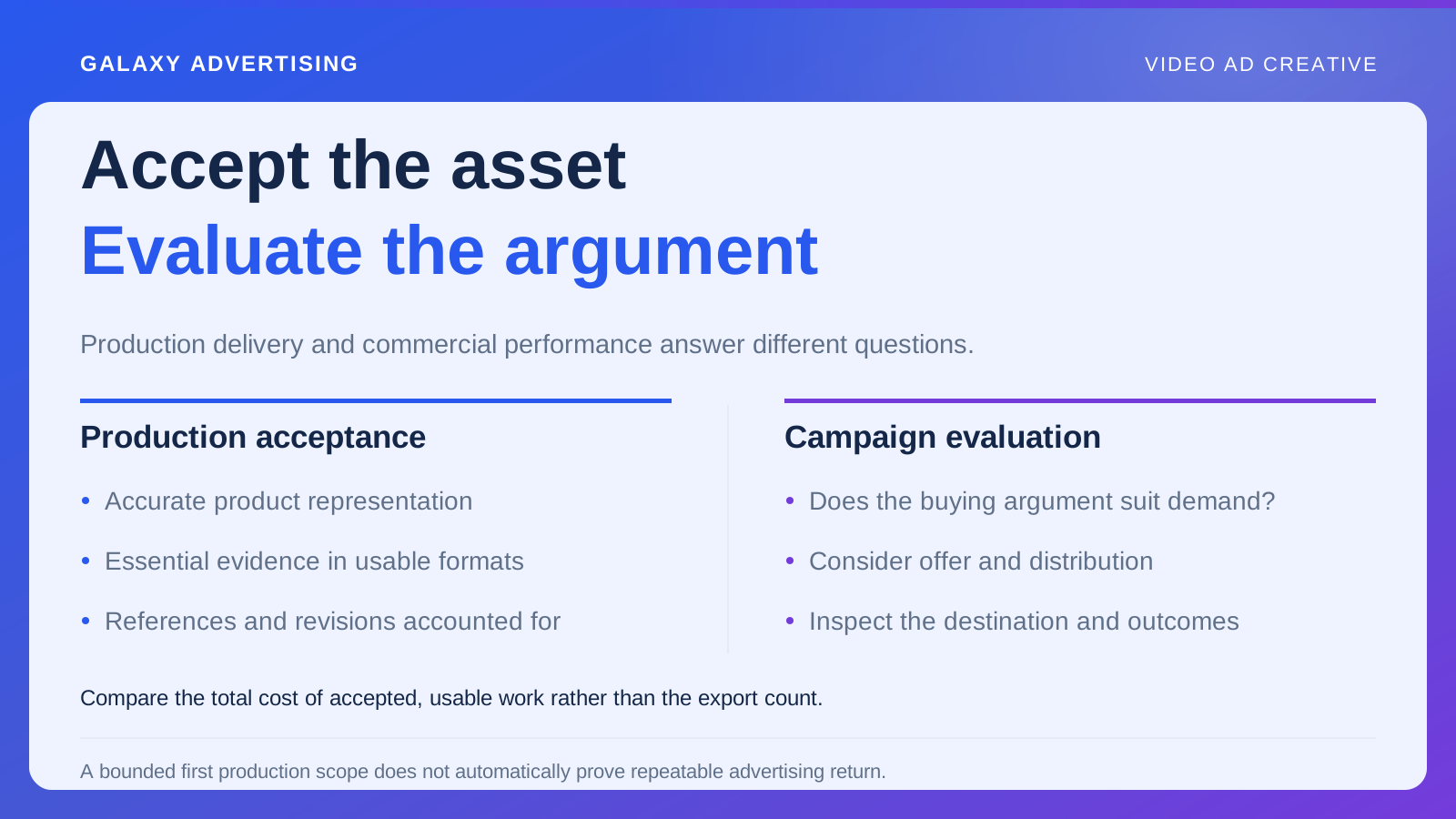
Review performance after these checks. Clicks do not make an inaccurate asset acceptable. Accuracy alone does not make it persuasive either: the story still needs relevance and a useful destination.
AI assisted production can make more concepts feasible. Its commercial value comes from communicating real product value clearly. Whether you generate the scene or organise a conventional shoot, the buyer still needs to recognise and assess the offer you intend to fulfil.