 Meta Ads
More adverts won't rescue a creative programme that keeps making the same argument. If the customer hears the same reason to buy every time, a busy production schedule can leave you learning very little.
Picture the furniture retailer commissioning ten new adverts: one room photograph, one product promise and slightly different opening lines. The files are new. The customer's decision hasn't become any easier.
When results weaken, another batch feels like progress. Before you commission it, ask what the last one tested. For a considered purchase, useful variety comes from addressing different decisions, rather than dressing up an unchanged proposition.
Decide what you're saying before deciding how it looks
Your argument is the reason a suitable person should pay attention. Its execution is how you communicate that reason. A dining table could earn attention through room flexibility, material detail, everyday practicality or reassurance about its size. Photography, video, demonstration and comparison are ways to express any of those arguments.
Write the argument in one sentence first. “Show that the extension mechanism makes this table useful in a smaller room” gives production something concrete to work with. “Make a more premium video” asks them to do the essential thinking for you.
Carry that distinction into asset names. Record the proposition, product and version. At review time, that tells you rather more than final, final revised and final approved. A folder can have a surprisingly optimistic view of what final means.
Borrow the questions customers already ask
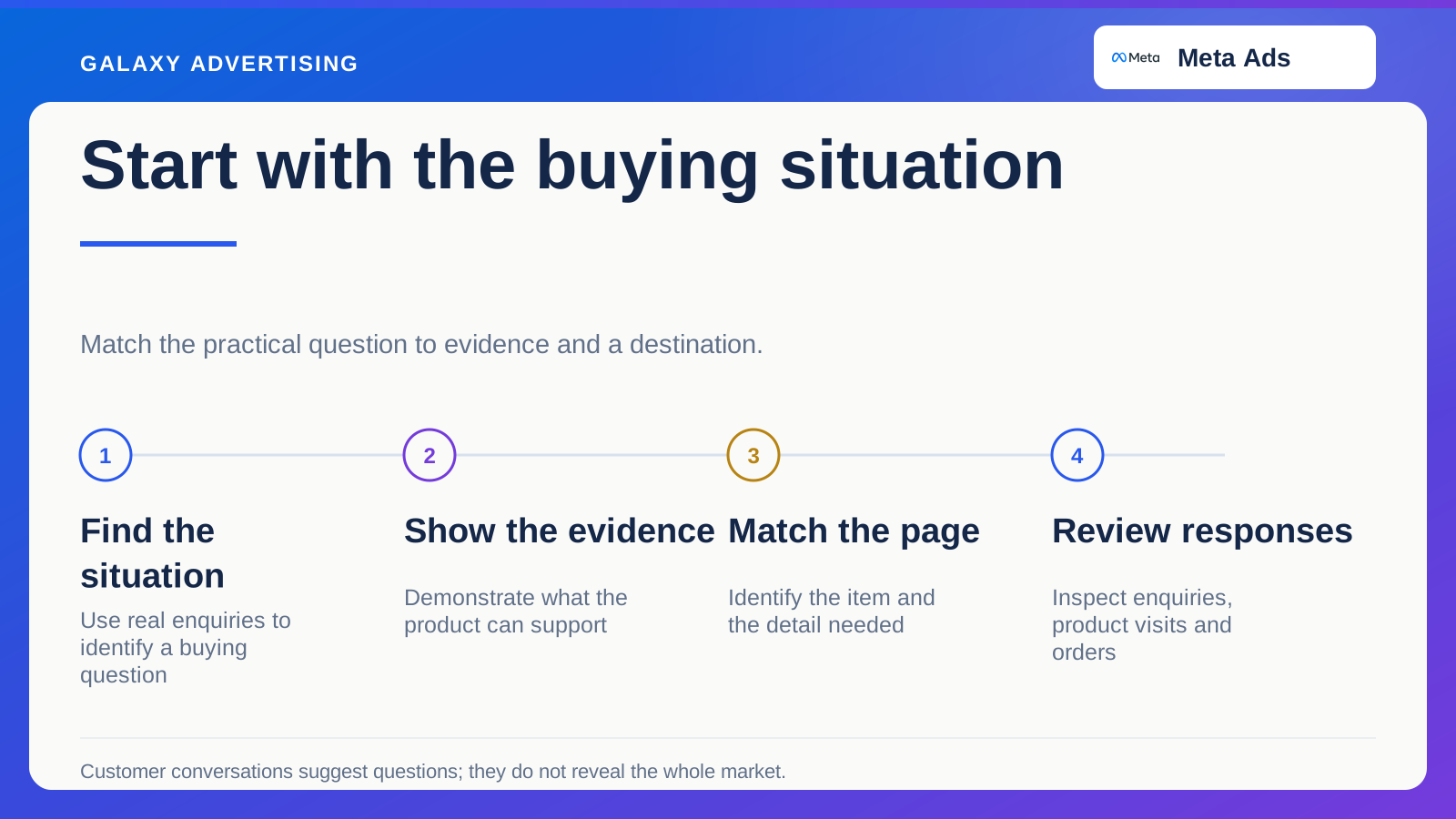
Look through product enquiries and sales conversations. Someone considering a premium table might want to know whether six chairs fit comfortably, how to care for the surface, what assembly involves or whether delivery includes bringing it inside.
You don't need an advert for every question. Choose the objections that recur, matter commercially and can actually be demonstrated. Explaining a meaningful limitation clearly can help more than another broad claim about quality.
Group questions by the reassurance they need. Some call for a visible demonstration. Others need factual detail or clearer purchase conditions. Now the creative plan follows the customer's buying journey, rather than whichever formats happen to be fashionable.
Make three arguments you can tell apart
Start with three genuinely different arguments for one product family. For each, record the customer question, supporting evidence, opening scene or visual, destination and main outcome you'll review.
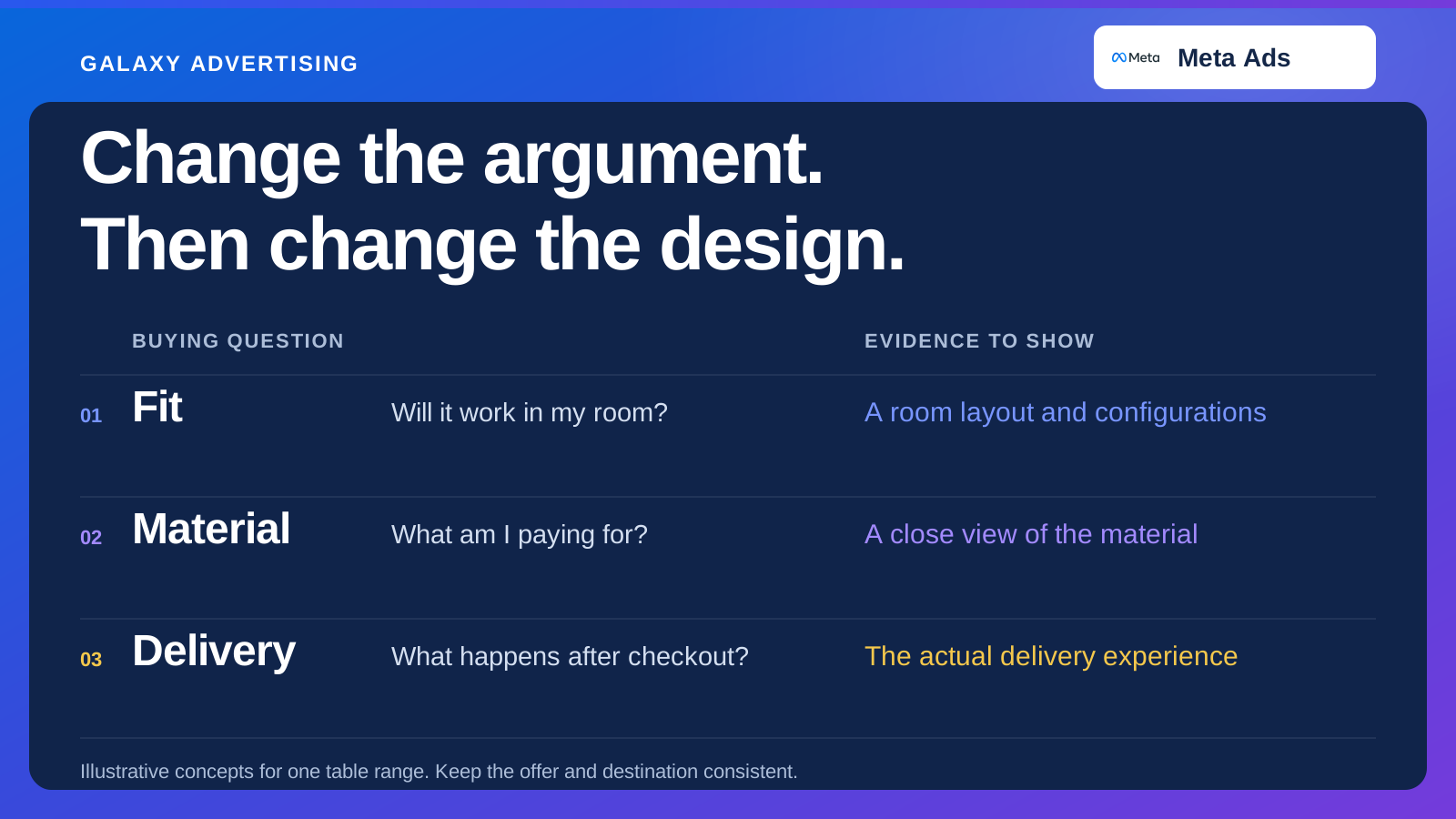
An illustrative table campaign could show a room layout, examine the material closely and explain the delivery experience. Those are different reasons to consider the same real offer. Keep that offer consistent. Slip a discount into one concept and you're testing price too; you can't credit the difference solely to the argument.
Only make execution variants once the concepts are clear. That lets you ask whether a useful proposition needs clearer communication without muddling that up with whether the proposition matters in the first place.
Give the page the rest of the job
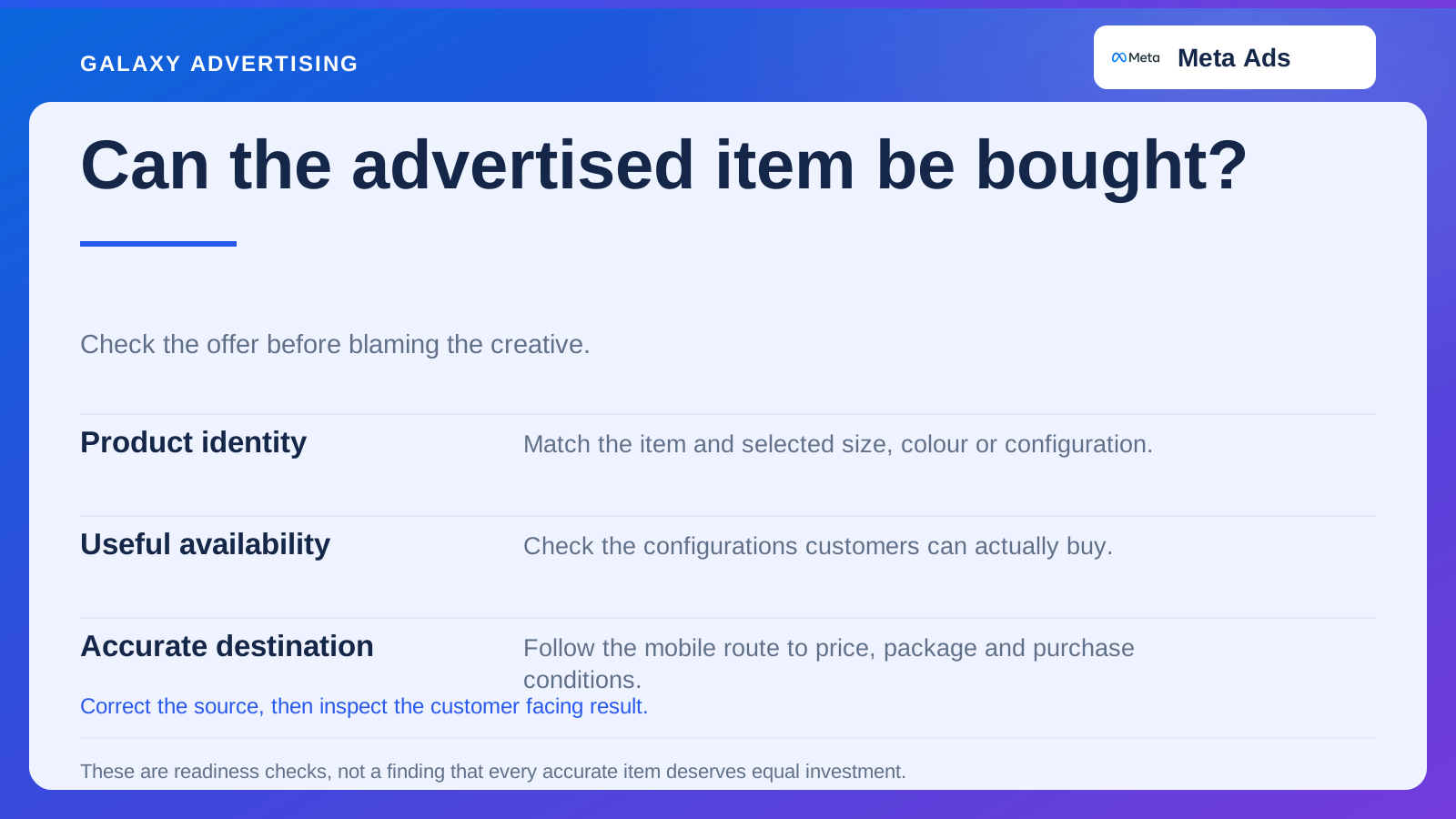
An advert about seating flexibility needs a destination showing relevant sizes and configurations. A materials story needs more than a product name and price when the customer arrives. Getting the visit is only part of the job. The page has to help the person decide.
Check that the finish you've demonstrated is available. Make the selected variant, meaning the chosen size, colour or configuration, understandable. Where accessories appear in a room scene but aren't included, make the package contents clear on the product page.
Another team may own that page. Your customer still experiences one journey. Walk it before deciding that a weak result means nobody cares about your argument. A mismatched destination can make a sensible concept look unconvincing.
Ask what happened after the attention
Attention and engagement help explain an advert's response. They don't establish whether the orders were commercially worthwhile. An entertaining demonstration might attract admirers who don't need the product. A quieter asset might bring fewer visitors who understand the offer more accurately.
Read account reporting alongside website behaviour and your store's order records. Note differences in investment, delivery and availability. One unusually valuable order isn't enough to crown a winner. Uneven spend isn't a perfectly controlled comparison either.
Keep the conclusion as precise as the evidence. “This concept generated more qualified enquiries” describes something narrower and more useful than “customers always prefer lifestyle creative.” There's a difference between the observation and your explanation for it.
Write the next brief before opening the designs
For each of your next three concepts, complete five lines:
- The product shown
- The buyer's unresolved question
- The main argument
- The evidence visible in the asset
- The information needed at the destination
Compare those briefs without looking at any design. If the arguments sound identical, you need more strategic variety before more production. If they differ meaningfully, choose the simplest execution that makes each one clear.
This also brings the dependencies into view. A material demonstration needs approved product detail. A service story needs verified fulfilment information. A configuration argument needs a destination where customers can use the options. Resolve those requirements before final approval.
You and the creative team then have something useful to discuss. Feedback can move beyond “make it fresher”. Later, you can review a real buying hypothesis rather than a preference for a particular colour or edit. The brief becomes a shared language, rather than a request everyone interprets differently.
Give fatigue a proper diagnosis
When performance changes, check the offer, destination, stock and measurement first. Creative fatigue is one possible explanation. It isn't a convenient name for every decline.
If you've repeated an argument extensively, bring in another relevant reason to buy. If it still attracts suitable customers but the presentation is unclear, revise the execution. If popular variants are unavailable, the next action may belong with merchandising rather than production.
Keep a learning record: the argument tested, what customers saw, what happened after the click and what you'll retain or change. That gives the next brief somewhere firmer to start.
Endless novelty is a demanding production target. A supply of credible arguments, accurately demonstrated, gives that work a purpose: finding the buying question worth answering next.