 Meta Ads
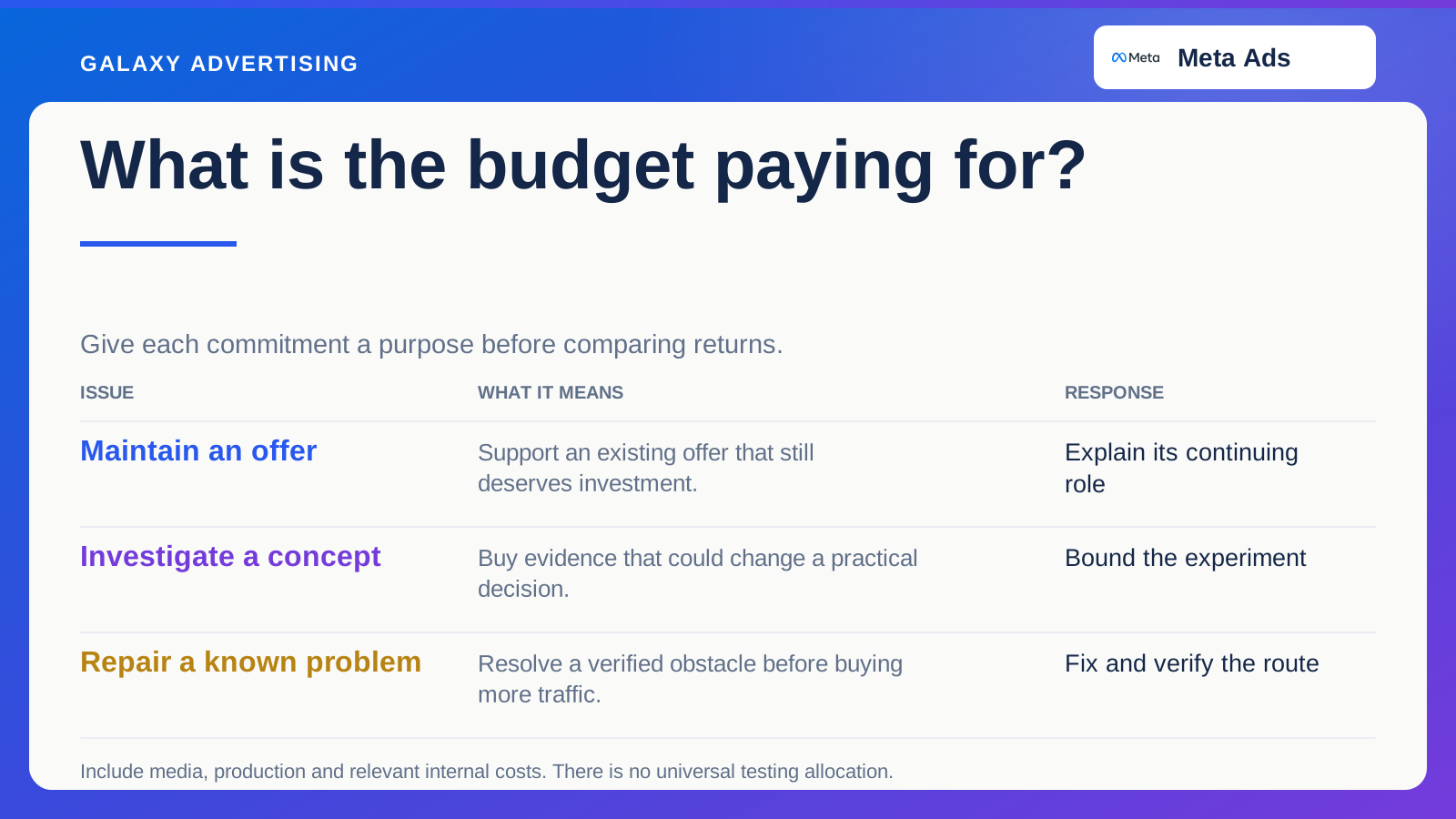
It's easy to ask Meta for a strong return before working out what you can afford to spend on a customer. The mistake becomes expensive when “strong” means different things to the people approving the budget.
A beauty retailer wants more new customers. Which orders count? Which costs belong in the calculation? How much future purchasing is everyone assuming? Until those questions are settled, the request is less clear than it sounds.
Start with what an order leaves behind and how much uncertainty the business can accept. A platform ratio helps you interpret performance against that reference. It can't create the reference for you.
Be clear about what you're buying
Are you evaluating a first order, a new customer or another purchase from an existing buyer? Those outcomes can be related without having the same economics.
Write the definitions where everyone can see them. Your order history might classify somebody as new while the advertising report classifies the activity differently. Explain that before comparing acquisition costs.
Don't assume every purchase attributed to the account represents a different first time customer. Use consistent customer and transaction references suited to the business question, within the information you can legitimately use. Otherwise, you risk attaching a precise cost to an outcome you haven't defined consistently.
Put one order on the table
Start with a consistent revenue basis. Then list the relevant variable costs: perhaps the product, payment processing, packing, delivery subsidy and a justified estimate of other order related expenses.
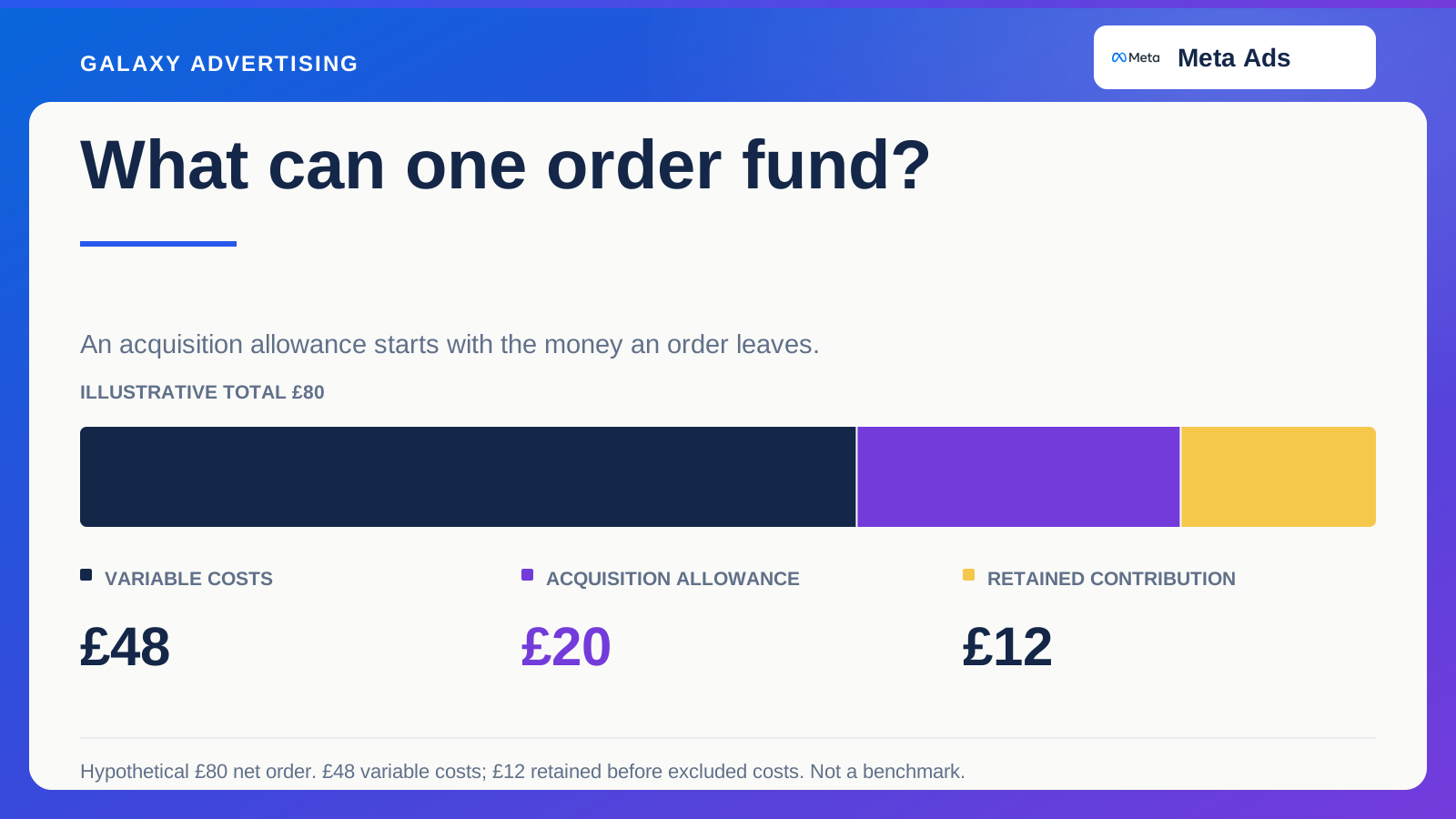
Suppose, hypothetically, your net order is £80 and those costs total £48. You have £32 left before advertising and the other costs this calculation excludes. That money is the contribution on this basis. If you want to retain £12, your illustrative acquisition allowance is £20.
This is arithmetic, rather than a beauty industry benchmark. Use your own costs and decide what must remain for overheads, risk and profit. Revenue exceeding advertising spend doesn't make an allowance commercially healthy if it leaves nothing for those needs. The remainder has jobs to do as well.
Make repeat purchasing earn its place
Repeat purchasing can support a different acquisition decision. It needs actual customer history behind it, with the customers, periods and product groups kept distinct in the estimate.
A subscription item, replenishable product and occasional premium purchase don't necessarily follow the same pattern. The strongest repeat behaviour in your business can't simply be assigned to every customer acquired through every offer.
Include the costs of later orders and the investment needed to encourage them. Future revenue isn't future contribution. And a forecast isn't cash already available to fund today's acquisition. You can recognise the value of repeat purchasing without spending as though every assumption has already come true.
Recalculate when you add a discount
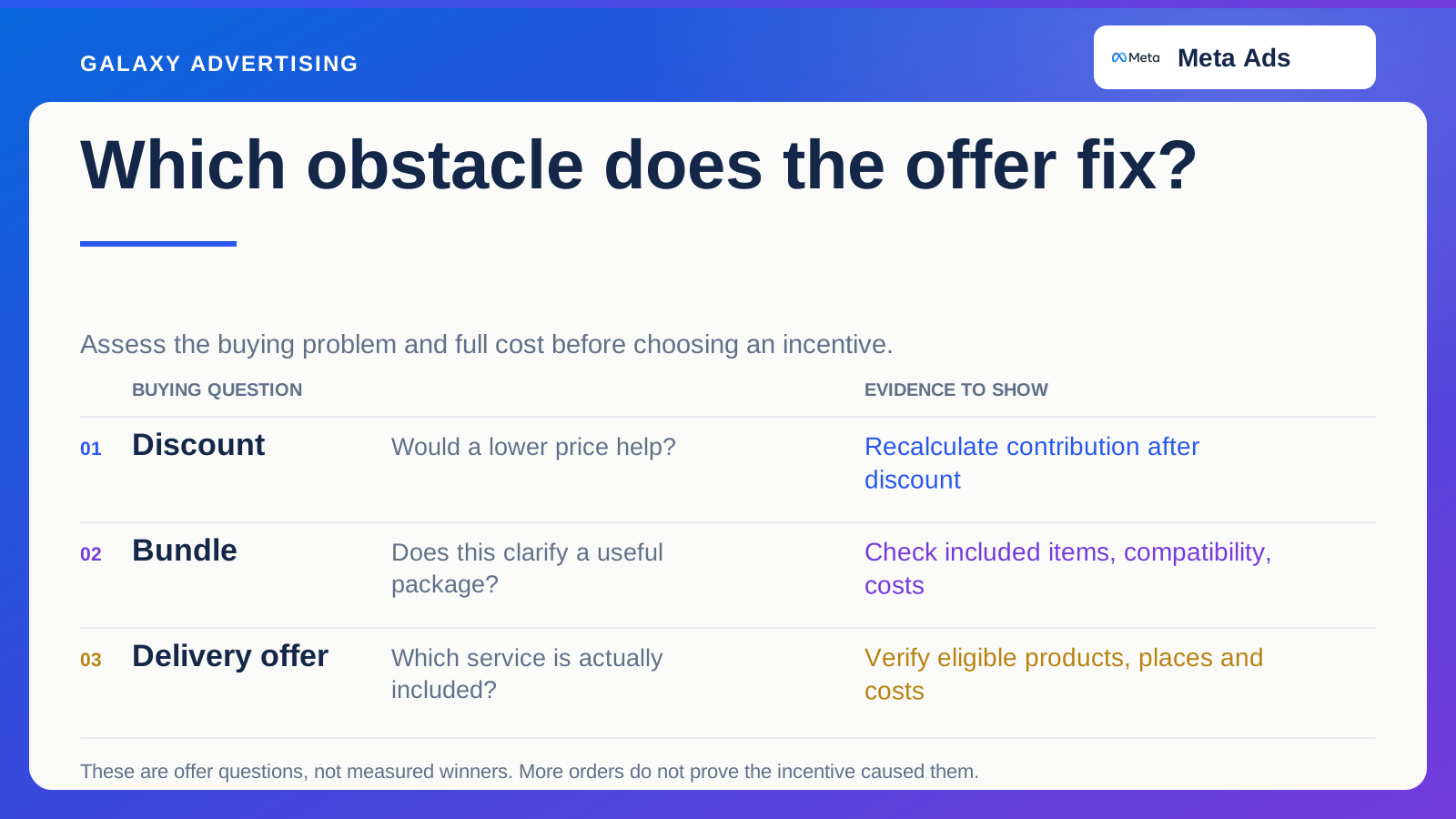
A first order discount can change both contribution and the customers you attract. Calculate the offer on its actual terms. Applying your normal product margin to discounted revenue can hide the change.
If an incentive takes the hypothetical order's contribution from £32 to £24, spending £20 to acquire it leaves a different amount behind. The advertising report can look familiar while the business keeps less.
Ask whether the incentive addresses a real obstacle. If shoppers are confused about a shade or the product contents, investigate a clearer destination before reaching for another reduction. A cheaper uncertain purchase is still uncertain.
Connect the allowance to the report carefully
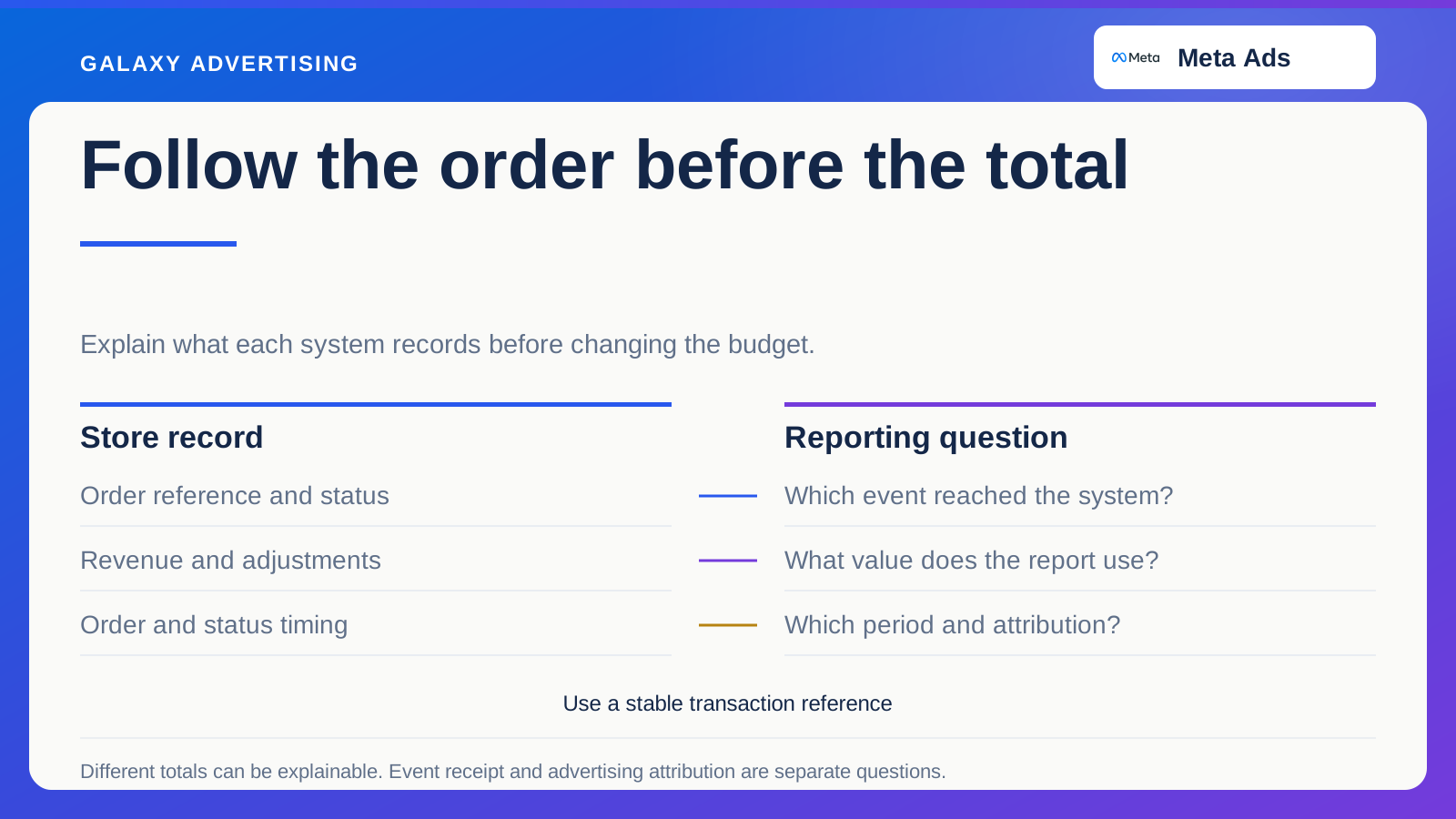
Agree how you'll compare acquisition investment with the relevant orders or customers. Reconcile a small sample against store records so the definitions stand up to inspection.
Keep attributed performance separate from additional sales. Someone recorded after an advertising interaction could also have encountered your brand elsewhere. Your allowance is a business reference. It doesn't prove the platform caused every outcome credited to it.
Understand what the available account controls actually mean. A commercial target and a bidding instruction aren't identical. Ask your manager how the chosen implementation reflects the objective, and where the evidence runs out. That explanation should connect the business decision to the account setup without pretending they are the same thing.
Look at the customers and products inside the average
A campaign can move towards lower contribution products or more existing customers while its headline return stays attractive. Inspect the parts of the mix that materially change your allowance.
Keep the distinctions maintainable. A few meaningful customer classifications, used consistently, can help more than an elaborate model built on uncertain identities or incomplete costs. Precision on the page doesn't remove uncertainty in the inputs.
Record material changes in offers, costs and fulfilment. They may require a revised target even when the advertising team's execution hasn't changed. You need to know when the economics moved before deciding the campaign did.
Check what the business can actually fund
An acceptable acquisition cost doesn't establish this month's spending capacity. Consider a hypothetical retailer paying its supplier before dispatch while customer payments settle later. Growth can increase the money needed to fulfil orders before improving available cash. Finance should review that timing separately from contribution.
Returns bring another uncertainty. If the allowance relies on an expected return rate, show where that expectation came from and what you'll do if it proves optimistic. An estimate shouldn't become permission to spend without a limit.
Agree an affordable test amount, who can authorise further investment and the evidence they need. The allowance judges the order's economics. Spending authorisation controls the business's exposure. Both decisions need making.
Give uncertainty a boundary
Where the evidence won't support one exact figure, use a range or bounded test. State the assumption that matters most and the observation that could improve it.
Don't resolve uncertainty by picking the most optimistic customer value forecast. Equally, don't automatically treat every unmeasured influence as zero when a proportionate investigation is available. Let the risk and quality of information shape the decision.
A target return becomes useful when you can explain what it asks the business to retain, risk and assume. Choose the number after examining the order, and it can guide the work rather than merely impress everyone in the budget conversation.