 Meta Ads
Does your Meta budget mean everything you invest, or just what you pay the platform? If video, photography, samples and editing are approved elsewhere, the media report can look acceptable while the full cost of acquiring that business remains unclear.
It's an easy gap to miss when different people approve different pieces of work. But the customer acquisition programme still carries all those commitments.
Creative development deserves its own management view without disappearing from the commercial judgement. Your budget needs to connect today's demand, tomorrow's creative options and the cost of getting evidence that helps you decide.
See the separate costs before combining them
List media spend, external production, internal work and relevant sample or location costs. Identify what recurs, what supports several uses and what belongs to one specific experiment. You need that distinction before allocating the costs sensibly.
A photography session might support product pages, several campaigns and future edits. Charging it all to the first advert would misrepresent its role. Calling it free because another department paid would lose the cost altogether.
Agree a practical allocation method with finance. It doesn't need to pretend to perfect precision. It needs to make the material investment visible enough to judge whether the programme is worthwhile and which further commitments need approval. The method should help you decide, rather than create confidence in a number nobody can explain.
Say what each request will do
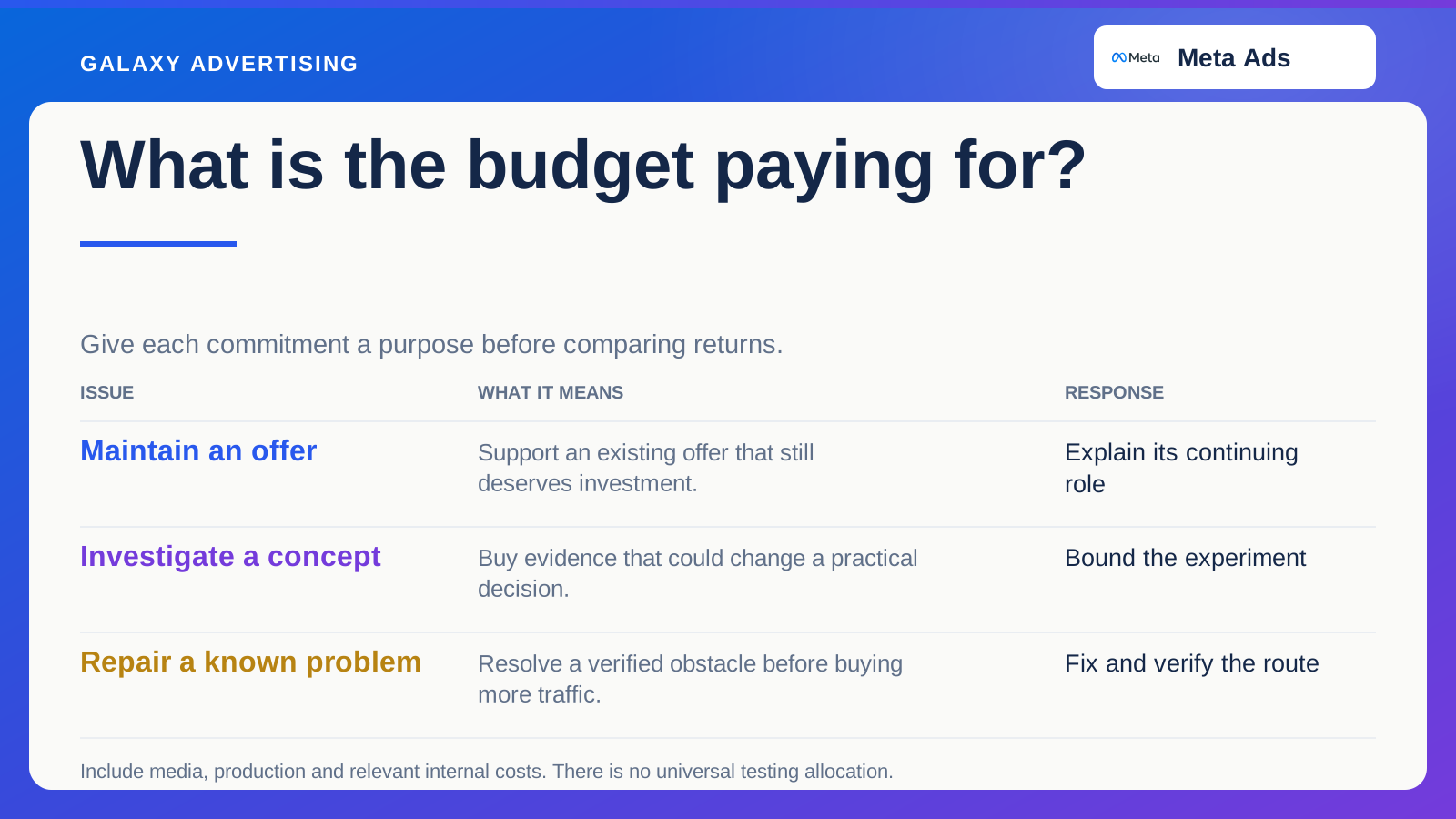
Separate maintaining an existing useful offer, investigating a new argument and repairing a known problem. Each has a different purpose. Their most recent attributed returns shouldn't be the only basis on which they compete for money.
An established asset might deserve continued support while a smaller, bounded experiment examines another buying question. A broken destination needs fixing before either gets more traffic. A new product might need basic reference imagery before anyone can brief a campaign responsibly.
Write the decision concretely. Asking for more creative budget is difficult to assess. Asking to film the documented storage action because the current footage doesn't show the capacity question customers ask identifies the gap and the intended use of the money. Now the person approving it has something specific to judge.
Check what the orders leave behind
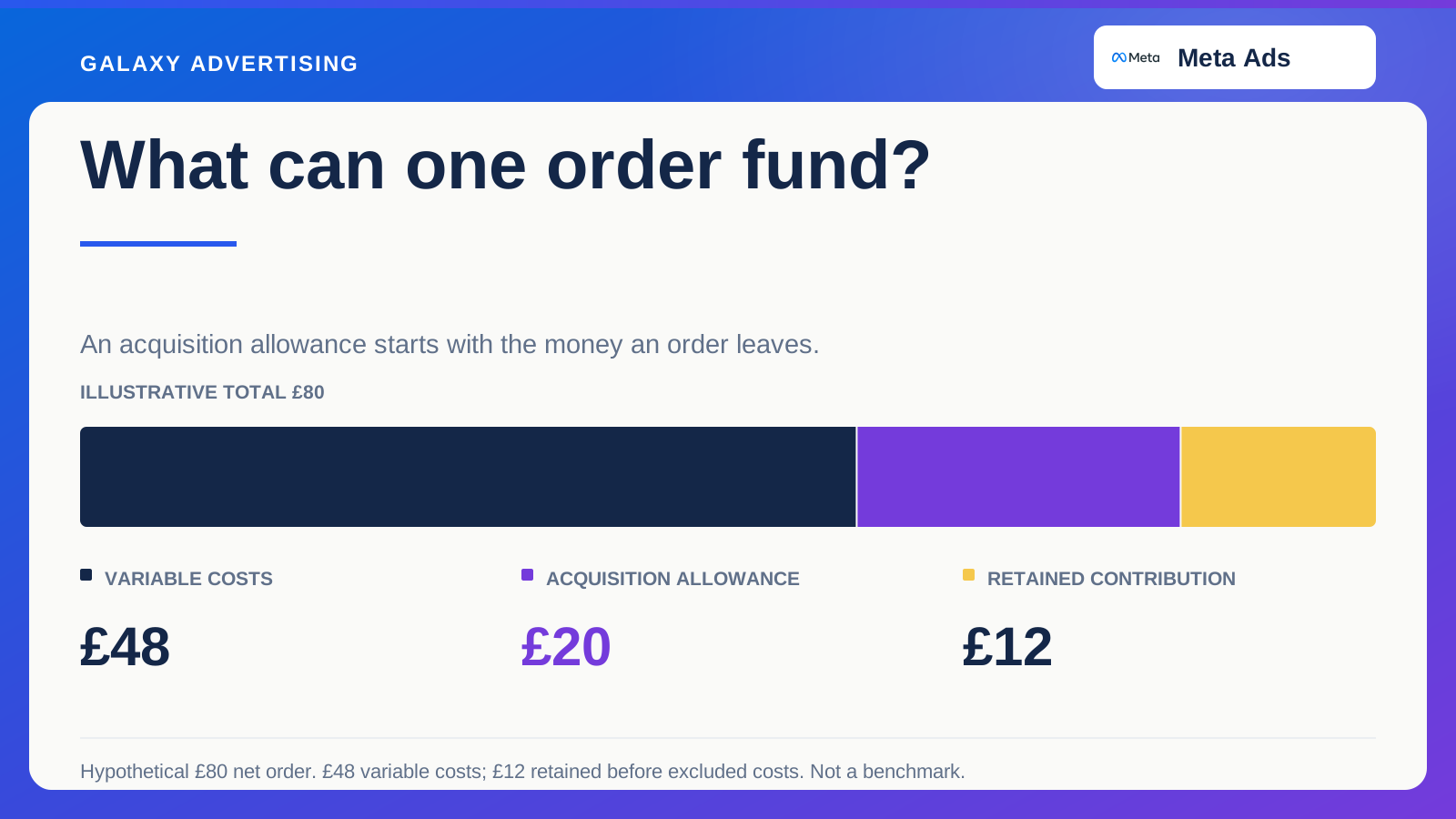
Use your agreed contribution basis: the money remaining after the relevant costs included in your calculation. More campaign revenue can come from a shift towards products with weaker margins or more expensive fulfilment. Revenue alone won't show that trade off.
Take a hypothetical programme spending £2,000 on media and £600 on production for one defined test. The management review should show both commitments and explain whether the production has further usable value. Those figures illustrate the accounting question. They aren't recommended spending levels.
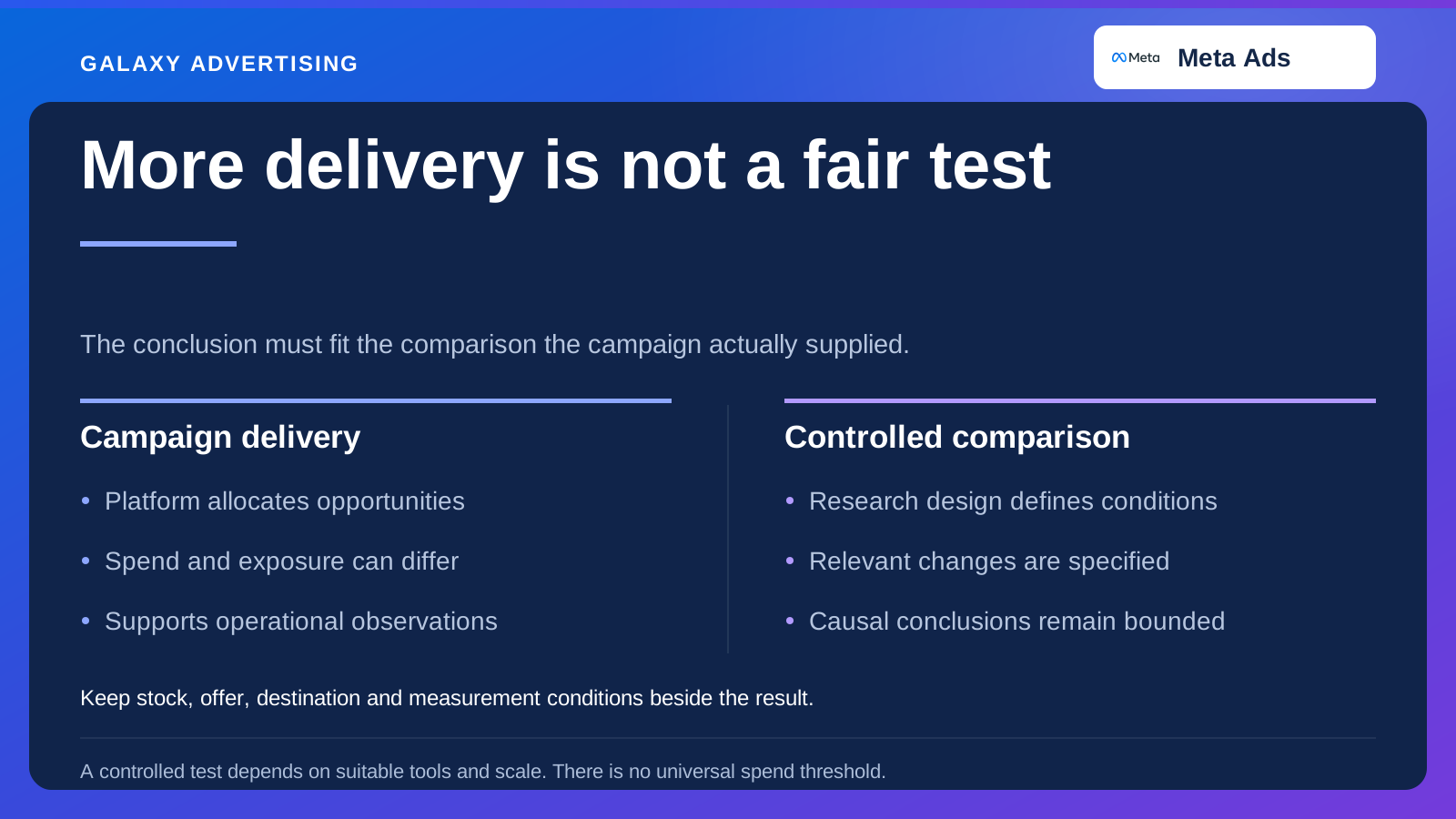
A strong historical return doesn't establish that the next increment will behave identically. Customer mix, available products and creative distribution can change as investment changes. Give the next commitment its own reason, rather than extending the previous average on a spreadsheet and calling that a plan.
Pay for learning that could change a decision
A useful experiment has a clear uncertainty and a practical consequence. It could examine whether a product action deserves a more complete demonstration, or whether a particular proposition encourages relevant product exploration.
Different isn't enough. An asset can add novelty to the library without resolving anything the business needs to know. Ask which recommendation would change if the evidence supported the idea, and which would change if it challenged it.
Keep the scope affordable relative to that decision. An uncertain concept might justify a modest, accurate production before something larger. Don't build an expensive campaign package before establishing that the underlying offer and demonstration make sense. The production commitment should reflect where your understanding has reached.
Leave room to prepare a useful replacement
If the entire allocation maintains current delivery, nothing remains to prepare the next credible argument. That can push you into reusing increasingly unsuitable material or rushing production decisions when the pressure arrives.
Build a realistic queue around actual business needs. Include product changes, depleted offers, recurring customer questions and missing evidence. Each item needs a reason. A promise to make a fixed number of videos regardless of relevance doesn't provide one.
There isn't a universal percentage every retailer should reserve for experiments. The right amount depends on offer stability, production costs, available evidence and your appetite for uncertainty. Ask for the reasoning behind the allocation. A benchmark imported without context cannot do that thinking for you.
Reuse what is still accurate and permitted
Accurate references and well labelled footage can reduce later production effort. Reuse has value when it preserves the important evidence while supporting a genuinely relevant new message.
Before using an asset again, check permissions, product accuracy and whether the offer is current. Footage of a discontinued configuration isn't automatically useful. Nor is material featuring a contributor whose agreed usage doesn't cover the new context.
Record why the material is reusable. Identify the product, action shown and relevant restrictions in the library. That turns efficiency into something maintained, rather than an expectation that the editor can somehow produce another version from the files left behind.
Include the cost of waiting where it materially affects the choice. A short remaining availability period might make lengthy production unjustifiable, however attractive the idea. Another product might deserve preparation now because accurate references will serve several future launches. Document those planning judgements as judgements, rather than guaranteed financial forecasts. Their value won't always show in an immediate campaign return.
Make the next approval specific
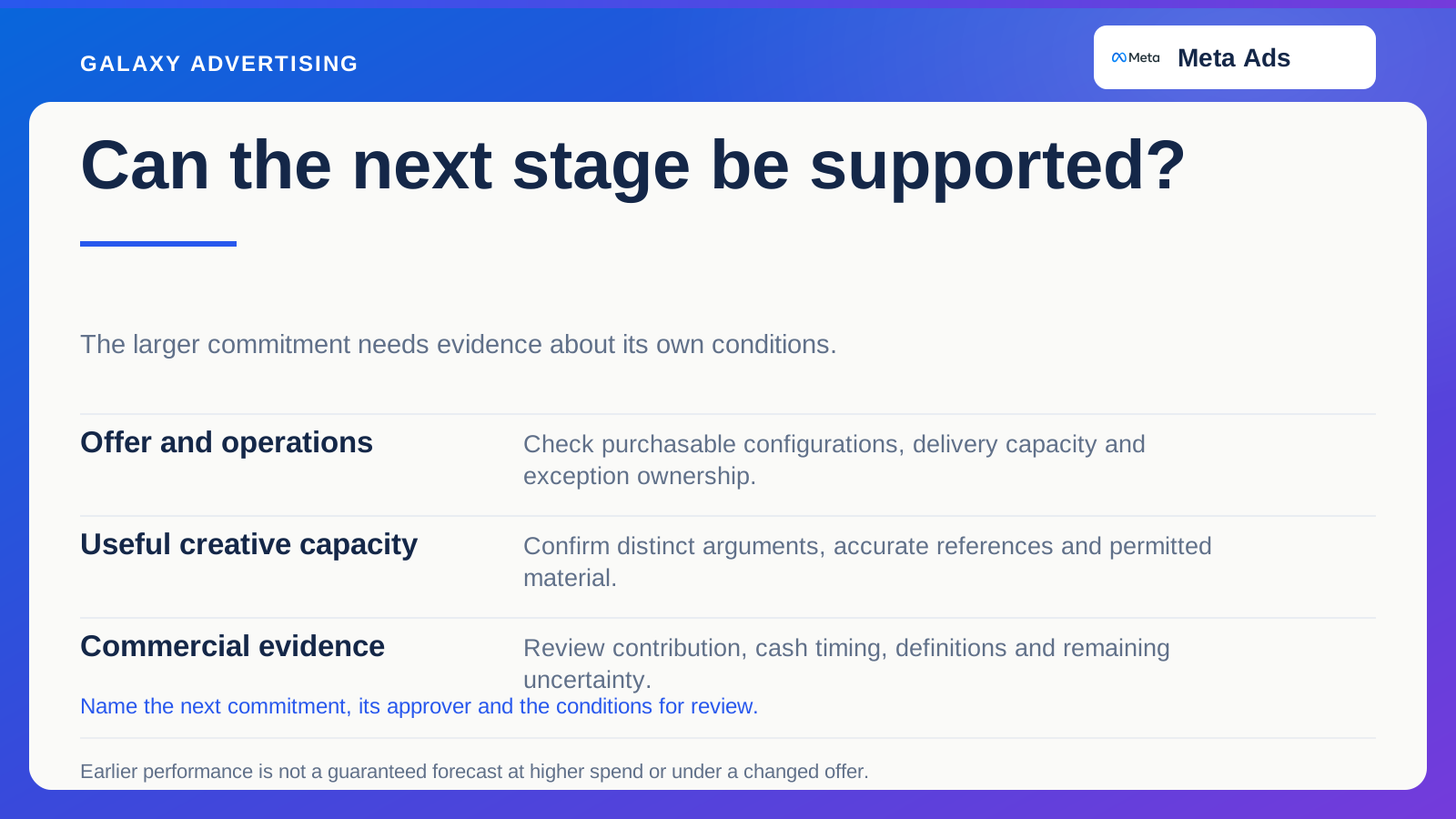
Present the next commitment with its purpose, full relevant cost, dependencies and review condition. Name the person who can approve it and the evidence needed before considering more spend.
At review, distinguish an accurately completed production from its commercial result. A well delivered concept can still fail to justify continued media. A useful early result doesn't establish that every related production request deserves funding either.
A sustainable budget keeps current activity and the next defensible decision within reach. Once production is visible, a reassuring media return has to answer to the economics of the whole programme.