 Meta Ads
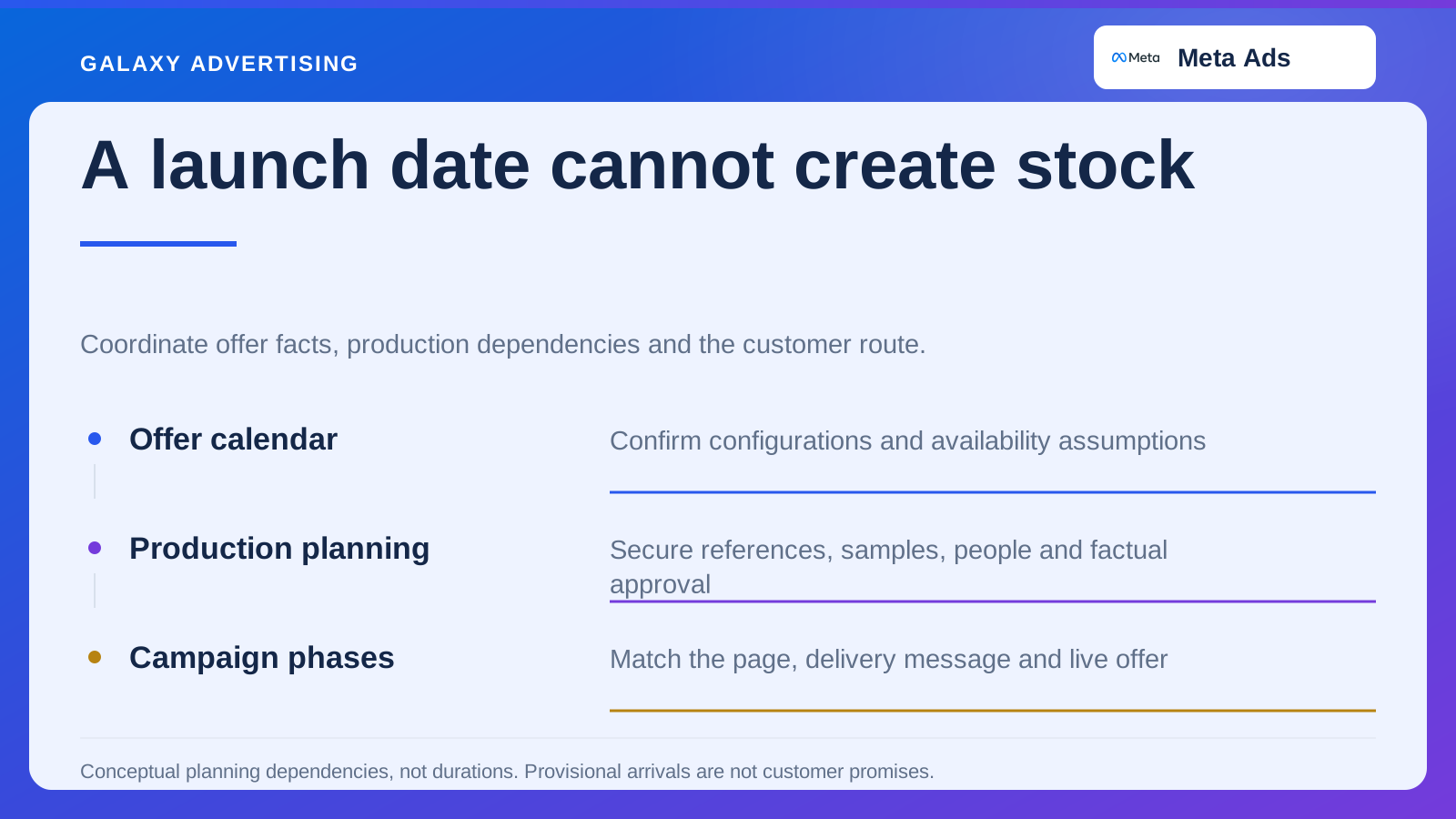
A content deadline cannot make an uncertain offer ready to sell. Your outdoor campaign might be scheduled for April, while the most photographed dining set has no firm arrival date, one finish is nearly depleted and bulky orders face a different delivery lead time.
The creative deadline is clear. What the customer can actually buy is much less clear.
Seasonal planning needs to coordinate the product and service conditions behind the advertising. Once those are supportable, the content calendar can explain the offer. It shouldn't become a list of promises that operations must somehow make true afterwards.
Start with when the customer needs it
Identify when somebody wants to use the product and what they need to decide beforehand. Buying for an outdoor gathering brings different timing pressures from exploring a room redesign without a fixed deadline.
A public holiday doesn't automatically create the same opportunity for every retailer. Look at your actual product enquiries, previous order patterns and operational knowledge. They help frame the plan, but none guarantees demand will repeat.
Write down what that means practically for the shopper. If the product must arrive before an event, the campaign needs accurate timing information and a clear way to identify the relevant item. A lovely seasonal mood won't resolve a delivery dependency. The customer still needs to know whether the offer fits the occasion they're planning for.
Build the offer calendar with merchandising
Map the products you expect to promote, their availability assumptions and the person who can confirm changes. Keep reliably stocked ranges separate from items whose timing remains uncertain. Those are different foundations for an advertising promise.
Record configuration differences too. A product family can be available while the finish in the planned creative isn't. The calendar needs to identify the actual offer represented, rather than just the category discussed in the marketing meeting.
Keep unknowns visibly unknown. A provisional arrival date mustn't become a customer promise because somebody needed to finish the copy. Decide whether to delay the claim, choose another suitable product or explain the uncertainty accurately at the destination. A production deadline cannot settle the underlying fact.
Work backwards from what production needs
For each concept, identify the product references, samples, locations, contributor availability and approvals required. A credible production date needs owners for those dependencies and realistic routes to resolving them.
Prioritise evidence that's difficult to replace later. If the campaign depends on showing an extension mechanism, make sure the correct configuration can be filmed. General room photographs cannot necessarily stand in for the missing demonstration. They may look attractive while leaving the buying argument unsupported.
Allow time for factual review before final delivery. Seasonal pressure often leaves product approval until the end, when corrections are expensive. Checking the exact item and promise early can prevent an uncomfortable choice between missing the deadline and publishing inaccurate advertising.
Have a useful alternative ready
Where uncertainty is material, choose suitable replacement products and messages in advance. The alternative should preserve a coherent buying argument, rather than merely occupy the space left by a depleted item.
If the main concept explains a compact dining arrangement, a large replacement set may serve a different need. Review its dimensions, price and destination separately. The easiest substitution can quietly change what your campaign is trying to explain.
Organise production files and approval records so a supported change can happen efficiently. You're preparing for known uncertainties. You're not promising that the team can instantly make accurate material for anything that might happen. Keeping that distinction clear makes the contingency plan more believable and more usable.
Let operations define the delivery promise
Ask which products, areas and service options share fulfilment conditions. A deadline that works for one group shouldn't become a blanket campaign claim. The difference matters to the person deciding whether to order.
Separate an internal planning assumption from a promise you can make to a customer. If operations must confirm timing against a particular order, give shoppers a clear route to that information. Don't invent certainty in the advert to make the message simpler.
Review seasonal copy as conditions change. An asset can remain active while communicating an obsolete deadline or offer. Assign somebody to retire or revise it. Remembering what was said at the launch meeting weeks earlier isn't a dependable process.
Match the destination to the campaign phase
Early research content can help people compare configurations or measure their space. Later messages may need to give availability and service information more prominence. The emphasis can change while the underlying facts stay consistent.
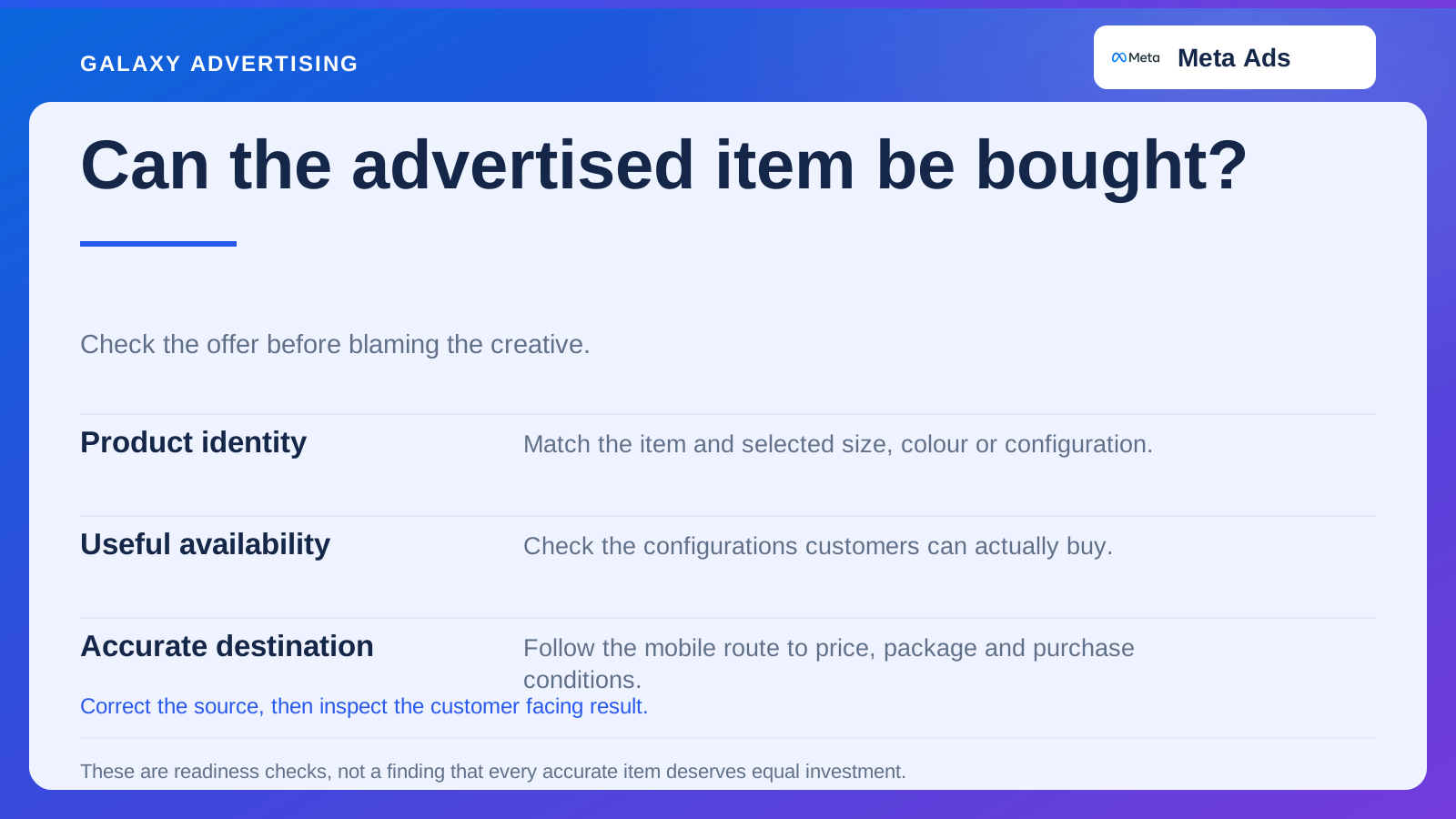
Check that the landing page identifies the products shown and explains any changed promotion. A seasonal collection with a strong headline and several unavailable featured items can make an otherwise accurate advert difficult to use.
Test the route on a phone before each material phase change. New banners, offer overlays and rearranged collections can hide precisely the information a shopper needs. Put experience verification in the calendar alongside new asset delivery.
Ask the calendar's approver to walk through an exception. If the featured finish becomes unavailable shortly before launch, who chooses the replacement, verifies its facts and retires the original asset? Name actual responsibilities across merchandising, production and media. An urgent group message isn't a substitute for knowing who owns each step.
Keep the season's explanation honest
Afterwards, compare the plan with what happened. Record material changes in availability, pricing, delivery and investment beside the creative and commercial observations. They belong in the explanation of the result.
A strong performance might reflect favourable product mix or an unusually reliable offer as well as useful advertising. A weaker one might reveal a planning or fulfilment constraint rather than a failed creative concept. Preserve those distinctions for next season.
Keep the readiness decisions that helped: an earlier sample request, a clearer exception process or a more accurate replacement route. Those lessons can remain useful when next year's creative argument changes. The calendar earns its place when it describes a business ready to serve the demand its imagery invites.