 Meta Ads
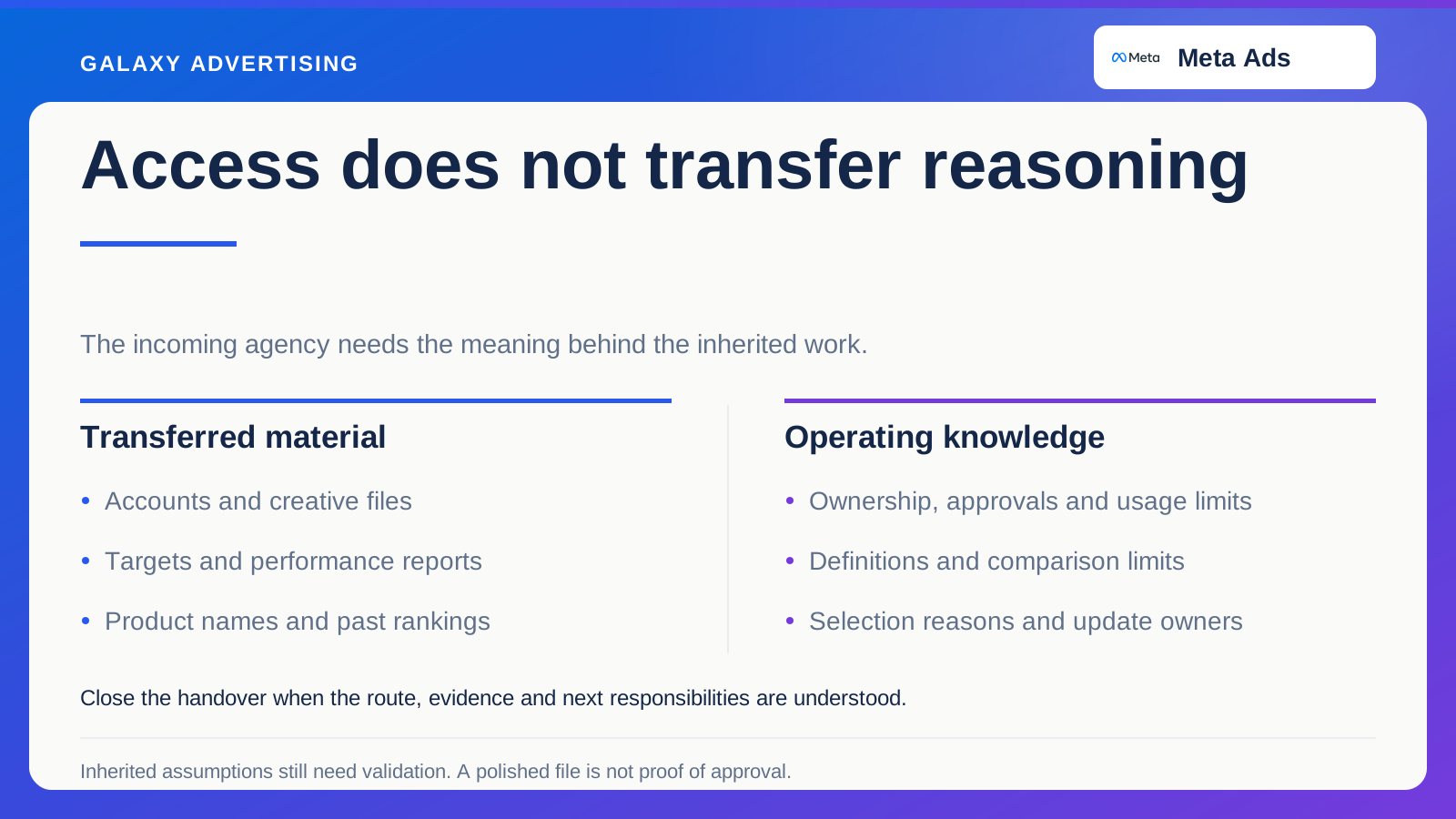
Account access doesn't transfer the memory of your business. A new agency can download a report and collect the latest creative files without knowing why a product was excluded, which successful video has usage restrictions or what revenue definition sits behind the return target.
Those gaps can surface a month after a transition that appeared technically complete. The files arrived. The reasoning didn't.
A useful handover explains why important decisions were made, where reliable information lives and who owns the next action. Access is necessary, but the incoming team also needs an operating brief it can understand and question.
Establish who owns what and who needs access
Identify the accounts, assets and integrations owned by your business that are involved in the service. Ask the responsible administrator to verify current ownership and appropriate access for each role using the platform's supported controls.
Don't pass around personal login credentials instead of setting up managed access. You need an accountable working relationship in which the business keeps control and knows who is authorised to do what. Convenience at handover shouldn't obscure that ownership.
Record unresolved access questions before calling the job complete. Being able to view a report doesn't prove the team can maintain another essential part of the route. Set permissions around the actual scope. Don't assume every collaborator needs unrestricted control simply because they're joining the project.
Pass across the meaning behind the targets
Provide the revenue basis, contribution assumptions and acquisition allowances used in management decisions. Contribution means the money remaining after the costs included in that calculation. Explain how you treat tax, delivery income, refunds and cancellations where those affect interpretation materially.
Include the source and owner of the definitions. A spreadsheet helps only if the new team can establish that it's current and knows who can settle a disagreement. Otherwise, the file merely relocates the uncertainty.
Keep a platform bidding instruction distinct from your commercial target. An account management number can reflect implementation considerations rather than the complete business economics. Transfer the reasoning and purpose alongside the target, so the new team doesn't mistake an instruction to the platform for the whole commercial brief.
Explain why these products receive attention
Identify product families, important configurations and operational conditions that influence promotion. Include recurring stock issues, relevant service differences and the route for receiving updates. The team needs to know when the offer changes, as well as what it looks like today.
Product names alone won't explain your selection. Record the material decisions behind emphasis, pauses and exclusions. Mark whether each reason remains current or needs reassessment. A temporary stock decision shouldn't become permanent through lack of context.
Keep this proportionate. The agency doesn't need every internal record. It needs the facts that change advertising, their reliable source and somebody who can clarify an exception. That stops ordinary merchandising knowledge being rediscovered through expensive campaign mistakes.
Give the creative library some meaning
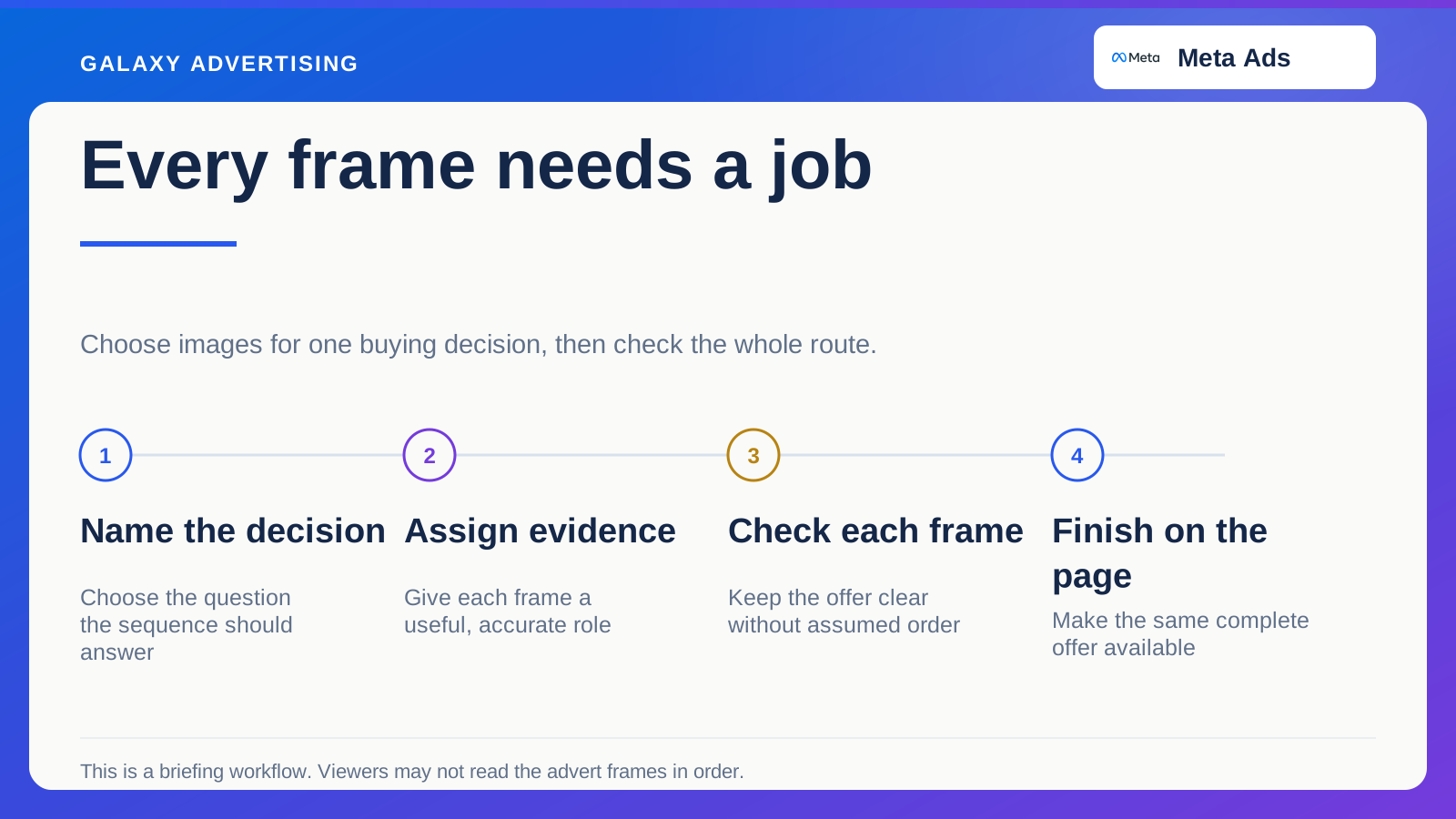
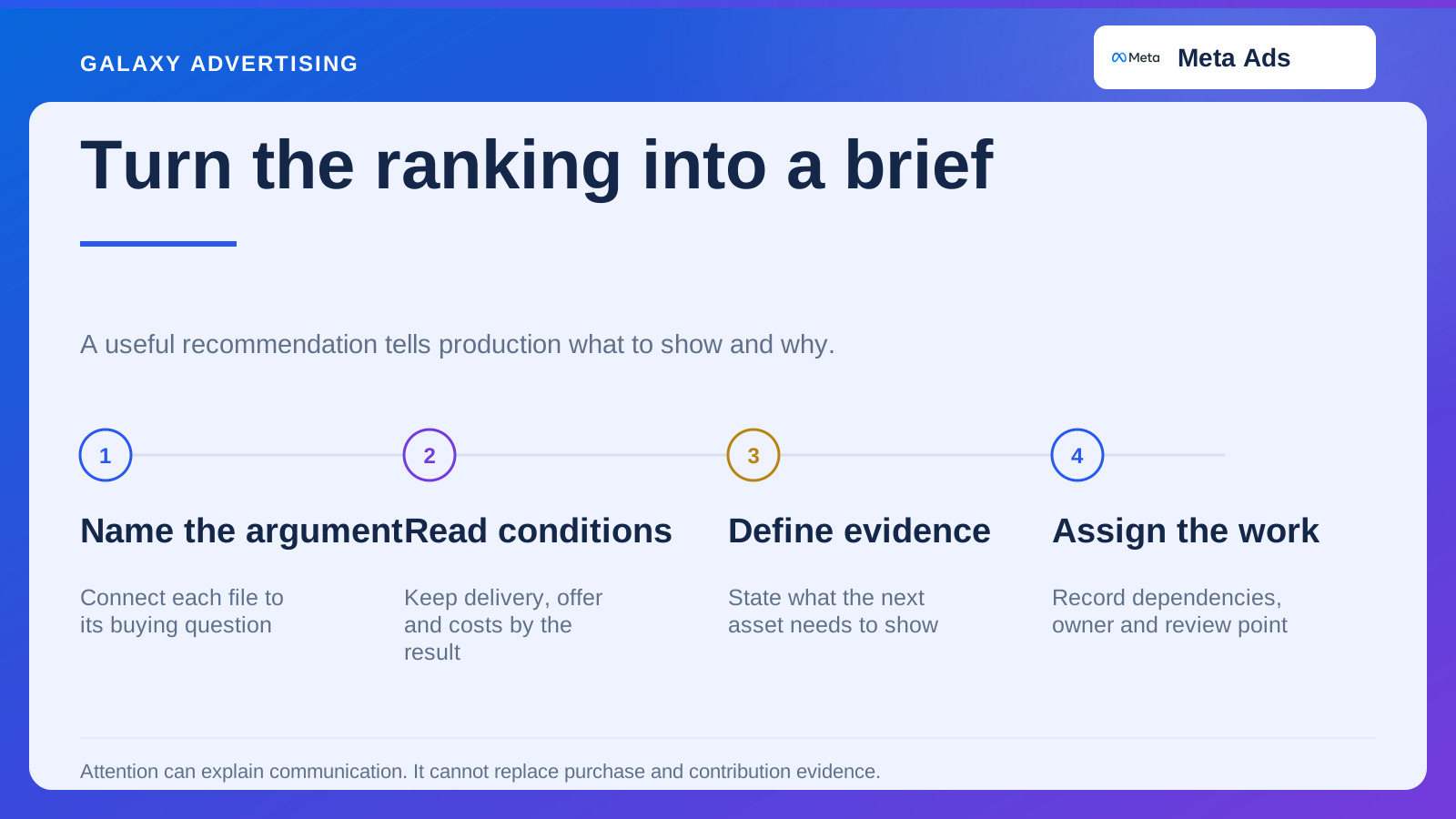
Transfer usable source files and final outputs with stable references. For each asset, identify the product and configuration shown, the argument it makes and relevant approval or usage restrictions. That makes the files usable rather than merely available.
Keep contributor permissions accessible to whoever manages later versions. Possessing a video file doesn't establish permission for every placement or revision. The next team needs to see the boundaries before commissioning another use.
Separate approved work from concepts and superseded versions. A polished appearance isn't evidence of approval. A short record connecting the final file, caption and destination can prevent an obsolete price or unsupported claim finding its way back into circulation.
Preserve the limits of earlier learning
For material experiments, transfer the question, comparison, available results and decision taken. Include limits such as unequal delivery, changing availability or an incomplete destination. Those conditions belong with the outcome, rather than in somebody's recollection of the meeting.
A historical asset ranking can mislead without that context. A lightly delivered concept may look disproven. A comparison between different offers may look like a clean test of creative. Neither reading preserves what you actually learned.
Keep useful failures as well as strong results. Knowing why a concept attracted unsuitable enquiries can save future production. You're preserving evidence the business already paid for, rather than asking the incoming team to defend the previous agency's choices.
Walk through measurement and reporting ownership
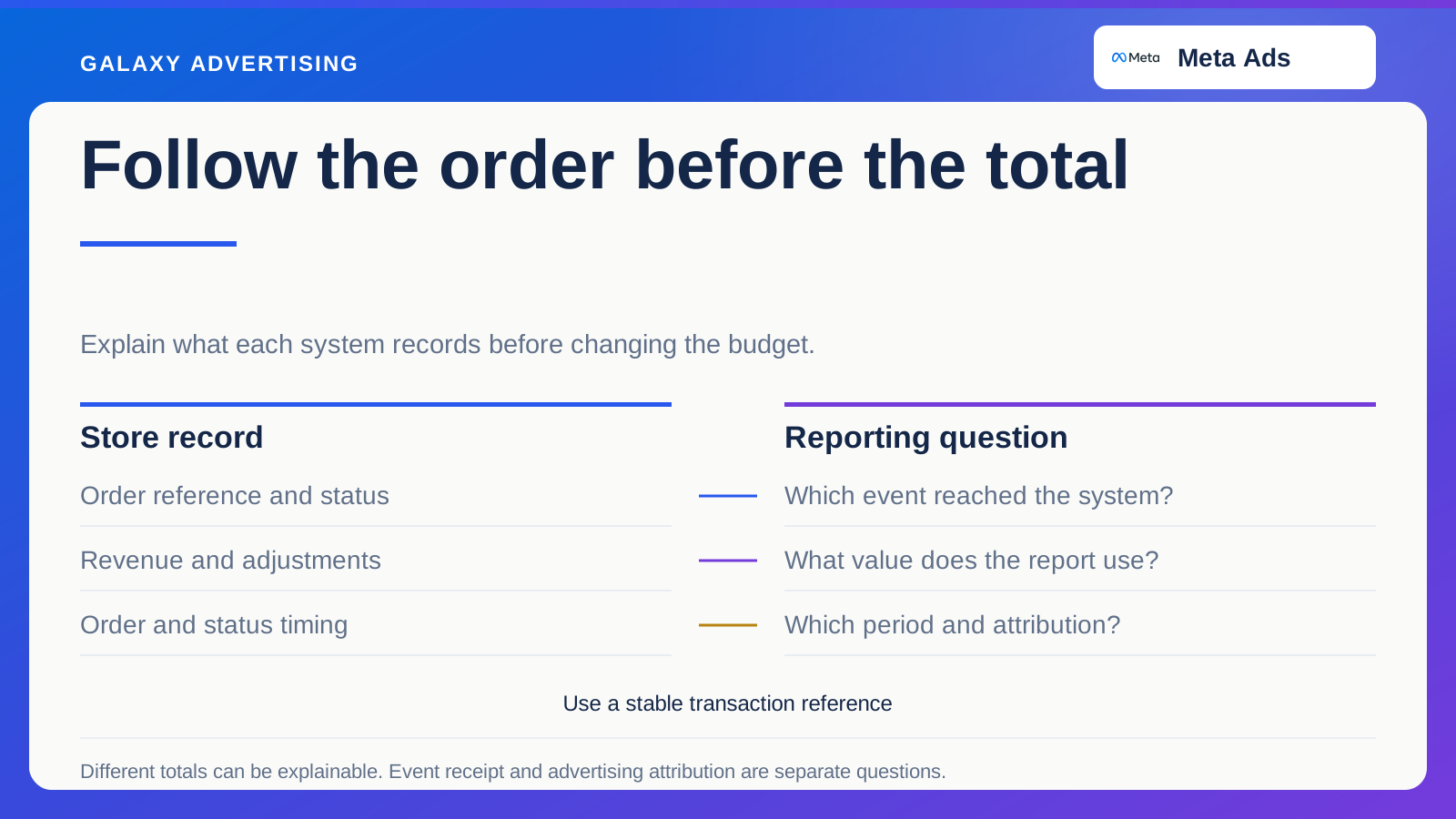
Ask the implementation owner to explain current event routes and known limits. Identify who investigates discrepancies between advertising reports and store orders, and which records anchor the commercial review. Knowing where a number comes from matters as much as being able to view it.
Confirm what the recurring reporting conversation should decide, which definitions it uses and who acts on recommendations. A redesigned dashboard won't fix a process with unclear responsibilities. Mark open faults and unfinished work separately from ordinary limitations, with an owner and verification step for each. Otherwise, both agencies can assume an unresolved issue belongs to the other's period.
Where scope allows, arrange a short live walkthrough with the outgoing knowledge owner. Trace one product from source facts through creative and destination into the commercial report. Record unresolved questions and who can answer them. A supplier exception or temporary exclusion that accidentally became permanent may never appear in an export. The incoming team should validate inherited assumptions, but first it needs to understand them.
Agree when the transition is finished
List and assign the work needed: access verification, product and creative briefing, measurement understanding and reporting ownership. Don't leave completion dependent on informal availability. Each task needs a clear destination of its own.
Avoid unnecessary simultaneous changes merely to make the new team's arrival visible. Urgent material corrections may be needed; record why. A stable reference helps distinguish a transition problem from the effects of a deliberate new direction.
Close the handover when you and the new team can explain the route, evidence and next responsibilities. The next agency should inherit knowledge it can use and ownership you retain, rather than an invitation to start the commercial investigation from zero.