 Meta Ads
Six attractive photographs don't automatically make a useful advert. If their only connection is that you want to use them all, customers may see more furniture without understanding the offer any better.
That's the trap for a furniture brand with good product images ready to go. The brief becomes a list of photographs, rather than something the customer should learn from seeing them together.
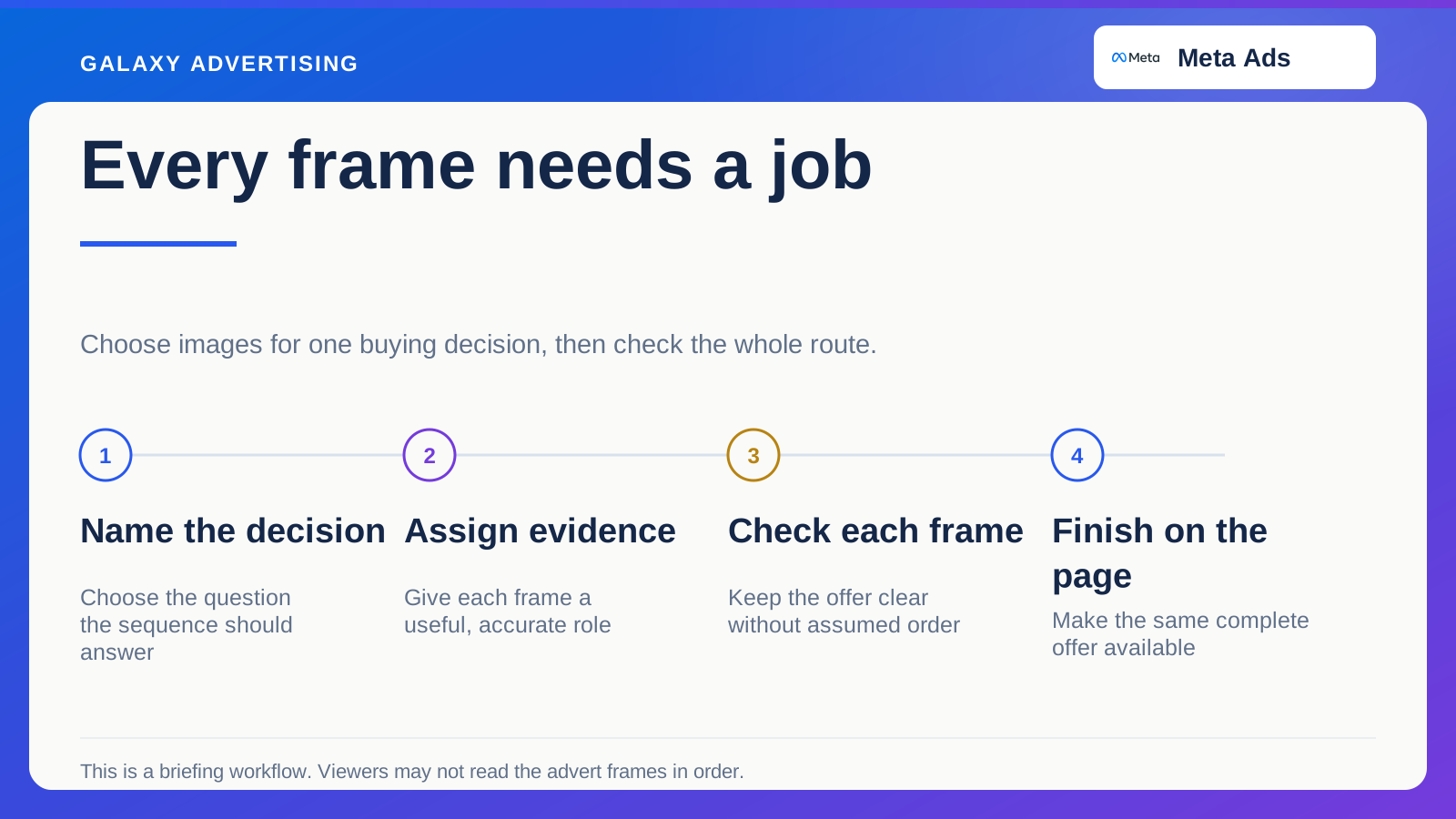
Start with one buying decision, then choose the evidence and the relationship between frames. You're giving a suitable customer a useful next step. You don't have to squeeze an entire product page into the advert.
Decide what the sequence helps someone work out
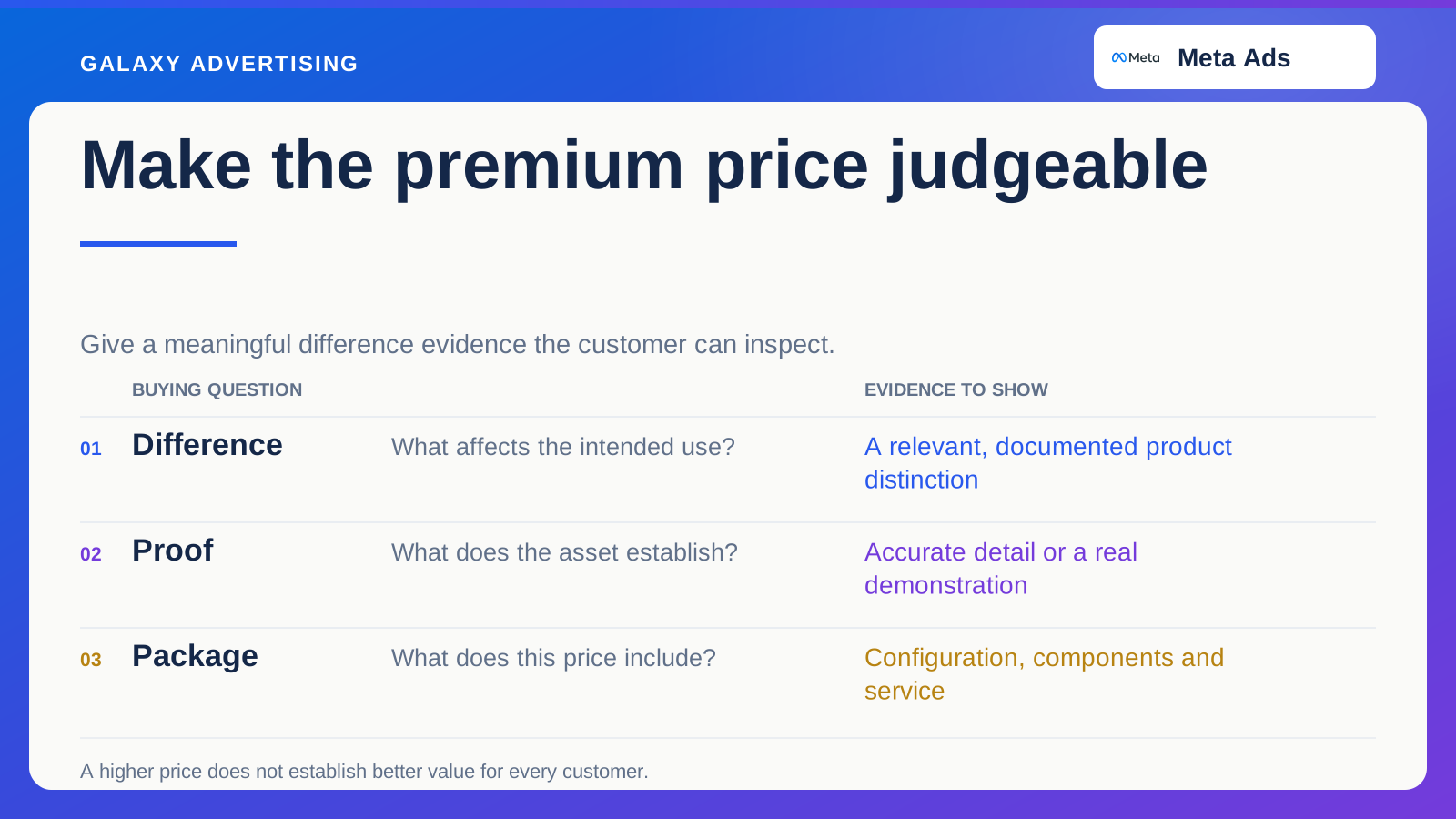
Choose a question specific enough to shape the composition. A hypothetical dining table retailer might explain the difference between the ordinary arrangement and its documented extended arrangement. Another sequence might show what's included in a defined package.
These are different briefs, even with the same product. Establish what you want people to understand before picking photographs or requesting new ones. Otherwise, the available material starts choosing the argument for you.
Requests for premium styling or more variety can guide execution, but they don't establish the commercial argument. A clear buying decision tells the designer why one image belongs and another doesn't. That gives production a more purposeful, efficient basis for choosing the material.
Give each frame one clear job
Map the frames to the evidence they contribute. Perhaps one establishes a configuration, another reveals an important detail and another identifies the route to the full offer. Let this argument determine those roles. There's no need to impose the same formula on every campaign.
Check that each image actually supplies its assigned evidence. A distant room photograph might create atmosphere without explaining a mechanism or package detail. A close view might be attractive without identifying the model.
Remove a frame if it adds nothing useful. Using all the available material doesn't necessarily strengthen the sequence. Extra content can make the relationship between the important images harder to follow. An available photograph isn't an obligation.
Don't rely on everyone reading in order
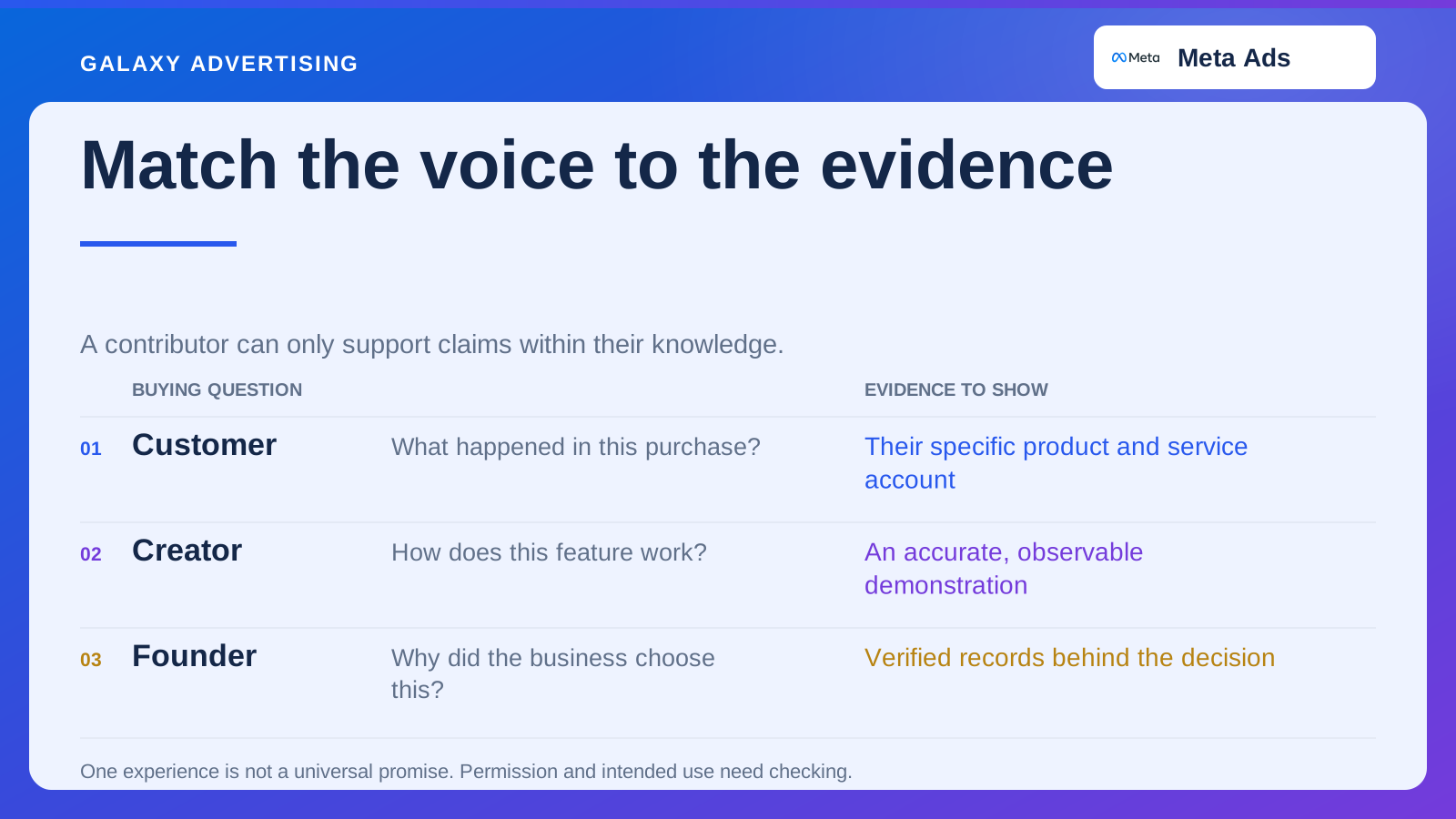
Some viewers won't study every frame in your intended sequence. Each still needs enough context to identify the relevant product and avoid creating an inaccurate impression on its own.
You don't have to repeat the whole message on every image. You do need to check that a frame isn't relying on a distant qualification to correct its apparent promise. The customer may never see that qualification.
For the hypothetical table, identify the extended arrangement accurately. Don't rely on another frame to reveal that the pictured version is optional. Wherever image, configuration and price appear together, preserve the relationship between them. The individual frame needs to remain an understandable part of the same offer.
Make comparisons fair to the actual difference
If you're comparing options, help people judge the real distinction. Different scales, unexplained lighting changes and inconsistent styling can imply a product difference that isn't there.
Use accurate source references and retain the model or variant identity. A variant is the selected size, colour or configuration. When pictures show different configurations, explain that relationship. Don't present them as interchangeable views of one offer.
You don't have to declare a universal winner. The point may be to show which documented difference matters for a particular task. Someone learning that the larger arrangement is unnecessary for their room has still received useful buying information. An honest comparison gives them room to reach that conclusion.
Let the words do work the picture can't
Use copy to identify a relevant fact or question, rather than describe the obvious. A label can identify a package component. A sentence can explain why a visible difference matters to the decision.
Keep important conditions legible and near the claim they concern. If the wording becomes uncomfortable to read on a phone, revisit the proposition. Shrinking the type around an increasingly complicated explanation isn't solving the customer's problem.
Review the words and images together. A statement can be accurate by itself yet create a misleading impression beside another configuration. Product approval should cover the combined communication, including caption and destination. Separate conversations approving copy and image can miss the meaning they create together.
Make the destination finish the explanation
Name the destination in the brief. Check that visitors can recognise the represented product or comparison there. They shouldn't need to rebuild the advertised arrangement by searching a broad catalogue.
If your available account setup sends different parts of the sequence to different destinations, verify every intended route with the implementer. Don't assume a particular control or link behaviour exists without checking the current account.
Make the complete offer available to inspect. The advert can introduce the useful distinction while the page supplies remaining specifications, availability and service information. The two stages can offer different levels of detail. They still need to describe the same thing you're selling.
Review the argument before judging the asset
Ask somebody outside the production discussion what the sequence helps them decide. If all they remember is attractive furniture, you may have made a mood collection rather than the intended explanation.
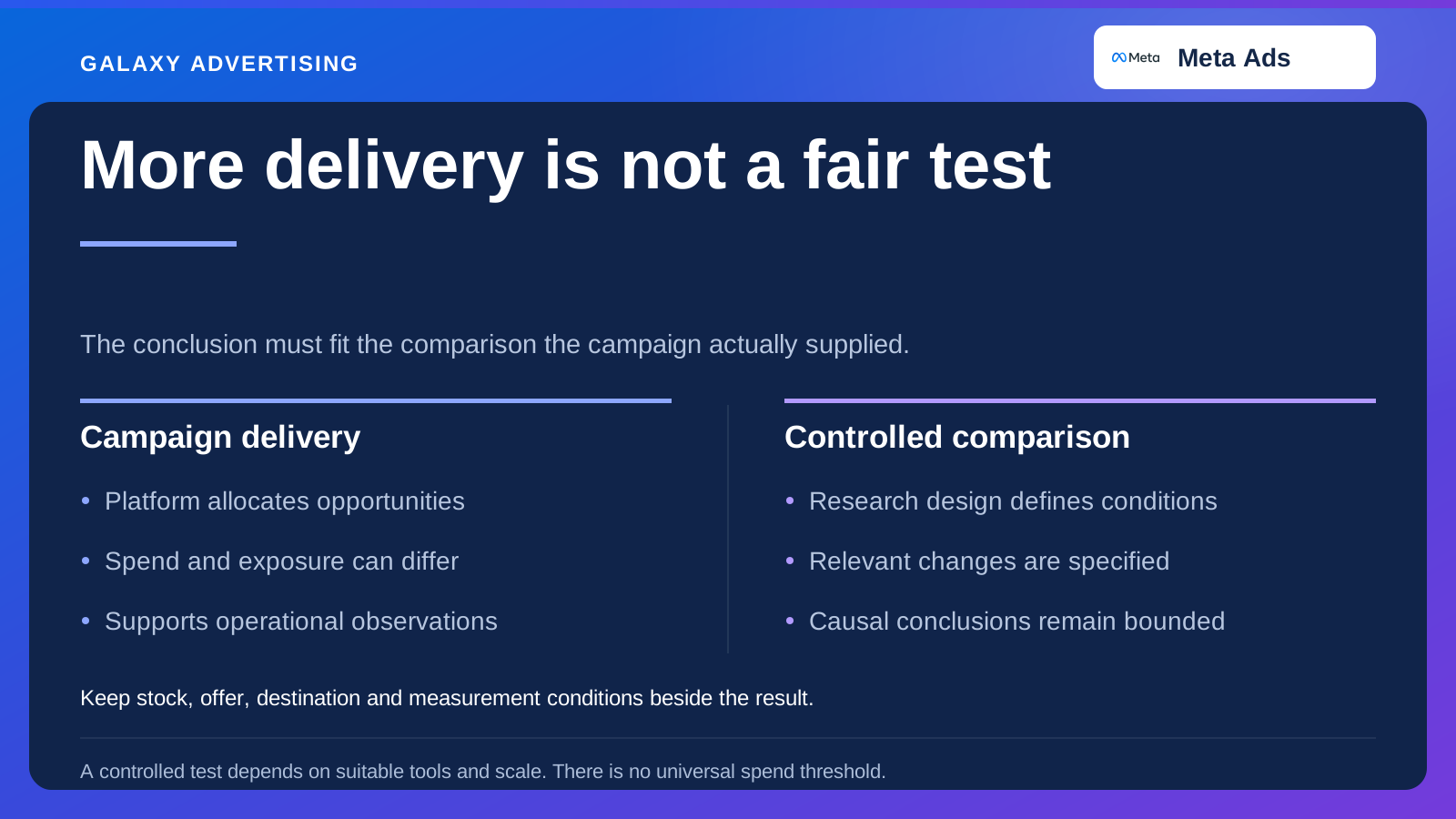
Keep that clarity check separate from performance claims. Even a coherent sequence needs commercial evaluation under its actual delivery and offer conditions. Clarity makes the hypothesis understandable. It doesn't guarantee the campaign result.
After use, connect available enquiries and product exploration with the original buying question. Did people recognise the package? Were configuration questions more informed? Respect the limits of those observations, then use them to refine a particular frame or destination.
Let the next brief inherit your evidence and reasoning, rather than just an arrangement that looked successful. A purposeful sequence keeps every frame attached to a supportable offer. That's a more useful production brief than finding somewhere to put the newest photographs.