 Meta Ads
Does the price in your Meta advert buy what the video actually shows? If the page opens on something different, your customer has to untangle the offer before they can even consider it.
Picture a four seat outdoor set, complete with cushions and a side table. The caption quotes an attractive starting price. Click through and the page opens on a two seat arrangement without those accessories. Nothing is technically broken. The promise still doesn't hold together.
A promise audit checks what a reasonable customer would understand at each step. It's particularly useful when your agency makes the advert, merchandising controls the range and a developer maintains the page. Each part needs to describe one understandable offer.
Save the version you're actually checking
Keep the creative, caption, destination and relevant offer details together. “Please check the garden advert” doesn't identify enough when several edits and product variants are in circulation.
Give the version a stable reference and name its approver. Record the configuration shown and the price described. Later, you can discuss a specific mismatch without relying on somebody remembering what happened to be live.
Repeat the audit when the promise changes materially. A different opening frame, price or destination can change the customer's understanding even if most of the asset looks familiar. Approval belongs to the version reviewed. It doesn't automatically verify the revised offer.
Ask what the picture promises
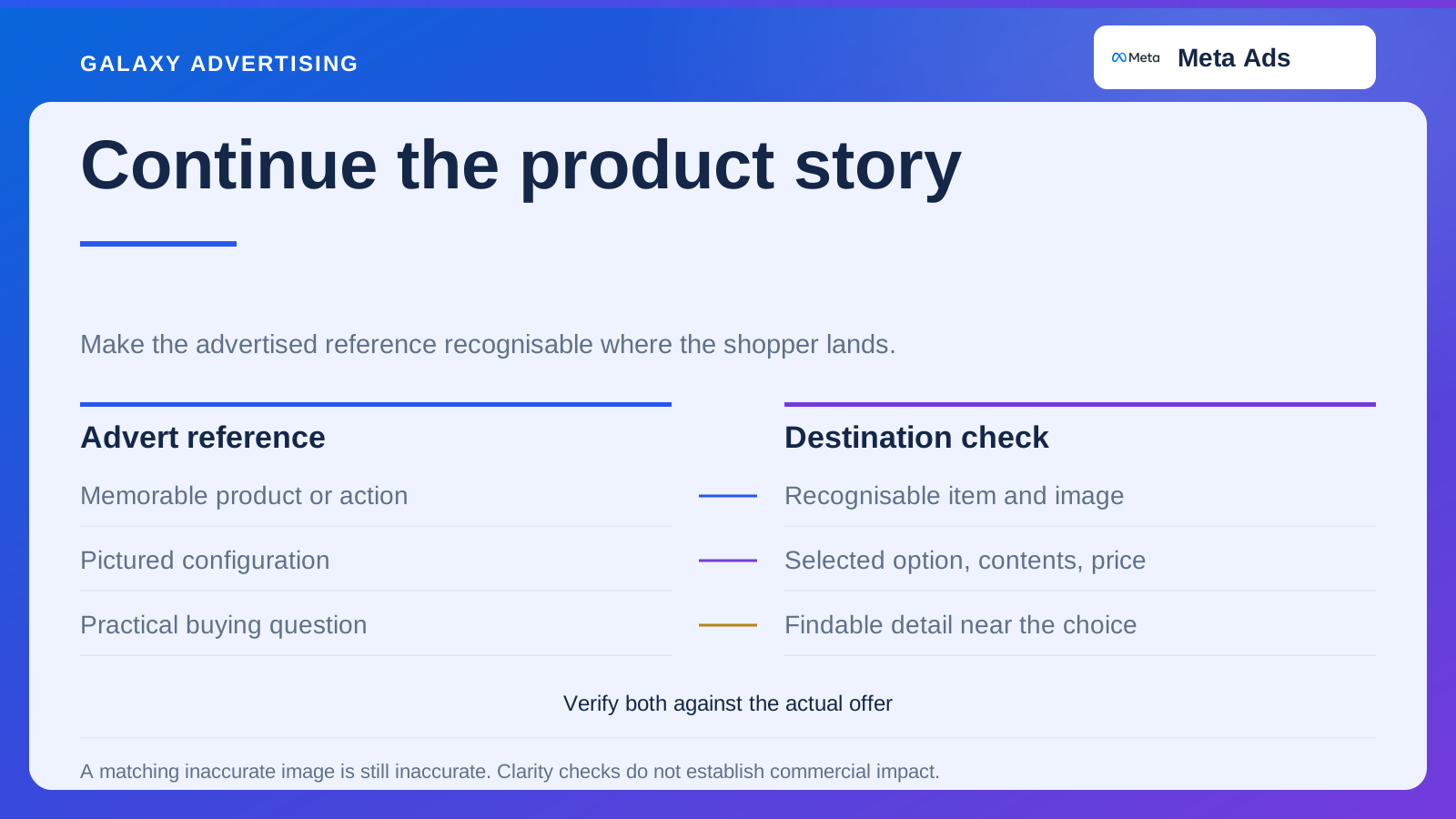
List the objects and features viewers are likely to associate with the purchase. Meaning doesn't come only from the caption. Accessories, dimensions implied by the scene and the arrangement of components shape expectations too.
For the hypothetical outdoor set, are the cushions and side table included, optional or simply styling props? Make that distinction clear enough in the asset and destination. A small disclaimer can't be relied on to repair a visual whose main impression remains inaccurate.
Check generated or heavily edited images against real product references. A convincing scene can change component numbers, frame proportions or material appearance accidentally. Somebody who knows the actual product needs to review it. Image quality alone isn't the question you're trying to settle.
Match the price to the configuration
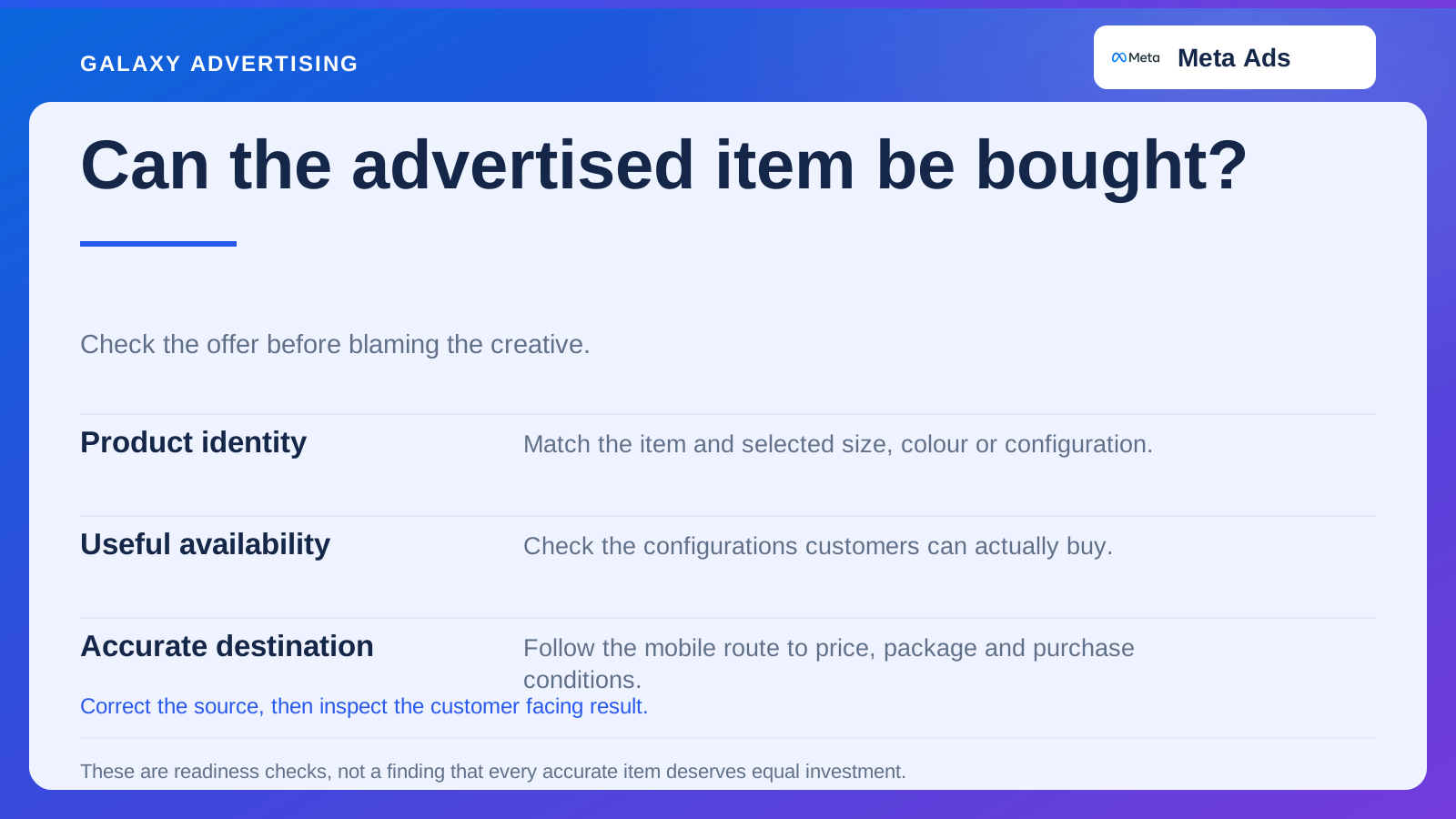
Find out whether the displayed price buys the demonstrated item, a smaller option or a promotional package with conditions. Follow the destination and verify that customers can reach that exact offer.
Discuss tax, delivery and optional services on a consistent basis internally. You're trying to understand what the customer would pay for the offer. Convenient definitions that make two summaries appear to agree won't resolve a real difference.
With a starting price, ask how quickly visitors can identify what it buys. A plausible introductory figure can still confuse when the dominant image shows a substantially different package. Resolve the presentation before debating whether the traffic is sufficiently qualified. The customer first needs a coherent proposition to qualify themselves against.
Get delivery promises checked by operations
Ask operations to verify the service your advert suggests. Delivery to the property's entrance is a different experience from “delivered to your room”. Don't borrow a stronger promise from another product family because it sounds better in the script.
Check actual availability and relevant geographic restrictions. A website banner might describe the usual service while a particular configuration follows a different arrangement. Give whoever approves the creative a clear route to those exceptions.
Avoid a universal delivery window for a range with different lead times. Where timing varies, explain how customers can get the relevant information. An accurate conditional statement is more useful than an attractive promise the business can't consistently support.
Walk through without filling in the gaps yourself
Open the destination on a phone. Follow the steps needed to identify the offer and check the selected variant, meaning the chosen size, colour or configuration. Review its image, price, stock information and essential purchase conditions.
Notice where your knowledge of the catalogue is doing work the page should do. Ask somebody unfamiliar with the brief to describe what's included. Their interpretation won't establish how every customer reads the page. It can still reveal an ambiguity production has stopped noticing.
Change colour or size as an ordinary shopper might. A correct opening state doesn't prove the image, price and availability remain coherent after selection. The audit needs to follow those choices, rather than end with a successful page load.
Send each problem to somebody who can solve it
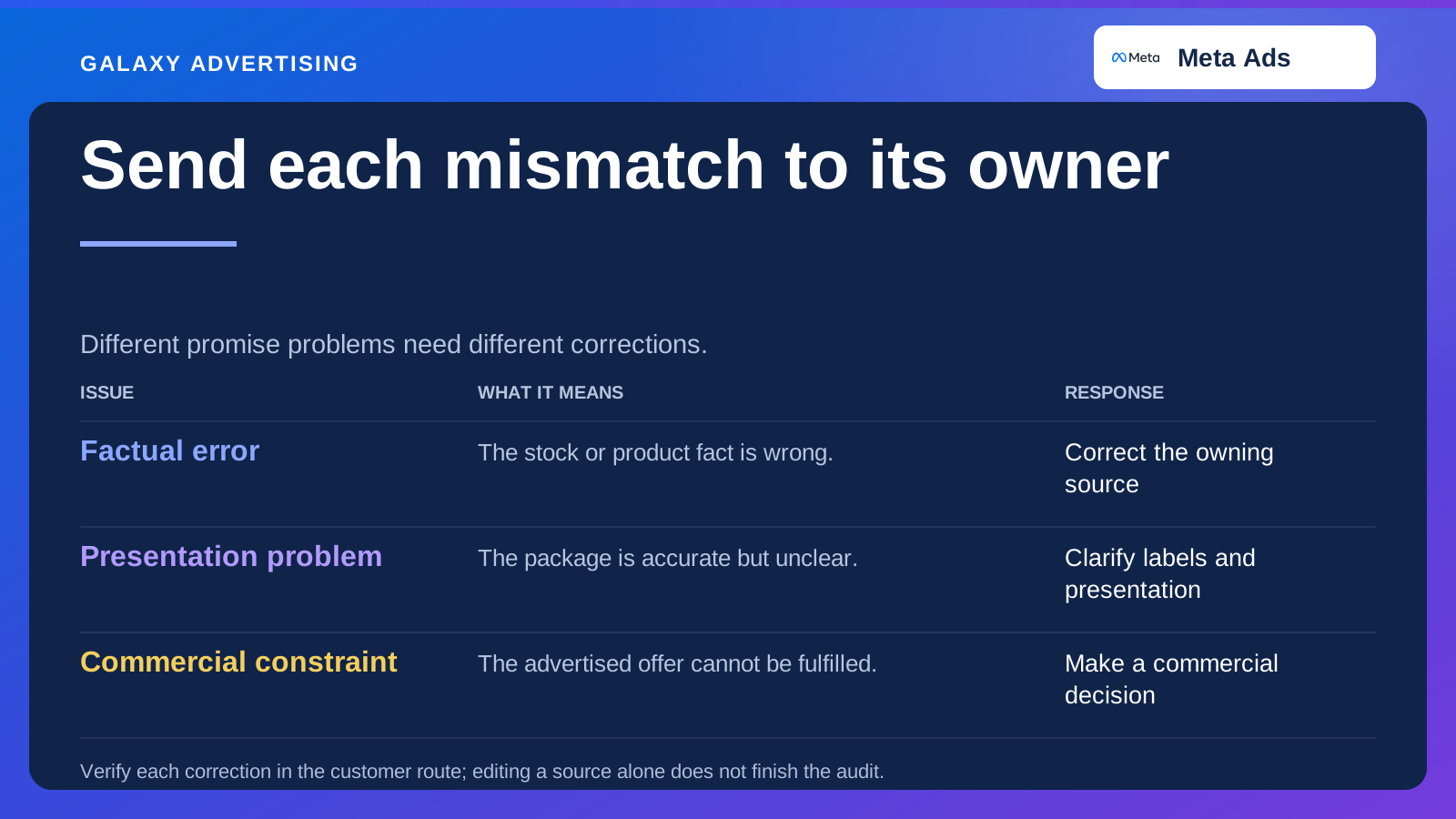
Separate factual errors, presentation problems and commercial constraints. Wrong stock information may need correcting at its source. An unclear package might need better labels. An offer that can't be fulfilled at the advertised price requires a commercial decision.
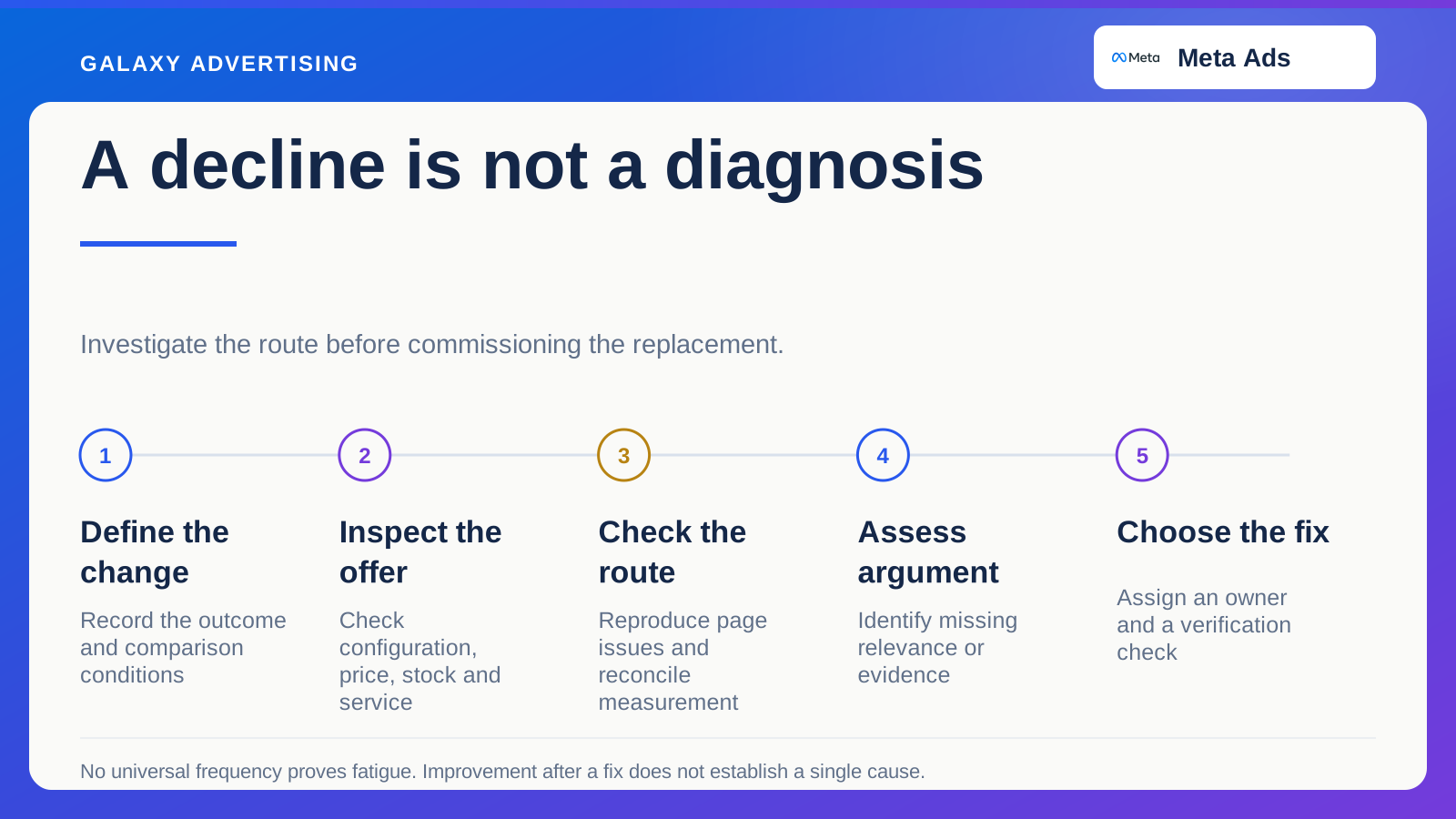
For every issue, retain the creative reference, item reference, observed mismatch and person responsible. Give the reviewer enough evidence to reproduce it without reading a lengthy forwarded conversation.
Then verify the correction in the customer's route. A source document edit doesn't prove the new information reached the page or live creative. A brief confirmation naming the relevant version tells you more than a general assurance that somebody has handled it.
Make the check part of releasing the work
Place the audit before spend approval and repeat it after material changes. Keep the sampling proportionate. A small range needs a different approach from a large catalogue, but both need clear ownership of the promise being made.
Retain common exceptions so the next brief starts better informed. If optional accessories repeatedly cause confusion, improve production references and product labelling. Rediscovering the same ambiguity at every launch isn't much of a process.
A promise audit won't guarantee commercial performance. It removes avoidable uncertainty about what you're selling. That leaves the team able to investigate demand and persuasion on a firmer basis, instead of unknowingly asking customers to choose between contradictory versions of the offer.