 Meta Ads
At the creative review, one advert has most of the spend and more purchases. The other barely appeared. Somebody calls the first concept the winner and asks for ten similar versions, but the creative team may still be waiting for an answer to the question it meant to test.
The platform allocated delivery. That isn't the same thing as giving both ideas a fair comparison.
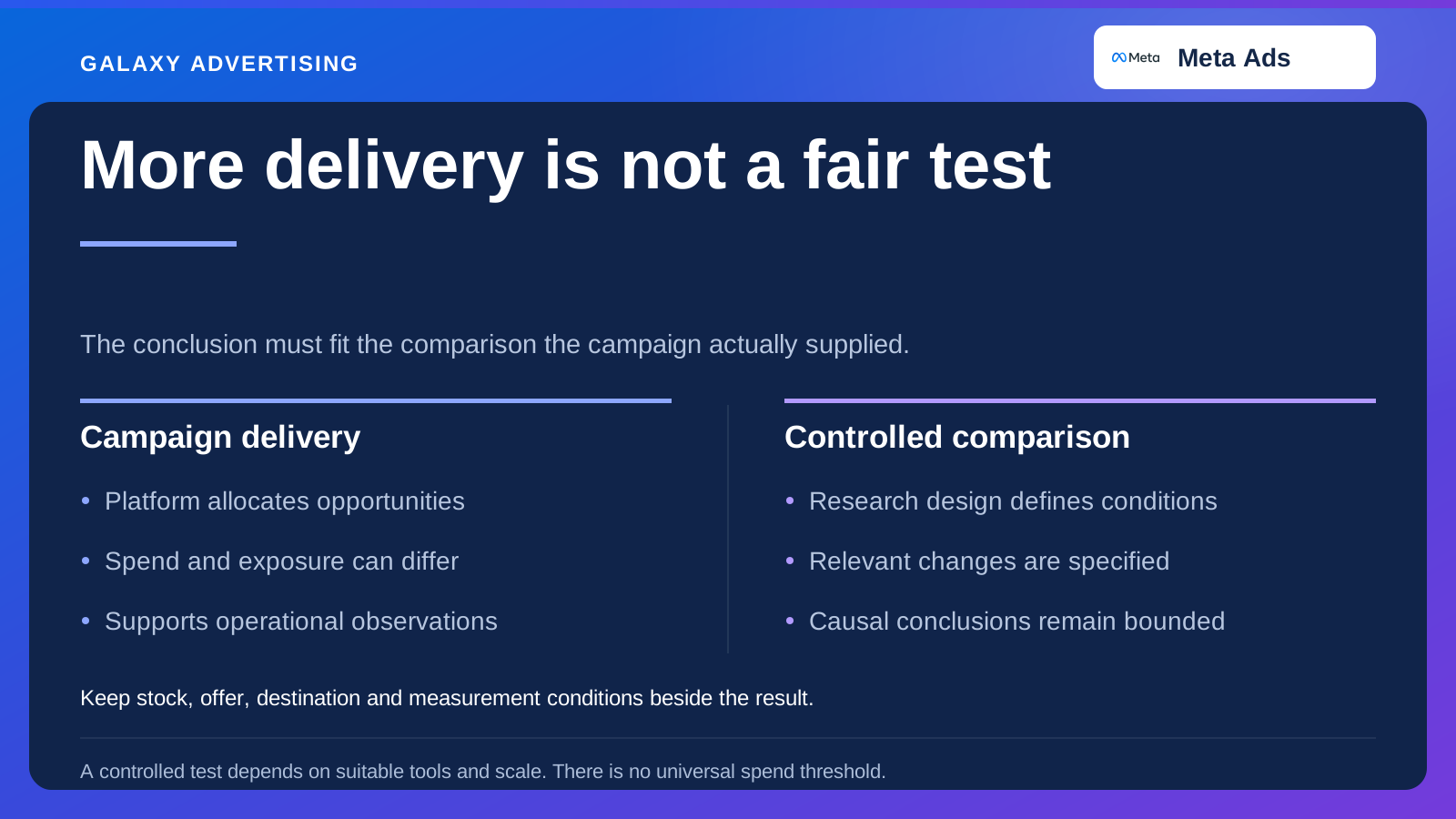
Campaign delivery is an operational process; a fair experiment needs a research design. They can inform each other, but your next production investment should rest on what this particular comparison can actually support.
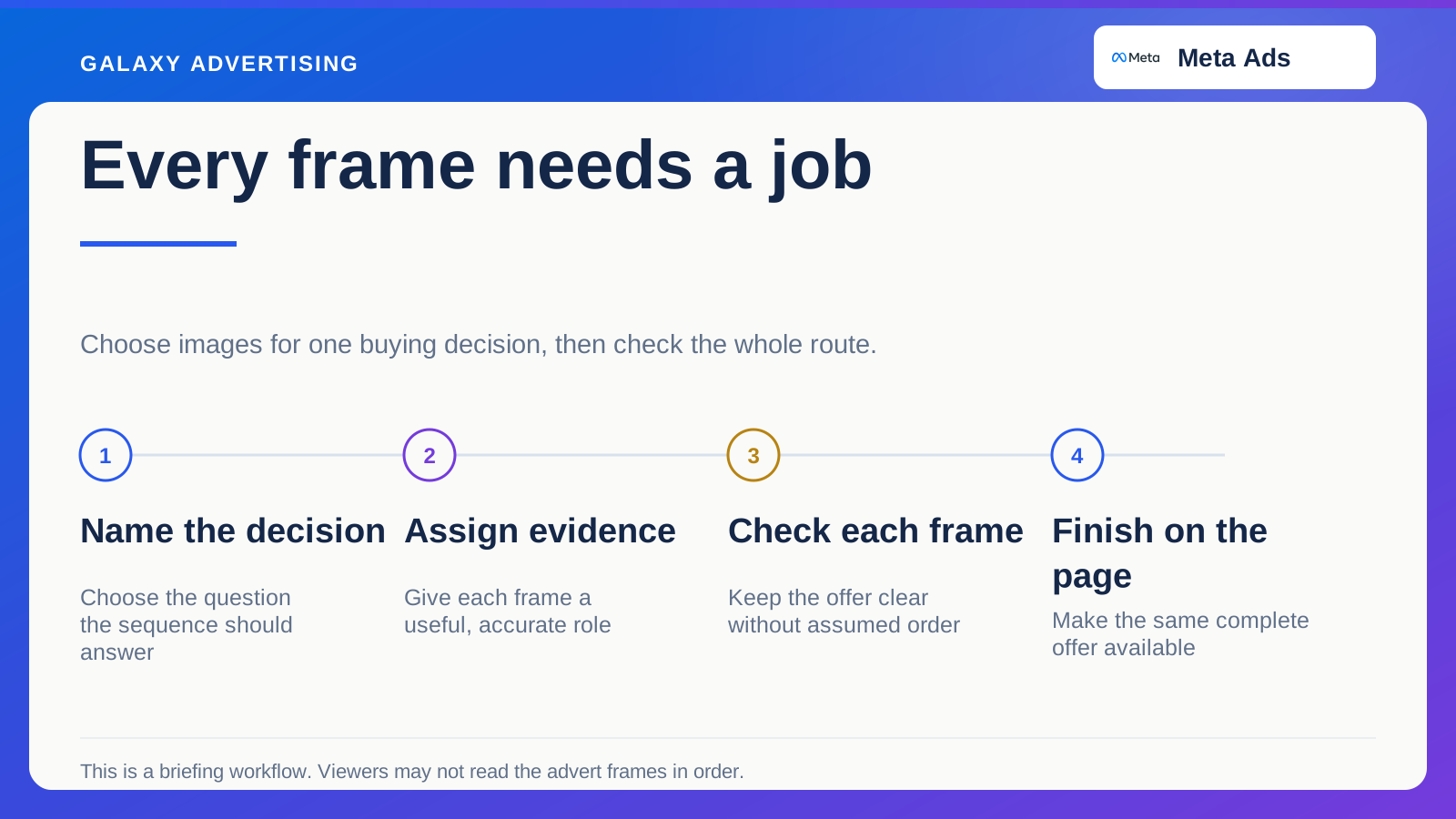
What buying question are you testing?
Describe the difference in the customer argument. A hypothetical chair retailer could compare a clear demonstration of the adjustment mechanism with an explanation of the chair's compact footprint. Each gives somebody a different reason to consider the product.
If the assets also use different products, prices and destinations, you're comparing complete offers rather than isolating one creative variable. That can still be useful. Just make sure the conclusion says what you really compared.
Write down the observation you expect and the decision it would support. Finding the best creative is too broad a task. Asking whether one particular argument deserves more investment, under conditions you can afford to investigate, gives the review something usable to answer.
A new file isn't always a new idea
Change the caption colour or opening crop and you've made another file. You haven't necessarily introduced another reason to buy. Those execution variants can help improve clarity, but unique filenames don't make them independent strategic ideas.
Map each asset to its underlying proposition. Record the evidence it shows and the destination it uses. Otherwise, a large folder can look like a large body of learning when it contains very little conceptual variety.
Where several versions belong to one concept, review the files individually and the concept's overall role. Don't choose your favourite edit and then invent a strategic explanation afterwards. The reason for comparing them should be visible before any results arrive.
Keep the delivery conditions beside the result
Retain spend, exposure and relevant outcomes for each asset. Alongside those, note material differences in timing, offer and availability. When the opportunities to appear differ, a simple purchase total has limits.
An advert with more purchases may have had far more chances to produce them. An advert with no purchases from a tiny sample hasn't necessarily been shown to be commercially useless. Neither result can carry a bigger conclusion than the evidence supports.
Ask the account team to explain the platform's current delivery configuration using verified documentation and your actual account. Being eligible to appear in the same campaign doesn't mean every asset received a controlled comparison. The report needs that context before the team commits to the next production.
Choose a comparison you can defend
If the available experiment tools and your business's scale support a suitable controlled test, discuss that option with the specialist. Confirm what stays consistent, what changes and what uncertainty will remain.
If a controlled test isn't practical, use campaign results as operational evidence. They can guide a bounded next step. The report should still state that delivery conditions limit what you can conclude about cause and effect.
Avoid a universal minimum spend or fixed purchase threshold borrowed from another retailer. Useful evidence depends on expected variation, the outcome you're assessing and the cost of a wrong decision. The specialist should justify review conditions for your particular test, rather than importing somebody else's rule.
Don't let other changes muddy the comparison
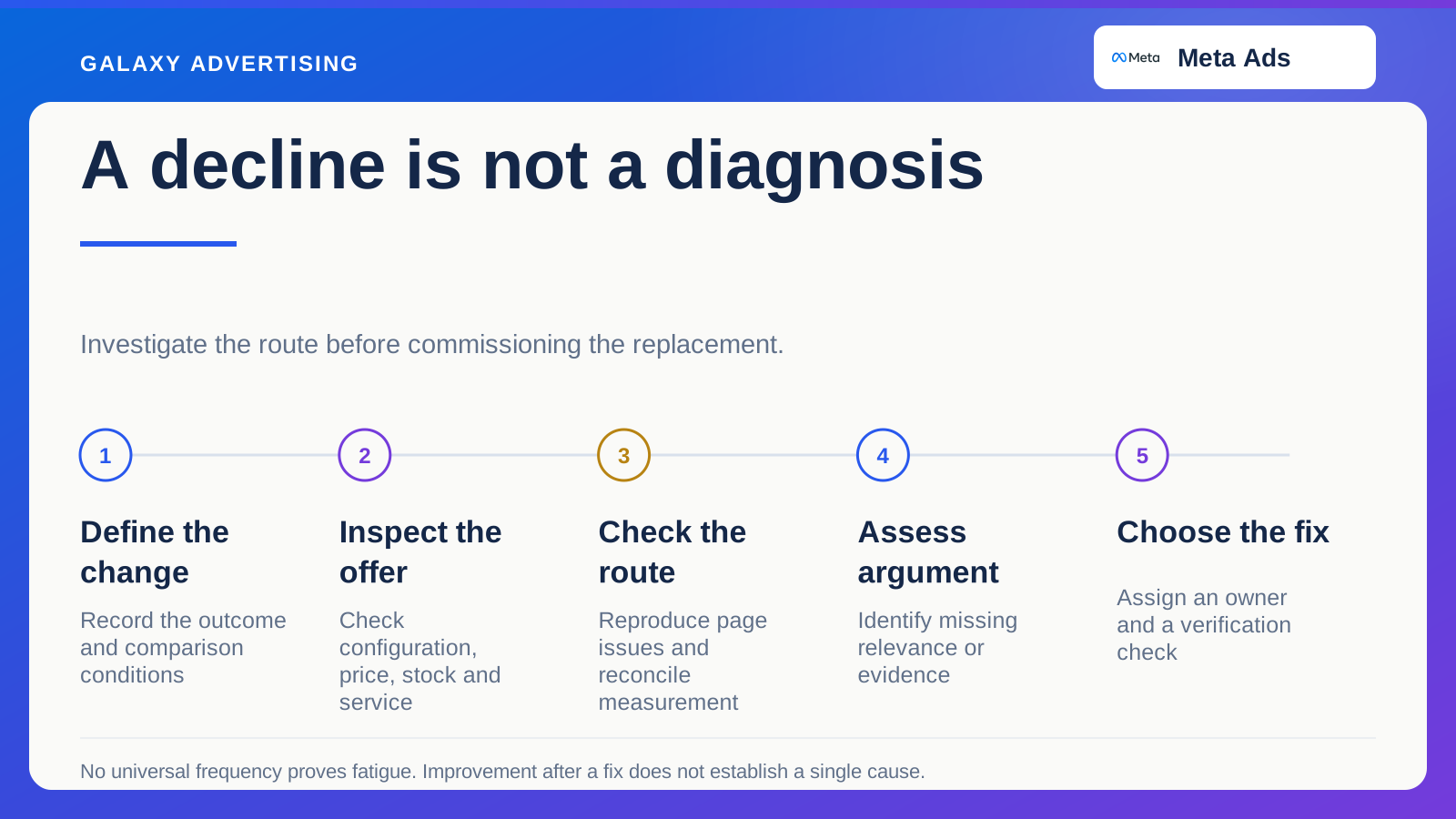
Check stock, destination accuracy and measurement before starting. If one concept promotes a depleted configuration while another offers an available item, the difference in results cannot sensibly be called a pure creative effect.
Record unavoidable changes as they happen. A promotion, revised delivery promise or corrected product page can materially affect the outcome. You may need to narrow the conclusion or repeat the relevant comparison in clearer conditions.
Repeatedly editing the central proposition also changes what you're evaluating. Iteration can be useful, but the final report cannot describe one stable test if the argument kept changing. Keep versions identifiable and record why material changes were made.
Attention and orders answer different questions
Attention measures can help you diagnose whether an asset communicates its premise. They don't automatically tell you whether visitors are suitable buyers or orders leave worthwhile contribution, meaning money remaining after the relevant costs in the calculation.
A clear demonstration might attract plenty of curiosity without answering a commercially relevant question. An asset with less widespread appeal might help a smaller, suitable audience understand an important product difference. Neither observation makes the commercial question disappear.
Use supporting evidence to explain the route, rather than manufacture a favourable verdict. If purchases are inconclusive, strong attention might justify a specific further question. It shouldn't quietly become the new objective because the original outcome disappointed.
Before the review, ask the creative and account teams to write their interpretations separately. If one describes storage messaging and the other describes complete product offers, resolve that mismatch before agreeing a verdict. You may uncover a briefing failure that more spending won't repair. Keep the agreed interpretation with the asset references, so the next decision doesn't depend on whoever sounds most confident in the meeting.
Let the uncertainty shape the next commitment
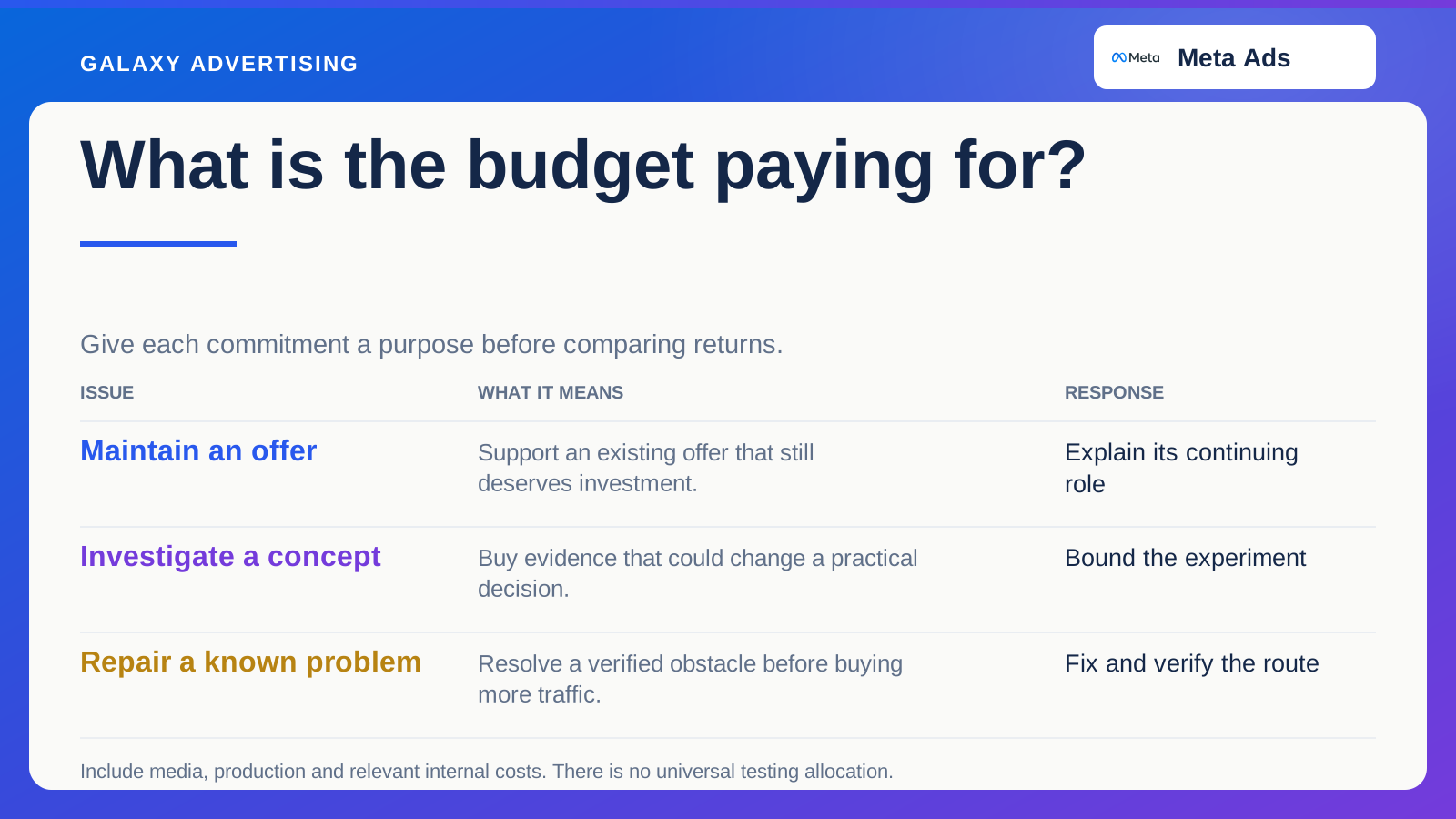
Classify what you know. One concept may have shown operational usefulness. Another may need clearer evidence. A third may be unsuitable because its offer or destination cannot support the intended purchase.
Choose the production commitment accordingly. A small refinement to a promising argument is a different decision from commissioning a large asset library on an uncertain comparison. Let the strength and practical value of the evidence shape what you spend next.
You don't need a confident winner after every campaign. You need an honest account of the question, the comparison and the conclusion you can defend. That's what gives the next creative brief a reason to exist beyond following the file at the top of the table.