 Meta Ads
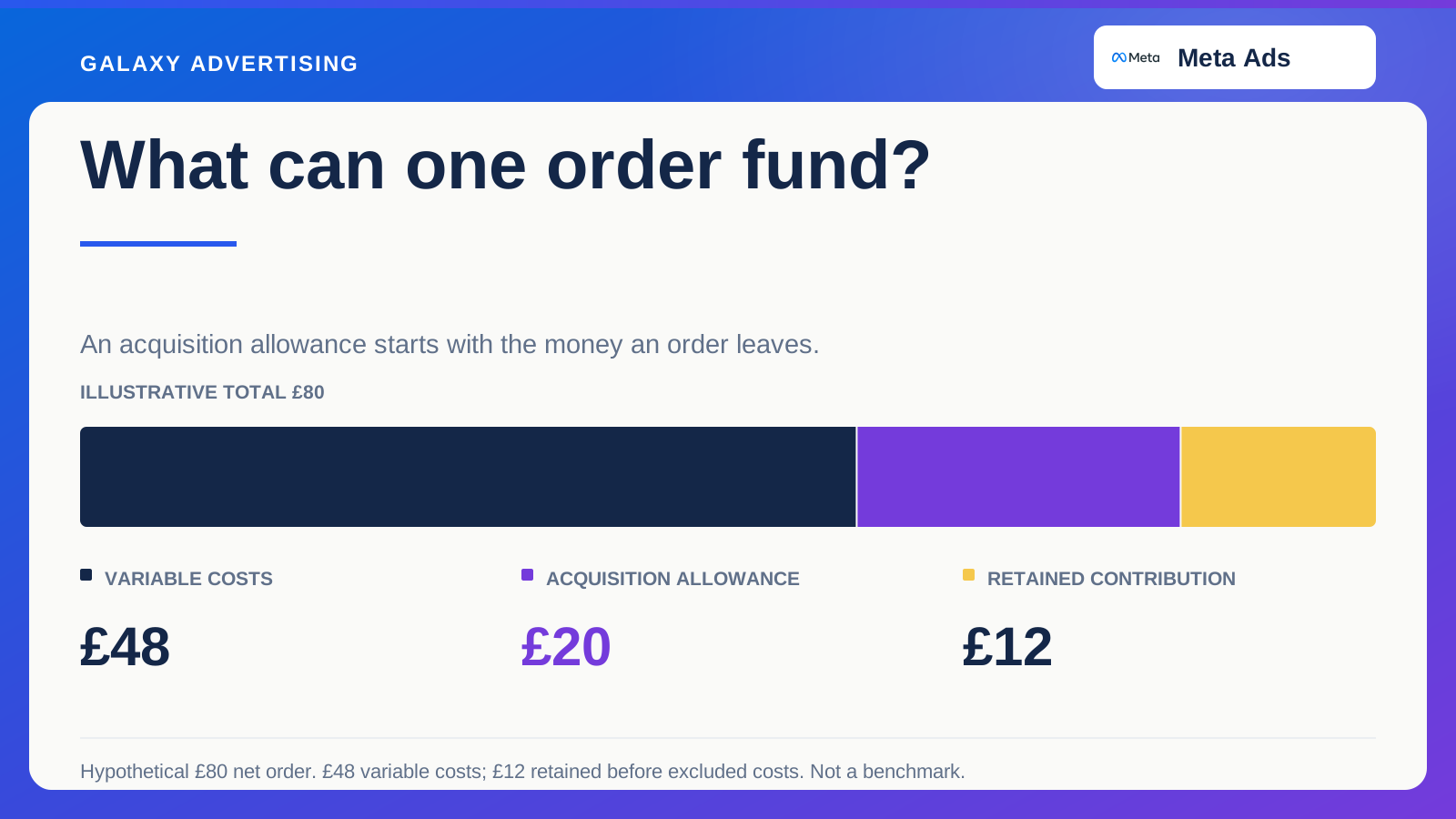
A £10 discount can turn £40 left before advertising into £30, without changing the costs of fulfilling the order. That's the arithmetic in the hypothetical example below. It's a useful pause before reaching for a percentage badge to make your Meta offer stronger.
Your customer may be unsure about the complete package, an unexpected delivery cost or whether an essential accessory is included. A lower headline price can leave all those questions unanswered while reducing what you can afford to spend acquiring the order.
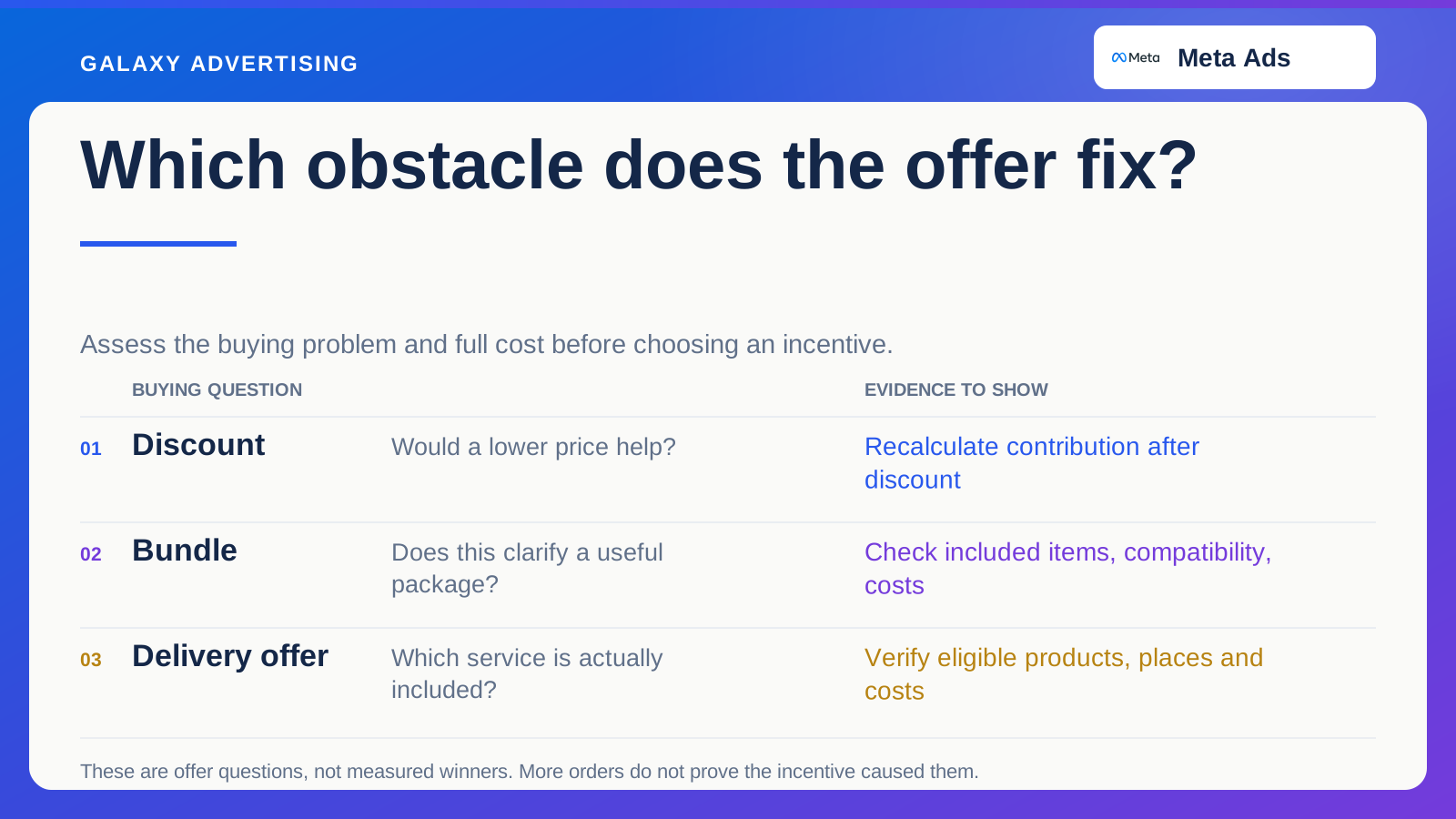
Start with the change the promotion should make. Then compare a discount, bundle and delivery benefit on a consistent commercial basis. They can each help, but their jobs and costs differ.
What obstacle are you trying to remove?
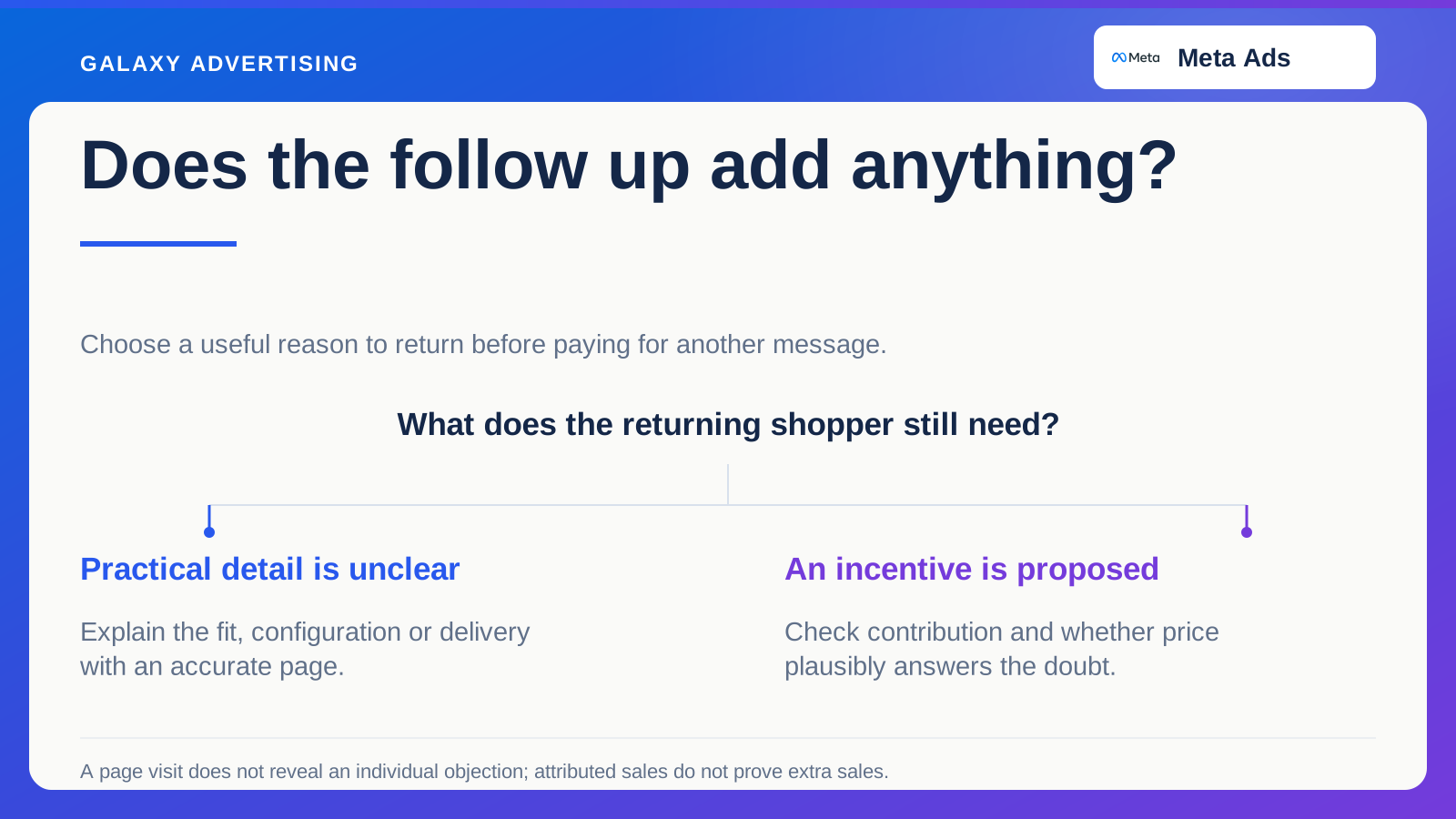
Use real customer questions and the purchase route to frame the problem. Are suitable buyers finding it difficult to compare total cost, select the right components or justify a configuration? An abandoned visit doesn't establish that the price is too high.
Treat the promotion as a hypothesis about what would make the offer more compelling. State it plainly. A clearly defined accessory package might make a complicated configuration easier to assess. That's a different proposition from assuming a cheaper price will bring more orders.
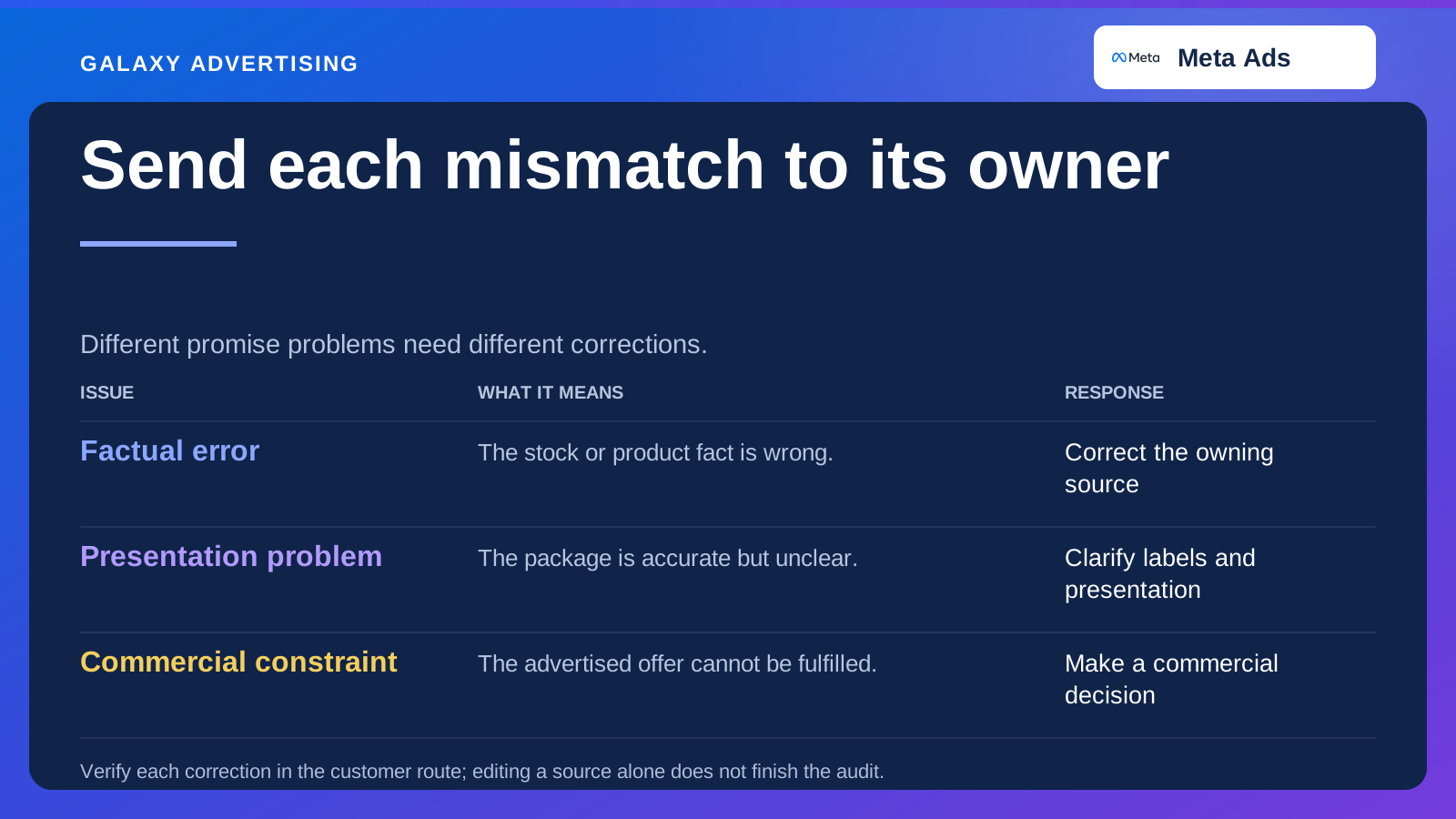
Check whether better information would resolve the obstacle first. If the accessory is already included but badly labelled, presentation may need correcting before you add an incentive. Paying for a discount to solve a communication problem can be expensive. Understand the problem before deciding what to give away.
Work through what a discount leaves you
Use your agreed revenue and relevant cost definitions. Suppose, hypothetically, a £100 net order has £60 of variable costs. It leaves £40 before advertising and any excluded costs. Reduce the price by £10 with the same costs, and that amount falls to £30.
That shows why a modest looking price change can materially affect the acquisition allowance. These aren't recommended margins or discounts. Your business needs its own cost basis and a decision about how much it must retain.
Judge more than revenue or attributed return. A larger number of discounted orders can leave less useful contribution, the money remaining after the included costs, than fewer orders at the original price. When interpreting the result, include material changes in order mix, refunds and fulfilment. Otherwise, the extra sales can distract from what those sales are worth.
Make the bundle understandable as a package
Identify every included item, its availability and its actual cost to your business. A bundle should help the customer understand a useful package. It shouldn't hide an unsuitable or unwanted component behind a more appealing overall presentation.
Check compatibility and accuracy. An attractive arrangement can mislead when one component is optional or the included version differs from the picture. Give the destination enough detail for the shopper to inspect the package easily.
Compare the bundle with the practical task the customer needs to complete. A hypothetical desk package could help if it contains the documented components needed for a particular setup. Adding unrelated products purely to increase perceived value can make the decision less clear. More items don't automatically make a more useful offer.
A delivery benefit is a service commitment
Establish exactly what's included and what it costs to provide. A delivery subsidy, a different service level and a genuinely included installation service are distinct offers. Don't put them under a vague label that leaves the customer guessing.
Ask operations to verify eligible products, locations and conditions. The advert mustn't imply universal availability when the offer depends on circumstances the shopper cannot readily identify. Those boundaries belong in an offer they can understand.
Calculate the relevant cost against the resulting order economics. A benefit that looks inexpensive on average might be unattractive for a particular product or destination. Identify meaningful exceptions in the commercial review. One headline cannot safely stand in for every part of the range.
Follow the same offer through to checkout
Keep the promotion's exact configuration, eligibility and applicable conditions with the approved asset. Before launch, check the destination and purchase route. The advertised benefit should be recognisable where somebody evaluates and selects the product.
If a code or particular selection is required, verify that the instructions are clear and work. A customer who cannot obtain the represented offer has encountered an operational problem. Calling that low quality traffic won't correct it.
Assign responsibility for retiring the creative and updating the destination when the promotion changes. A correct launch doesn't finish the job. An expired benefit left circulating can keep making a contradictory promise after the internal campaign is supposedly over.
Decide what would make the offer worth repeating
Choose the commercial question before looking at the result. Did the promotion produce suitable orders at an acceptable contribution? Did the bundle reduce confusion over components? Did the delivery benefit change the relevant purchase route?
The available observations may not give you a perfect causal answer. Promotions can coincide with stock changes, seasonal demand or different media investment. Keep those limits visible. You cannot assume every additional order was created by the incentive.
Where a suitable controlled comparison is available and proportionate, discuss it with the specialist. Otherwise, make a bounded decision from the evidence you have. Imperfect measurement calls for careful wording and spending, rather than invented certainty.
Keep the useful lesson after the offer ends
Record the obstacle addressed, full relevant costs and conditions in which the result was observed. That helps you assess the next promotion without assuming the same incentive will remain appropriate indefinitely.
A bundle that clarified a recurring package question could point to a permanent merchandising improvement. A discount that shifted orders towards low contribution items may need a narrower role. A delivery benefit might expose service information that should have been clear all along.
The strongest offer changes a relevant buying decision at a cost you can support. The badge in the advert is only the visible part. What matters is the accurate proposition, usable purchase route and commercial explanation underneath it.