Two proposals for the same product sit in front of you. One offers plenty of short clips for a low headline price; the other offers fewer outputs, reference review and a planned demonstration.
Counting files makes the first look efficient. It does not tell you what your business can use or learn.
Set the production investment around a defined commercial task. Which question will it answer, what evidence must the assets contain, and which further costs depend on the finding? Those decisions give you a stronger basis for comparing quotes than a universal price per video.
Define the decision before asking for a quote
Choose a specific purpose. Introducing an unfamiliar function, clarifying a configuration and comparing distinct buying arguments require different material and review effort.
Not every video must immediately justify itself through a directly attributed order. Production can create reusable factual coverage or resolve a known information gap. It still needs a commercial explanation and an appropriate check of whether that purpose was fulfilled.
Write the decision before requesting quotations. A producer can estimate a defined demonstration more usefully than a general request for premium content. Identify what must be observable, which references exist and what would make the output unusable. That gives both sides something concrete to price and review.
Agree what counts as a usable output
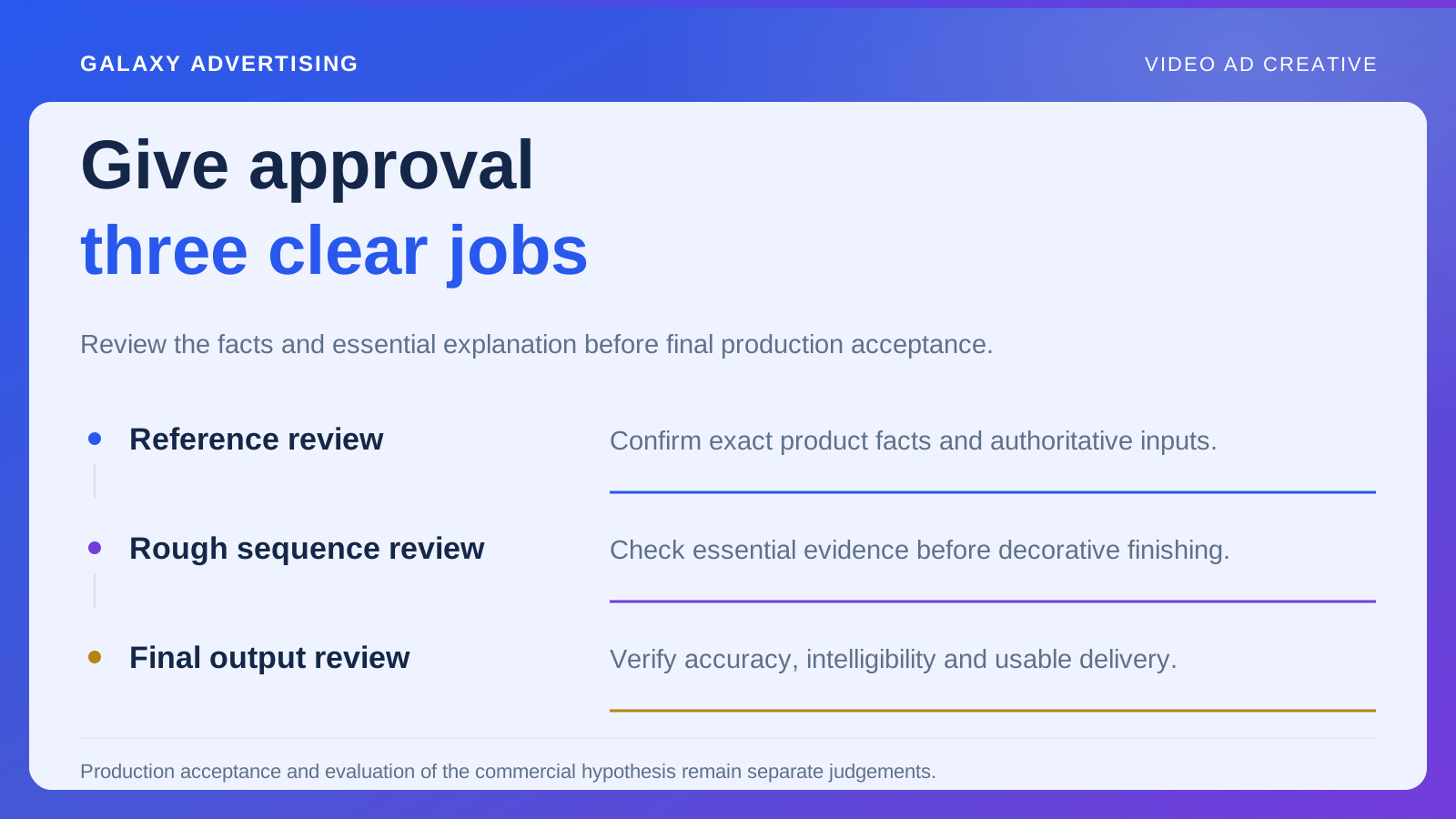
Set the essential evidence and factual requirements for acceptance. A changing product shape or unsupported accessory does not become a usable variation because the export has the right length and dimensions.
Separate concepts from adaptations. Another crop or closing frame can be valuable for a particular placement. It does not give you the same learning as a different buying argument. Label those outputs accurately in the proposal.
Specify intended destinations and formats. A technically delivered asset can still omit the material needed by the real campaign. Judge acceptance against what the business intends to use, rather than the producer's export list. You are purchasing useful work, with delivery specifications supporting that purpose.
Count the work that surrounds filming
The budget might need product preparation, approved references, transport, locations, contributors, editing and factual review. Establish what is included and what requires internal time or another supplier.
Discuss revisions realistically. A change caused by an inaccurate supplied brief differs from a correction where the output contradicts an approved reference. Clear responsibilities make the likely costs easier to understand before disagreements arise.
Internal review has a cost even if it never appears on an invoice. People repeatedly reconstructing product facts or comparing unlabelled versions are doing operating work. Better references and approval records can make production more efficient while preserving editorial care. Include that effort when deciding what the proposal really costs the business.
Start with a complete but bounded investment
Choose a scope that answers a useful question without committing the whole allowance. A hypothetical retailer could commission one complete demonstration and its necessary adaptations before funding a larger family of concepts.
Keep the first scope coherent. Removing factual review or essential evidence to reduce the price can leave you with material unable to support the offer. An incomplete cheap test may leave the original uncertainty intact and less money available to resolve it.
Agree what the first investment can establish. Perhaps it checks accurate representation in the setting and whether viewers understand the action. Those findings can guide further production. They do not automatically prove a repeatable advertising return, so do not give the first scope that stronger job after the fact.
Review production and campaign performance separately
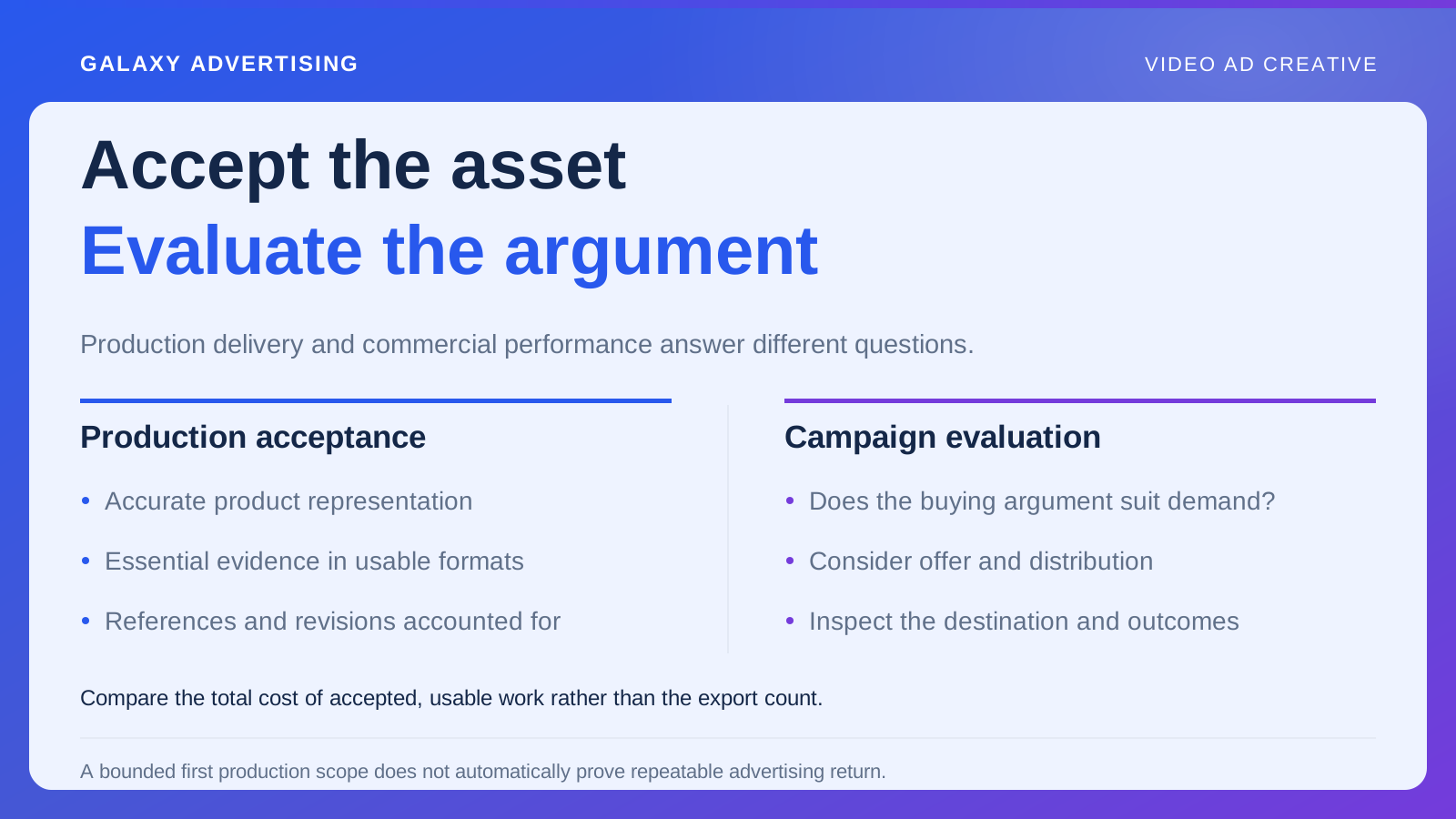
An accepted asset should fulfil its brief accurately and intelligibly. Whether its buying argument creates suitable demand is another question, affected by the offer, distribution and destination.
Keep both assessments visible. A producer should not be blamed for a commercial hypothesis failing after delivering the agreed evidence. An attractive campaign result equally cannot excuse a material product error.
Ask the account team which evidence will guide the next production decision. If they propose reviewing only views, clarify how attention connects to the commercial task. You might need product exploration, enquiry quality or order contribution, meaning money remaining after the costs included in its calculation, alongside available platform observations. Match the evidence to the decision.
Consider what else the next budget could fix
The alternatives might be another concept, a reshoot of missing evidence, a clearer destination or no further production. Ask which addresses the largest remaining uncertainty.
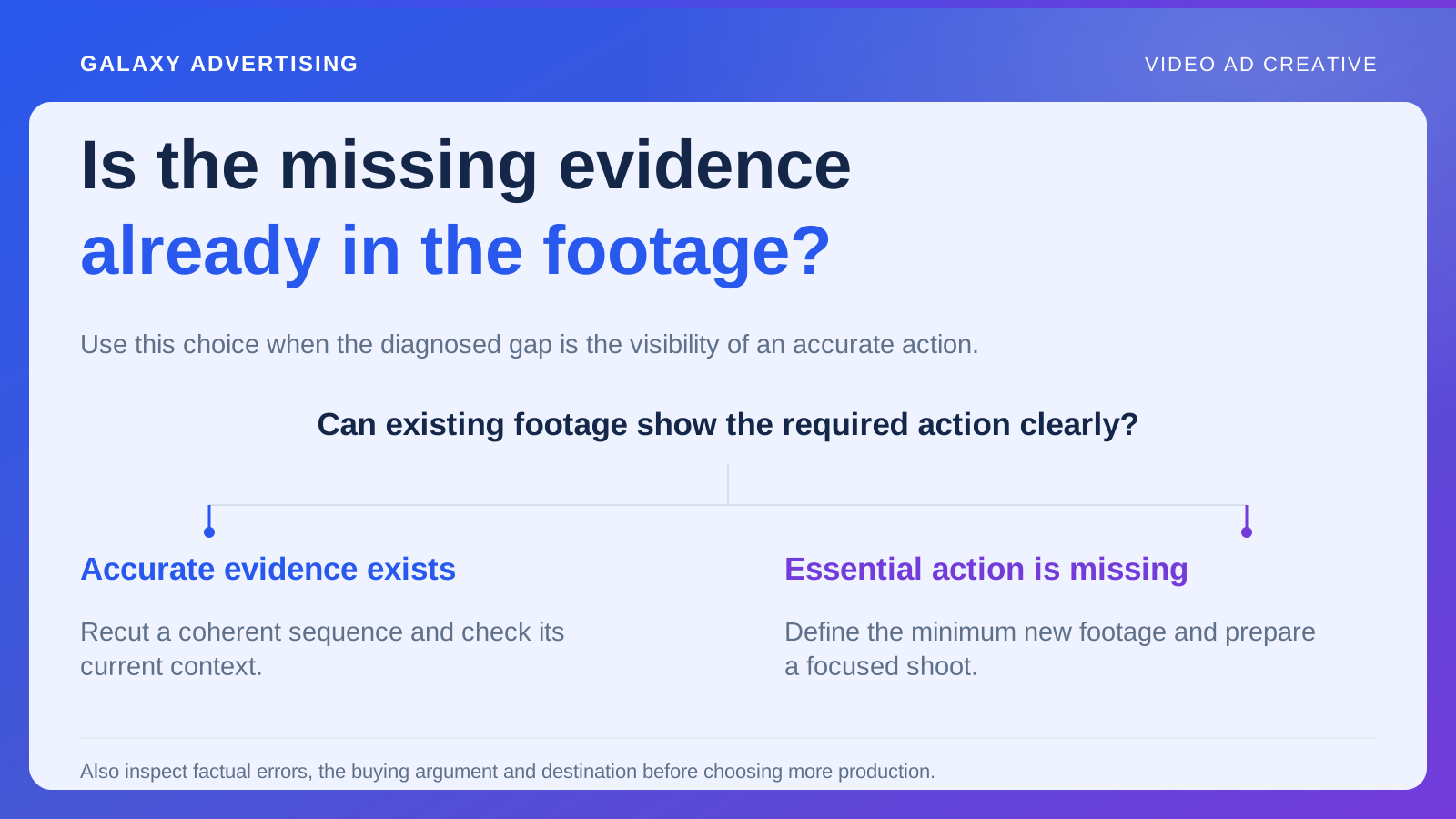
A new batch is not automatically sensible when the current video leads to an unclear configuration page. Recutting accurate footage could be more useful than another room scene if the missing piece is a concise explanation.
Use explicit assumptions. A hypothetical estimate can support discussion when its basis is visible, but a precise forecast built on weak evidence should not become a guaranteed sales requirement. Keep the choice grounded in what remains unresolved and which available investment could reasonably address it.
Ask what happens if the cheap batch is unusable
Consider a hypothetical batch whose low price depends on approving many outputs together. Different factual corrections across the files could cost more in review and revision than the apparent saving.
Ask how partial acceptance works and whether the supplier's process permits a useful early check. Economical production can still make sense. Compare the cost of accepted, usable work while preserving necessary evidence and review, rather than dividing the invoice by the number of exports. That gives procurement a figure connected to the business's actual use.
Keep the investment record simple and useful
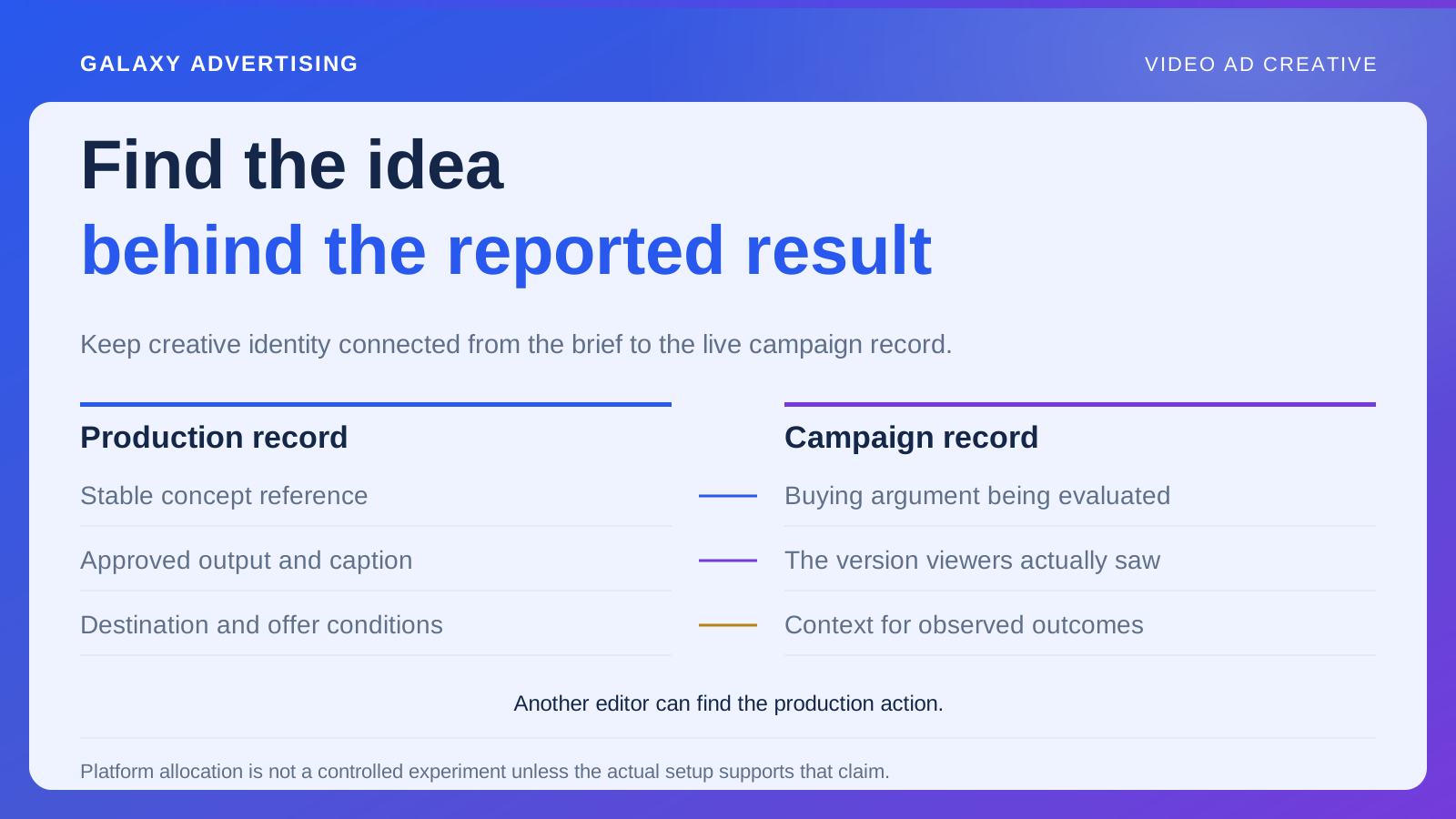
Record purpose, accepted assets, total relevant cost and findings guiding continuation. Note reusable material and elements tied to a particular product or offer.
Review the record before commissioning again. References and footage can save unnecessary work, while changed products or claims may need fresh checking. An asset collection's value rests on continuing accuracy as well as its size.
A sound target asks what you are paying to make understandable and what the next decision requires. It can justify economical adaptations and demanding demonstrations alike. The useful measure is evidence your business can use at a cost it can explain.