A fair admission: an inspiration folder can feel like a finished brief when the important decisions are still missing. You send a mood board, product photographs and a request for polished videos, then object to the configuration, material appearance and implied service in the first edit.
The supplier thinks you should have explained. You think they should have known. Neither belief gives the editor a reliable answer.
Inspiration sets a visual direction. A production handover must also establish the actual offer, the evidence the video needs and who can settle unresolved decisions. Connect those things to the customer's question and the supplier has a task they can work with.
Tell the supplier which decision needs help
State the product or family, describe the intended customer in practical terms and identify the question the video should answer. “Make it feel premium” or “drive engagement” leaves much of the commercial and editorial task undefined.
Explain the intended use and destination. A product page demonstration may need different evidence and outputs from a short campaign introduction. The supplier needs to understand that role before estimating the work, rather than pricing an assumed version of it.
Leave room for creative judgement. Establish the task and factual boundaries without unnecessarily prescribing every frame. A capable external team can propose an execution for a clear purpose. It should not have to infer the purpose from your favourite visual reference.
Make the product facts unambiguous
Identify exact model, configuration, finish and included components. Supply dependable views and the relevant specifications needed to represent the item accurately. Those details tell production what must stay true.
Separate current references from obsolete or contextual ones. A photograph can illustrate the atmosphere you want while showing another product. Label that distinction so the supplier knows which images carry factual authority and which do not.
Name the person who can answer product questions. Your production contact might organise the schedule while another person owns specifications. Making that distinction visible reduces delays and stops creative judgement filling factual gaps nobody has authority to settle.
Say what the viewer must actually see
Describe the evidence required to understand the argument. A configuration story may need identifiable components and a clear rearrangement. A mechanism story may need continuous action rather than disconnected positions. Tell the supplier what needs to be demonstrated, not only how you want it to feel.
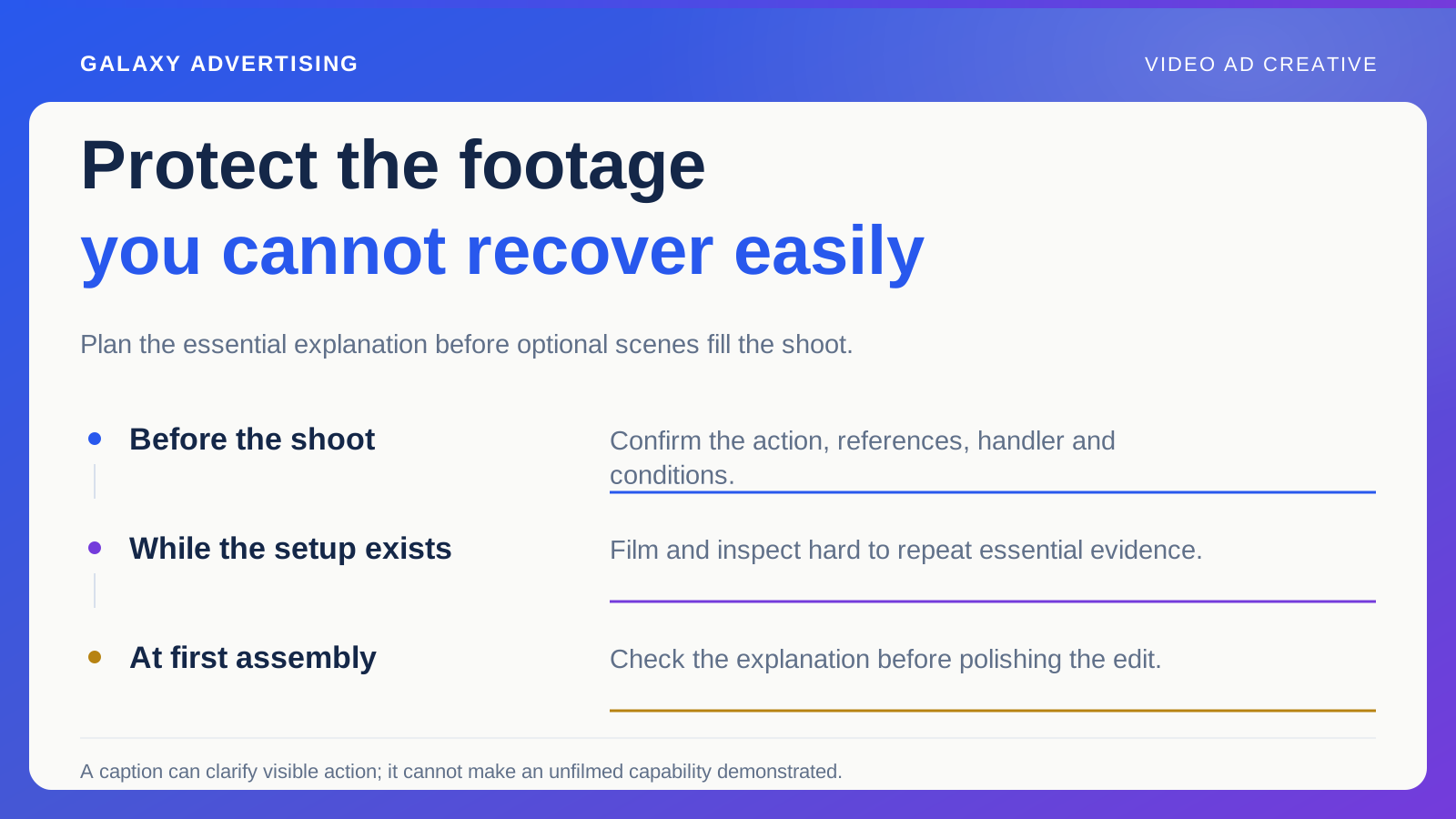
Separate essential coverage from optional atmosphere. This gives the supplier a basis for planning time and resources around the shots that make the output usable.
Ask about feasibility early. If the proposed method cannot capture the required evidence accurately, resolve that before production. A willingness to make an attractive scene does not establish that the scene can support the specific claim you want to make.
Agree who supplies and checks the inputs
Record responsibility for products, locations, contributors, music, imagery and other materials. Establish who verifies permissions and restrictions relevant to the intended use. Make those responsibilities part of the working record.
Possession of a file does not settle every usage question. Both supplier and business need an agreed record to consult when a later adaptation or placement changes the context.
This is operational briefing, not a substitute for reviewing a particular contract. You are trying to avoid releasing an approved looking output whose inputs or intended uses remain unclear. Have the appropriate responsible people settle those questions before release.
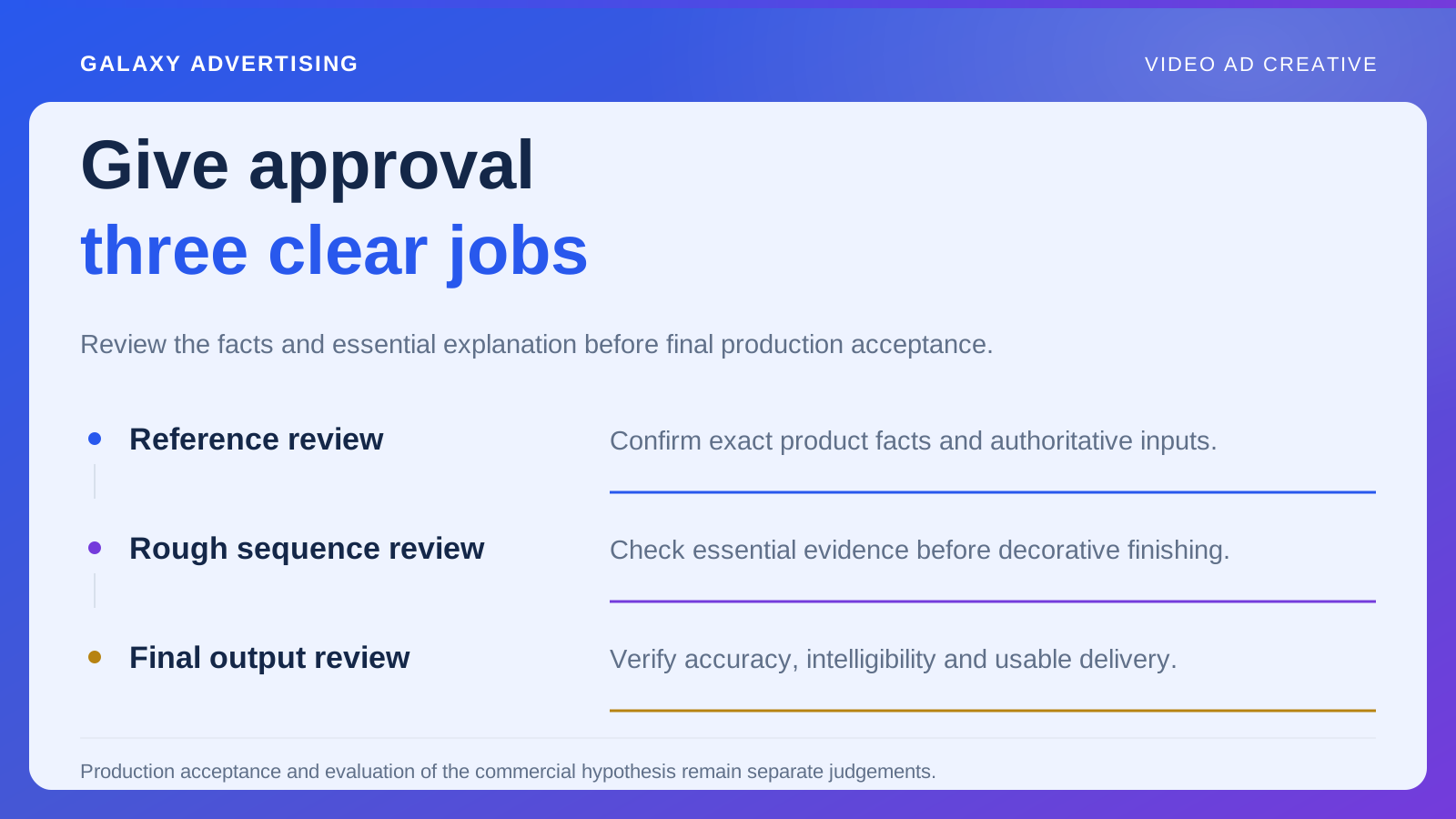
Review the evidence before the finishing touches
Agree review points for references, rough sequence and final output. Assign factual, editorial and release responsibilities explicitly, so approval means something specific at each stage.
Check important evidence and product representation early. Decorative refinement can follow once the sequence works. Finding a missing mechanism shot after final finishing creates avoidable pressure and cost.
Consolidate feedback and make it precise. Identify the issue, moment and approved reference. Several uncoordinated reviewers can send conflicting instructions that leave the supplier unable to tell what takes priority, or whether somebody's preference has quietly become a factual requirement.
Ask for a handover you can maintain
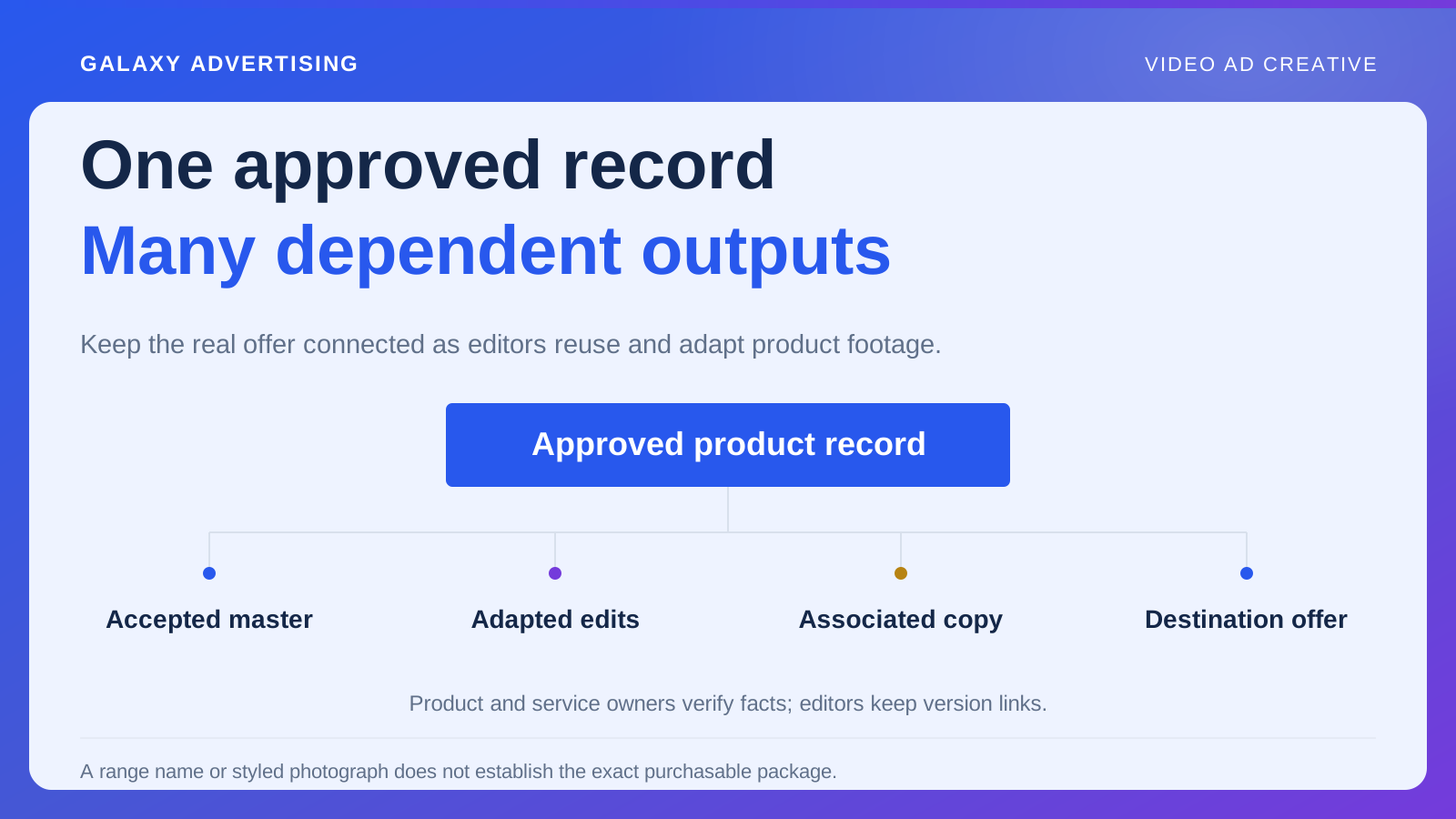
Agree accepted outputs, source material and records needed for later use. You may need the relationships between masters, adaptations, captions and destinations, rather than simply a collection of exports. Specify that before delivery.
Identify temporary offer elements and evidence reusable while the product stays current. A future editor should not need to watch every file to discover an expiring price hidden in spoken copy.
Use stable names and retain approval status. The account team needs to select correctly; a later producer needs the factual foundation. A large unlabelled delivery can create more maintenance work than a smaller pack organised for those purposes.
Decide who settles a disagreement
Before work starts, agree who can settle a conflict between visual preference and factual requirement. The supplier should know which approved reference controls a detail and which internal owner can clarify an uncertain claim.
Keep the resolution with the relevant version rather than in an isolated message. Another contributor should be able to find the answer without reopening the same debate.
Clear escalation need not make the process adversarial. It enables quicker judgement without asking an editor to guess which stakeholder has authority to change the offer. People can disagree and still have a practical route to a decision.
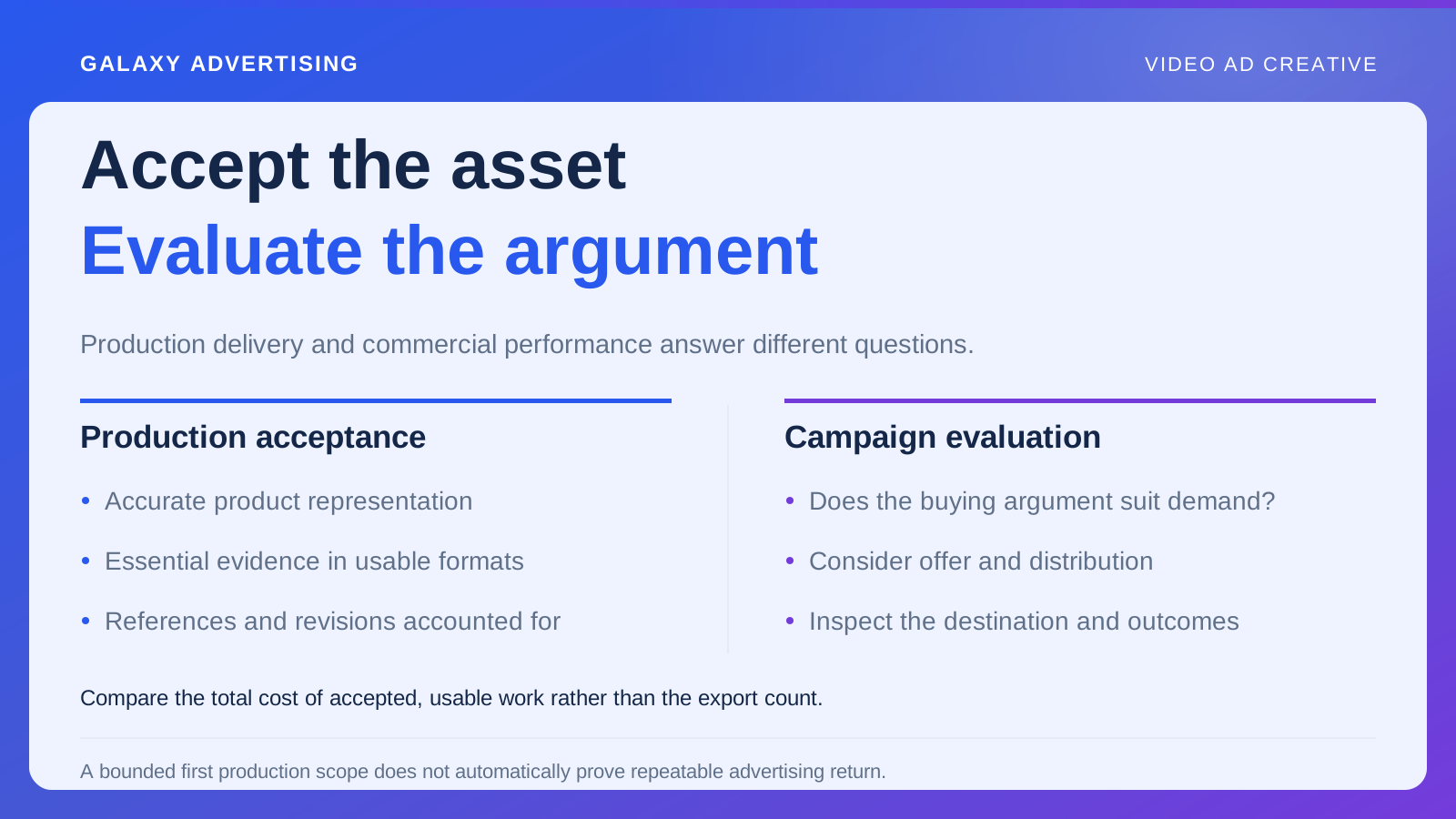
Accept the production, then evaluate the hypothesis
Define acceptance through accuracy, required evidence, intelligible communication and agreed usable outputs. Verify those before treating the asset as ready.
Evaluate the commercial hypothesis through the actual campaign and customer route, with its limitations. An accepted video can support a weak argument. A strong result does not excuse incorrect representation.
A complete handover gives the producer a real task and the business a fair way to verify delivery. It also leaves knowledge for the next use. Inspiration can then do what it does well: guide creative choices inside a brief that already knows which facts the pictures must preserve.