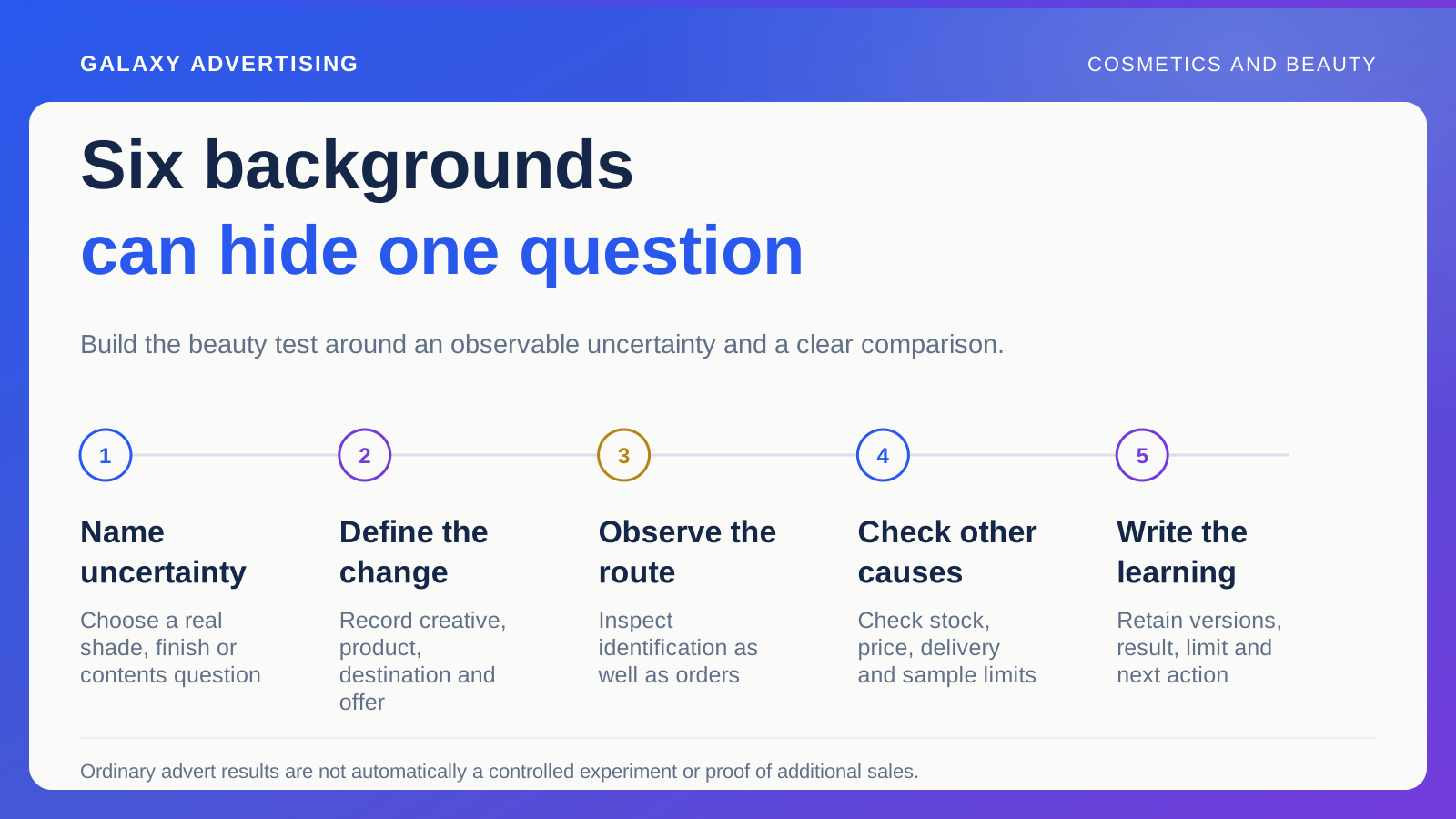
Different backgrounds don't automatically give you different creative strategies. Your beauty brand could produce six adverts with different music and captions, repeat the same broad promise in all of them, then mistake the best performing background for the answer.
The production differences are real. The learning could be much smaller than the conclusion. Before commissioning more, start with something a shopper doesn't understand, a possible explanation and a comparison that could prove that explanation wrong. That gives your next creative budget a question worth paying to answer.
What is the shopper actually unsure about?
Choose a specific uncertainty supported by product enquiries or difficulties you've observed. Perhaps shoppers can't tell two finishes apart, identify the shade being shown or work out what comes in the package. Those are questions a production team can work with.
“Better content will increase sales” sounds like a hypothesis, but it only repeats the result you want. It doesn't say what evidence to create or what you'd learn if sales disappointed. You're left trying to interpret an outcome without agreeing what caused it.
Here's a hypothetical question with more use: does clearly identifying the demonstrated shade help suitable visitors find that variant, meaning the selected shade or configuration? It connects a communication change with something observable in the purchase route. Keep its limit in view, though. Finding the shade doesn't establish that the shopper considers it suitable.
Keep the comparison understandable
Write down the creative difference, product, destination and offer. If you're examining shade identification, changing the price and landing page at the same time leaves you with several possible explanations. You want to understand the label, but you've also changed the deal.
A perfectly controlled comparison isn't practical for every business. Say where yours falls short. Unequal advert delivery, changing availability and small order samples all affect the conclusions you can reasonably draw. Recording them makes the result useful, even if it makes the story less tidy.
Where relevant, use the testing capabilities actually supported by the account and check current official guidance before assuming how they work. Two ordinary adverts with different reported results aren't automatically a controlled experiment. Describe the method before giving it a confident name.
Watch the part of the journey you're testing
For the shade question, look at visits to the demonstrated variant, selection behaviour your store can observe and customer questions that indicate whether the shade remained identifiable. Completed orders add commercial context. They won't necessarily explain the mechanism on their own.
Don't choose a measure simply because it moves quickly. Attention may help you assess an opening sequence, but it doesn't establish a successful product decision. Equally, the final order total can sit too far from a labelling problem to explain it without supporting observations.
Agree what decision the evidence should inform. You might keep the clearer label, change its placement or conclude that your observations haven't resolved the question. Leave room for all those outcomes. Otherwise, the test becomes a search for permission to keep what somebody already prefers.
Check the actual adverts before paying for delivery
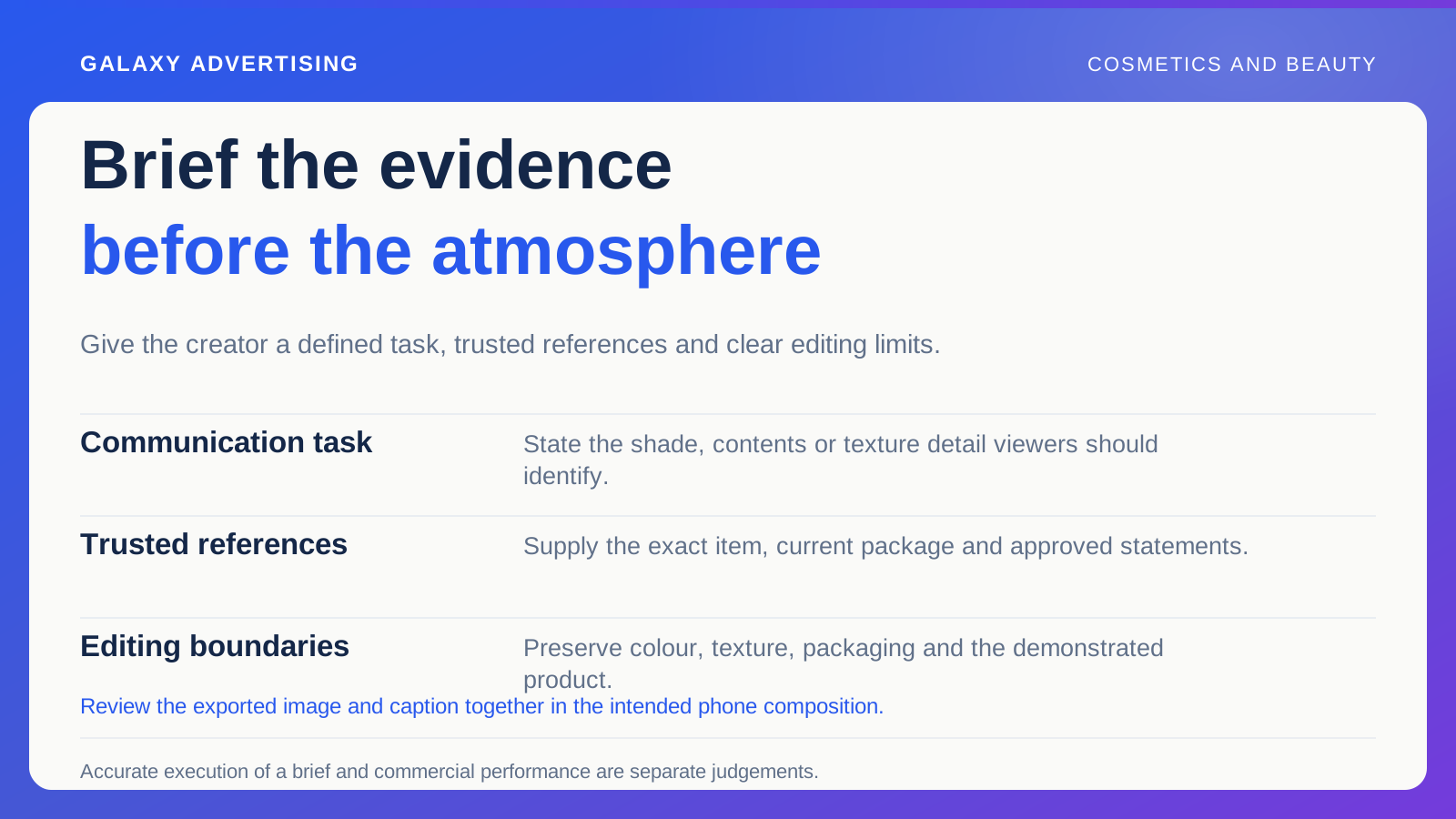
Make sure both versions represent the same product accurately and that the planned difference is visible. One version could introduce a stronger unapproved claim or hide essential product detail. That changes the comparison before the first paid visit arrives.
Ask someone who hasn't seen the brief to describe what's different. You're checking clarity, not asking them to predict performance. If they can't perceive the intended distinction, you could be paying to test an editing change too subtle to interpret.
Then follow each destination on a phone. A helpful shade label loses its value if the page opens on another variant without explaining why. Remove that preventable mismatch so it doesn't quietly become part of the test.
Agree when to review and when to intervene
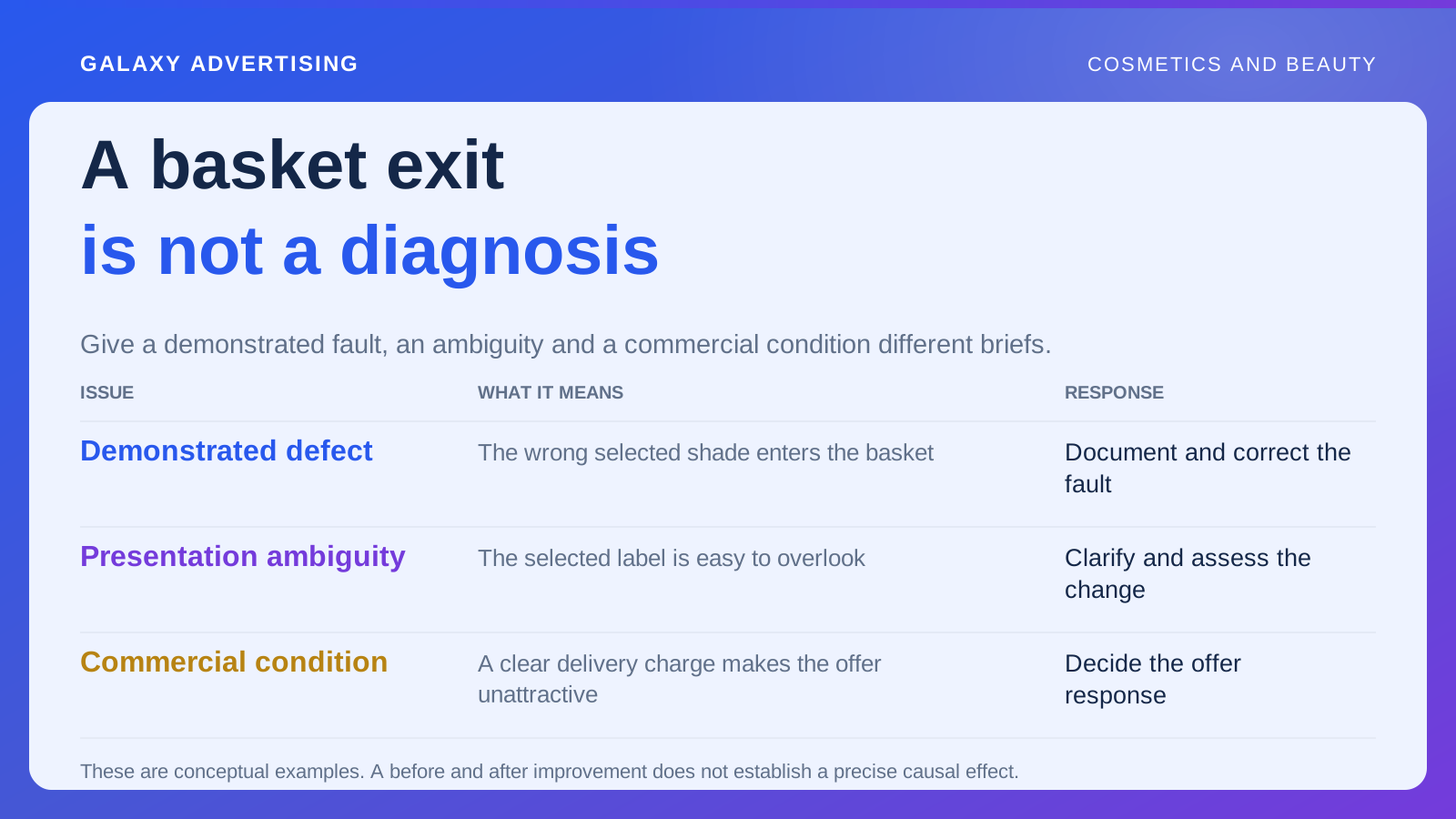
Set the approved operating scope, the evidence needed for a useful review and the faults that require prompt action. There isn't a universal spend threshold or test duration that makes sense for every beauty range. Don't invent one to make the plan look complete.
Keep technical stops separate from commercial judgements. A broken link or unavailable demonstrated product needs correcting. Disappointing early sales may need more context before you judge the proposition as a whole. Those are different decisions, even when both make the team nervous.
Name the person who can authorise continuation if the evidence remains uncertain. Without that responsibility, an inconclusive test can become an indefinite campaign because nobody wants to call it. Uncertainty is a valid conclusion when you explain what it means for the next decision.
Give other explanations a fair hearing
At review, check material changes in stock, price, customer mix and the destination. If one version received most of its delivery during a promotion, say so before crediting the entire difference to the creative. Context belongs beside the result.
Do the supporting observations fit your original explanation? Stronger orders with no change in shade identification could point to a different mechanism. A favourable result doesn't have to support the story you started with, and forcing it to fit won't improve the next brief.
Keep observed association separate from evidence of an additional commercial effect. Your method sets the strength of the conclusion. A careful claim gives the next decision something firmer to stand on than an impressive claim another brief can't reproduce.
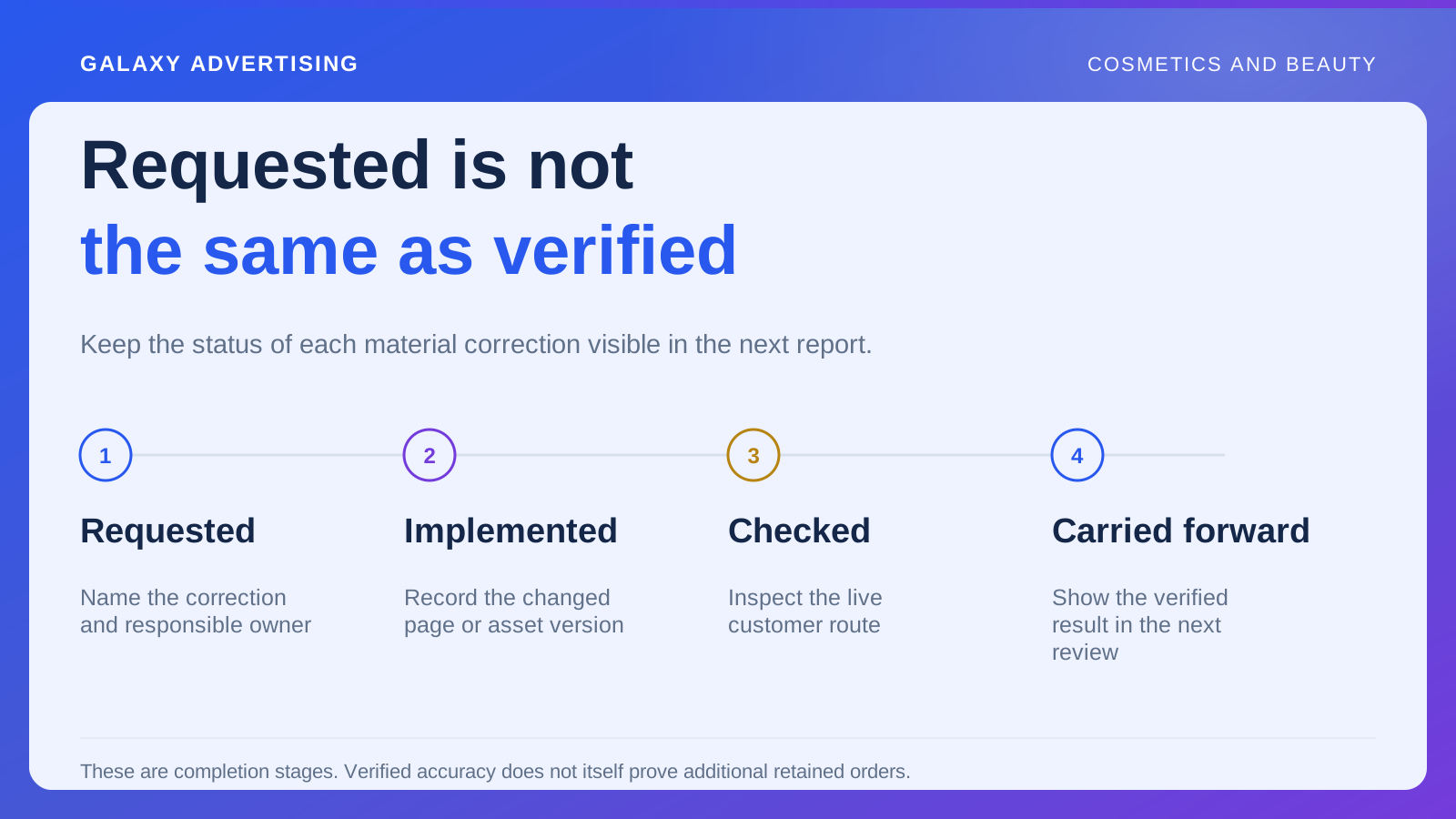
Save the original exported assets with the learning note. Someone recreating them from memory later could change the product, label or offer without realising it. The evidence concerns the versions actually used. Keeping them lets the next team inspect the comparison and distinguish an established observation from a story that became more definite each time it was told.
Make the next production decision specific
Write a short note naming the question, versions, observed result and main limitation. Add the action you'll take and why. That's the memory your next production brief needs.
If the label appears useful, keep it while testing another real uncertainty. If the evidence remains unclear, improve what you can observe or narrow the question. Another larger collection of cosmetic variations isn't an automatic answer.
You don't need every experiment to deliver a winning advert. You need production and media investment to leave the business with an explanation it can use, so the next decision has more behind it than the last.