Can you explain the £65 beauty order in your advertising report after one of its paid items has been refunded? It began with two paid products, a free sample and a promotional discount. Several teams could now give you plausible figures while describing different parts of that order’s history.
Your measurement plan needs to make those definitions visible. Establish what you count, which records support it and how later changes are handled. Only then can you judge whether the campaign report is useful for acquisition decisions. A number you can trace is a better starting point than an unexplained total.
Choose the order record everything connects to
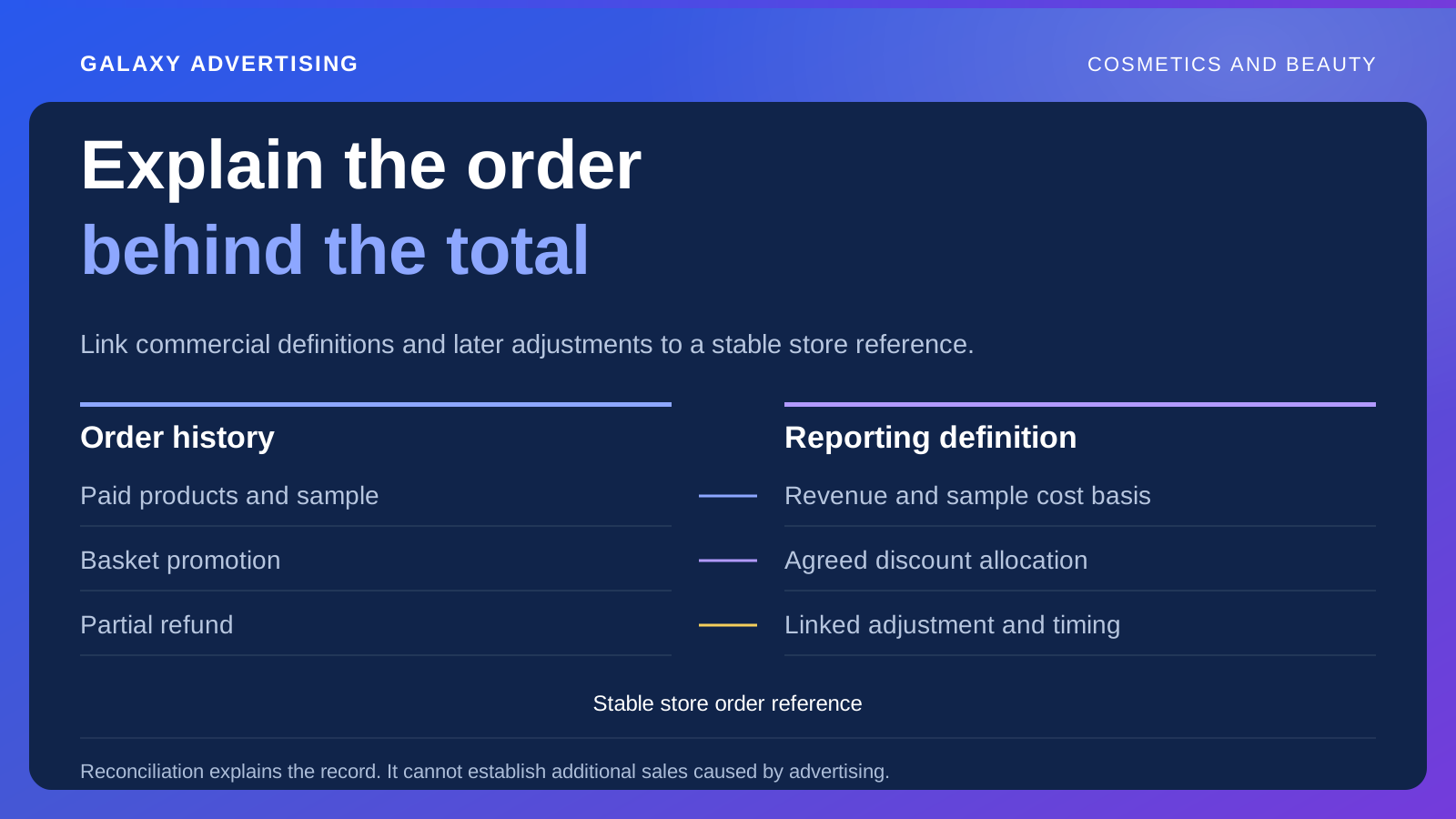
Identify the store record that establishes a real order and its stable reference. Keep its line items and subsequent status changes connected to that reference. Reconciliation gets difficult when every export uses another identifier and somebody has to reconstruct the relationship.
Agree which statuses belong in your commercial review. Initial payment, fulfilment and a retained purchase are related observations, but they are not interchangeable. Make it clear which stage the report currently describes so colleagues do not compare different things under the same label.
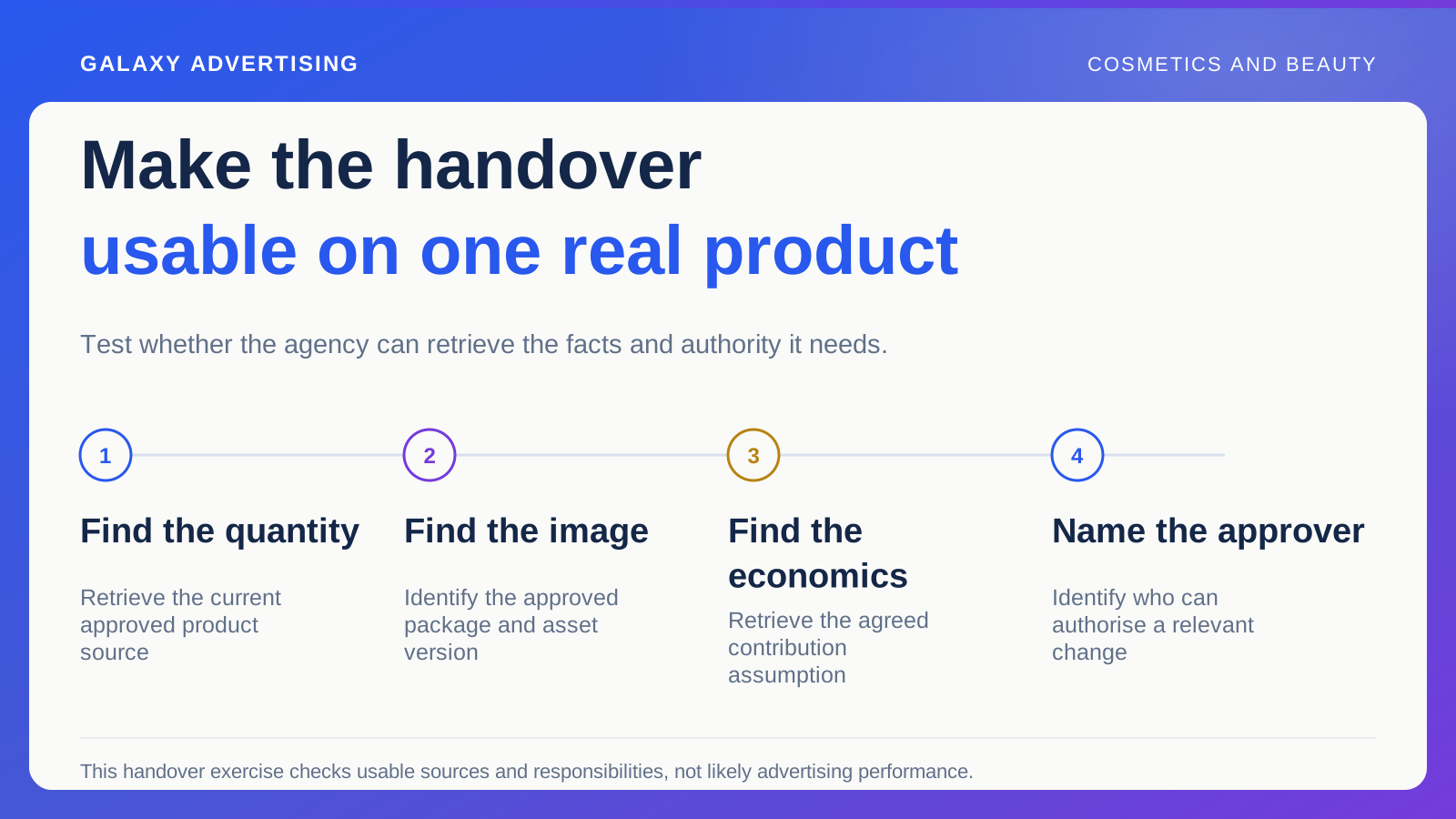
Start with a manageable sample, including ordinary orders and meaningful exceptions. You’re trying to understand the reporting route before automating it. A summary nobody has explained won’t become more understandable just because it updates without manual work.
Distinguish money received from promotional contents
Record which products generated revenue and which arrived as samples, gifts or promotional additions. An item supplied without payment can still carry a real cost. Keep that visible rather than letting the absence of a paid line erase it from the calculation.
In a hypothetical £65 basket, £70 of listed products might be reduced by a £5 promotion, with a sample added. Customer revenue and promotional cost need separate treatment on your chosen basis. Adding the sample’s notional selling value to revenue would describe something different from money received.
Have finance or the responsible owner approve the cost basis. A convenient reporting field is not a reason for marketing to invent a valuation method. When you need an estimate, label it. That is more useful than an unexplained figure dressed as an exact fact.
Agree where the discount goes
A basket promotion can change several items’ apparent contribution, the money remaining after the costs included in your calculation. Agree how you allocate the discount for product level analysis. Retain that convention when comparing campaigns or periods so the comparison has a consistent meaning.
One report might put the entire discount against the advertised product, while another spreads it across the basket. Either mathematical choice may be reasonable in context. An unacknowledged switch between them makes the commercial interpretation unreliable.
Show the convention through a worked order: listed values, discount and resulting net figures. Your colleagues don’t need to become reporting specialists. They do need to see the assumption that might otherwise quietly decide which product appears most attractive.
Keep the later changes in the history
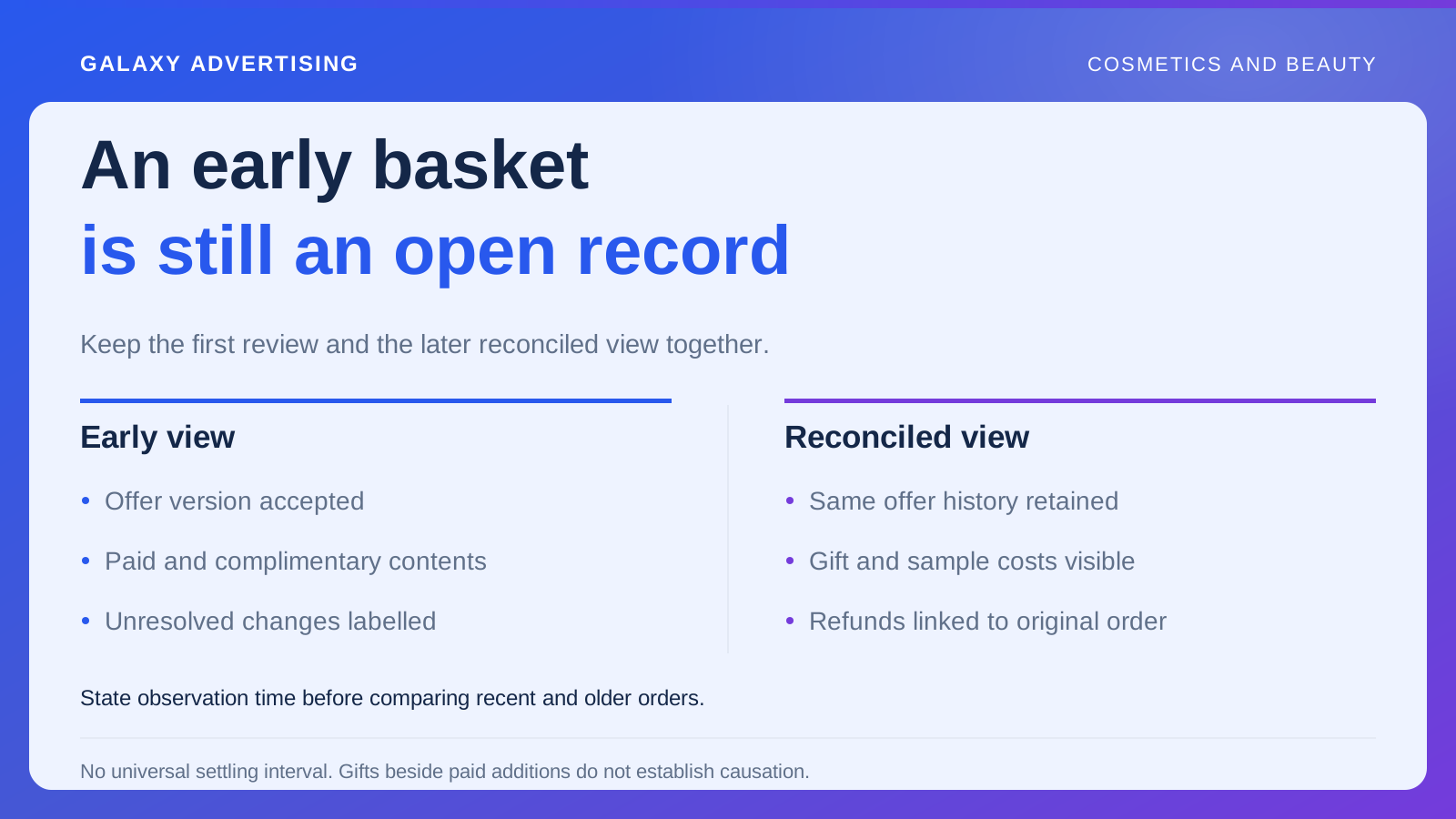
Attach refunds, cancellations and relevant returns to the original order reference. Establish when they appear in the commercial review and whether advertising reports reflect them the same way. Timing belongs in the explanation, rather than being treated as an inconvenient detail.
A difference between systems doesn’t immediately mean one is defective. One may show an attributed purchase as originally recorded; another may describe the order after later changes. Separate a genuine recording fault from a difference in timing or scope before choosing a correction.
Likewise, acknowledge the difference between recent orders with little time for adjustments and a mature group. An apparently precise comparison can still be unfair if it treats unequal histories as equivalent. You want an assessment the business can use, not precision that hides the uncertainty.
Trace real orders through the event route
Ask your measurement owner how the purchase observation reaches each reporting system. When a technical correction is needed, use the actual configuration and current official documentation. A familiar platform label cannot establish that your setup works as intended.
Check whether an order appears more than once, whether its value uses the approved basis and whether product references are understandable. For a mismatch, record an example someone can reproduce. A screenshot of an unexpected total rarely explains the route that produced it.
Keep technical corrections and commercial conclusions distinct. Fixing a duplicated observation can improve accuracy without showing that the underlying campaign creates additional sales. Each question matters, but each needs its own evidence. One corrected field does not answer both.
Put a commercial view beside attribution
Prepare a short review of spend, consistently defined revenue and the relevant variable costs you’ve chosen to include. Note material changes in promotions and product mix. Without that context, the same reported number can carry a different commercial meaning.
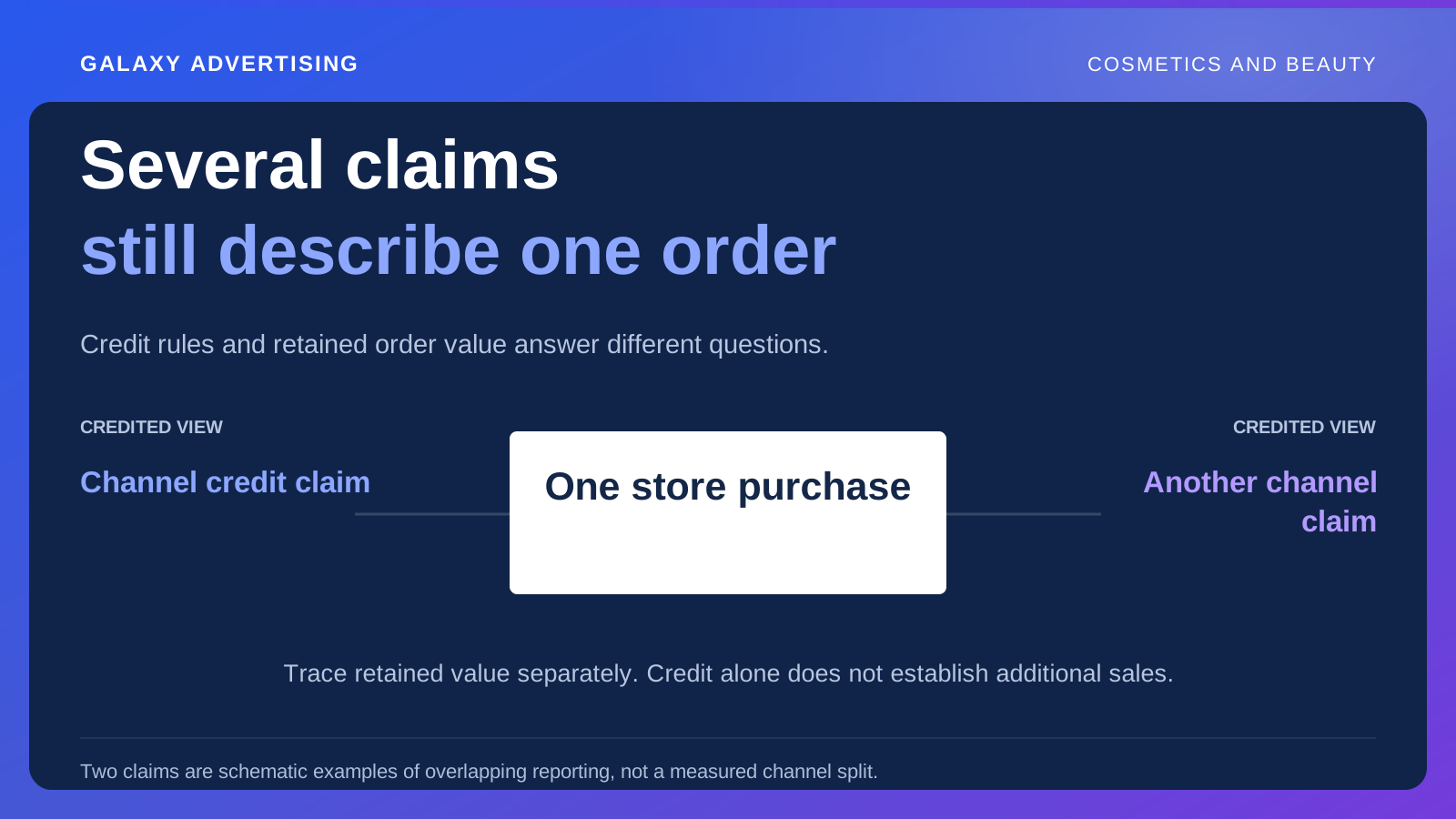
Use attribution to understand what the platform claims, alongside the store’s actual orders. Several channels can claim involvement in a transaction. Your business still received one order, rather than the sum of those claims. Preserve that distinction in the review.
When evidence is missing, state the limitation and the decision it affects. Don’t fill the gap with a favourable invented allocation. You may need to narrow the conclusion until the observation route improves. That is more useful than confidence the records cannot support.
Include a partial refund in your first reconciliation. Does the adjustment remain attached to the right item, and is the sample cost still treated consistently? This can reveal a weakness that completed full value orders miss, before the exception accumulates inside a confident monthly summary.
Leave definitions someone can maintain
Write a compact measurement dictionary: order reference, revenue basis, sample treatment, discount convention and adjustment process. Assign source owners and a reviewer who can check the outputs remain coherent after changes. The definitions need people as well as a document.
Revisit the sample when checkout, promotional mechanics or product systems change. A correctly reconciled first version does not verify the operation forever. The plan remains useful only while its definitions stay connected to the way your business currently works.
You cannot remove every uncertainty about marketing influence by reconciling an order. You can remove avoidable confusion about what was sold, what was supplied and what remained after changes. Give your acquisition decisions figures that can be explained through the orders behind them.