The serum launch report is open, and the first payments look encouraging. Customers bought the promoted product, some added another paid item, and qualifying baskets received a gift. Before you call the launch a success, can you account for what went into those parcels and which orders later changed?
Start there, before setting a new target. You need a dependable account of the offer accepted, the promotional commitments fulfilled and the adjustments attached to each purchase. Otherwise a recent campaign can look stronger simply because its unsettled orders have had less time to change than the group you’re comparing it with.
Keep the offer customers actually saw
Record the paid products, qualifying conditions, gift or sample arrangement and relevant delivery offer. A campaign name isn’t enough. You need the version people encountered when they bought.
If the gift changes during the campaign, preserve that difference. Orders attributed to the same activity can carry different promotional commitments even when the advertised serum stays identical. The name on the report won’t reveal that on its own.
Group records only where the distinction can change a practical decision and your team can maintain it. A gift threshold or package change may matter. An incidental creative filename may tell you very little about the basket supplied. Endless tiny segments won’t make an unclear offer clearer.
Separate what was paid for from what was supplied
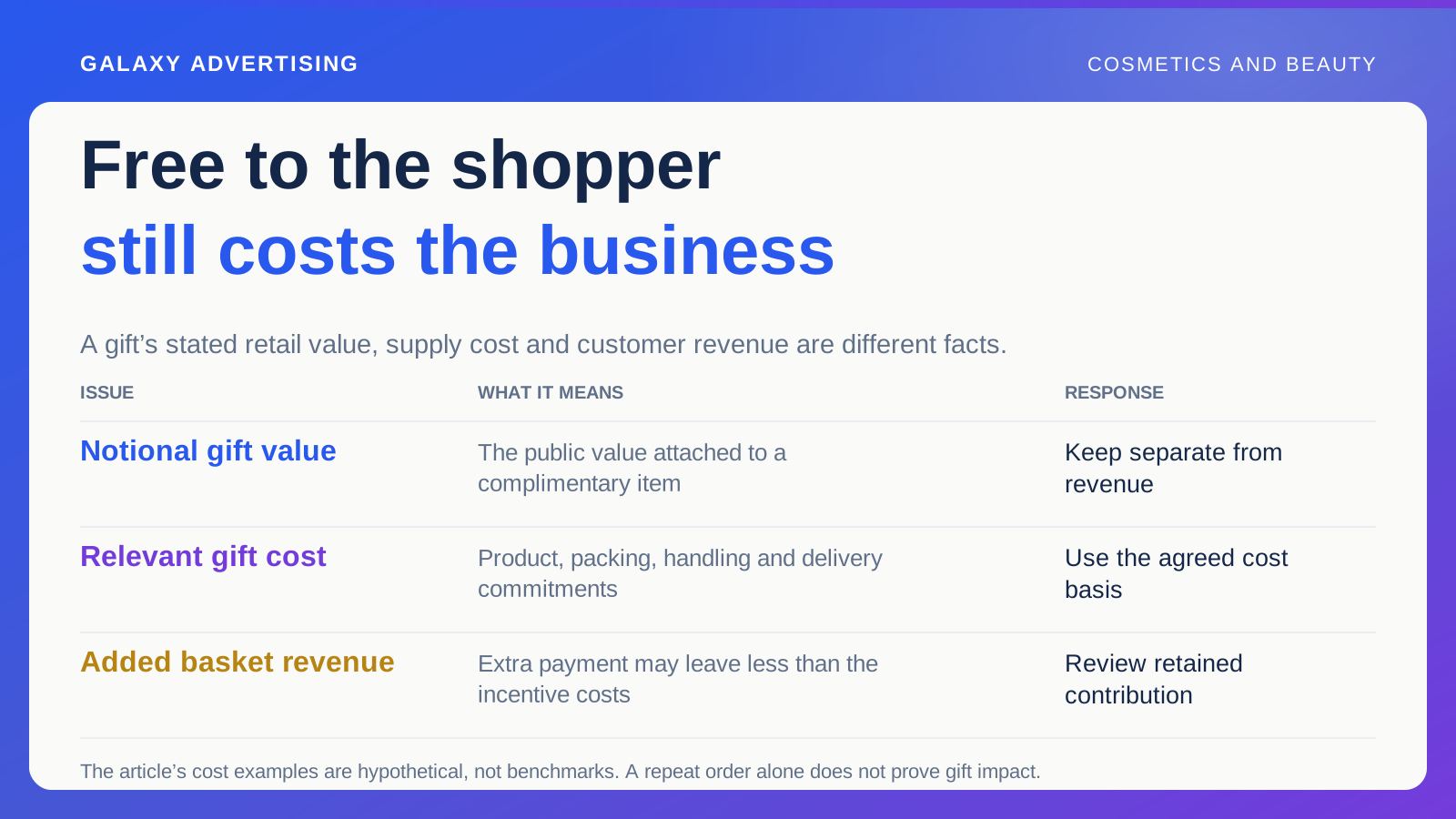
Use order and fulfilment records to distinguish paid products from items supplied without extra payment. Whatever value the public offer places on the gift, that value is not revenue received for it.
Keep its relevant supply cost visible. A sample chosen during packing can vanish from a narrow sales export while remaining a real commitment of the promotion. Missing from one report does not mean missing from the parcel.
Agree who owns that record across merchandising and fulfilment. Your campaign manager shouldn’t have to guess which sample went out by looking at today’s website banner, especially after the promotion changes. You’re reviewing those orders, not the package currently on sale.
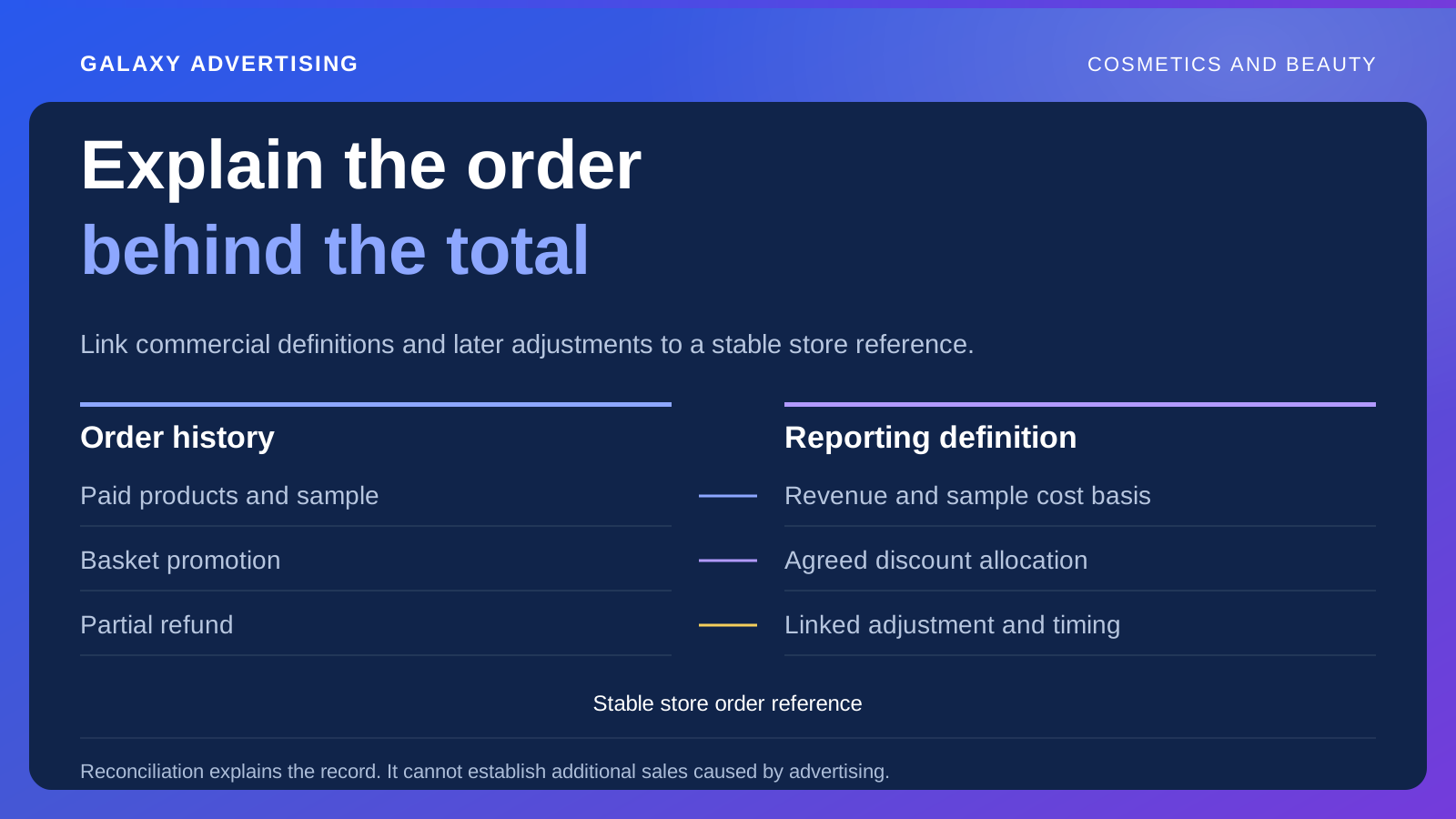
Keep partial changes attached to the original order
Connect refunds, cancellations and item changes to the original reference. A completely cancelled purchase and a basket with one retained paid item and another refunded need different descriptions. Preserve that difference in the record.
Record how promotional contents were actually handled through your approved process. Don’t assume the gift cost disappeared when the paid basket became smaller. Nor should you assume every adjusted order followed the same path.
Imagine a hypothetical basket where the main serum stays with the customer while another paid item is refunded after the gift was supplied. Show that specific outcome. This is an exception to inspect, not a statement about how often it happens or guidance on determining customer rights.
Give the orders a fair amount of observation
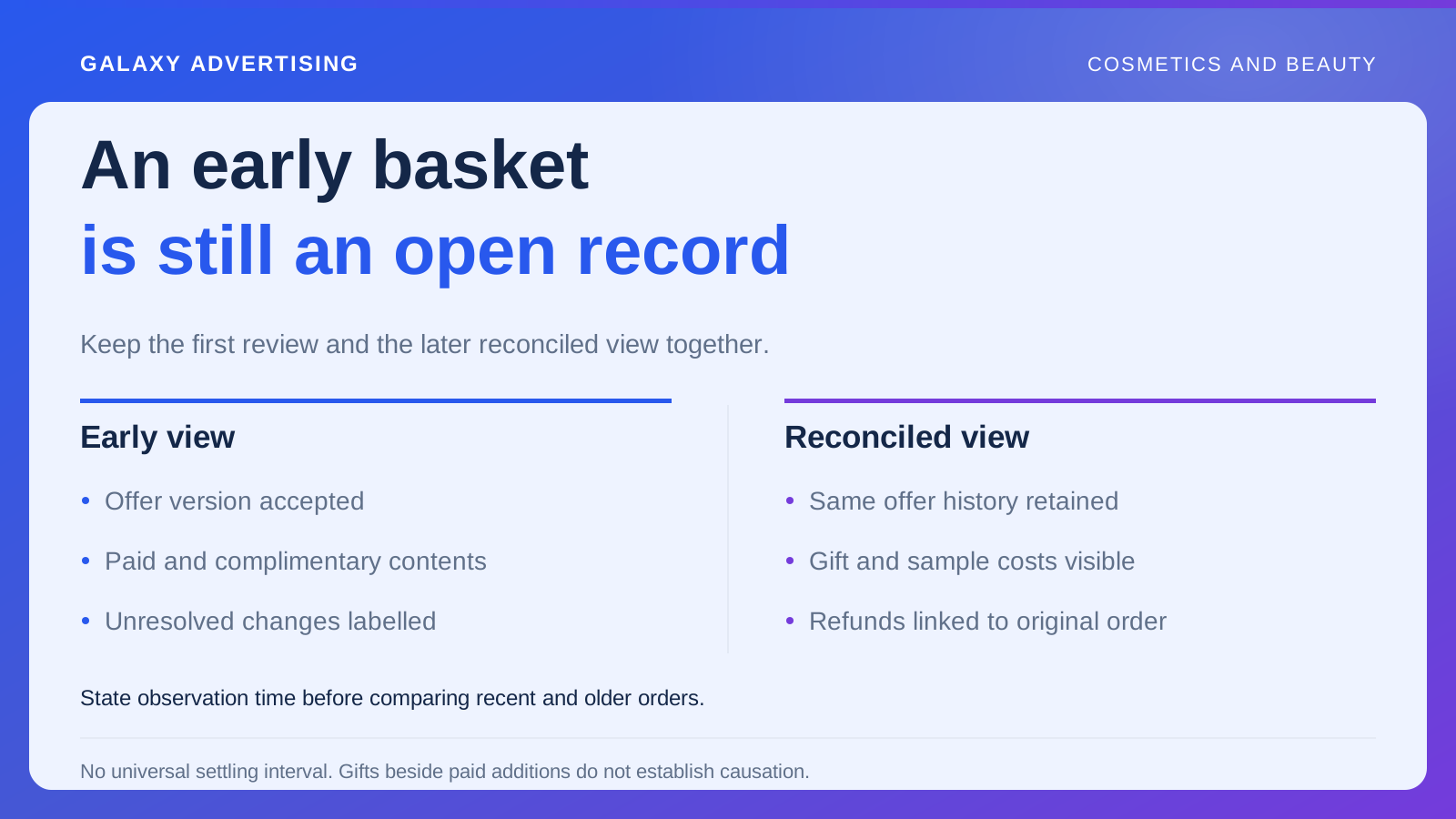
A recent group and an older group are not equally settled by default. State how long each has been observed and which relevant outcomes remain unresolved. The difference belongs beside the comparison, where it can influence the decision.
Use your own business history to judge when an initial view is informative enough for the decision at hand. There is no universal interval that makes every beauty basket mature. This is not a prescribed return period.
You can still give the owner a provisional view for an immediate operating decision. Label what remains unknown rather than waiting for every possible adjustment. Just don’t let the first result quietly become the final comparison because it happened to be presented first.
Check what changed in the promotional mix
Look for different shares of introductory products, larger paid baskets and other meaningful offers. A higher average payment might reflect a different mix, rather than a stronger result for the promoted item itself. That distinction matters before you scale the same proposition.
Check whether a small number of unusual orders drives the conclusion. Those orders belong in the records. You should also understand their influence before treating the average as an ordinary expectation for the future.
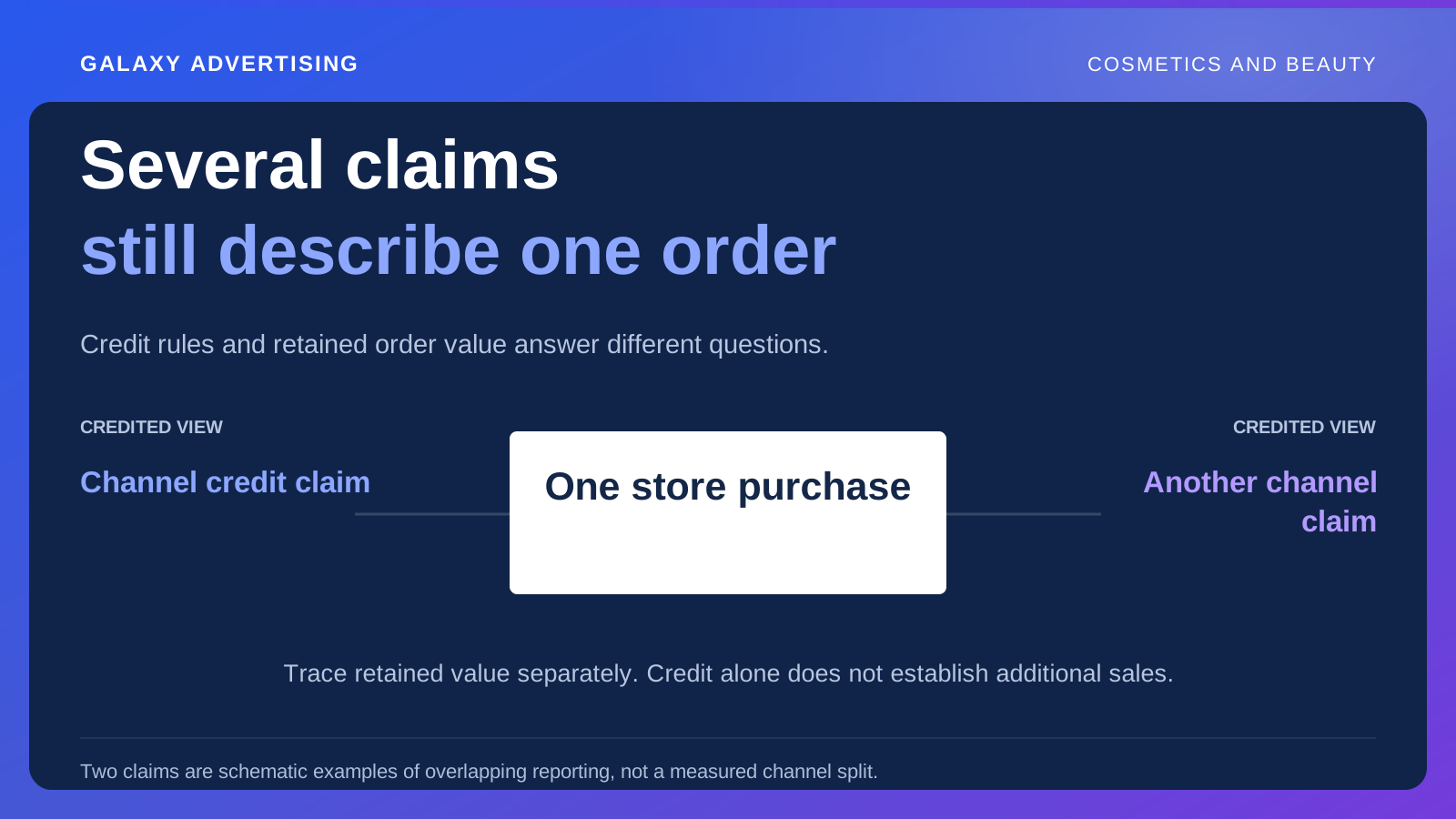
Gifts and additional paid items appearing together do not establish that the gifts caused the additions. Your records show the accepted basket and its outcome, not every customer’s alternative choice. An offer comparison can guide judgement without providing a causal answer it wasn’t designed to establish.
Don’t use hoped for repeats to settle the first basket
A repeat purchase is a new observation. It doesn’t automatically repair a weak initial result. Keep actual subsequent orders separate from a forecast that customers will return.
If you fund an experiment partly on that forecast, say so and state the uncertainty. Adding an assumed repeat value to every recent customer doesn’t turn the total into retained revenue. A commercial choice can be legitimate without being an observed fact.
The initial review has its own useful job: identify the supplied offer, retained payment and relevant promotional costs. A later customer value analysis is easier to challenge when known transactions and hoped for behaviour have not already been mixed into one apparently factual number.
Make a decision about the offer
Ask what the evidence says you should change. You might revise a gift condition, improve sample recording, clarify the package or obtain a fairer comparison before expanding investment. Let the problem determine the action.
Use your agreed financial definitions for contribution, the money remaining after the costs included in the calculation. You don’t need another generic acquisition formula in every report. You need inputs that describe the basket well enough to apply your established principle.
Give unresolved issues to someone who can resolve them. A missing sample record needs a process that captures it; an unexplained adjustment needs reconciliation. Campaign settings cannot repair an order history you haven’t understood.
Keep the early view as well as the settled one
Retain the original review and its assumptions alongside the later reconciled view. Explain what changed the decision. Don’t overwrite the history until an uncertain early report looks certain in hindsight.
That record helps colleagues see which offer distinctions and recording gaps mattered, so the next launch doesn’t have to rediscover the same questions about complimentary contents.
Your launch budget deserves an offer you can explain through its actual basket. Follow the samples, gifts, partial adjustments and observation timing far enough to understand what you funded. An encouraging first snapshot should earn further scrutiny before it becomes a dependable acquisition assumption.