Which beauty product should introduce your range to a new customer? Your cheapest item is not automatically your simplest first purchase. A low price can still come with a difficult shade comparison or an unclear package. And the bestseller’s existing success doesn’t tell you whether it can do every acquisition job.
You need an entry product with a defined role: something a new customer can inspect, understand and consider for a clear reason. Connect that selection with information, availability and economics. A familiar sales ranking is a starting point for the conversation, rather than a complete strategy.
Decide what this product should introduce
Write down what someone should understand about your range after exploring the offer. Perhaps it introduces a documented format, a finish family or a clearly described package. “Showcase everything” leaves too much for one product to carry.
Keep that commercial role separate from personal suitability. You can explain what an item is and the information supporting it without claiming it is the right starting point for every individual. An introduction should not become a universal recommendation.
Use real enquiries, where available, to find a recognisable decision. They make the brief concrete; they don’t prove the same uncertainty explains your whole market. Treat your chosen introduction as a commercial proposition you can test, not a conclusion already secured.
Work out how much explanation the offer needs
List the facts a new shopper needs. One item may need a clear comparison between variants, the selected shades or configurations. Another needs quantity explained, or an accurate account of the components included. Cheap does not always mean easy to assess.
Choose an offer whose relevant information you can support and maintain. If a central claim is unverified, find the appropriate source or narrow the proposition before investing in production. Don’t make the shoot carry a question the business hasn’t answered.
Attractive packaging alone is a weak selection rule. It can earn attention while leaving somebody unable to understand the choice. Your entry offer needs a credible route to a purchase as well as a recognisable hero image.
Look underneath the product name
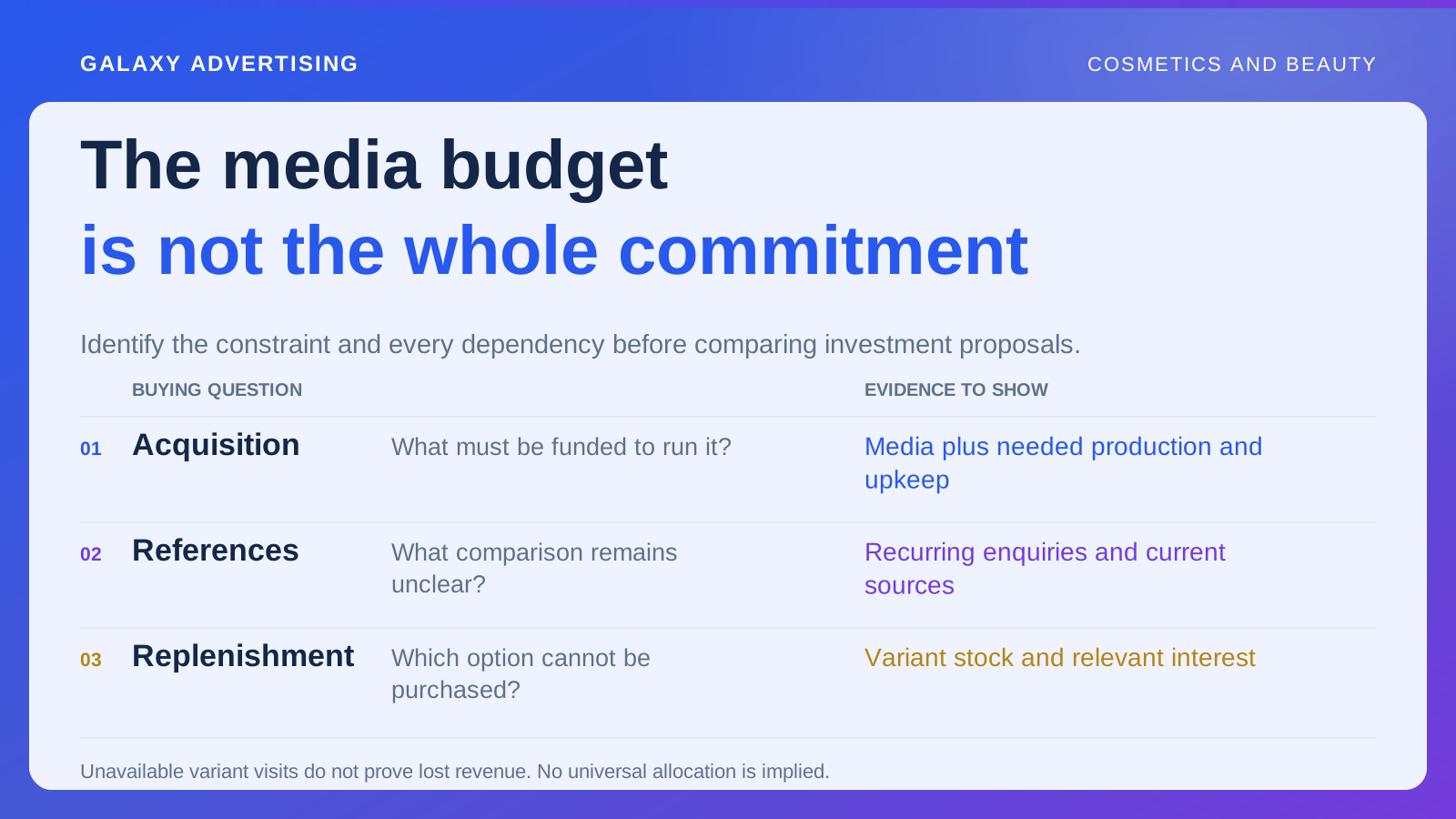
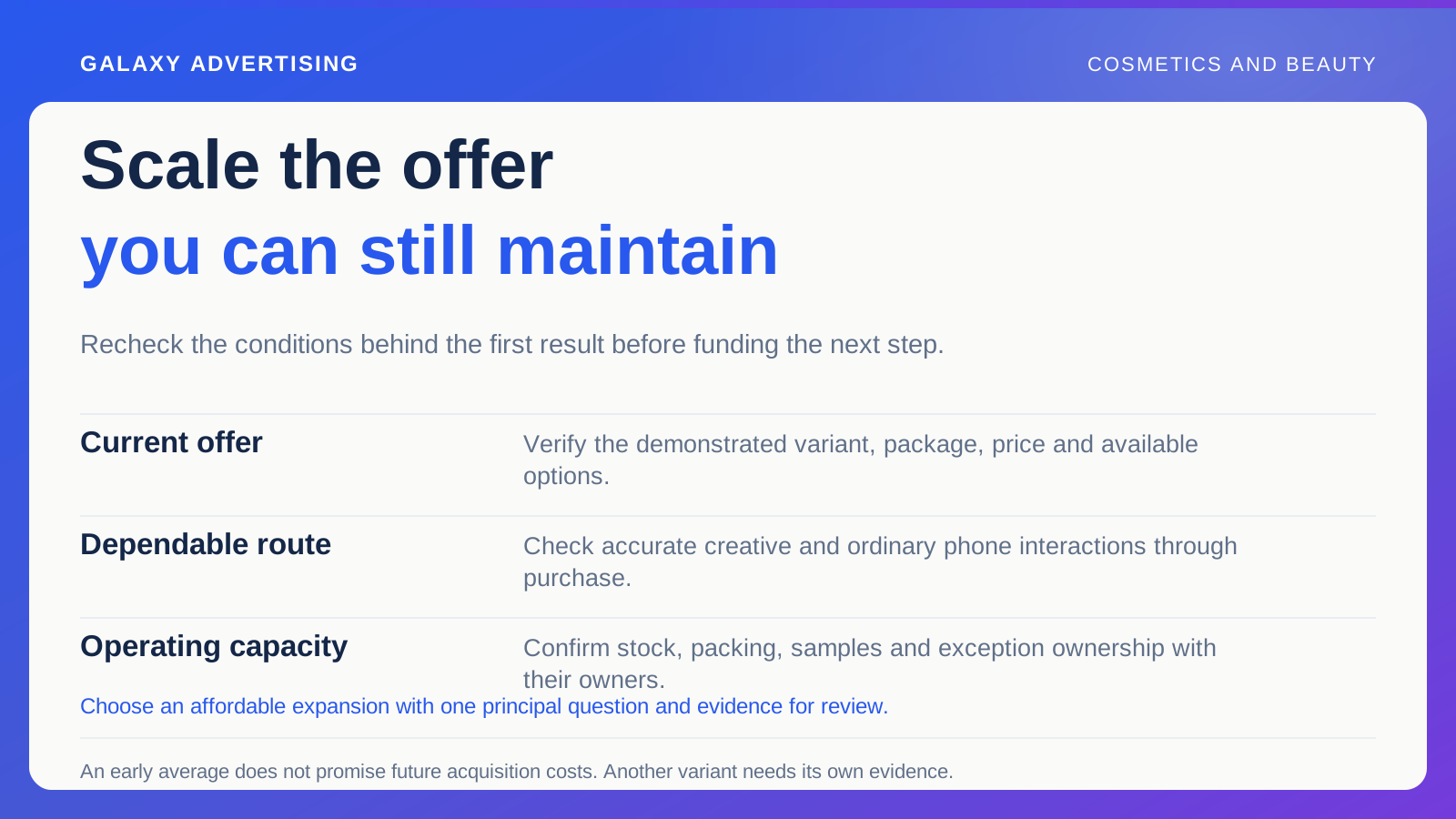
Check the shades, quantities and formats your proposed creative depends on. A product may be broadly in stock while the demonstrated option is unavailable or poorly represented on the destination. “In stock” at range level can hide the practical problem.
Agree how changes reach the campaign owner. You might switch emphasis, use another accurately described variant or pause a particular promise. Check the actual supported setup before assuming a technical control is available to do the job.
Interest in an unavailable option is not proof of guaranteed lost sales. It gives merchandising and product information teams something to investigate. Keep observed enquiries distinct from a confident forecast of orders you never fulfilled.
Choose a reason people can actually inspect
Give the creator an argument supported by the product. A visible texture reference, clear package contents or a documented format distinction is more specific than another broad quality claim. It tells the asset what to communicate.
Keep atmosphere and evidence in their proper roles. A premium setting can support positioning. It cannot establish product behaviour. Specify in the brief which observation makes the proposition credible, so the visual polish doesn’t become its only support.
If every shortlisted item depends on the same adjectives, revisit the selection. A coherent brand can still answer different customer questions through different products. Repeating the same broad promise creates assets, but not necessarily useful choice.
Compare the whole acquisition calculation
Use your agreed basis for revenue, relevant costs and later adjustments. An inexpensive item may leave a small advertising allowance after packing, fulfilment and promotional additions. A higher price doesn’t automatically create a better opportunity either.
Consider a hypothetical entry product producing a modest first basket with occasional paid additions. Review the mix you actually observe. Don’t assume every customer will recreate the most attractive basket, and label uncertain expectations in the proposal.
If later purchases are part of the rationale, define the evidence you’ll need to review them. Intending an item to begin a relationship does not give every first buyer a guaranteed future value. Keep the intended role and observed result separate so both can be judged honestly.
Make the next decision available, without forcing it
Offer a coherent route to useful information or related products. Explain genuine differences without suggesting that the first purchase is incomplete just to manufacture another sale. Let each offer stand on its actual merits.
Keep compatibility and combined use claims within approved information. A convenient cross selling graphic is not a source of product facts. If the relationship cannot be supported, the proposition needs another basis.
Also consider someone who decides against your entry item. A relevant comparison or clear alternative can keep their exploration useful. Describe that alternative accurately rather than treating it as identical without evidence. The shopper still gets to decide what matters.
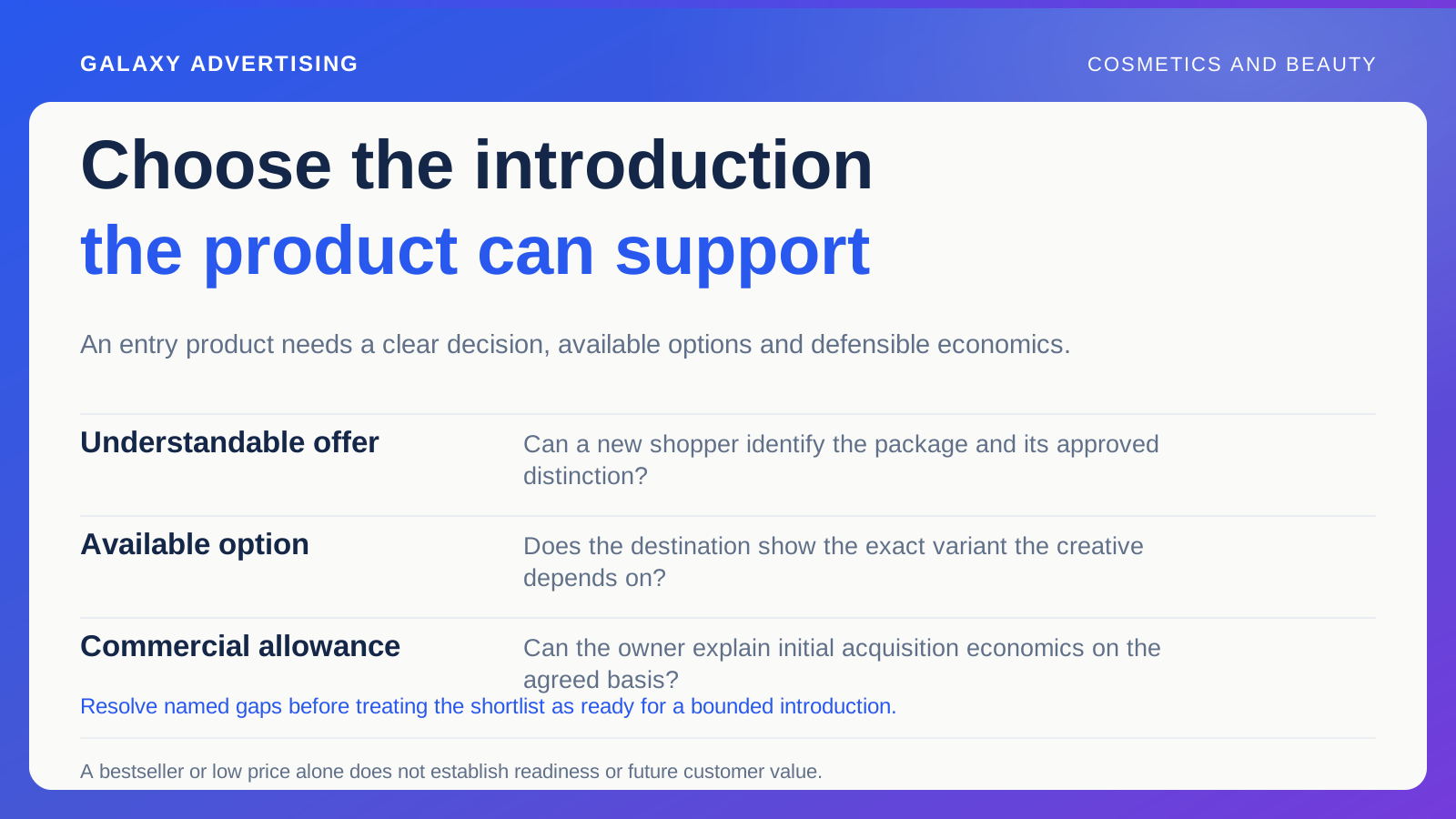
Before ordering another shoot, run a small readiness check. Ask a colleague to identify the exact package, find the approved distinction and follow the destination to an available option. Then ask the commercial owner to explain the initial acquisition allowance.
If the answers depend on several undocumented assumptions, resolving those may be your next useful investment. This doesn’t demand perfect knowledge before marketing starts. It removes avoidable uncertainty about the offer itself, allowing the subsequent test to address a real commercial question.
Rank what is ready for the job
Classify your shortlist by action: ready for a bounded introduction, ready after a specific correction, or unsuitable for the intended question. An elaborate score with unsupported numerical precision adds little if it doesn’t change what anyone does next.
Assign each correction to the person who owns its source. Then verify it in the customer’s route. An updated internal reference is not the finish line if the campaign destination still carries the old image or label.
A good entry product gives you a first proposition you can maintain and assess: an understandable decision, reliable evidence and defensible economics. Choose it for the introduction it can credibly make. Your cheapest item and bestseller remain candidates, but neither should get the job by habit.