What if the shopper asking whether your complexion product looks shiny needs a clearer reference, rather than a different product? Recommending another item immediately feels helpful. But it can skip the question they were trying to ask.
Explaining the manufacturer’s stated finish, showing the relevant reference and asking what information is still missing gives you a better starting point. The same discipline belongs in your advertising. Comparing appearance, quantity or packages is a different task from seeking personal suitability advice. Establish what you can explain reliably before turning an enquiry into a campaign promise.
Keep their words before adding your interpretation
Collect actual enquiries and enough context to identify the product concerned. “Customers lack confidence” sounds like an insight, but it can conceal several quite different gaps in your information.
Group the questions by what someone is trying to do. They might want to identify the shade shown, understand a format or check what the price includes. Each points to a different change in the creative or the destination. You don’t need an imagined personality to make those tasks useful.
Keep the sample in perspective. A few conversations aren’t a complete map of the market. They can still expose a specific ambiguity worth checking. An insight doesn’t have to speak for every shopper to earn its place in the brief.
Know where explanation stops
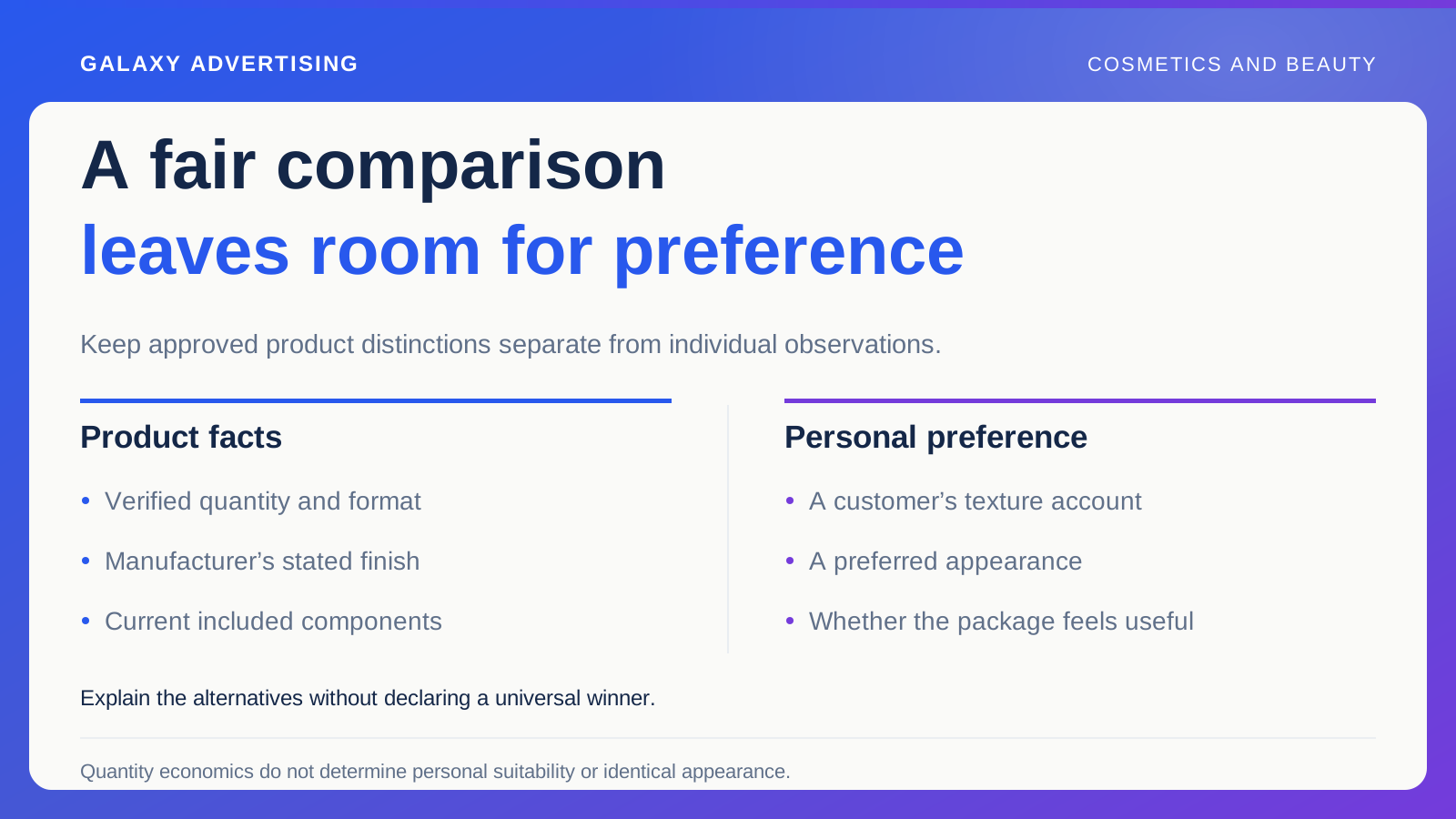
You can explain approved product facts and help someone find the right reference. That does not mean you can promise an individual outcome or prescribe a personal routine. Keep that boundary clear for the people creating the content.
An asset about documented finishes should stay an explanation of those finishes. It shouldn’t quietly become a claim that one option suits everybody with a particular appearance or concern. A persuasive tone can make that leap easy to miss.
Give staff a reliable route for questions the available information cannot answer. They need to know who can verify a statement and when another qualified source is needed. Confidence in an advert should reflect the business’s knowledge, rather than stretch beyond it.
Find the comparison hiding inside the question
Ask what the person is trying to distinguish. They could be comparing two variants, meaning the selected shade or configuration, inspecting a photograph, or noticing a difference between your description and a creator’s demonstration. The same short question can come from any of those situations.
Choose the next explanation accordingly. One person may need a labelled reference image; another may need a comparison of formats. General praise for the range won’t necessarily resolve either uncertainty.
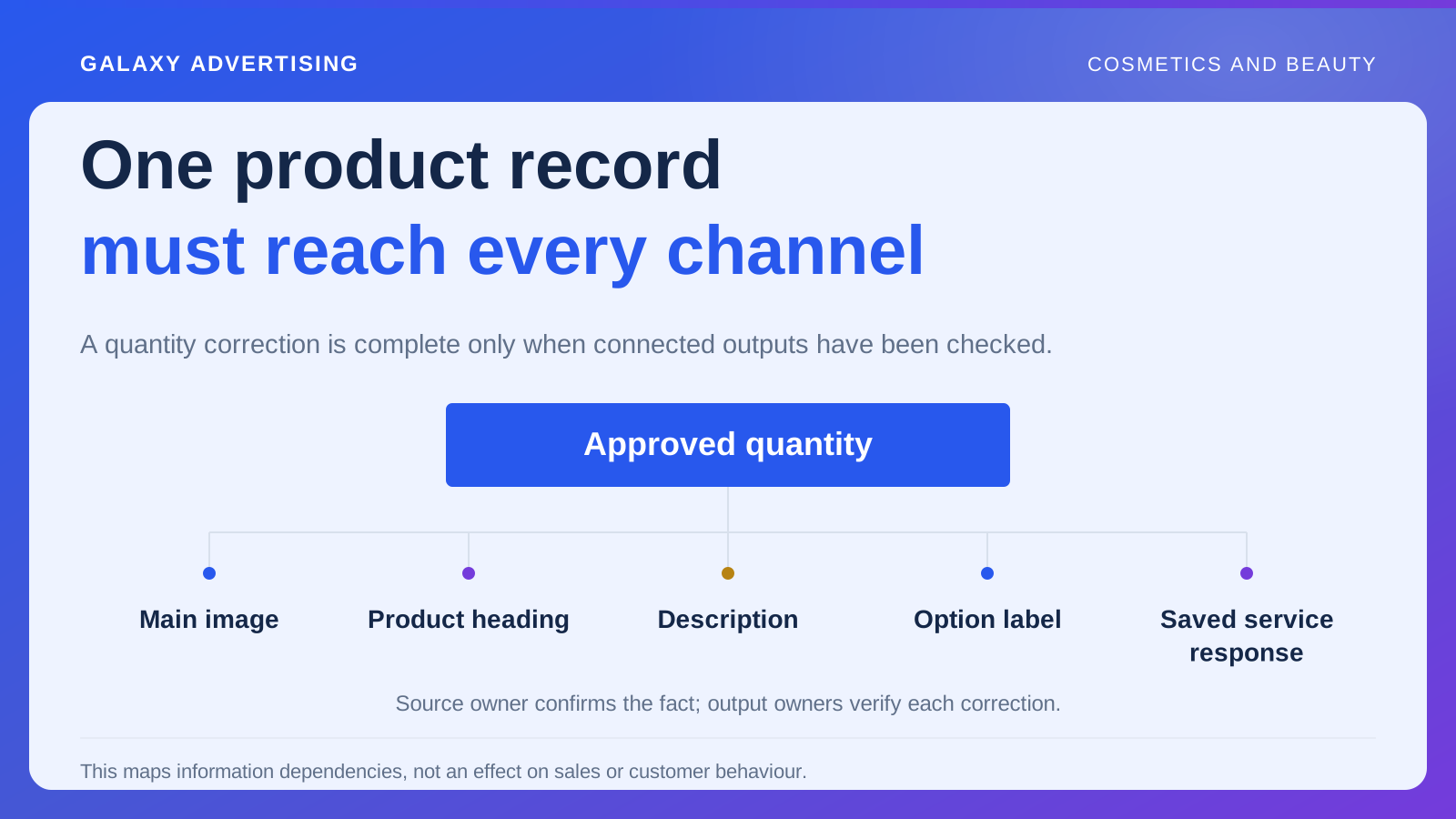
Check your own information route, too. Inconsistent labels, a different default shade or an old package image can make an ordinary product look surprisingly hard to understand. Sometimes the right first move is a correction to the page, rather than another advertising argument.
Show evidence that answers this particular task
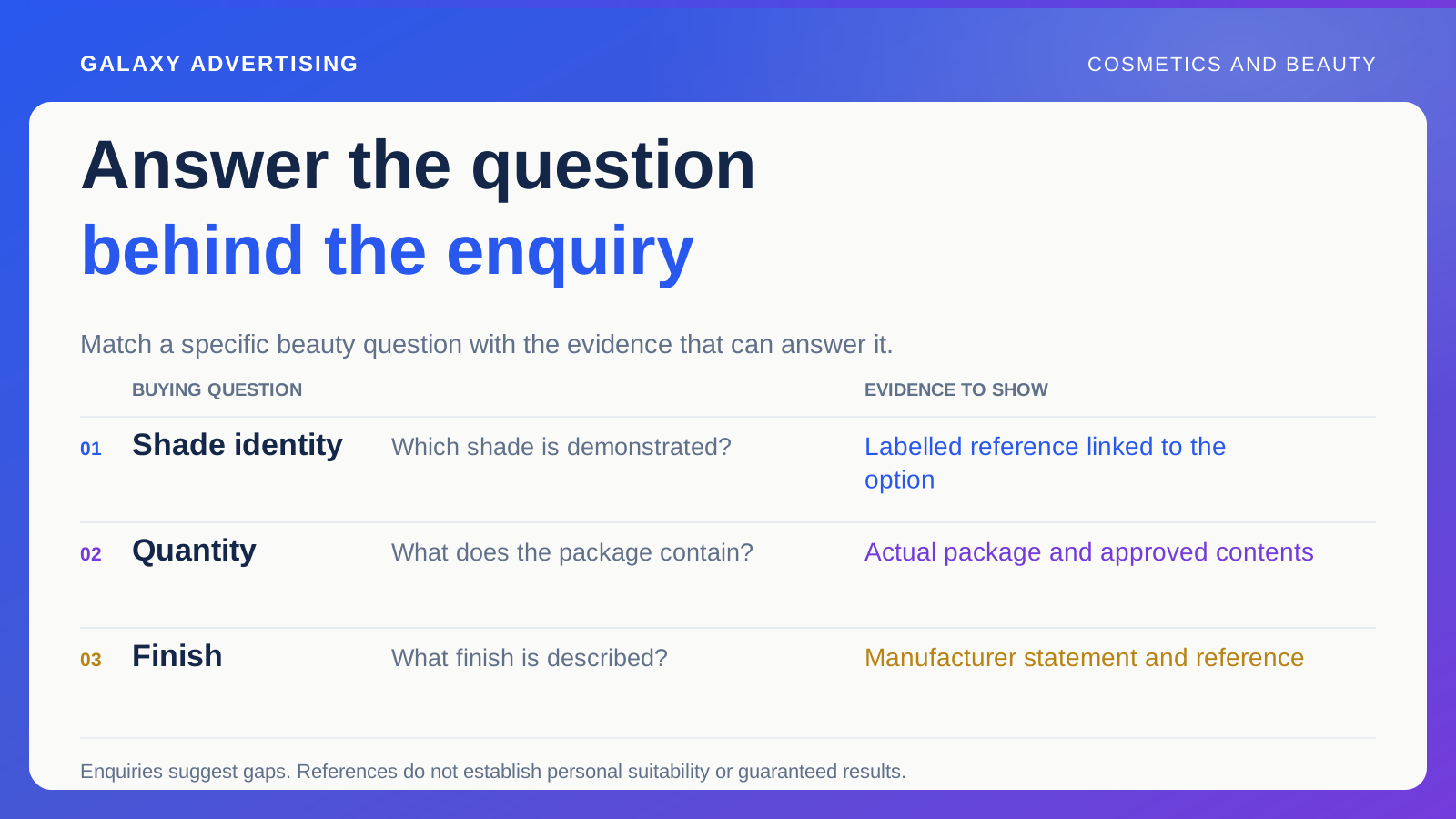
If someone needs to identify the demonstrated shade, make its identity visible and connect it to the destination. If they’re asking about quantity, show the actual package and state its approved contents clearly. Let the question determine the evidence.
Be honest about what imagery can establish. A reference helps a comparison; it cannot guarantee an identical appearance for every viewer and setting. An illustrative scene shouldn’t start looking like proof of an unverified result.
Ask somebody unfamiliar with the brief to explain what they understood. You’re checking clarity, not predicting performance. If they can’t identify the intended distinction, improve the evidence before commissioning more versions of an asset that remains ambiguous.
Carry the question through the click
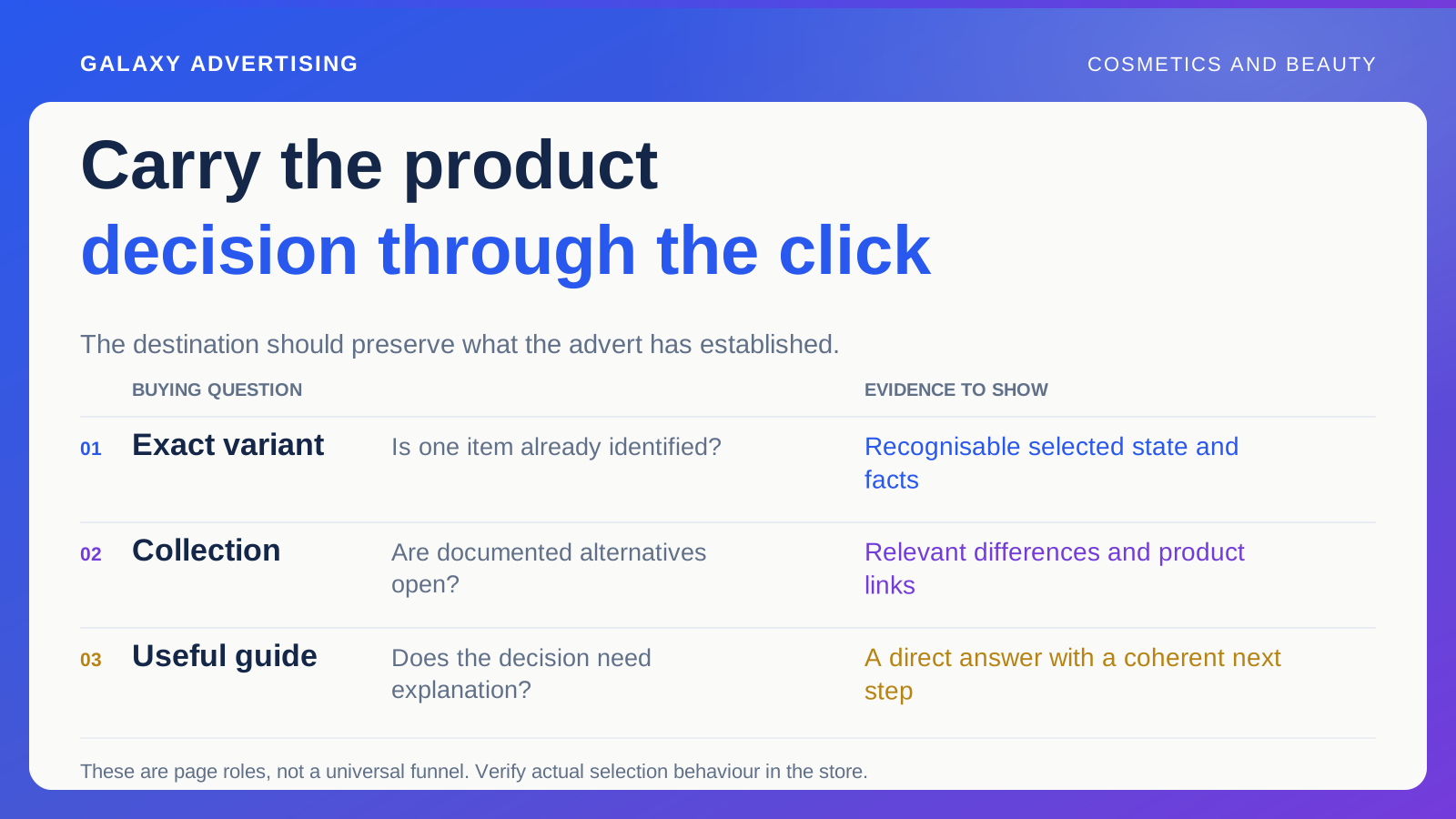
The page should recognise both the product and the task your advert introduced. Someone exploring a particular finish shouldn’t have to rummage through an unrelated collection to find the subject again. The advert has already asked them to pay attention.
Place verified information near the choice it explains. An answer in a general help article can be perfectly accurate and still difficult to find on a phone while somebody is selecting an option.
Leave clear routes for different needs. Some shoppers want the exact item, some want a comparison, and some want more information. Help each progress without another form or an unnecessary download standing between them and basic product facts.
Listen to what people ask next
After a correction, check whether the same ambiguity persists. You may uncover another identification problem. Or customers may now ask a more specific question because the basic distinction is clearer. Both are worth understanding.
Fewer questions alone do not prove the route improved. People might find answers more easily, but traffic changes and product interest also affect enquiry volume. Tie your interpretation to what you can observe rather than the conclusion you hoped for.
Keep improved accuracy separate from additional sales. Inspection can establish that the information is now correct. A sales claim needs commercial evidence and a suitable comparison. Neither conclusion should borrow certainty from the other.
Consider a hypothetical photograph showing several finishes without labels. The shopper may simply want to know which picture belongs to the selected option. They might not need a new recommendation at all. Check that narrow uncertainty first so the team has a concrete correction it can verify.
If the label is already clear, investigate the remaining question. Don’t make your first guess explain the whole conversation. That sequence protects both the customer’s understanding and the quality of the resulting brief.
Build a brief you can stand behind
Record the actual question, the reliable source for an answer and the intended change. Name an owner and a check that establishes whether the route now communicates the right fact. That makes the insight usable by the next person doing the work.
Retain its limits. Explaining one range’s finish does not give you a recommendation system for every product or shopper. Another category may need another source and a different comparison.
The most useful audience insight changes what a shopper can see and understand. It helps them identify the product, inspect the relevant difference and find reliable information. A polished persona that leaves the same unanswered question on the page has much less to offer.