An advert can show an earlier package while the product page states a different quantity. Add a saved customer response repeating a claim nobody can source, and your customer encounters several versions of the same product. Each may once have been approved. Together, they no longer tell one reliable story.
Before you commission more copy, establish who owns the information. You need to identify the current item, verify material statements and carry corrections through the places customers meet them. Another persuasive paragraph cannot settle a factual disagreement underneath it. Get that relationship working first.
Make the current version easy to identify
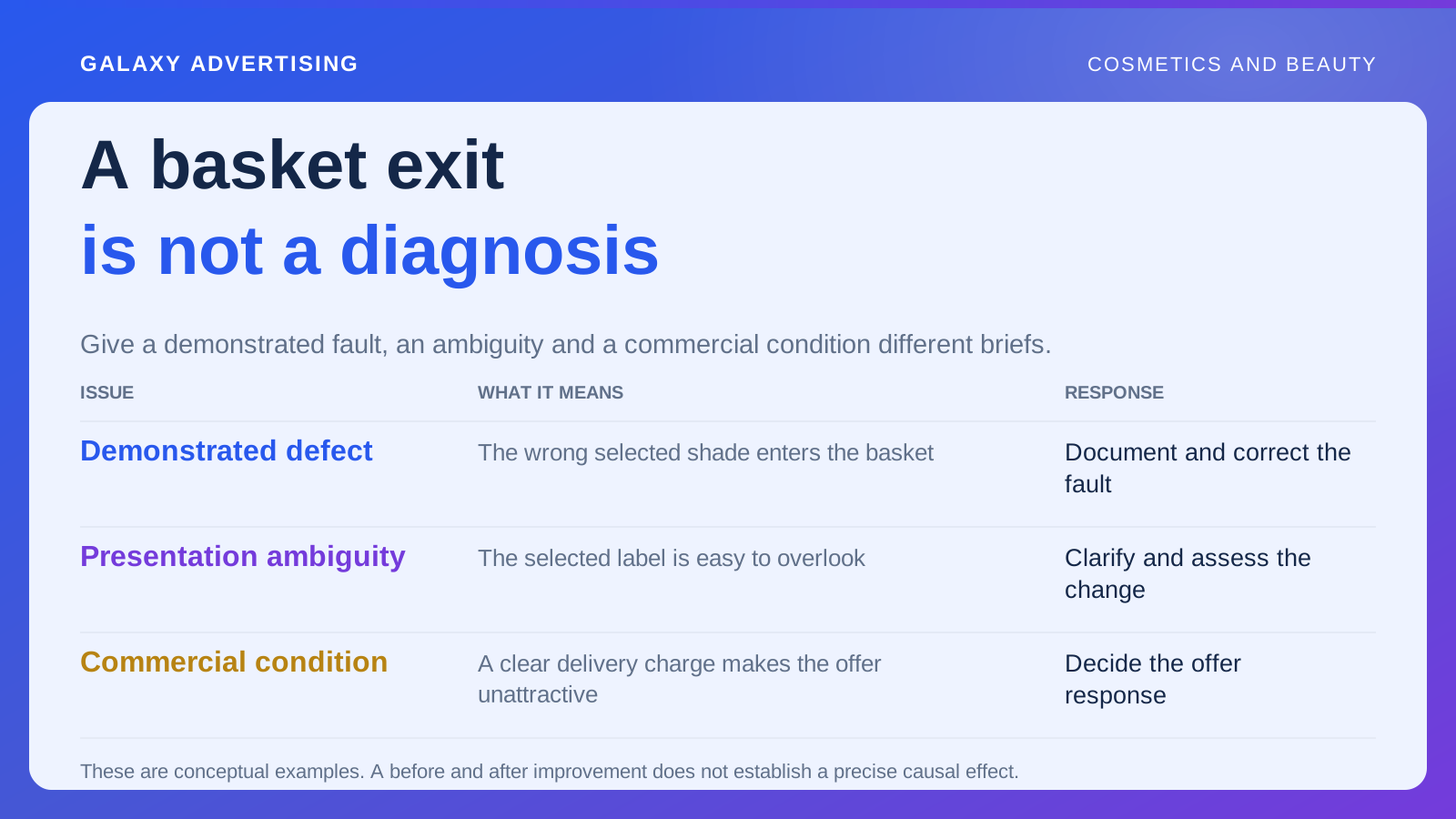
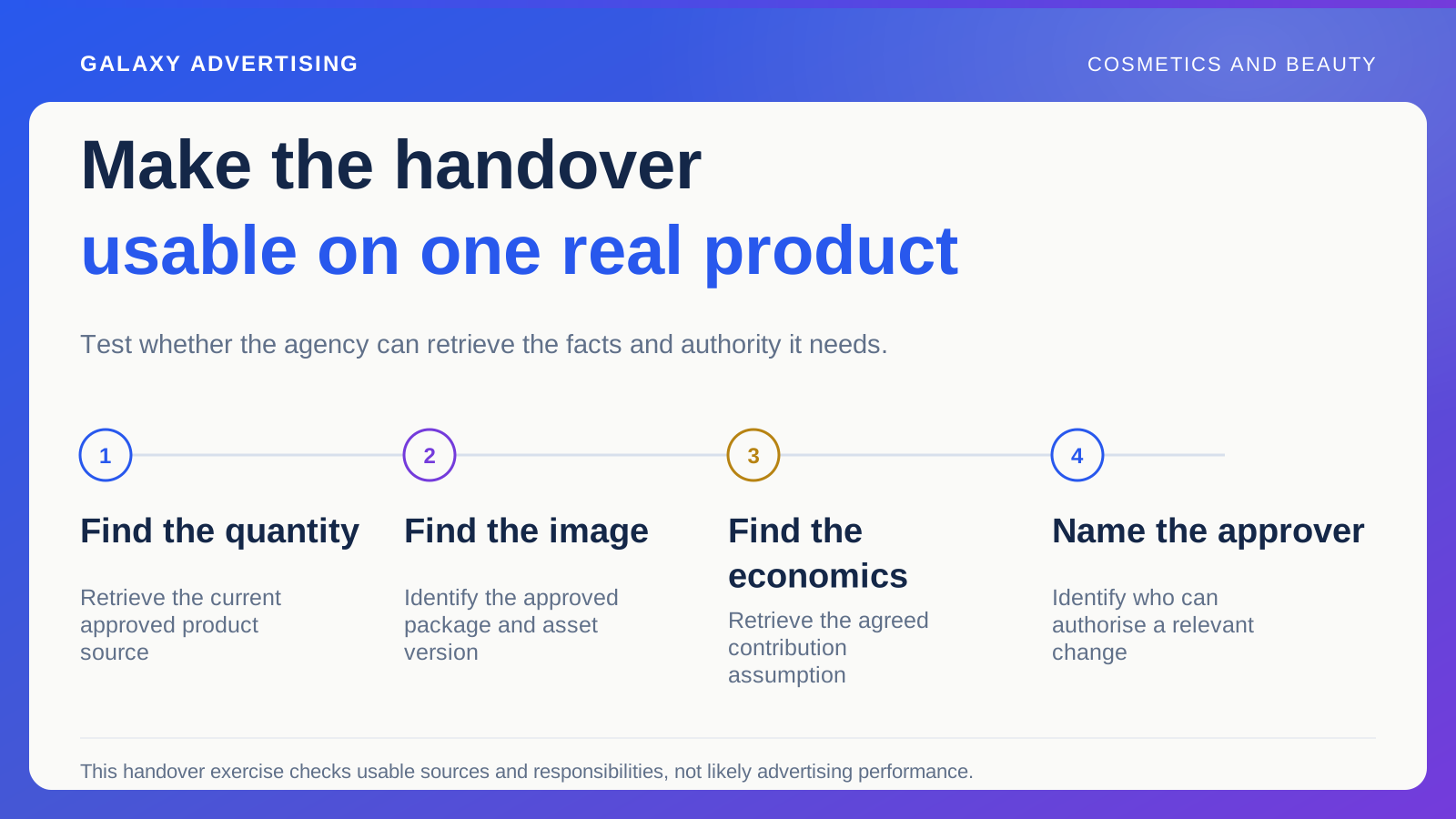
Use stable references for the product, variant and package. A variant is the selected shade, size or configuration. Similar names and images won’t reliably distinguish a change in quantity, included components or the claim being made.
Ask the responsible source to confirm whether a change is a visual refresh or a different offer. Don’t infer that the contents remain identical because the packaging looks familiar. That relationship needs verification rather than a reasonable sounding guess.
Keep the reference visible in production and customer service working material. People need to find the right record quickly enough to use it during ordinary work. An accurate file buried in an unlabelled folder offers little protection when somebody needs an answer now.
Separate facts from claims and personal observations
Organise objective product information separately from claims your business is authorised and able to support. Give every material statement an identifiable source and owner. Confidence in the wording is not evidence for what it says.
Customer observations have a place, but keep their nature clear. A comment about texture or appearance describes that person’s account. It does not automatically support a broader promise about the range. You can retain its usefulness without enlarging its meaning.
Record uncertainty openly. If you cannot verify a statement, narrow or pause it while the right owner resolves the issue. A deadline cannot make the evidence more definite. Clear boundaries also make writing easier later, because the team knows what it can responsibly say.
Show what the customer actually receives
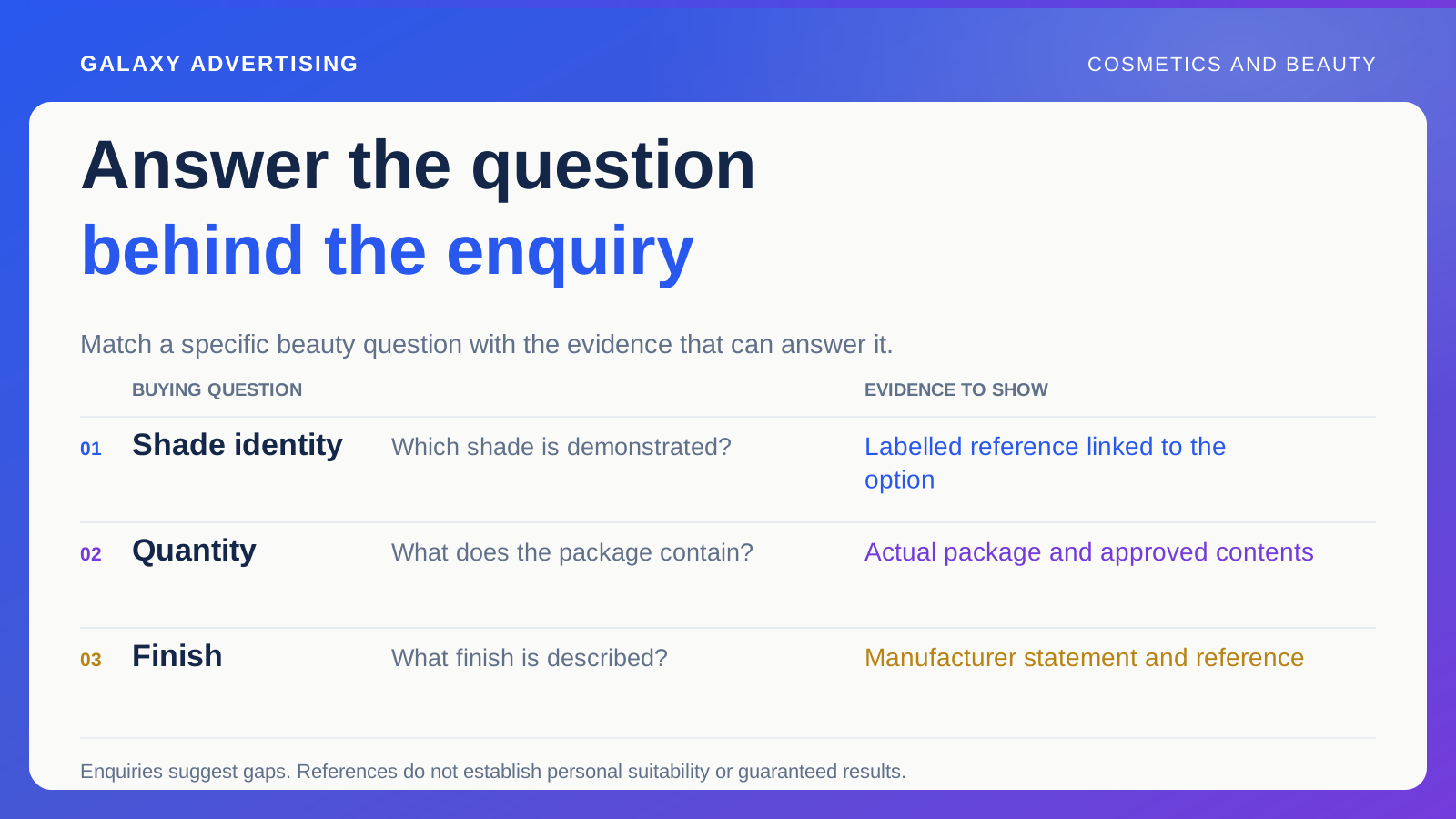
Check quantity, format, options and included items against the current offer. Full size products, miniatures, refills and accessories should not borrow one another’s apparent package without explanation. Make the distinctions visible wherever they affect understanding.
Connect the displayed price to what is pictured. A starting price can confuse people when the dominant image shows a substantially different package. They need to identify what the amount buys, without reconstructing the offer from several separate clues.
Where relevant, inspect the basket and confirmation wording too. A clear page can still lead into an ambiguous transaction if the selected item becomes a generic name. Product information needs to follow the purchase beyond the main description.
Follow the actual advert link
Label the demonstrated item and follow the campaign link yourself. The selected state, image and visible name should help a new visitor recognise the offer. They haven’t read your production brief, so don’t make the route depend on remembering it.
If your store cannot preserve the selection automatically, make the intended option easy to identify on the page. Check the behaviour before promising it. A technical assumption written into the brief is still an assumption until somebody tests the route.
Agree what happens when that option becomes unavailable. A silent substitution can change the proposition. Marketing and merchandising need a response that preserves accuracy, rather than leaving an active campaign promoting an obsolete configuration.
Let customer service work from the same facts
Review saved responses against the product source. An informal answer intended to reassure can create a stronger promise than the page. That promise still reaches the customer, even if it wasn’t part of the main marketing approval.
Provide a route for questions approved information cannot answer. Staff need to know who can verify a claim and when a personal suitability question goes beyond the retailer’s reliable knowledge. A friendly response should keep those boundaries intact.
Use recurring enquiries to distinguish missing information from information that is difficult to find. One needs a verified answer; the other may need better organisation. More generic copy can leave both problems exactly where they were.
Check that a correction reaches the customer
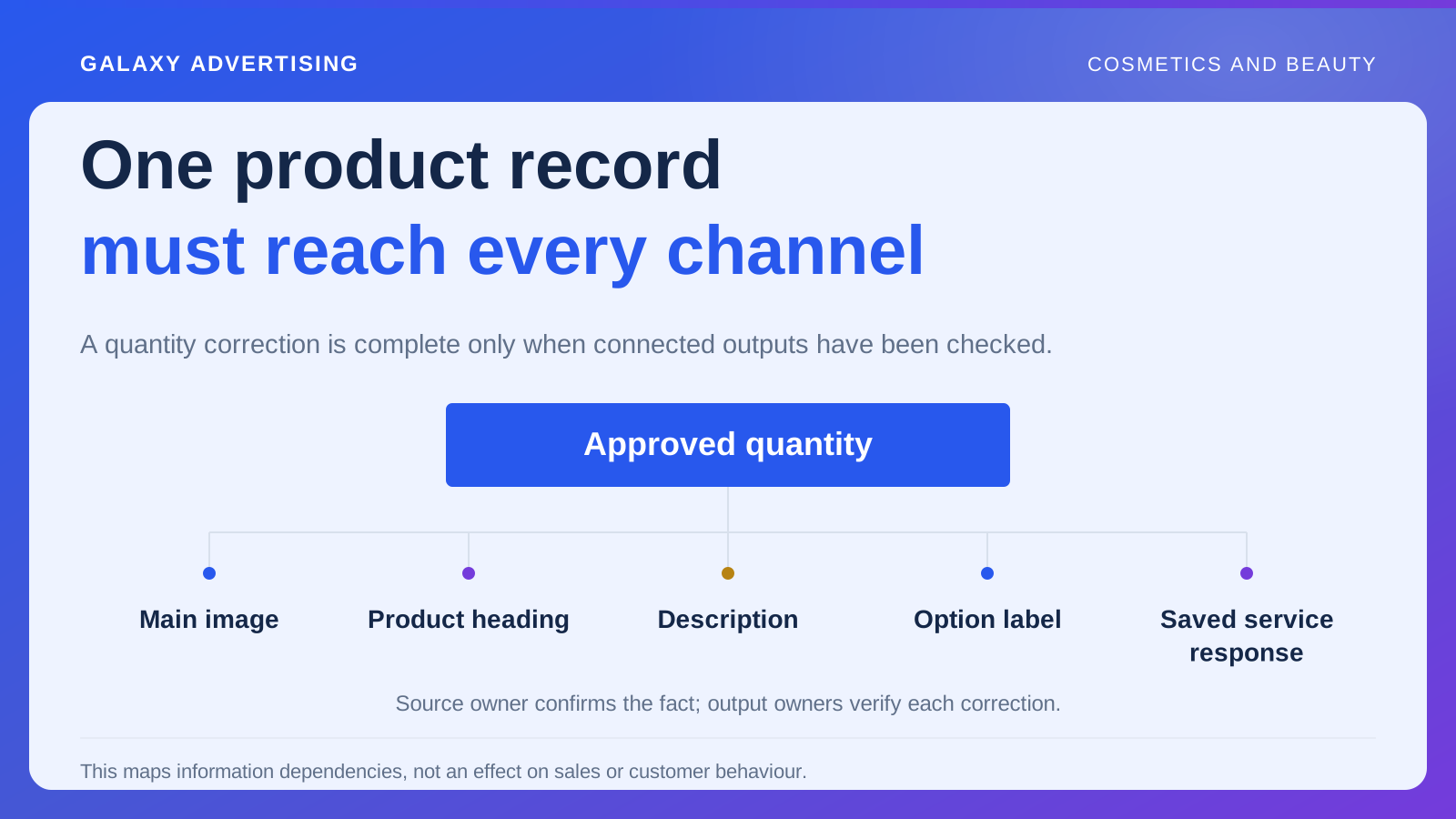
Find the source that owns an error, then update connected outputs appropriately. Editing one page downstream can leave a feed, asset or saved response unchanged. A correction needs a route as much as the original information did.
Keep a narrow verification record: item reference, statement, source and checked outputs. Someone should be able to reproduce the correction without reading a long conversation. Record the approved image and copy versions when promotion is affected.
That version record helps later production avoid reintroducing obsolete information simply because the old file is convenient. Maintenance belongs inside information quality. It is not a separate administrative concern that starts only after the interesting work has finished.
Try tracing one quantity correction from its source to the basket. Inspect the main image, product heading, description, option label and saved service response. Each can preserve an earlier fact independently. Looking only at the corrected paragraph may miss the different impression around it.
Give remaining discrepancies to their actual owners and repeat the check after implementation. You want a maintained factual relationship, rather than a temporary patch whose accuracy depends on which page or message somebody encounters first. Retain the verified record for the next package update.
Make accuracy part of release
Ask an unfamiliar reviewer to identify the item, its contents and the relevant source route. Their interpretation can expose ambiguity your experienced team has stopped noticing. Familiarity is useful, but it can also fill gaps a customer cannot fill.
Repeat that check after material product, package or system changes. Approval of an earlier version doesn’t verify what a customer encounters now. The current route is the one that needs to stand up to inspection.
One reliable product record gives writers accurate distinctions, creators verified references and staff a sound basis for answers. That is a more professional offer than several channels confidently maintaining their own versions of the facts. Your customer should be able to recognise the same product wherever they meet it.