It’s tempting to call “natural skin, an aspirational result and a premium feeling” a finished beauty brief. The image can deliver all three and still show a finish unlike your approved reference, with no clear account of the package quantity. The mood has landed. The product explanation hasn’t.
A useful brief separates factual boundaries from creative freedom. Say what viewers need to understand, supply the references and identify what must remain accurate. That gives a creator room to execute a clear idea, rather than guess what you’ll consider acceptable when the finished asset arrives.
Choose the question before choosing the treatment
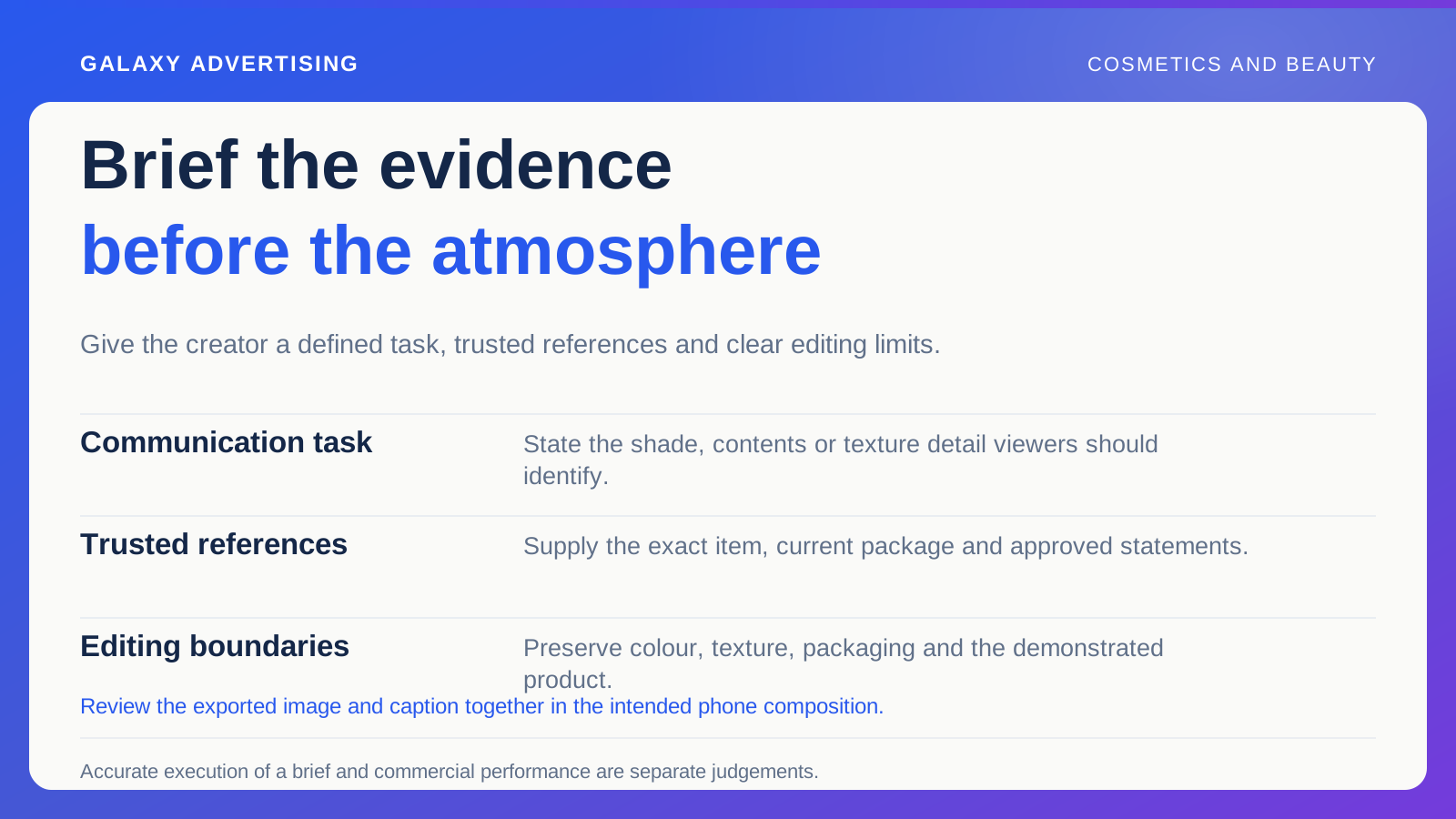
Give the asset one principal task. Is it identifying a shade, explaining a set’s contents or showing a documented texture reference? Each communication job needs different evidence. Start there before asking how premium the production should feel.
Don’t ask one short asset to resolve every uncertainty about the range. A dense montage can look comprehensive while making the important detail hard to judge. More visible activity does not necessarily mean a clearer explanation.
Describe the objective in observable terms: what should the customer be able to identify afterwards? “Make it irresistible” expresses an ambition. It gives production and approval very little reliable ground to work from. A clear task is more useful to both.
Hand over references people can trust
Supply the exact item, variant, quantity and approved statements that matter. A variant is the selected shade or configuration. Label reference images, distinguish current packaging from earlier versions and remove the need for a creator to choose which plausible file is authoritative.
Identify optional accessories and styling objects. The arrangement can suggest included contents even when a technically accurate caption says less. Give production an approved account of what is actually in the package, so the scene can respect it.
Keep this source pack small and organised. A large pile of references with uncertain identity is less useful than a clear selection. Give the approver access to the same facts. Final review should concern the intended offer, rather than competing memories of what was agreed.
Decide what the camera needs to preserve
Describe the characteristic the viewer must understand. A shade comparison needs clear identity and a consistent comparative viewing approach. A quantity explanation may depend more on the package reference and label than the decorative background.
Keep a visual reference separate from a guaranteed personal outcome. An image can support explanation while retaining limits around individual experience and viewing conditions. The claim should stay within what approved information actually establishes.
Ask production where an edit could obscure or alter the evidence. The most energetic transition isn’t automatically the most useful choice. Sometimes a stable view gives a product detail the time and clarity it needs. Let the communication task guide that discussion.
Agree editing limits before the work starts
Identify what must stay connected to the real reference: colour, texture, packaging and the appearance of the demonstrated product. Retouching shouldn’t quietly strengthen the product claim. Make those boundaries explicit before polishing begins.
Generated supporting scenes need the same factual review. A convincing output can alter the package, quantity or apparent effect without making the alteration obvious. Realistic imagery is not, by itself, accurate product information. Check it against the approved offer.
Retain the approved source with the final export. Future editors should not rebuild the claim from memory or intensify it to suit another format. Knowing what is reusable, and what needs another approval, gives the next adaptation a clearer starting point.
Be clear about a contributor’s role
A creator can make a demonstration easier to understand. A customer can describe an individual experience. Neither role automatically verifies every broader statement you place beside their words or image. Keep those responsibilities distinct.
Separate supplied copy from personal observation in the brief. Someone shouldn’t appear to have personally established a fact they were asked to repeat from a product sheet. The audience needs an honest account of where the statement comes from.
Record permissions and intended use through your approved process. Production and media owners need to know what was authorised so later versions remain within that scope. Receiving the file is not the whole operational handover. The permission information needs to travel with it.
Review what appears on the phone
Inspect the exported asset on a phone and in its intended composition. Cropping or compression can remove a shade label or make another package dominate. Approve what viewers will receive, rather than relying on a large working file that preserves details they won’t see.
Read the caption alongside the image. Together they can imply something neither appears to claim separately. Ask an unfamiliar reviewer what they believe is offered and which product they think they’re looking at. Their answer can reveal the combined impression.
Keep essential wording readable and focused. If accuracy requires covering the picture in qualifications, reconsider the proposition. A narrower claim or clearer scene may serve the customer better than another layer of tiny text.
For an illustrative gift set, have the product owner mark the included, optional and decorative objects in the planned scene. Then ask an unfamiliar reviewer what they think the customer receives. A difference between the two accounts gives production a specific question to resolve before the full shoot.
This tests package impression, not likely campaign performance. It can prevent a beautiful image needing an extensive corrective caption because the central arrangement never clearly communicated the offer. Use the check for that narrow purpose.
Leave the next production team something useful
Assign product accuracy, claim review and release responsibilities before production starts. Review a rough sequence early enough to fix missing evidence before every adaptation is finished. The useful moment to discover a gap is while the work can still address it.
After delivery, judge separately whether the asset fulfilled its brief and whether the commercial hypothesis proved worthwhile. A creator can supply accurate evidence while the customer argument still needs revision. Those are different conclusions.
Record the question, product reference and approved claim behind each asset in your creative library. Then you can change the next argument deliberately while keeping the facts dependable. Visual variety becomes more useful when everyone knows what the image must still tell the truth about.