What if you increase the loafer budget just as the most requested recorded sizes become scarce? The first result looks encouraging, but it came with a temporary offer and a recent order history. It might justify another step without giving you a dependable formula for expansion.
Growth readiness starts with the offer you can maintain. Work out what remains reliable, what is changing and what the next commitment should establish. A larger budget cannot do that thinking for you.
Describe what produced the first result
Record the model, finish, sizes available, price, creative and destination. Include the promotional and service conditions that mattered. A category average tells you less than a clear picture of the combination customers actually encountered.
Connect the result with your agreed commercial definitions. Initial product revenue and a purchase retained after later adjustments describe different things. Expansion should not rest on an attractive number whose relationship with store records remains unexplained.
Keep the evidence in proportion. A small group of suitable orders can warrant investigation. It cannot establish that the same acquisition cost will stay available indefinitely. Leave that uncertainty in the decision, rather than quietly turning an early average into a guarantee.
Check what the next customers can buy
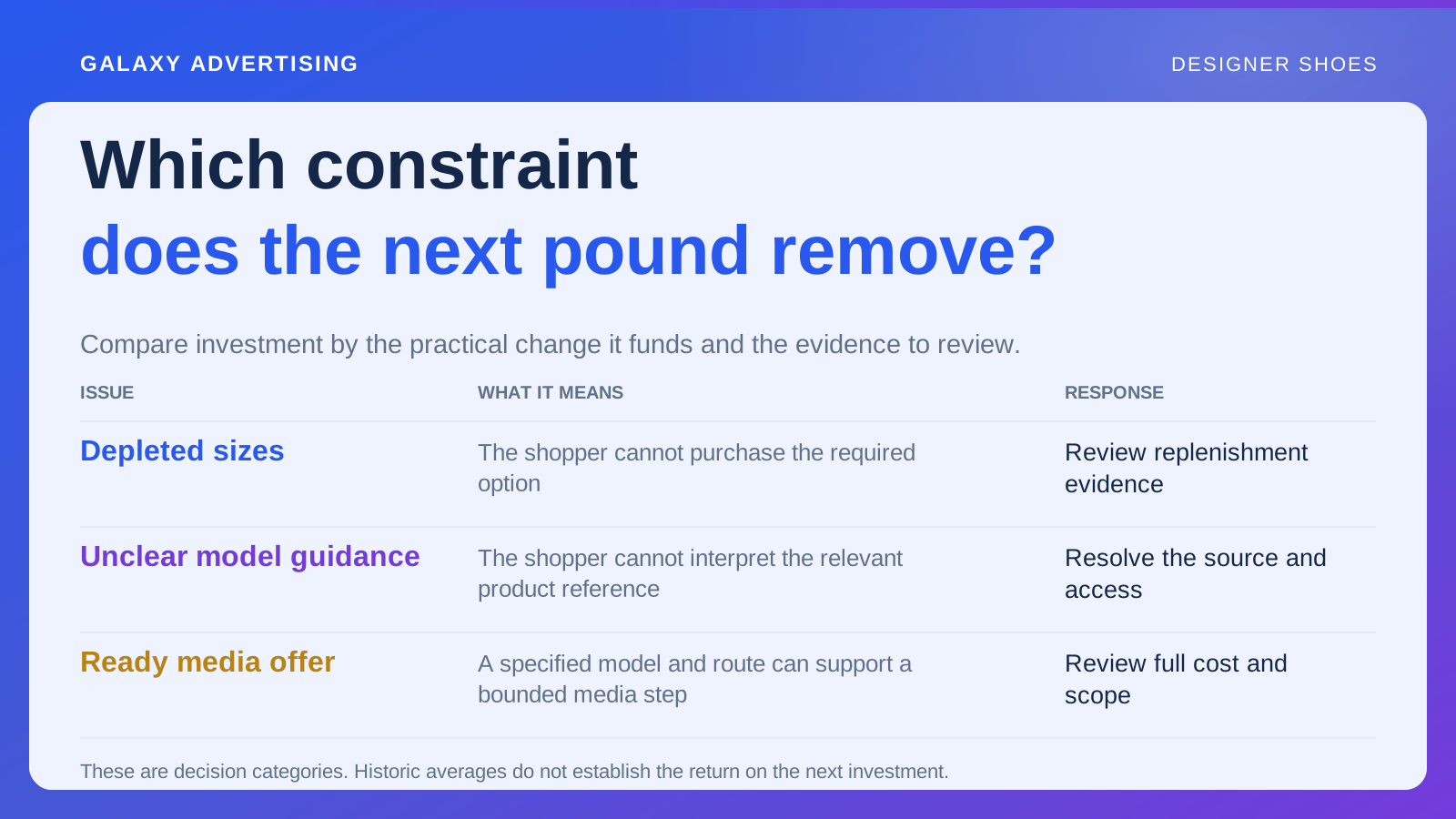
Review useful size coverage for the model you want to expand. General availability can hide a much narrower practical choice than the one behind the first result. Ask the stock owner what is confirmed about future supply.
Agree what happens as sizes become unavailable. Depending on your actual setup, you may need revised campaign emphasis, an accurately described alternative or another supported action. The account team should verify any automatic control before promising it exists.
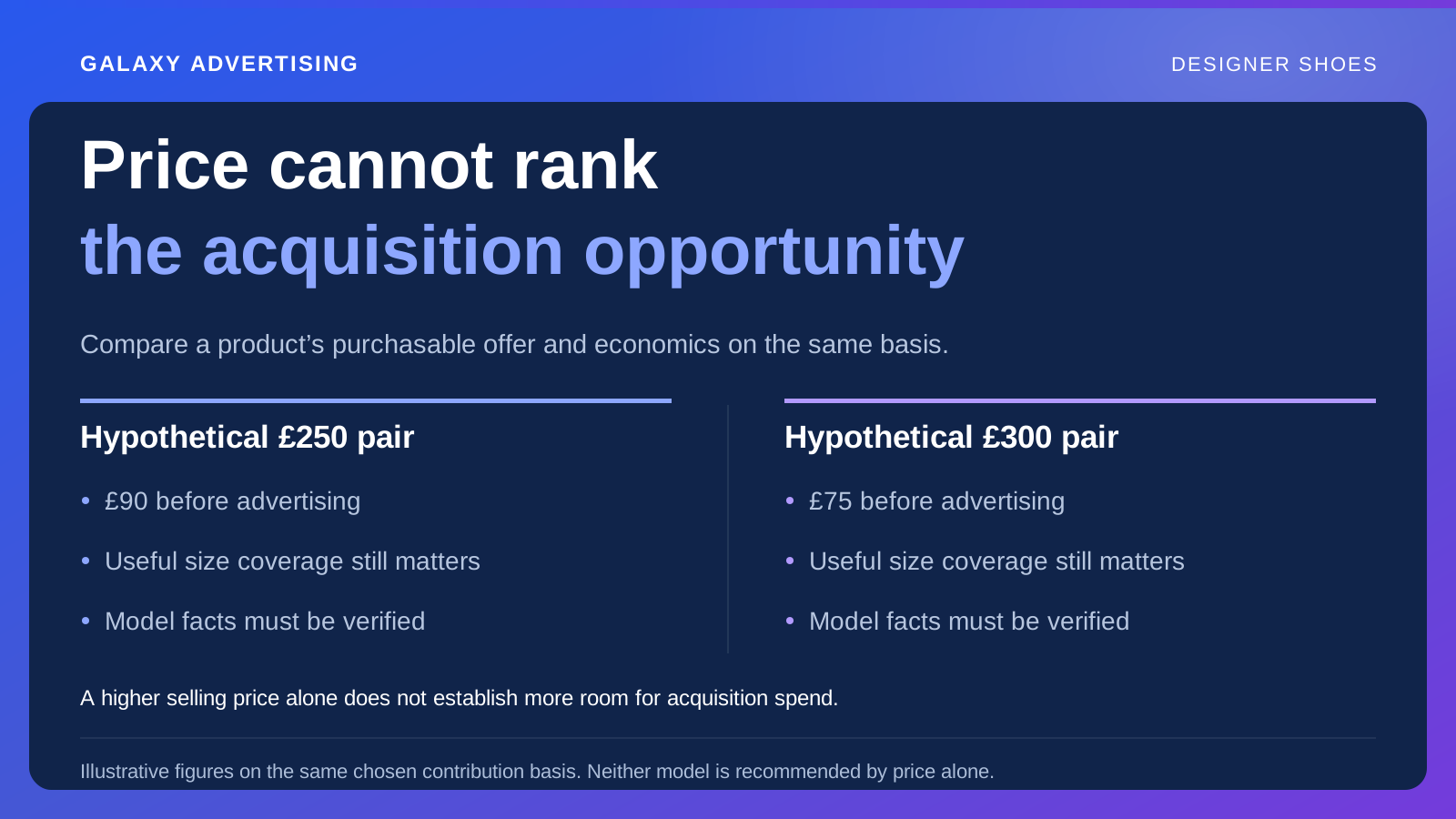
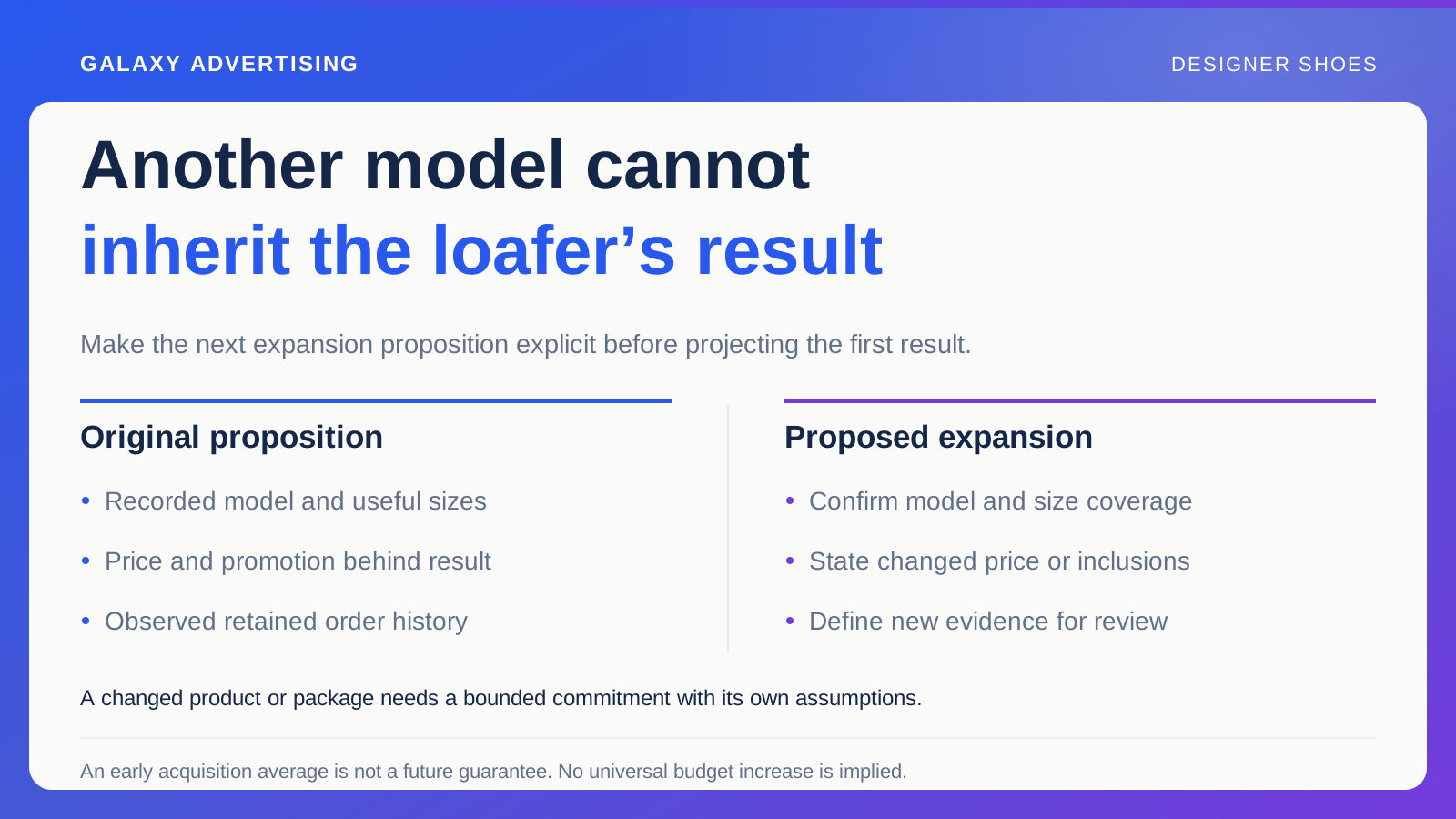
Another model does not inherit the loafer's result because it looks similar. Its fit information, customer appeal and contribution, the money remaining after the costs included in the calculation, may differ. Expanding the product selection changes the commercial proposition as well as the media plan.
Know which buying argument you are backing
Explain what the strongest asset set out to show. A distinctive silhouette, visible material detail and illustrative styling context make different arguments. You need to know which customer question the evidence addressed before funding more of it.
Keep the approved product references and permissions for the intended use. A successful asset becomes difficult to build on if nobody can identify where its facts came from or what boundaries apply to later versions.
Give new production a deliberate question. Changing the background adds variety in presentation; it does not automatically add a reason to buy. Your plan should distinguish maintaining an argument that appears useful from investigating a different argument altogether.
Walk through the promise on a phone
Follow the actual destination and check model recognition, finish, sizing information and purchase conditions. Change an option and inspect what happens when it becomes unavailable. That is part of the buying route too.
Fix demonstrated mismatches before describing them as weak demand. A visitor should not need your team's catalogue knowledge to recognise the pair in the advert. The page needs to preserve the product decision clearly enough for someone new to make it.
Also distinguish a working route from an appealing offer. People can understand your price and service perfectly well and still decline them. When the offer itself is the constraint, another layout change may be the wrong job to commission before increasing acquisition investment.
Ask what the extra orders mean for operations
Review stock, packing, fulfilment and customer information dependencies with the people responsible. More demand is not automatically effortless, and every increase does not create the same operational strain. Establish what this particular step needs.
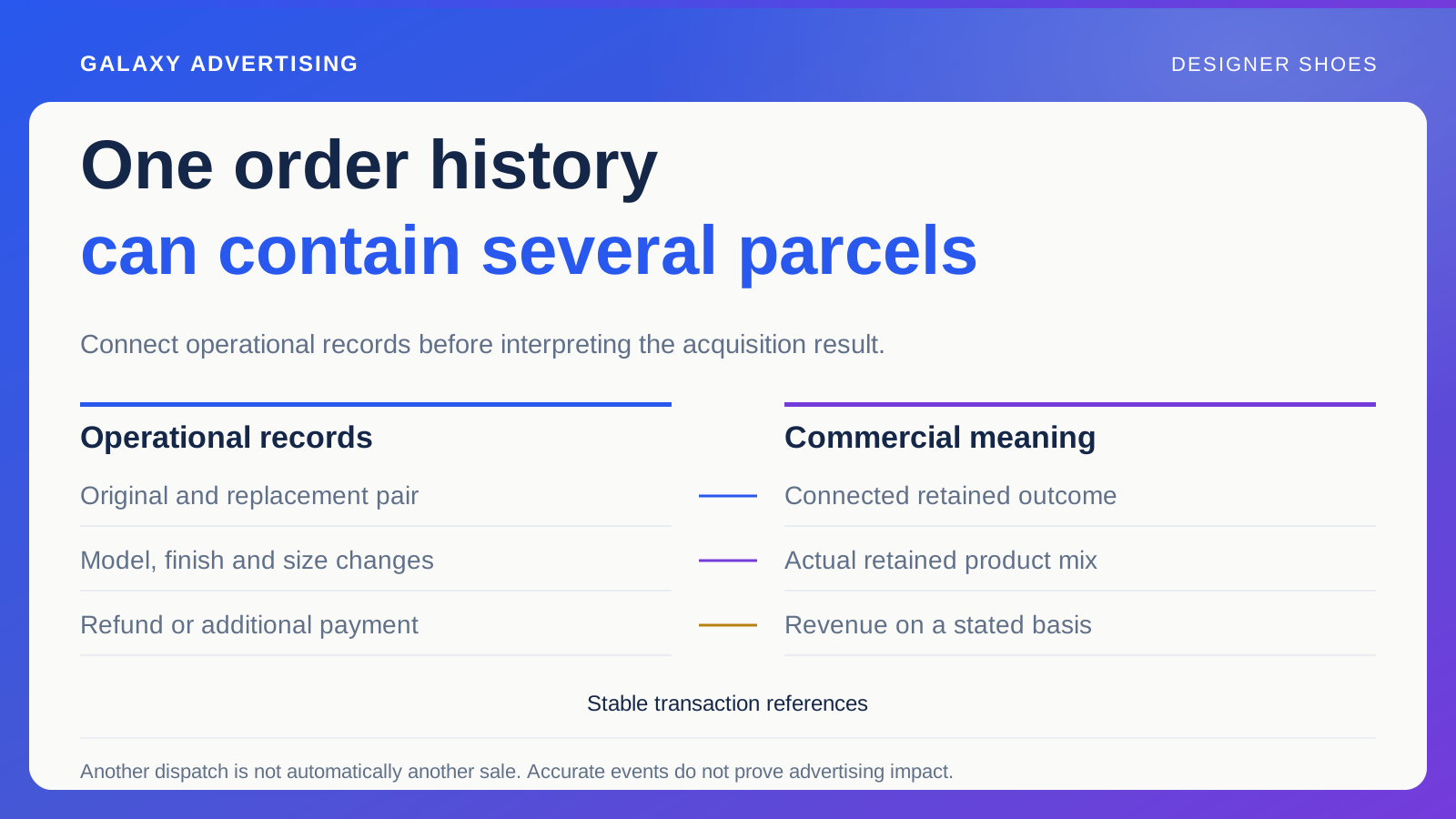
Include size exchanges and other exceptions where they affect retained economics. Suitable initial orders can reveal a cost or service issue worth understanding before the next commitment. Initial success and operational readiness need to be read together.
Set up a reliable alert route for changing conditions. Name the owner, the relevant product reference and the expected campaign response. That is much more usable than asking people to keep marketing informed. Clear operational communication helps protect the offer as demand changes.
Make the next step small enough to understand
Specify what you are expanding: investment in the same offer, another model or another creative argument. You can choose to combine all three, but accept that the result will tell you less about which change mattered.
Agree an affordable scope and the evidence needed for review. There is no universal percentage increase that suits every retailer. Base the commitment on your economics, operating capacity and willingness to fund uncertainty.
Keep factual corrections separate from the wider commercial judgement. An incorrect image needs prompt action. Judging retained acquisition value might need a more complete transaction history. Clear review conditions stop those decisions being muddled together.
Check whether the next step retains the promotion behind the original result. Removing a temporary price or included accessory changes the proposition even when the model stays the same. Expansion can still be worth investigating, but describe the revised offer explicitly. Yesterday's evidence should not become an unjustified promise about a different package.
Let the next result change your mind
Compare product mix, retained contribution and customer questions with the assumptions you started with. Record changes in the offer as well as the campaign. You should be able to explain a difference without leaning entirely on a dashboard average.
If the outcome weakens, investigate plausible causes before dismissing the original result. If it improves, keep the conclusion attached to what you actually observed. The rest of the range has not suddenly become proven.
A footwear programme becomes more dependable when the offer is maintainable, the creative evidence is credible and operations can support the demand being sought. Increasing spend commits you further to those conditions. It does not make them disappear.