A hypothetical shoe order can start at £280 and later receive a £20 adjustment while an advertising observation still describes the initial event. Both records need explaining. Treating them as though they report the same state of the purchase won't make the review reliable.
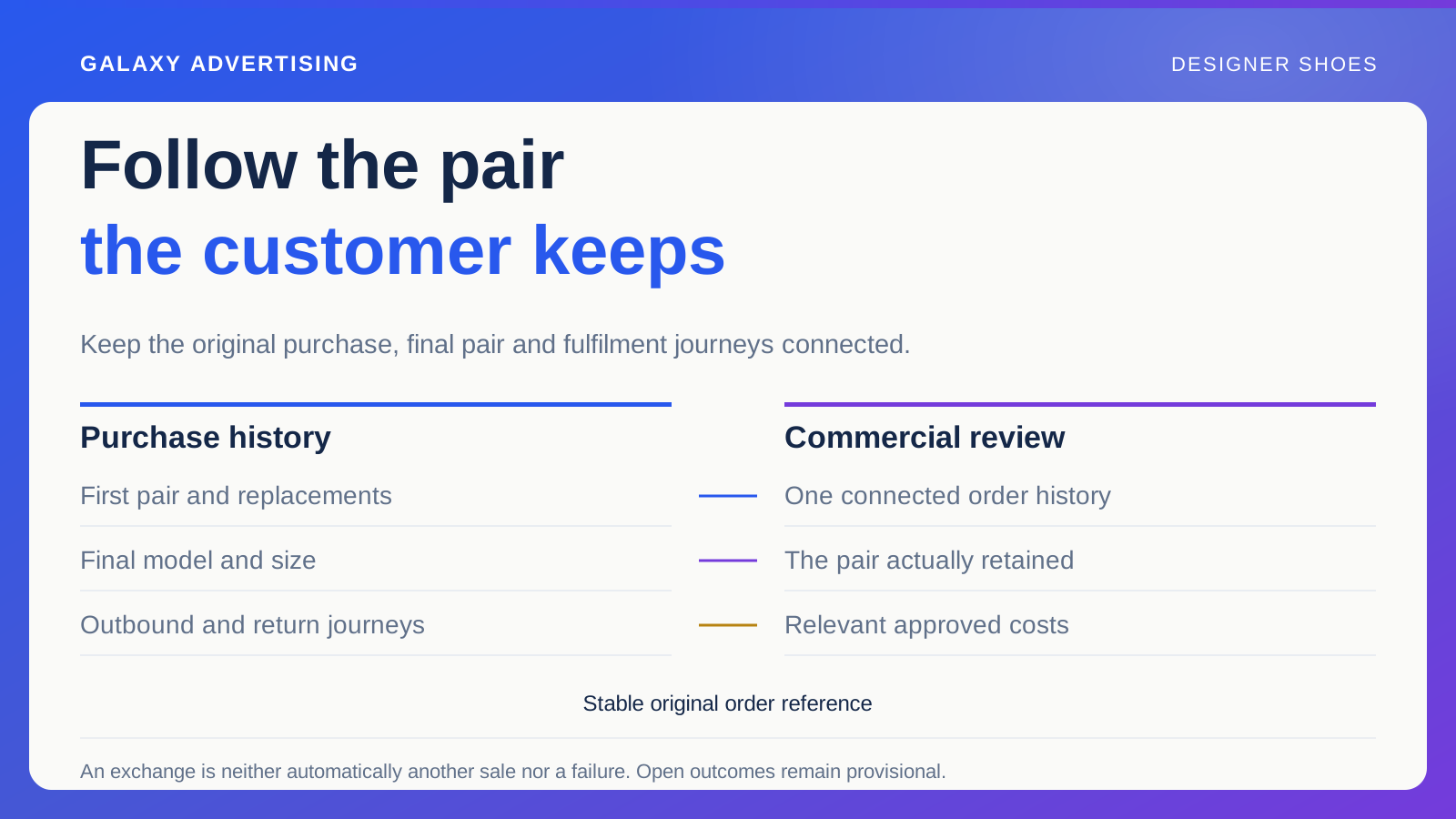
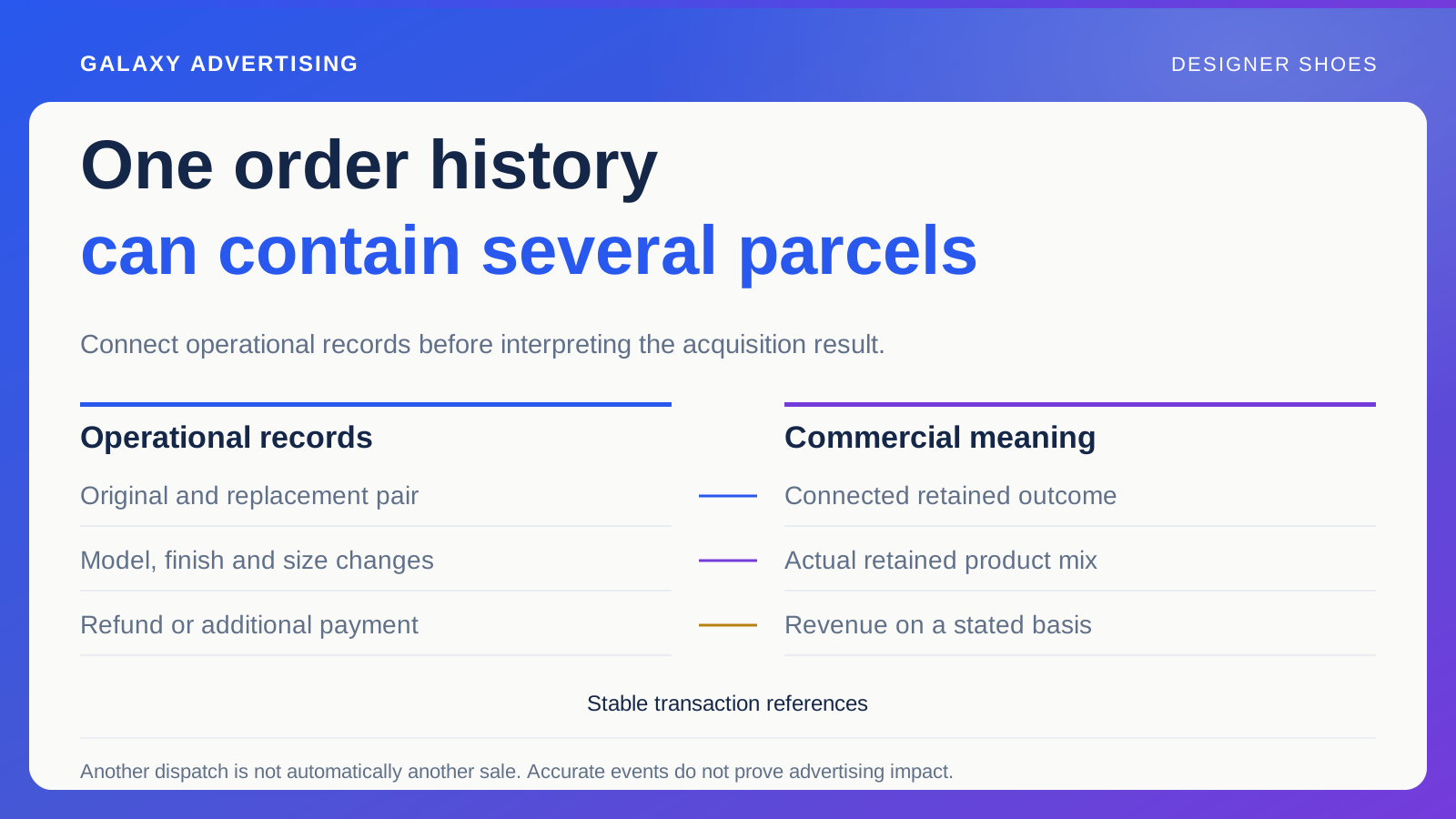
A size exchange adds dispatches, replacement items and sometimes adjustments. Those can be legitimate operating records without representing independent purchases. Before debating campaign or creative investment, build a stable transaction story connecting the original order, later changes and retained outcome, with its product and commercial context still intact.
Map the history before selecting a dashboard
Identify the records for original order, payment, fulfilment, exchange and refund. Have the system owner explain their connections. Similar names and neighbouring timestamps aren't dependable replacements for stable references. You need to know that the records concern the same history, rather than merely look related.
Use representative examples instead of keeping the discussion abstract. An ordinary completed order shows the straightforward route. A size exchange exposes where it becomes more complicated. Those examples give the team something identifiable to inspect while agreeing what the commercial view should follow.
Record each system's purpose. The warehouse manages physical items; the store records the transaction; marketing tools observe events under their own configurations. Different totals can reflect those different jobs without proving one team made an error. Understand the basis before demanding that every number agree.
Define what you mean by a retained outcome
Agree the commercial state the review needs to describe. The initial paid order, fulfilled pair and purchase retained after later adjustments are related observations. They aren't interchangeable. A useful definition makes clear which of them the reported result represents.
Specify how an exchange without additional payment is treated. You may have sent another parcel without acquiring another customer or earning another full product sale. Preserve that distinction in the report instead of allowing operational activity to inflate the acquisition picture.
Define relevant partial refunds, additional payments and cancelled replacements too. A clear dictionary is more useful than asking everyone to “count sales accurately”. It lets a reviewer see the precise interpretation applied to an exception, rather than assume that familiar labels carry the same meaning across the team.
Keep the product and size history together
Retain original and replacement model, finish and size where relevant. The retained purchase may concern a different variant, meaning the selected size, colour or configuration, from the one first advertised or chosen. That change belongs in the history rather than disappearing into the initial product reference.
Use it to investigate information and merchandising questions carefully. Repeated recorded movements between certain sizes could justify checking model guidance. They don't establish a universal fit recommendation or explain every exchange. A pattern can open a question without settling its explanation.
Keep sensitive or unnecessary customer detail out of marketing reports. The useful unit is usually the relevant transaction and product history. Use approved access and data handling arrangements instead of circulating complete records without a defined purpose. Enough context to investigate doesn't require sharing everything available.
Reconcile values using a stated definition
Identify whether reviewed revenue includes tax, delivery income and discounts. Show the effect of refunds and additional payments. Keep those definitions consistent with the commercial calculation used to assess campaign affordability, so the reporting number and the investment decision concern the same basis.
Return to the hypothetical £280 order and £20 adjustment. The commercial review needs to explain the resulting value, while an earlier advertising observation may still concern the initial event. This is a reconciliation question, not a statement about typical footwear behaviour. The example doesn't settle how your actual systems represent it.
Separate timing differences from genuine faults. A later adjustment can reach one source before another. Have the owner establish what the configuration supports and what the review can reasonably expect to match. An apparent disagreement needs investigation before either report is declared wrong.
Trace what reaches each marketing system
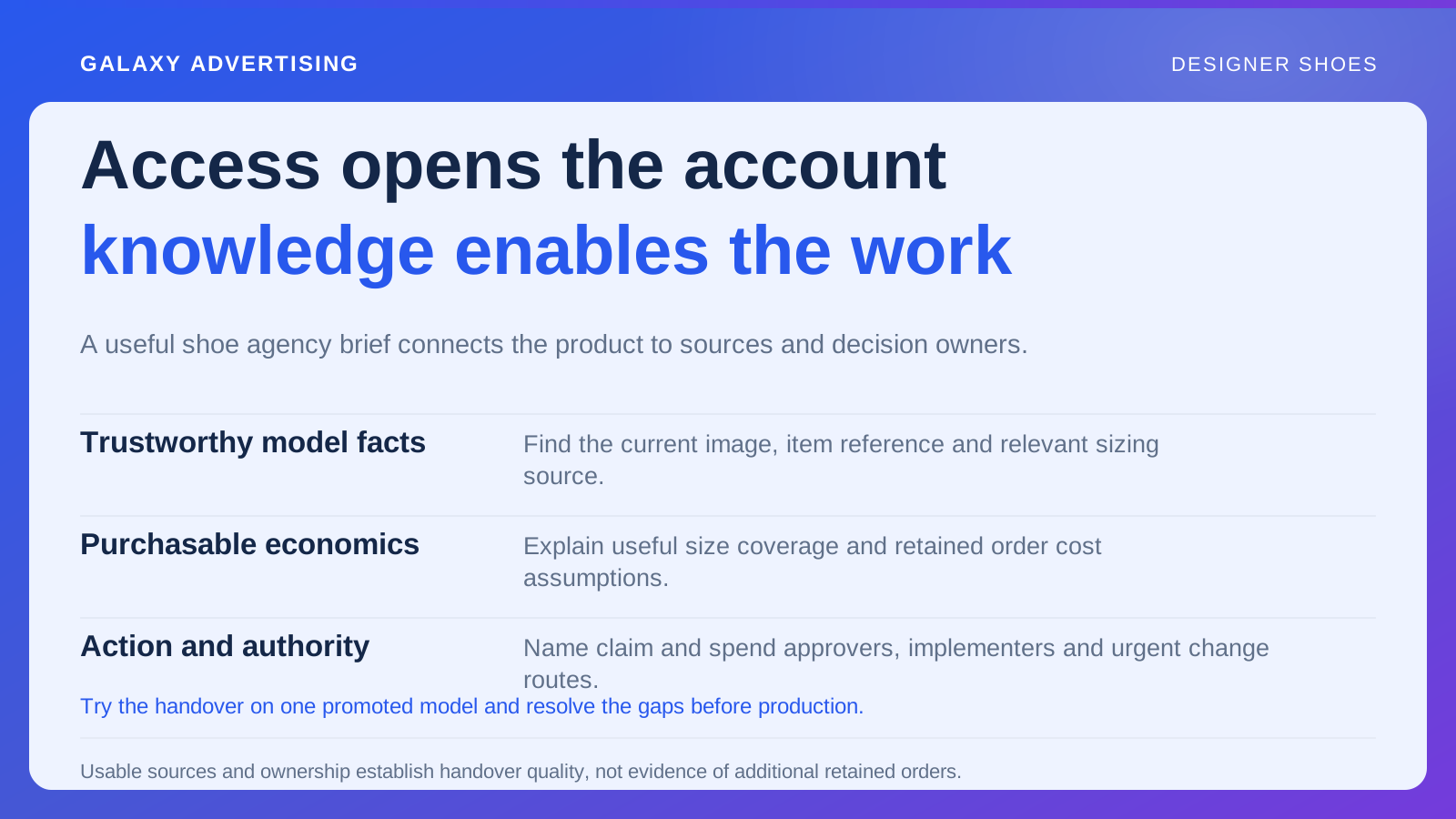
Ask the responsible specialist to follow an actual order into each marketing system. Use current official documentation when technical configuration needs interpretation or repair. A familiar event label doesn't prove that the observed action has the intended meaning. Verify the route behind the name.
Check for repeated observations of the same commercial transaction, wrong values and product references nobody can interpret. Keep reproducible examples with enough context for the owner to investigate. A specific mismatch gives the correction a clearer starting point than a general concern that tracking looks odd.
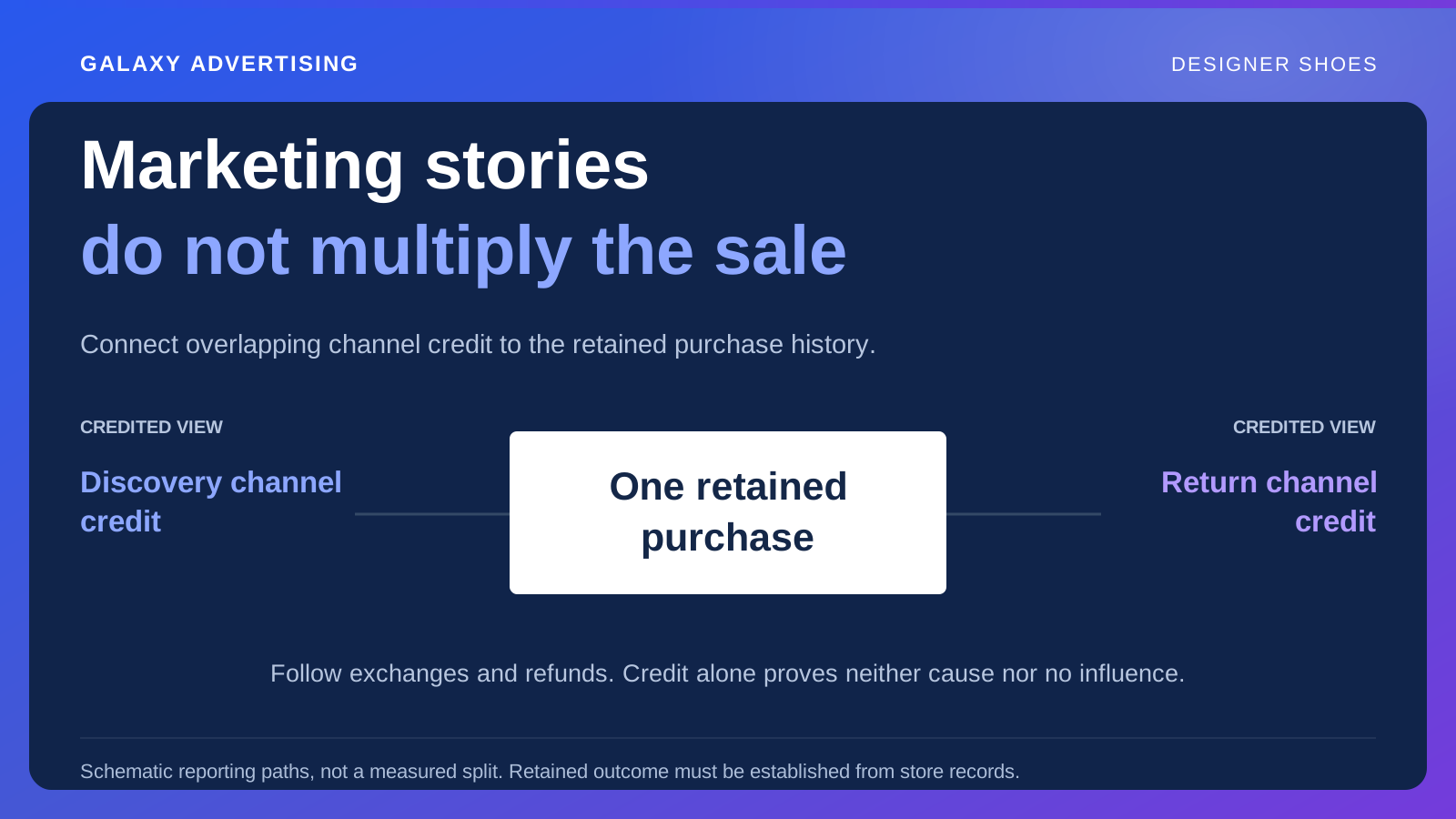
Keep technical accuracy separate from additional sales. Correcting a duplicate event improves the reporting basis. It doesn't establish how many purchases advertising caused. That wider question needs an appropriate comparison and a conclusion proportionate to its method. A repaired event and a causal result are different findings.
Choose groups that make a useful decision possible
Use groups large enough to interpret and specific enough to expose meaningful differences. A model, relevant collection or defined acquisition offer may be more practical than hundreds of tiny variant rows. The grouping needs to serve the decision rather than demonstrate how much detail you can export.
Include later order history consistently. A recent campaign has had less opportunity for refunds or exchanges than a mature group. Label that limitation rather than force premature certainty. Record stock and promotional conditions too: changed useful size coverage can alter who responds and what demand you can fulfil.
Include a real case where the replacement changes model, not only size. Revenue and relevant costs can change, so assuming every exchange preserves the original product mix may misdescribe the result. Keep the example attached to its actual records. It tests definitions; it doesn't establish that the same pattern applies throughout the range.
Make exceptions manageable and visible
Keep a short log with transaction reference, mismatch, likely owner and verified resolution. Use it to repair the route, rather than create a permanent manual audit of every sale. A manageable record helps people act on specific exceptions and see whether the correction reached its intended outcome.
Repeat a small reconciliation after material checkout, order system or measurement changes. An earlier successful check doesn't establish that a revised integration preserves the definitions.
The dashboard becomes useful when the purchase beneath it is understandable. Another dispatched pair isn't automatically another acquired customer, and a value means little without its definition. A traceable history gives the next investment discussion something dependable to stand on.