We can confuse a preference for lifestyle photography with evidence that it works better. The new worn images look lovely, the campaign improves, and it's tempting to stop there. Except the same period also brought a promotion and better availability, so the explanation remains uncertain.
Start with the question the worn view is meant to answer. Perhaps it helps someone understand proportion beside clothing or recognise a silhouette that's unclear in an isolated image. That gives production a specific hypothesis, with observations and limits you can agree before commissioning the shoot.
Identify what the current image leaves unclear
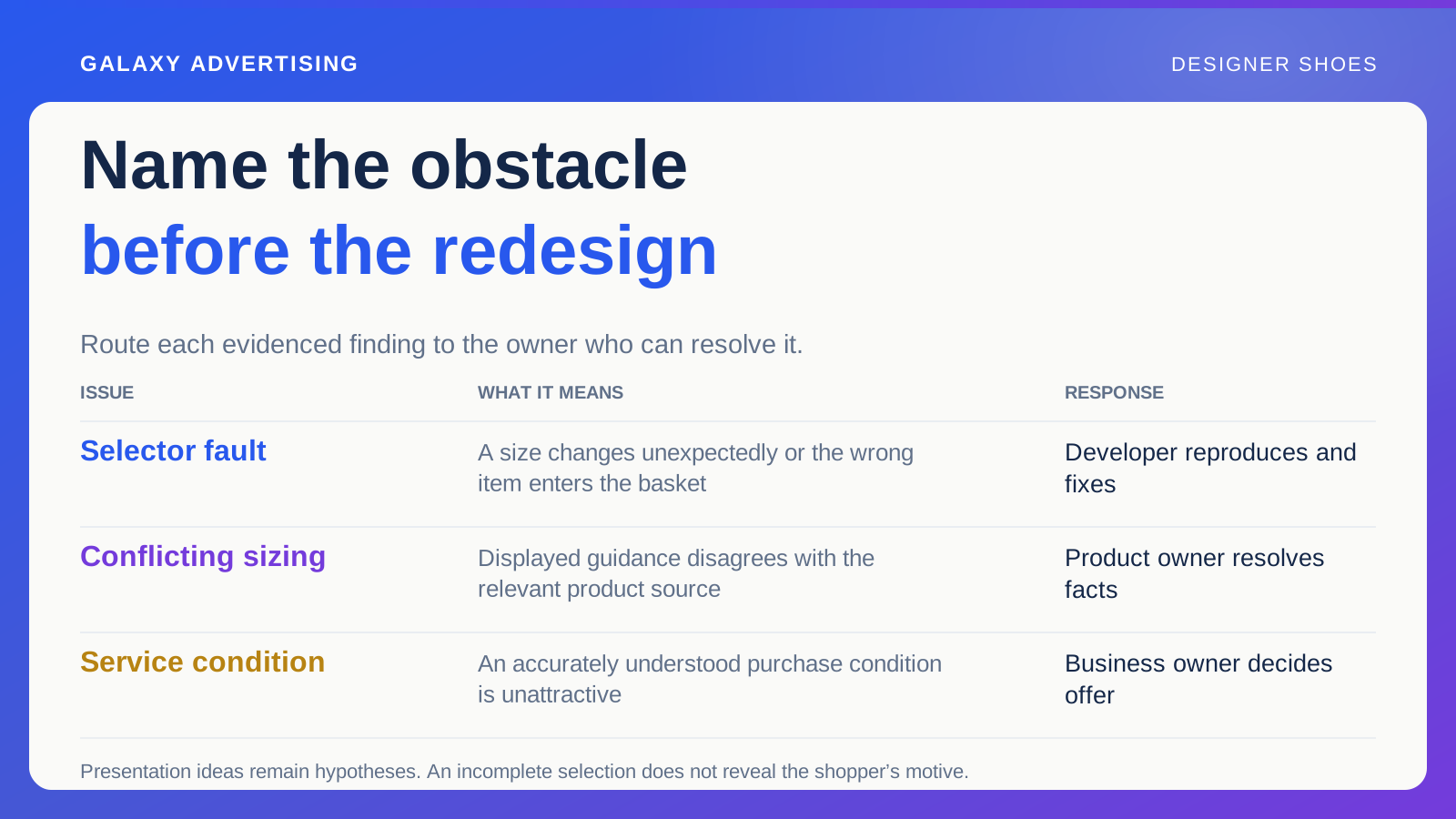
Look at the asset alongside real customer questions. Is toe shape difficult to judge? Does the side profile need a clearer reference? Is existing lighting creating confusion about the finish? These are practical information gaps, rather than general reasons to prefer another photographic style.
Choose one for the first comparison. Changing model, setting, claim and offer together can serve a campaign purpose, but makes it difficult to interpret the result as evidence about the worn view alone. Decide which question you're paying to investigate before introducing changes around it.
“Lifestyle looks more premium” expresses a judgement without defining a customer task. Ask what the viewer should understand or do more clearly after seeing the proposed evidence. That turns a production preference into something the business can examine, rather than simply approve on taste.
Design the evidence before styling the execution
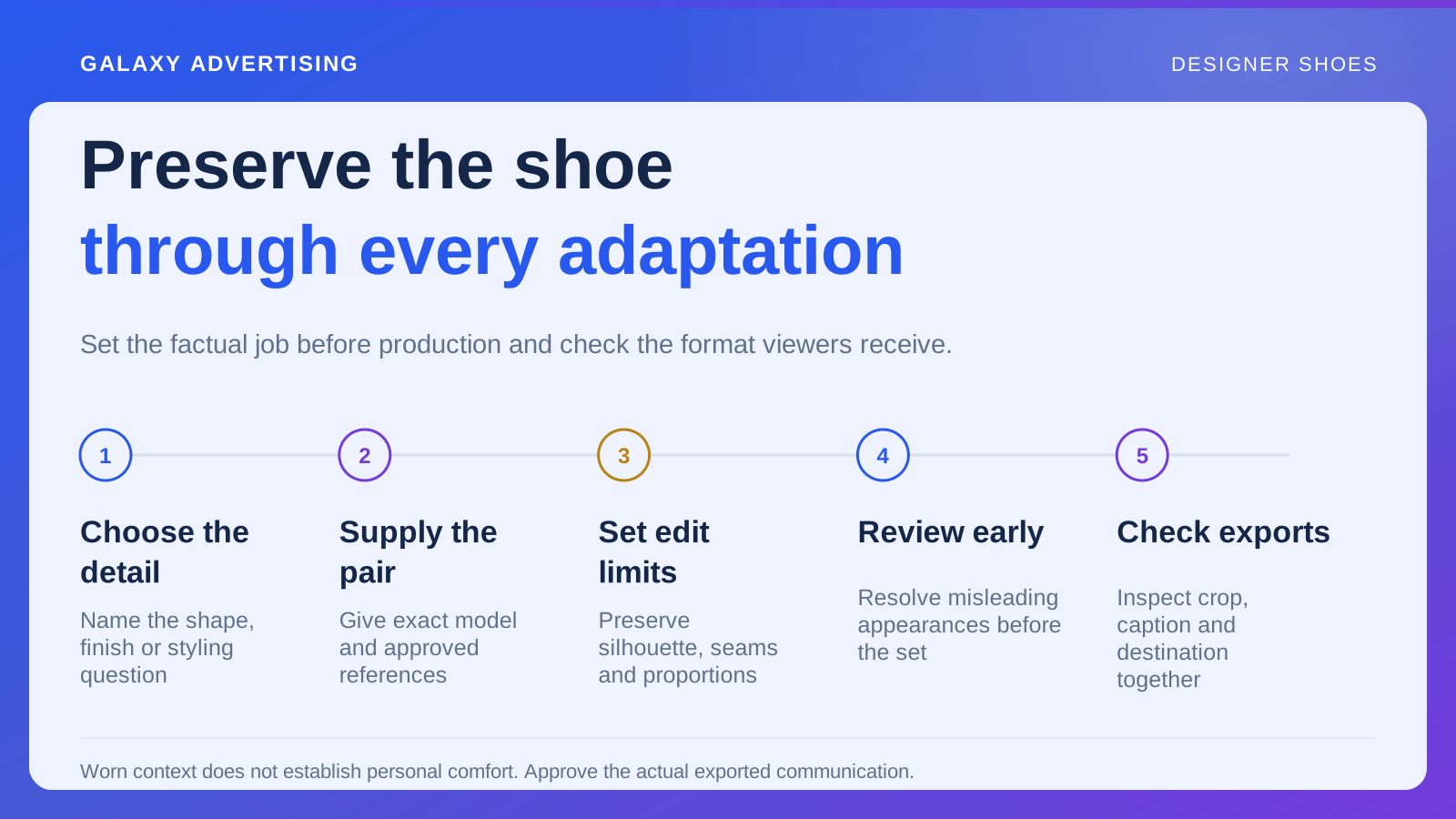
Specify the model, finish and relevant angle that must remain identifiable. Give production accurate references and clear boundaries for characteristics editing must preserve. The visual treatment needs to explain the same product the shopper will find after clicking.
For a hypothetical loafer proportion question, show the actual pair with its silhouette visible beside a relevant clothing reference. A dramatic pose that obscures the shape doesn't become a clarity test because the brief calls it one. The composition has to reveal the intended evidence.
Keep appearance separate from personal fit and comfort. A worn image can illustrate how the shoe looks. It can't establish how it will feel for every shopper. Don't let an unsupported claim enter the test simply because the scene itself appears credible and appealing.
Be honest about the comparison you can run
Record what changes and what should remain comparable, including product, destination and offer. If you intend a controlled comparison, use the account's actual supported capabilities and have the responsible specialist verify technical requirements. The method needs to match the claim you plan to make.
If you're comparing ordinary campaigns, state the limits. Unequal delivery, different audiences and changing stock can affect the result. Don't describe the method as more controlled than it is. Those qualifications belong with the finding, rather than appear only if someone challenges it later.
The aim is an interpretable next decision, not a claim of perfect conditions. A bounded comparison can still teach you something if you retain uncertainty and avoid assigning every change to the visual treatment. Imperfect evidence becomes less useful when its limits are hidden.
Watch the things the hypothesis concerns
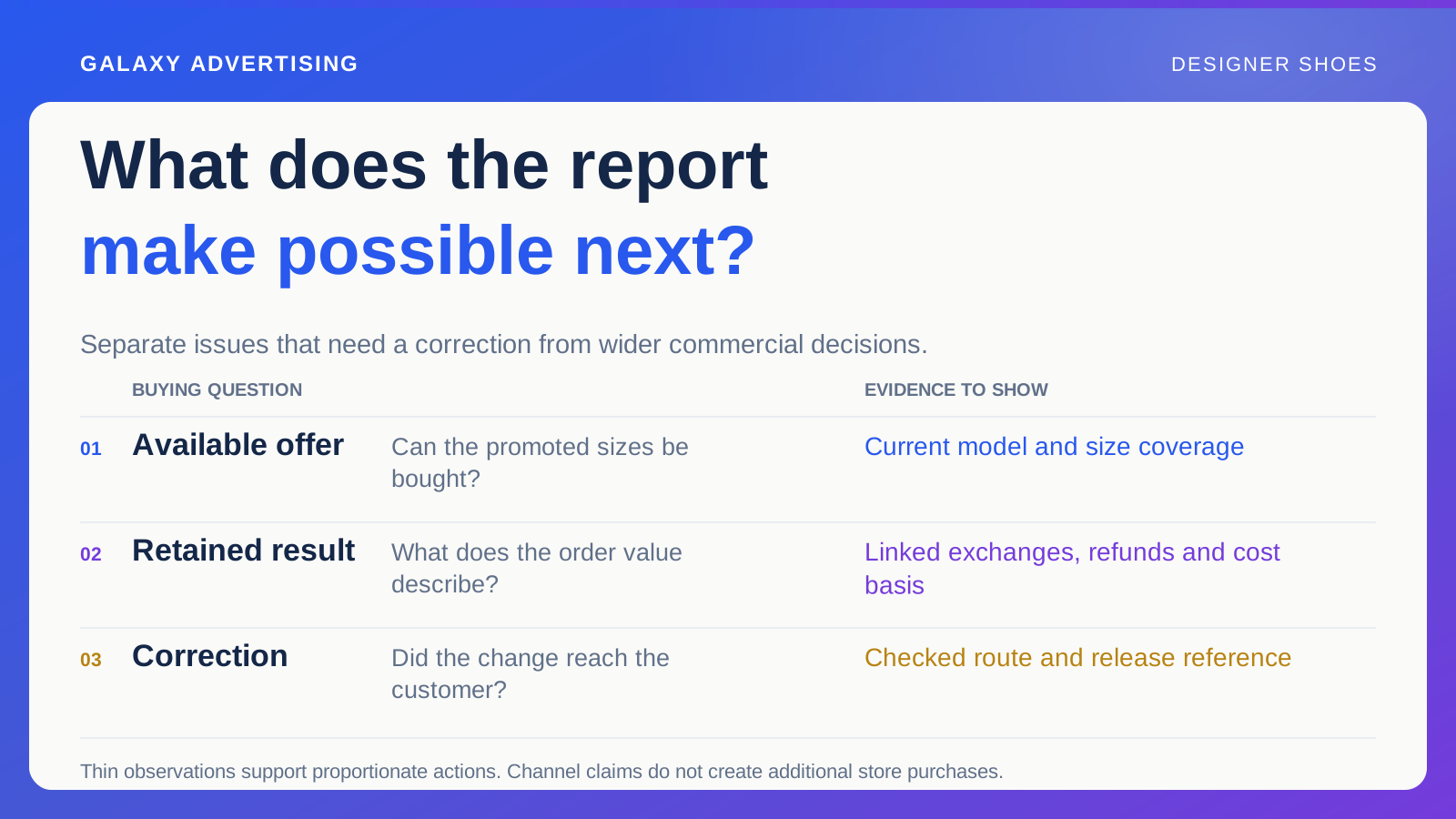
For model recognition, examine relevant product exploration and enquiries you can observe. For commercial acquisition, include retained orders and costs on a consistent basis. The question determines the observation, rather than whichever chart is easiest to export.
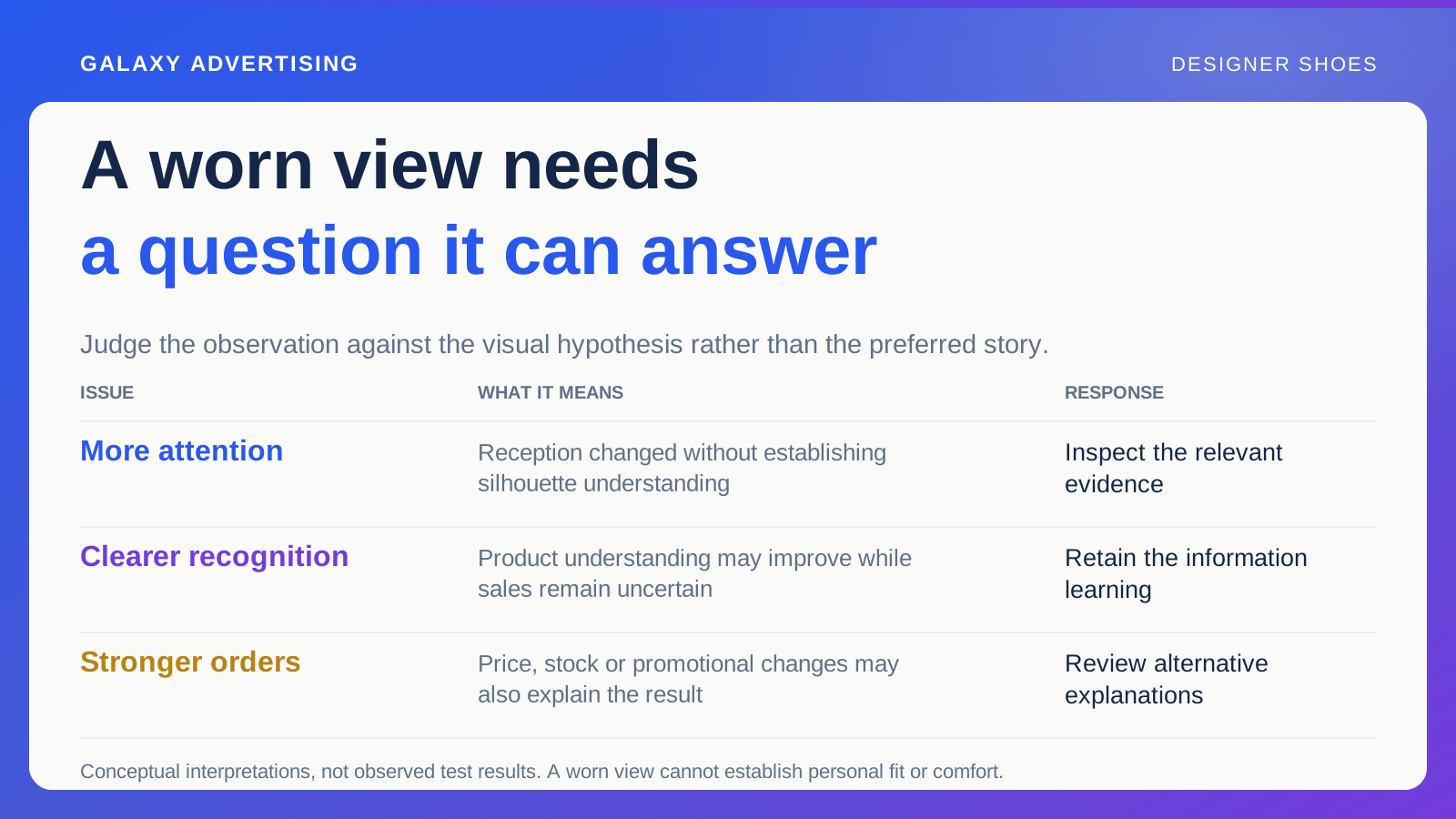
Attention measures can help explain reception. They don't establish silhouette understanding or whether purchases are worthwhile. Use them because they contribute to the question, not just because they arrive quickly and look decisive. A narrow observation should keep its narrow meaning.
Write the possible decisions in plain language. You might keep the clearer view, revise its composition or conclude that current evidence can't distinguish the alternatives. Leave the inconclusive outcome in the plan. A comparison that allows only a winner puts pressure on the interpretation before anything runs.
Check the whole route before launch
Verify the exact model and accurate destination, with useful sizes available and relevant product information accessible. You can't assess a visual explanation fairly if the associated offer changes silently. Confirm the practical purchase route as well as the production file.
Ask someone unfamiliar with the work what the image helps them judge. This checks production clarity, not future performance. It can reveal a missing angle or ambiguous model label before media spend is committed. Treat their response as a way to inspect the explanation.
View the final output at its intended phone size. A fine detail visible in a large working file can disappear in the delivered composition. Approval needs to concern the asset you'll use, rather than only the version that looked clear on a production screen.
Give other explanations room at review
Record material changes in price, stock, destination and promotional support. Ask whether observations fit the original hypothesis and what else could explain them. A stronger order result without relevant supporting evidence may justify a narrower conclusion than the team hoped for.
Conversely, improved product understanding without an immediate order increase can support an information improvement while leaving commercial impact uncertain. Don't make every sensible communication change depend on claiming additional sales. Accuracy and commercial effect are different decisions, and the evidence may resolve only one.
One comparison doesn't establish a permanent rule that every footwear asset needs this format. It concerns the model, question and conditions tested. Another distinction may require another view entirely. Retain a more identifiable model reference on verified accuracy grounds where justified, then let the next brief investigate the unresolved commercial question without presenting it as already settled.
Keep a record the next creator can use
Save exported assets, product reference, hypothesis, observed result and main limitation together. A ranking of files without that context becomes hard to interpret when somebody else commissions the next shoot. They need to know what the comparison was actually meant to explain.
Translate the learning into a specific brief: a clearer profile, more consistent finish reference or another customer question. That's more useful than “more lifestyle content”. A good asset library preserves evidence as well as aesthetic choices, so the next investment begins with understanding rather than a preference passed along as proof.