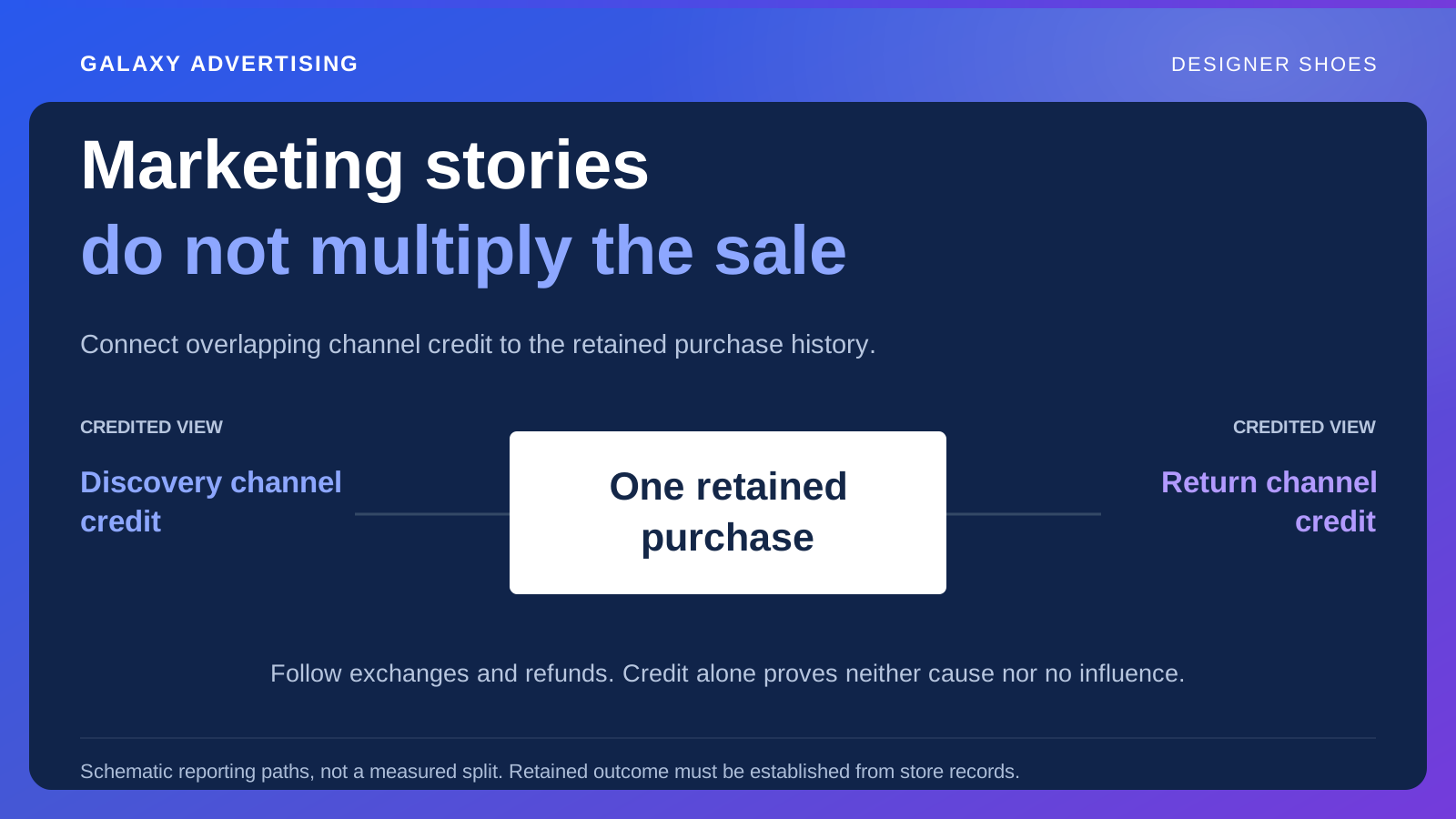
Let's admit a common reporting mistake: we give every channel its credit, then talk as though the shop received several shoe orders. A customer can discover a pair through social, compare the model through search and return directly to buy. You still have one transaction, followed by its own fulfilment, exchange or refund history.
Attribution, the way a system assigns credit to marketing activity, helps organise what it observes under its rules. It cannot replace your store record or reveal every reason for buying. Keep those perspectives alongside each other, with each answering the questions it can support.
Start with an order you can follow
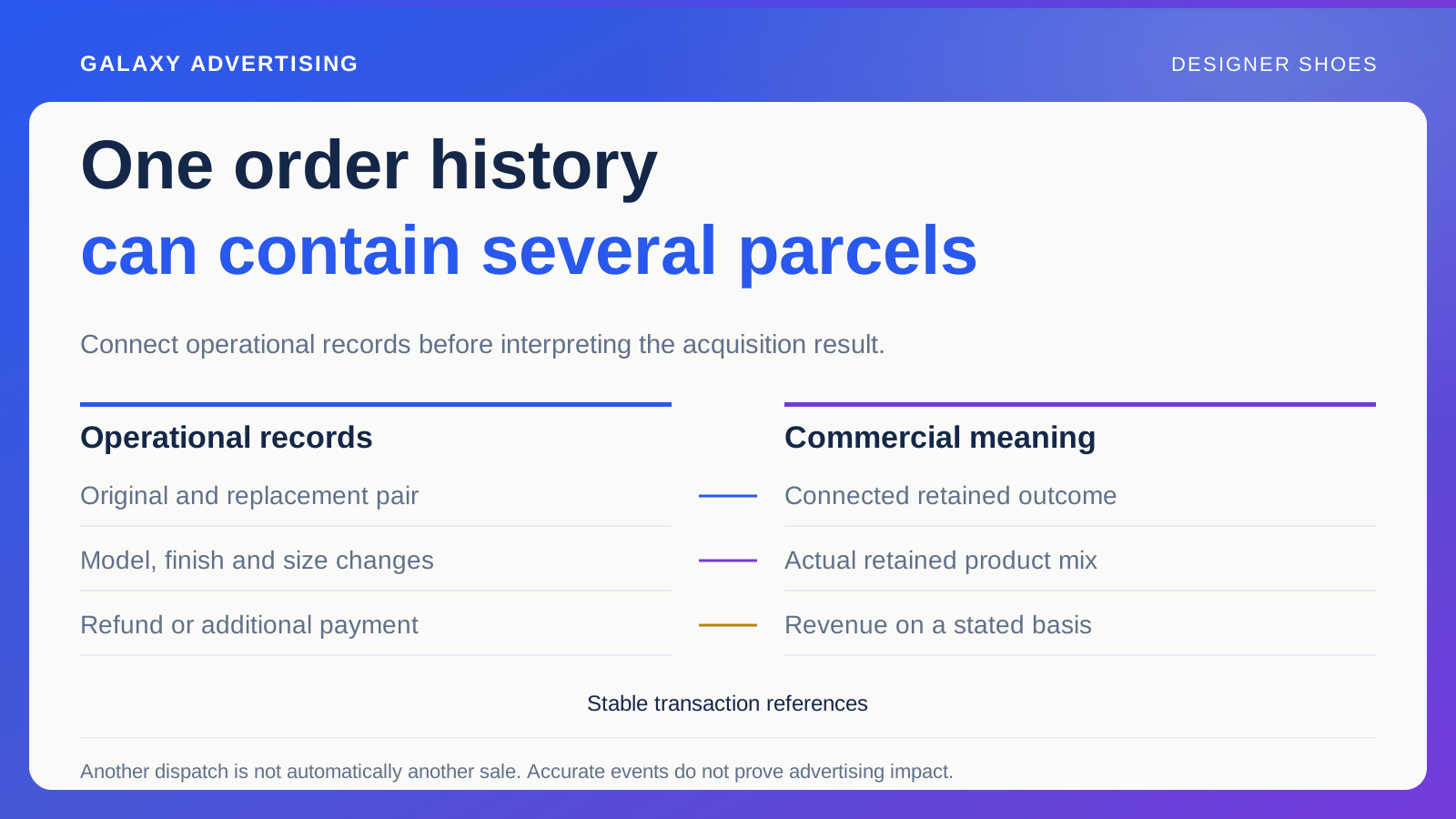
Find the stable order reference and agree which value you are reviewing. Set out how discounts, delivery income and later adjustments are treated before comparing channels. Otherwise, what sounds like an argument about where a sale came from may actually be an argument about its amount.
For shoes, keep the link between the original pair and any replacement. Dispatching another item does not automatically mean acquiring another customer or making another full product sale. Follow what happened commercially, rather than adding up operational records.
Choose a manageable sample that includes a normal purchase, an exchange and a refund. Each can reveal a different reporting assumption. Establish that understandable basis before trusting a large summary whose underlying details nobody has reconciled.
Ask what the channel actually recorded
Ask whoever owns the reporting to explain the observation and the rules used to assign credit. Where a technical setting matters, inspect the current configuration and relevant official documentation. Matching report labels do not establish matching definitions.
Separate what the system saw from what it inferred or assigned. An interaction connected with an order can be useful evidence. It does not prove that the customer would otherwise never have bought.
Keep the definition beside the result in exports and presentations. A qualified figure has a habit of sounding more certain once someone copies it onto another slide. Preserve its basis so an internal reporting claim does not become an unsupported claim about additional growth.
Credit is a different question from extra business
A platform can report an attributed transaction. Working out how many orders would not have happened without that activity requires a more appropriate comparison and careful interpretation. Those are different questions, however conveniently one number seems to answer both.
Consider advertising to people already familiar with the model or brand. Your reminder could play a useful part while reaching customers who had already decided to return. The attributed total establishes neither complete causation nor an absence of influence.
If stronger evidence of additional effect matters to the business, agree a method suited to the opportunity and operating conditions. A simple before and after observation does not become a controlled experiment because that description makes the conclusion sound stronger.
Look for something you can improve
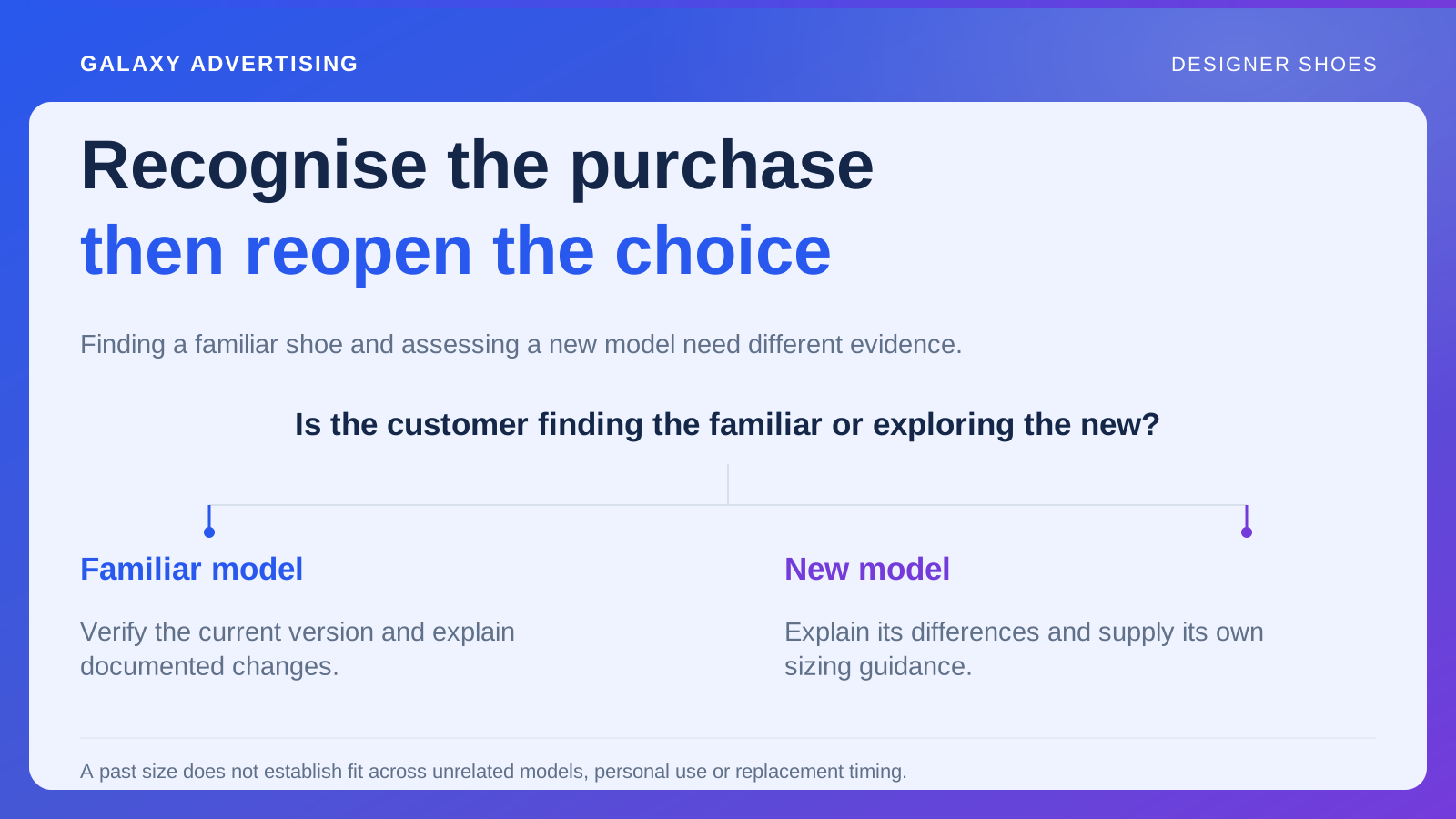
Review the product pages, comparisons and enquiries you can observe. Someone might need to recognise a finish, find model guidance or clarify a purchase condition. Those tasks can suggest improvements even while channel credit remains uncertain.
Put the information to work in a better route or creative brief. If people repeatedly return to sizing information after seeing an advert, inspect whether the original destination makes that reference easy to find.
Resist attaching an invented fixed value to every supporting interaction. A comparison guide can help without each visit representing a known sum of future revenue. You can acknowledge its strategic role while keeping the financial claim within the evidence.
Check whether the offer changed
Record meaningful changes in stock, useful size coverage, price, promotional support and customer mix. Familiar campaign settings can conceal a quite different offer for the person trying to buy.
Record measurement changes too. A revised event route or value definition can change the platform result while store orders remain similar. Explain that boundary before announcing a commercial improvement.
Keep comparisons fair. A model with unusually strong availability in one period may be a poor benchmark for a depleted alternative. That context belongs in the product and investment decision, rather than tucked beneath a confident ranking as a footnote.
Bring the retained purchase back into view
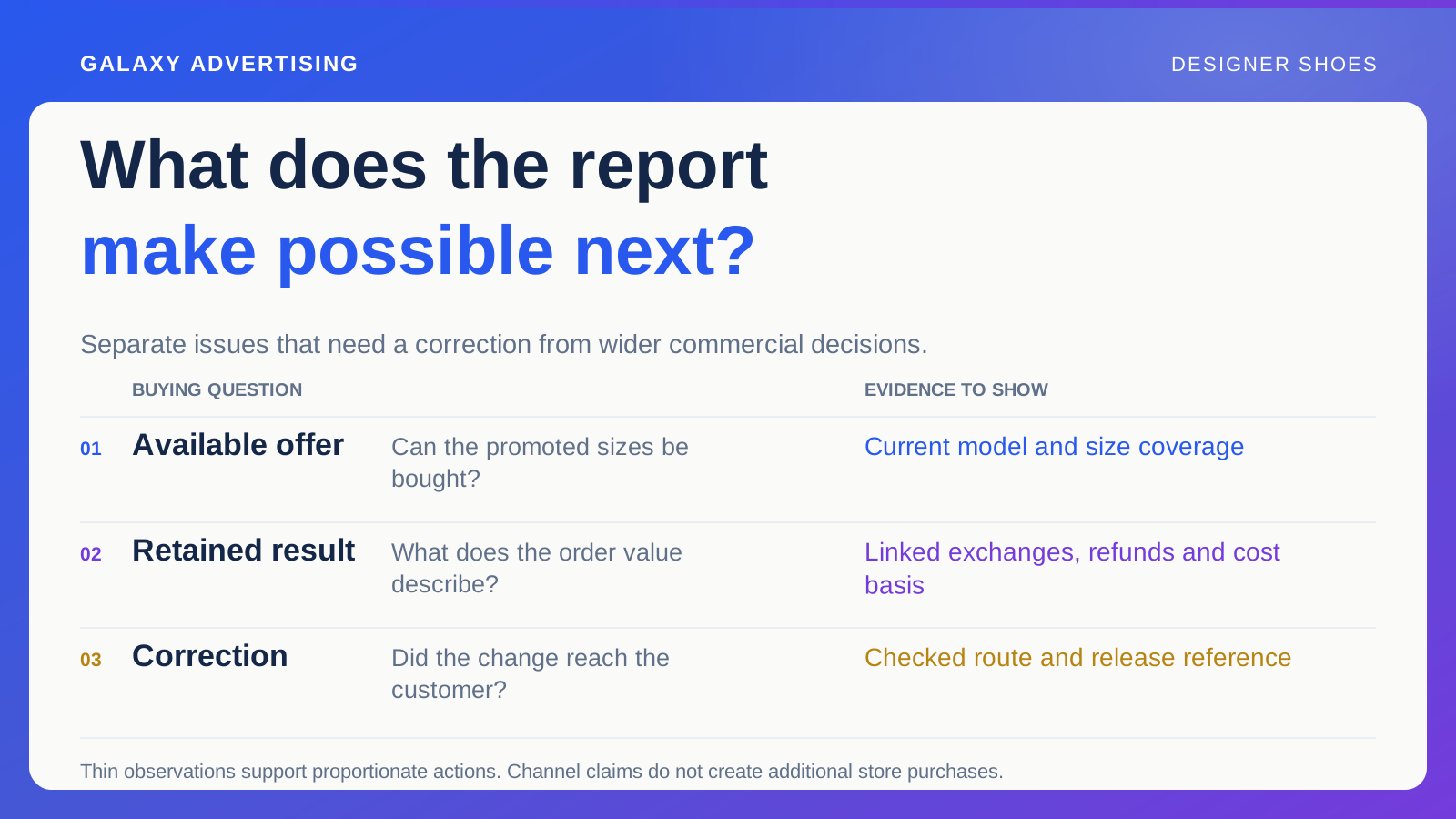
Show actual orders and your approved retained revenue or contribution measure beside channel claims. Contribution means the money remaining after the costs included in your calculation. Include relevant fulfilment, promotional and later adjustment assumptions so you can judge affordability.
In a hypothetical review, a channel report might improve while total retained contribution barely changes. That raises questions about mix, timing and additional effect. It does not automatically mean the channel did nothing useful. Investigate rather than choosing whichever explanation suits the meeting.
Do not use arbitrary allocation to force every system total to match. Explaining the differences transparently can be more useful than manufacturing agreement. The point is a decision you can defend, rather than identical charts produced from unrelated conventions.
Keep an agreed transaction example in the reporting notes. A new reviewer can then see how store value, channel credit and later adjustments relate before reading the aggregate chart. The example explains the definition; it cannot replace a suitable commercial sample.
Make a recommendation with its limits attached
Say whether the evidence supports continuing a bounded investment, repairing measurement, improving a product route or arranging another comparison. Name the uncertainty that matters most to that recommendation.
Retain reporting definitions and material configuration changes. Otherwise a future team can interpret an old result using a new basis without realising anything has changed.
Your order has a commercial life beyond the moment an advertising platform claims it. Count it once, follow what the customer ultimately keeps and let the method set the limits of the claim. That gives you something firmer to invest against than a collection of channel credits dressed up as new sales.