Knowing a customer's last shoe size doesn't qualify you to recommend the same size in an unrelated model. They bought a loafer. An invitation to order a new trainer in that size assumes both a fit relationship and an interest in another category that the transaction doesn't establish.
Recognise the purchase accurately without pretending it explains the person's complete needs. A useful follow up often makes the next investigation easier: finding the earlier model, understanding a documented difference or exploring a clearly described offer. That gives a returning customer something more useful than automatic suitability for every launch.
Recognise the purchase you actually know about
Keep model, finish and size references accurate in communications, and stay within the business's applicable contact permissions. A familiar item can help someone reconnect with the store when it's clearly presented. The recognition needs to be factual before it becomes personal.
Don't assume the account holder bought for themselves. The pair could have been a gift or a replacement for another person. The order establishes a transaction, rather than the complete circumstances behind it. Those unknowns matter when choosing how to frame the next message.
Leave space for that uncertainty in the wording. Inviting someone to revisit a model is different from telling them they now need another pair. Respectful recognition has a practical purpose: it avoids building the next offer on an assumption that could be wrong before the customer even opens the page.
Separate finding the familiar from exploring something new
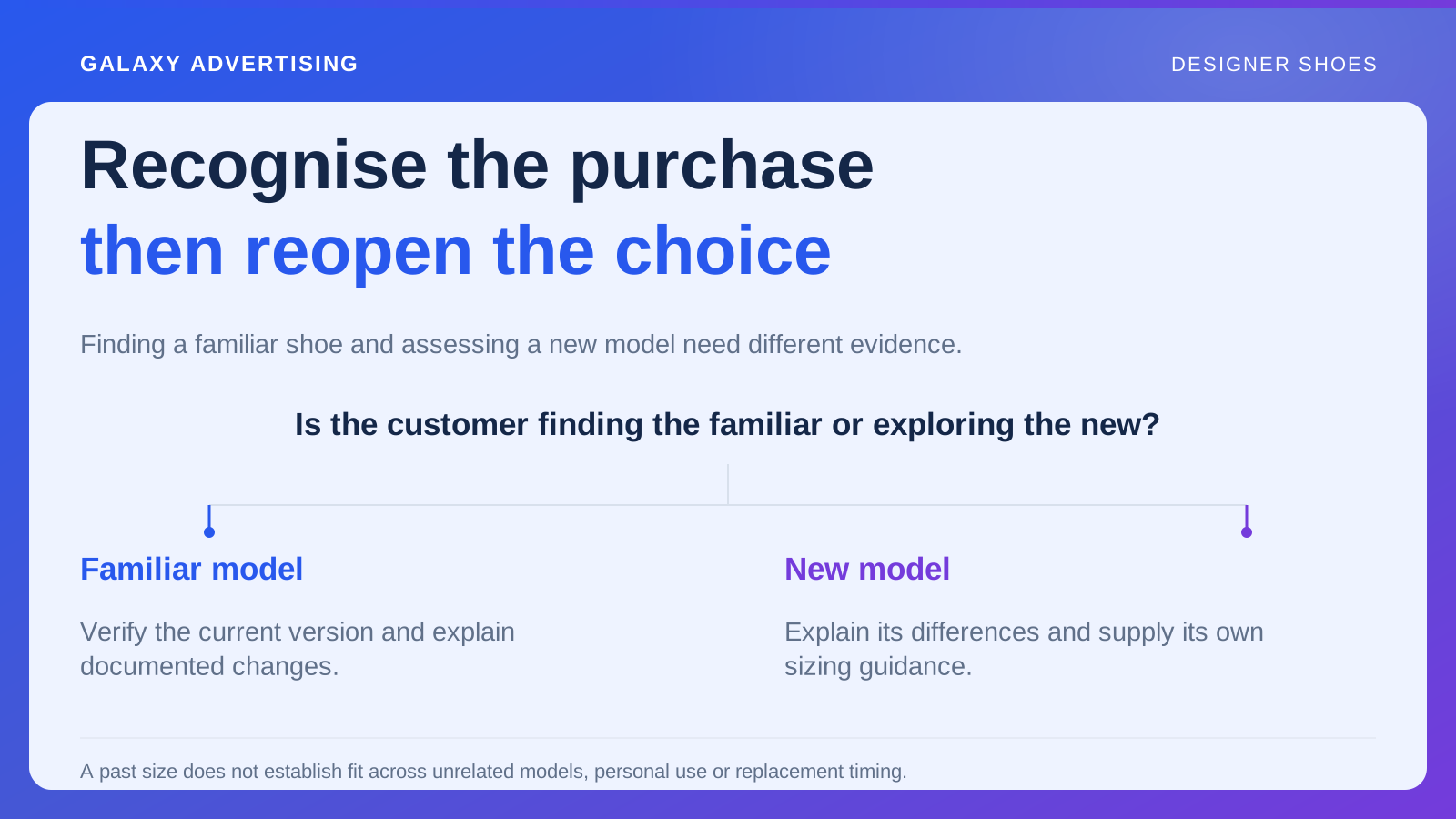
Someone seeking the same model has a different task from someone considering another silhouette or brand. Give those journeys different information. A generic repeat purchase message can blur the distinction between finding a known item and assessing an unfamiliar one.
For the familiar model, verify the current version and any documented changes. The same name or similar styling doesn't establish that the product is unchanged. Have the product owner check the relationship before the message relies on continuity the retailer can't substantiate.
For a new model, explain relevant differences and supply its own reliable sizing guidance. A previous size selection isn't a universal recommendation across unrelated shoes. The customer needs a fresh route to the evidence for this purchase, even when the store itself is familiar.
Give the new offer a reason to be investigated
Choose an actual product difference or recognisable styling question. A new finish, another documented material or a model within a clearly described range can provide a useful subject. That gives the message something concrete to explain beyond the fact that another product has arrived.
Don't create urgency by implying the earlier purchase has become inadequate. Someone can be satisfied with one pair and still want to investigate another. Explain what's new without manufacturing dissatisfaction with what they already bought. The invitation doesn't need that pressure to have a purpose.
Keep the proposition specific enough for a clear destination. “Exciting arrivals” can be a legitimate browsing message, but it doesn't test the same question as a focused explanation of one model. Decide which role you're asking the communication to play before interpreting what its results mean.
Keep the model differences clear after the click
Link to the relevant current product or focused range. Identify the model and finish, show availability and make its own fit information accessible. The customer shouldn't have to carry the details from the message in memory to understand what the page offers.
If the earlier item is unavailable, say so honestly. An alternative can be helpful without being identical. Explain differences worth investigating instead of relying on visual resemblance to carry a suggestion of equivalence. Another similar looking shoe still needs its own assessment.
Check on a phone. Returning customers still need clear variant labels, meaning the selected size, colour or configuration, and purchase conditions. Don't ask them to reconstruct a new offer from a message, a general collection and an unrelated size chart simply because they've shopped with you before.
Treat the timing as an invitation
A past order date doesn't tell you when someone needs another pair. Usage, gifts and other purchases can all affect a reminder's relevance. A guessed replacement schedule shouldn't be presented as knowledge. Your record knows when the transaction happened, not everything that happened afterwards.
If an occasion informs the message, keep the proposition appropriately general unless you have a reliable basis for more specificity. An illustrative seasonal styling idea doesn't establish someone's personal plans. Leave that decision with them while explaining the offer clearly.
Use your normal systems to review unwanted or irrelevant communication alongside sales. The aim is a useful relationship, rather than simply sending more delivered messages. If the programme repeatedly needs incentives to overcome poor relevance, diagnose that problem instead of assuming another incentive is the answer.
Check the retained orders and what incentives cost
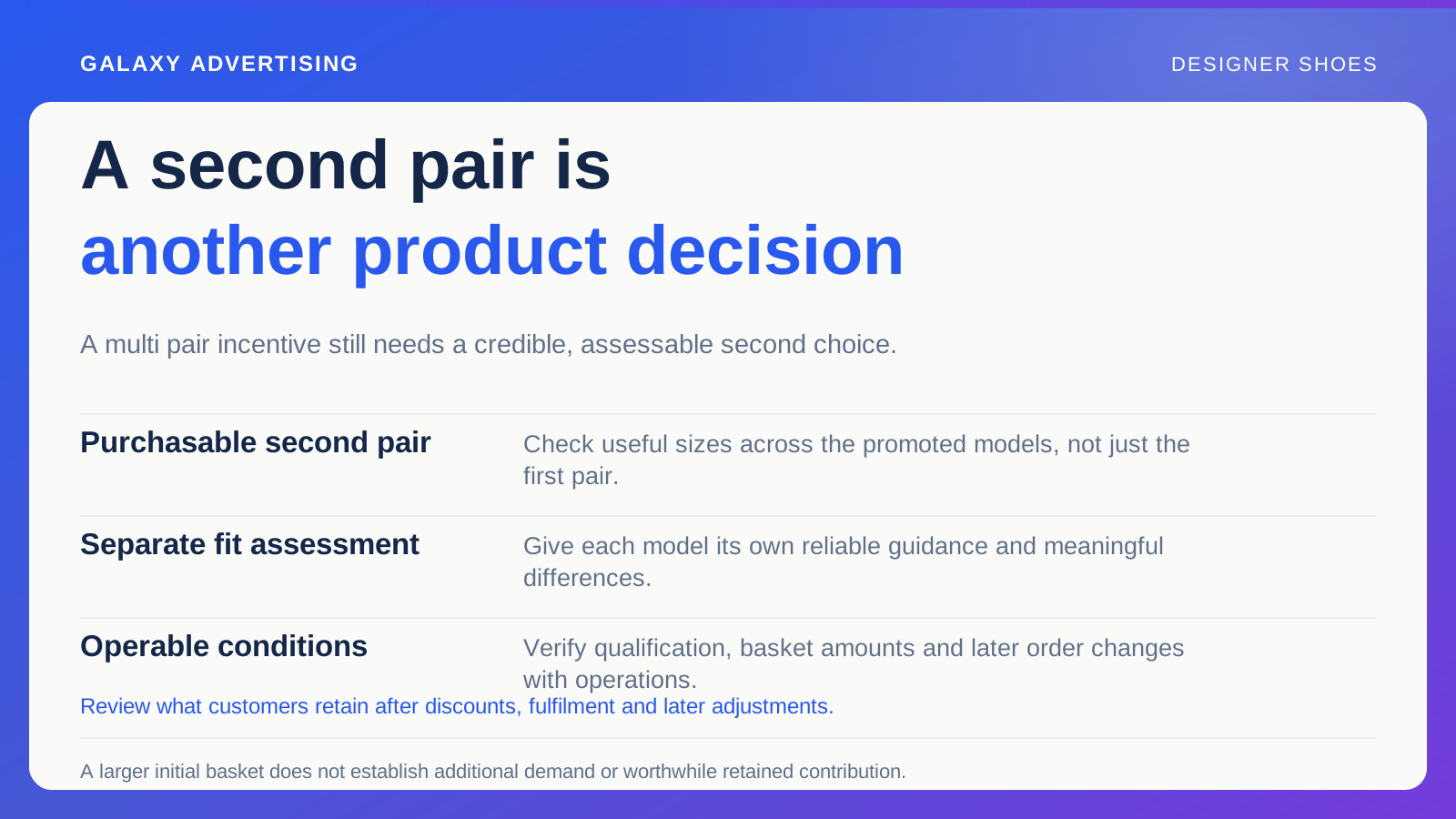
Use agreed definitions for repeat order revenue, discounts, fulfilment and later adjustments. A second purchase can have different economics from the first. Establish those differences with evidence rather than assume that an existing customer automatically produces an attractive order.
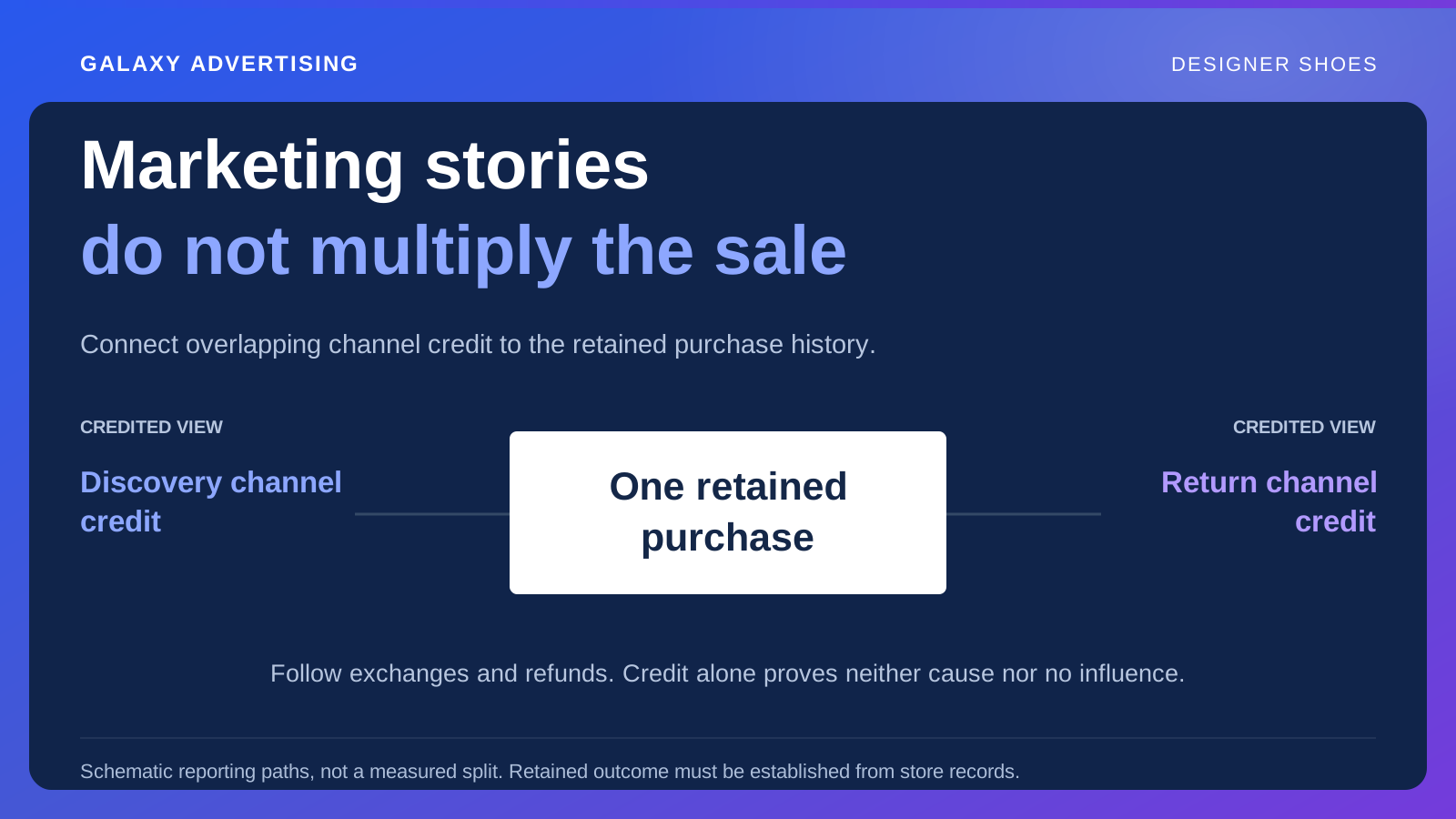
Keep observed repeat purchases separate from claims that a particular message caused them. Some people may already have intended to return. A suitable comparison, where feasible, can improve your interpretation, with its limitations visible. A recorded purchase after a message isn't the whole explanation of why it happened.
If discounts are central, examine retained contribution, meaning the money left after the costs included in your calculation. Calling someone an existing customer doesn't remove incentive costs. Explain the worthwhile behaviour the offer is supposed to encourage. Where a returning shopper remembers the retailer more clearly than the model name, an exact reference and recognisable image can help reconnect them. Keep recognition separate from the next recommendation.
Use the relationship to improve the information
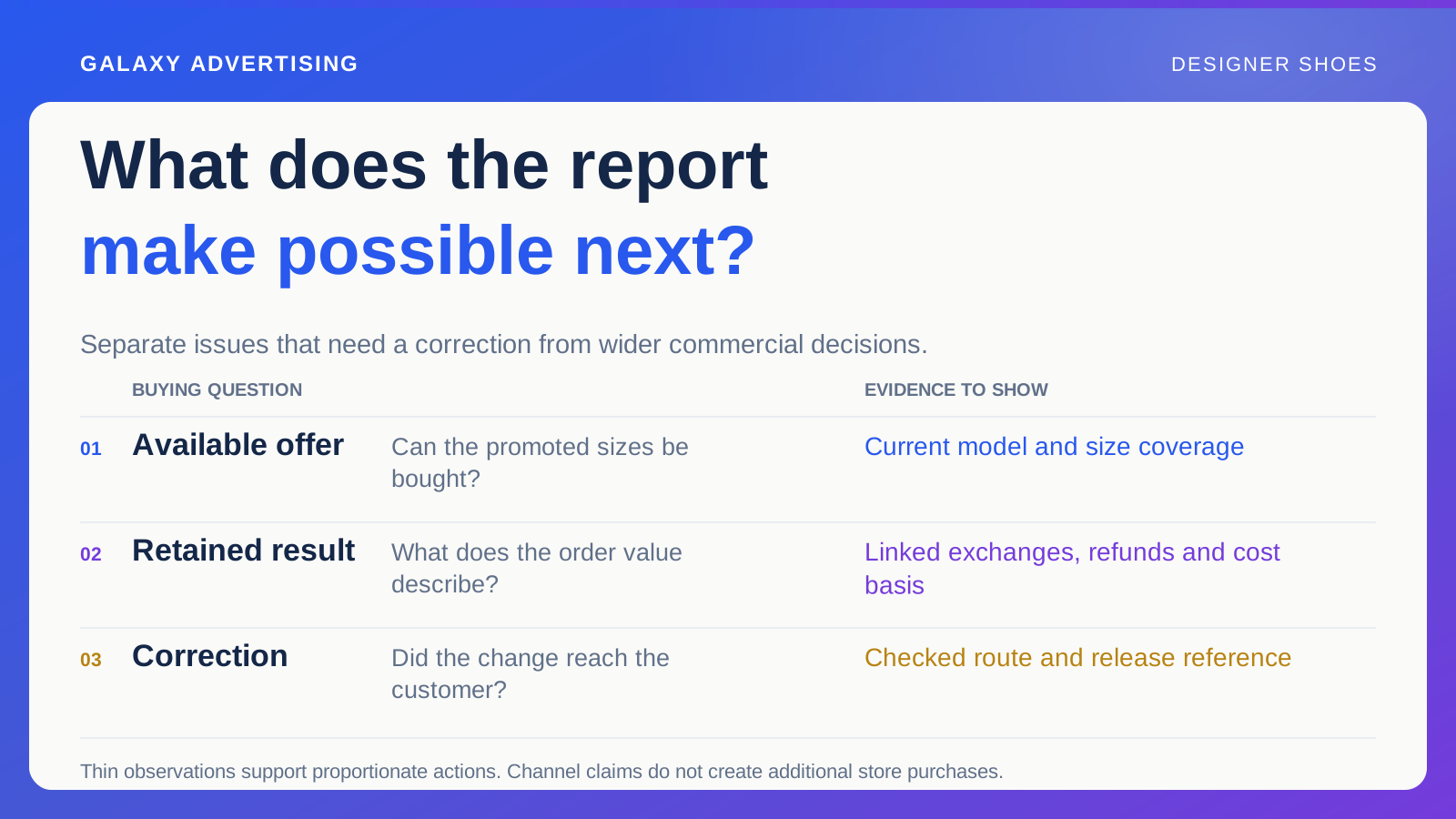
Review recurring questions about model changes, unavailable sizes and the relationship between familiar and new products. They can improve the product route as well as the next message. Treat the questions as useful information about what still needs explaining.
Assign ownership for keeping the sequence current as the range changes. An obsolete message can make a stronger promise than the current page, even if it was accurate originally. Revise or retire the affected material deliberately.
A good returning customer programme makes the previous pair recognisable while letting the new offer stand on its own facts. One successful purchase doesn't answer every future style and fit question. Respecting that gives the next worthwhile order a better foundation.