It's easy to give SEO the credit when branded organic revenue rises. A wider advertising campaign has introduced your retailer to more people, customers search your name before ordering, and two teams can now point to the same sale.
The SEO team calls it programme success. The paid team says it created all the demand. Both explanations may go too far. The useful reframe is to separate the observed route, the kind of demand involved and the harder question of what additional outcome the work caused. The channel label cannot tell you every influence behind an order.
Make your demand groups clear
Choose a practical method for separating searches involving your retailer's identity from wider product or category questions. Include known naming variations where appropriate, and document how the grouping works.
A manufacturer name doesn't automatically mean demand for your business. Somebody comparing a widely sold model could still be deciding which store to use. That distinction matters when you're explaining how much interest already concerns the retailer itself.
Be transparent about imperfect classification. Some queries are ambiguous and the reports don't expose every search. You want a useful view of the evidence, rather than a claim to have neatly categorised all customer motivation. The method should be understandable enough to challenge.
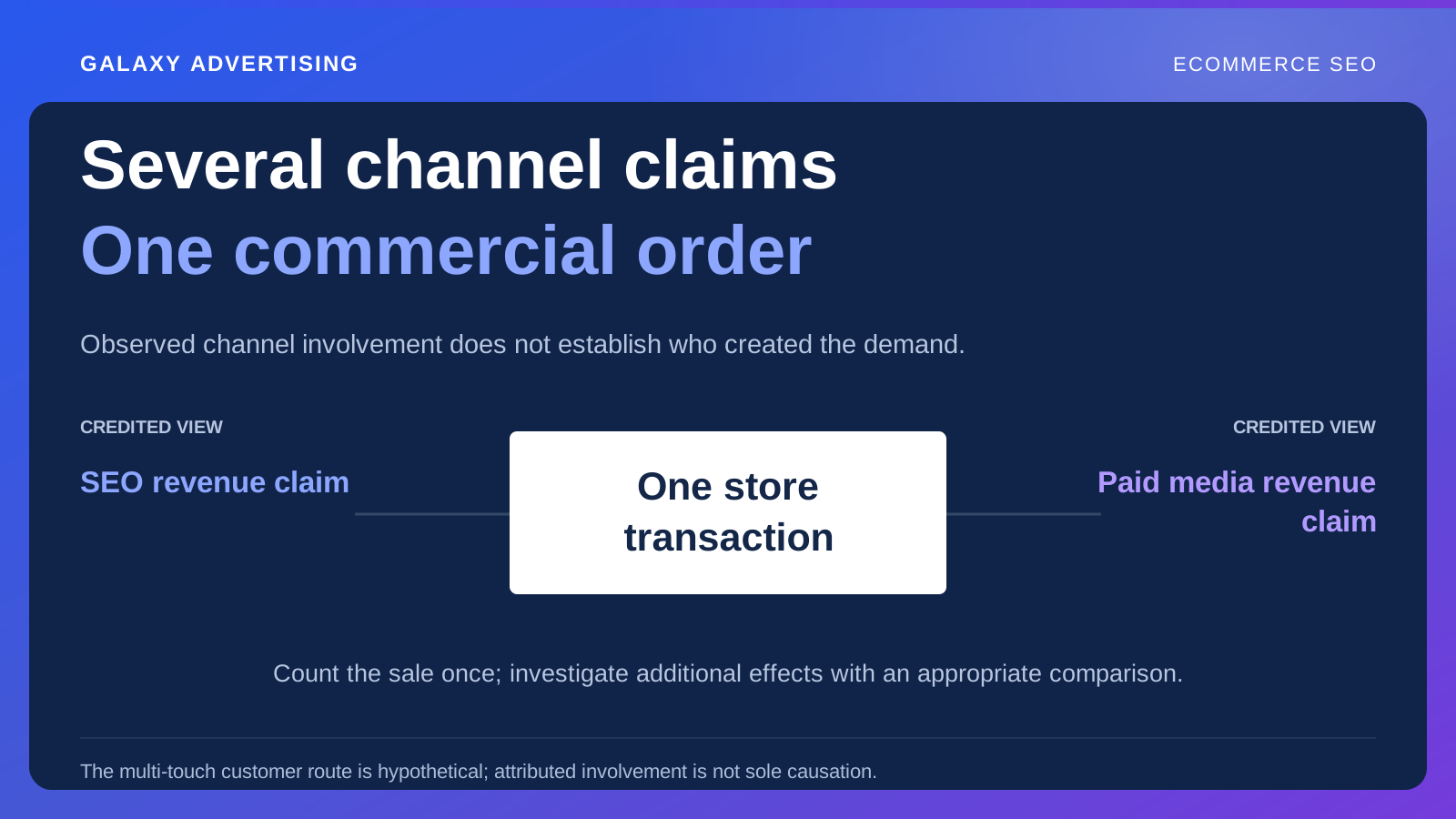
Start with the order, and count it once
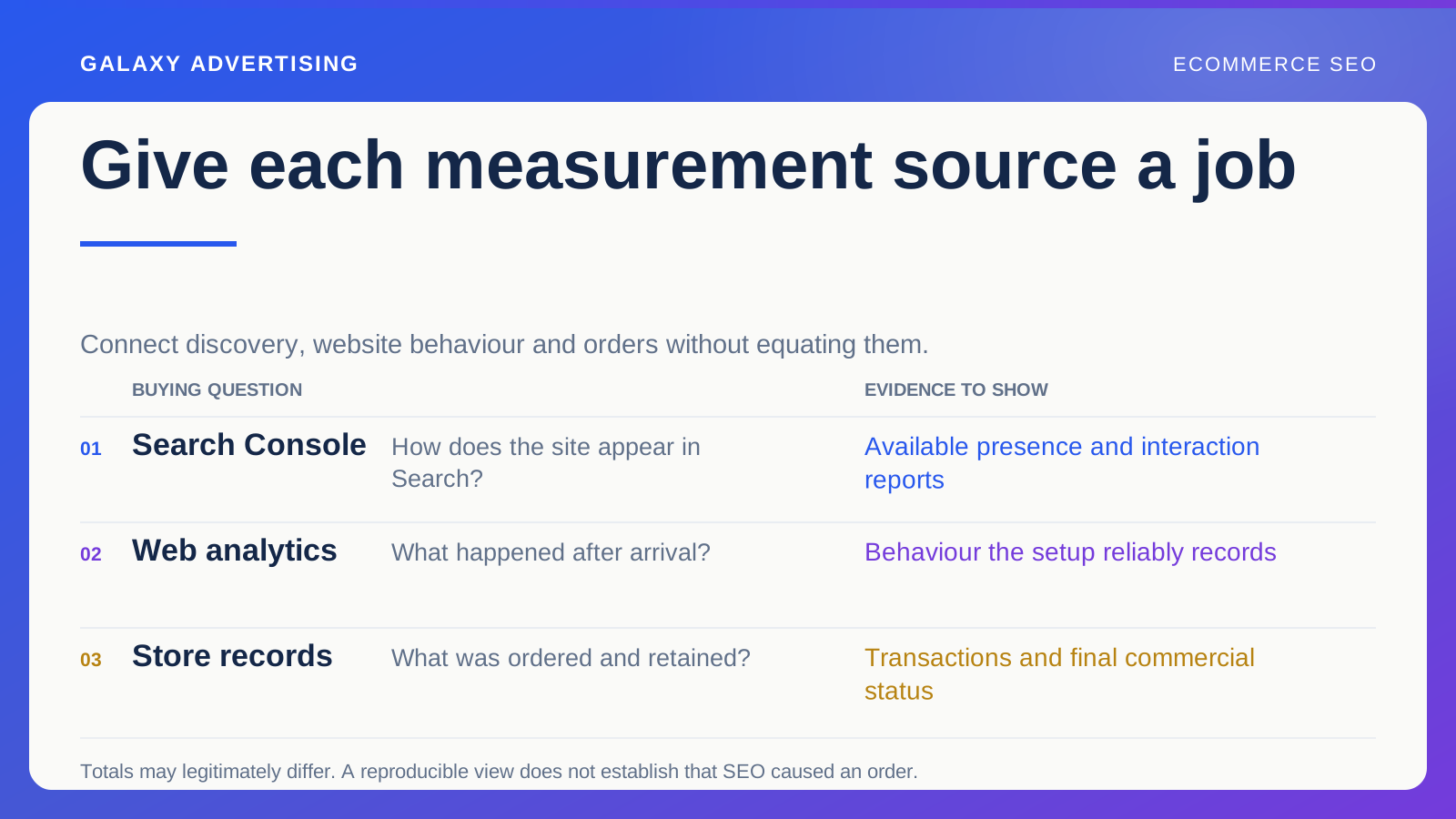
Use store records to establish the transaction, its value basis and relevant later outcomes. Channel reports describe observed or assigned relationships to that order. They don't create extra sales you can add together.
A hypothetical customer might watch a video, search for the brand and return again before buying. Several systems can show involvement according to their own rules. Your business still has one order.
Explain that relationship plainly. Attribution totals shouldn't become a contest in which each specialist claims the complete sale. The commercial owner needs to understand the combined route, without being asked to accept incompatible stories drawn solely from each platform's preferred report.
Value the website without claiming it created the interest
A clear organic brand result helps a customer find your business and continue buying. That destination still needs accurate products, usable navigation and reliable information for the decision.
None of that establishes that a recent SEO change created the initial interest. Equally, seeing an advert earlier doesn't make the website's role irrelevant. Both thoughts can be true without allocating the whole order to one team.
You can value a dependable route while asking a narrower question about the additional effect of new content or technical investment. Keeping those propositions separate makes the conversation more useful than arguing over which department gets to own the customer.
Keep the wider conditions beside the result
Record material advertising, promotions, public attention and product availability changes that could affect demand. Include website changes affecting the customer's ability to complete the offer.
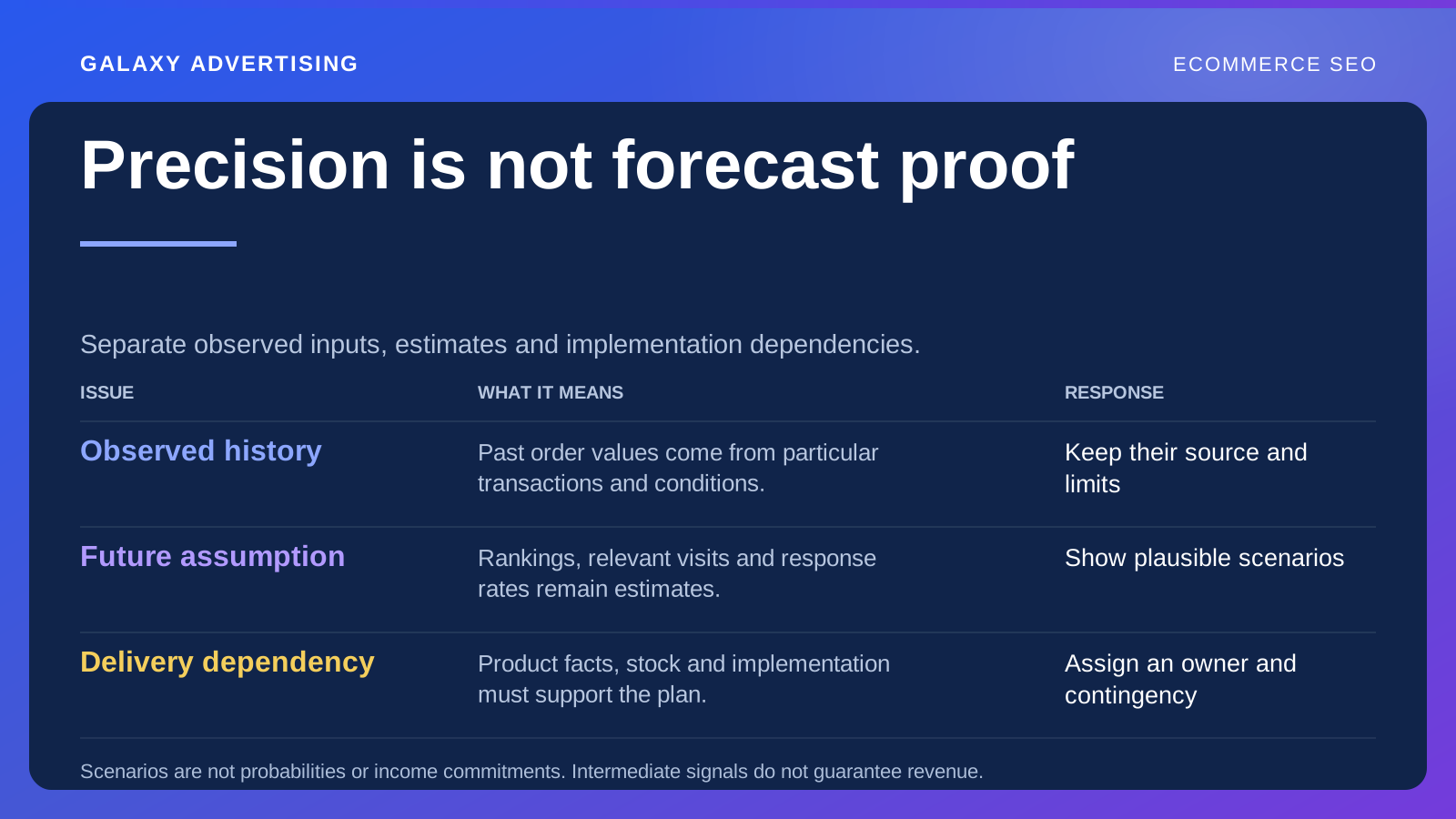
Branded discovery rising during a wider campaign is consistent with greater awareness, but doesn't quantify each activity's effect. Category orders falling during poor stock availability might need a different explanation from a discovery decline under stable conditions.
Apply that context consistently. Don't bring it out to excuse a weak period, then forget it when a strong result is convenient. The next recommendation should be open to challenge on its evidence, rather than depend on the narrative a team happens to prefer.
Look at the jobs different pages do
Review product, collection and guidance pages in light of their roles. A useful guide reaching a broader query group may represent a different kind of progress from more visits to the brand homepage.
Connect each observation to the decision ahead. A guide might encourage suitable product investigation; a collection supports selection; a product page helps confirm a known item. Appearing somewhere along the route doesn't entitle any of them to the entire commercial outcome.
Where the data supports it, use a sample of customer journeys, with its limits intact. An invisible interaction isn't proof of no influence. A visible interaction isn't proof it was decisive. You need both cautions if the review is going to be balanced.
Match the strength of evidence to the commitment
If an investment depends on a causal claim, discuss a suitable comparison with a qualified analyst. Its design should address your particular uncertainty and the retailer's practical scale.
A standard reporting filter or a before and after chart doesn't settle what would otherwise have happened. A comparison needs a rationale that considers concurrent changes and the evidence available.
Different operational decisions require different confidence. You might retain a useful correction under acknowledged uncertainty while asking for stronger evidence before expanding substantially. Say so. Uncertainty needn't mean either stopping everything or treating every commitment as equally harmless.
Give an ambiguous result an honest headline
Agree wording that preserves the observation without stretching it. You can say branded organic orders increased during a wider campaign and that the website supplied a relevant route. You don't have to assign the entire movement to one activity.
That restraint matters because confident headlines can become budget assumptions long after the original qualifications are forgotten. Keep the limitation close to the claim, especially if the result will be used to suggest the same investment can create comparable additional demand again.
Recommend what the evidence actually supports
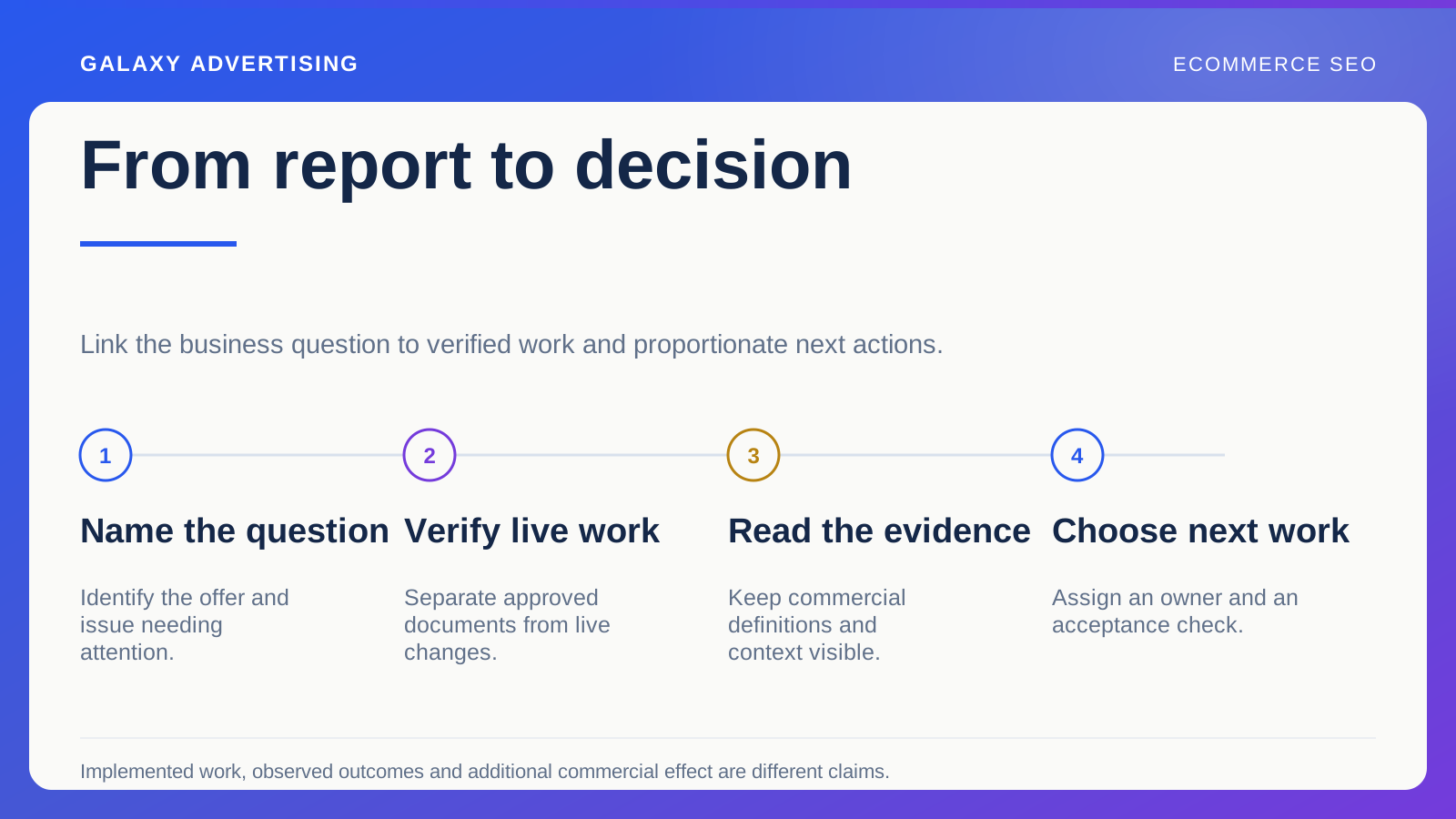
Choose the next action on that basis. It might be improving a weak product route, investigating wider category discovery or continuing a bounded content programme without presenting every branded order as a new acquisition.
Keep the reporting basis consistent and record changes openly. Understanding should improve over time. Switching definitions whenever a different view looks kinder makes that much harder.
Organic attribution earns its place when it explains the order's route rather than claims ownership of it. Counting the sale once and recognising the website's role leave room for a proper question about additional demand. That's a better basis for the next investment than asking your budget to settle a channel argument the evidence cannot resolve.