Correct arithmetic does not make an SEO revenue promise reliable. Multiply search volume by an expected click rate, conversion rate and average order value, and an impressive figure can emerge from assumptions that never belonged together.
That is a problem when the figure is being used to justify your investment. A forecast should show how an opportunity could develop under stated conditions, helping you decide what to fund and what to verify.
It should leave the uncertainty visible. Publishing particular pages does not become a precise income commitment because the spreadsheet has tidy cells.
Agree which commercial outcome matters
Start with the business question. Do you want suitable demand for a stocked range, better discovery of an important category or stronger contribution from organic acquisition? Contribution means the money remaining after the costs included in your calculation. Those objectives need different observations.
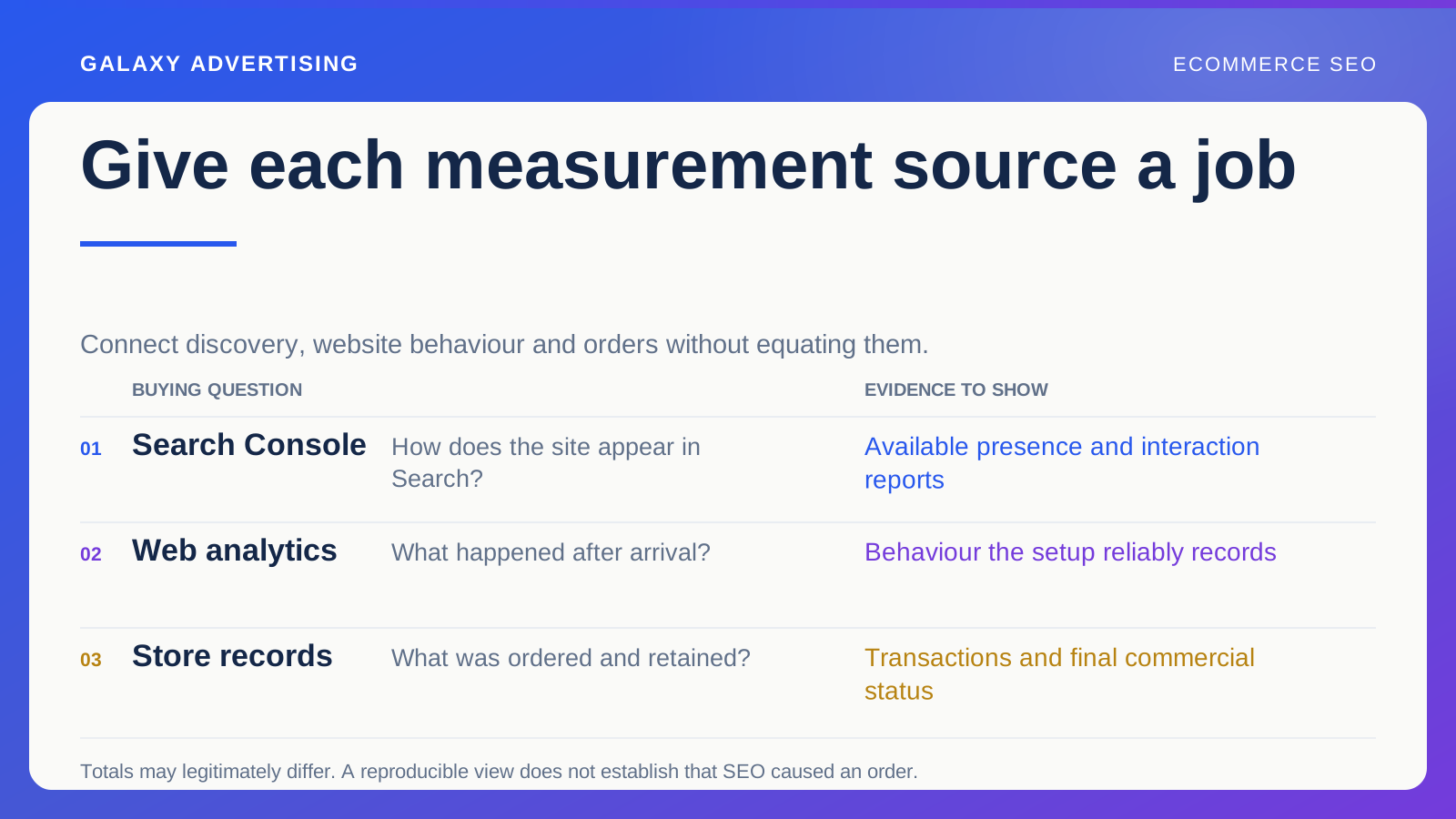
More visits to an inspiration article do not automatically show progress towards a profitable range. More branded searches may reflect other marketing as well as organic website work. Make the distinction before selecting the most convenient input.
Agree the revenue and cost basis. If you will judge the work on contribution, gross sales alone provide an incomplete forecast. Make the commercial definition visible first so your analysis serves the number the business needs, rather than one that is easy to produce.
Label what you know and what you are estimating
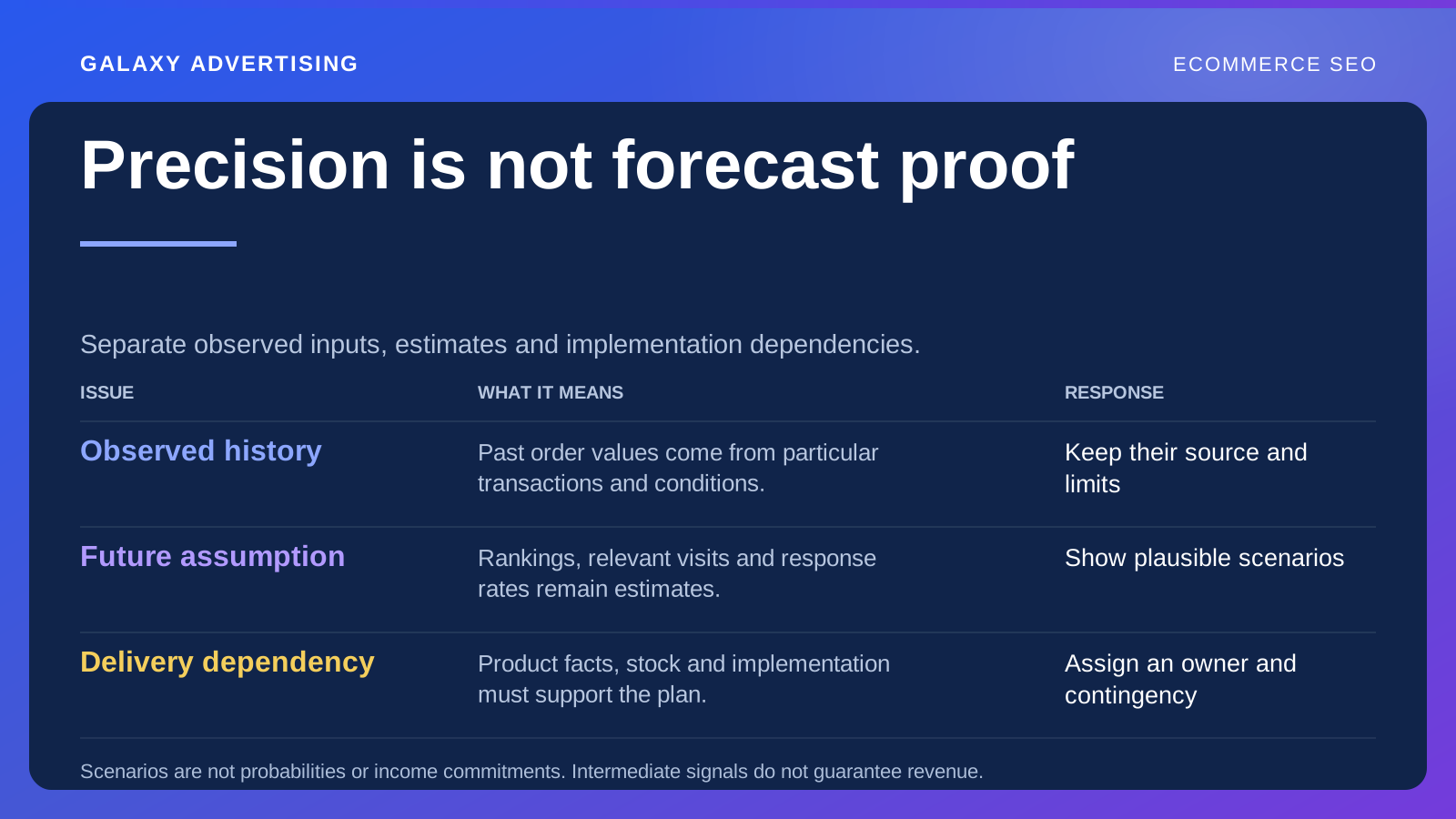
Record the source and limitations of each figure. Historical order values describe transactions observed under particular conditions. A future ranking position or click rate remains an estimate, however polished the planning tool looks.
Be especially careful when applying a strong conversion rate from existing brand demand to projected traffic from unfamiliar category searches. The tasks and customers may differ substantially. If you use that assumption, explain it rather than letting it pass unseen.
A simple hypothetical example makes the sensitivity visible. Halve projected relevant visits while holding everything else constant, and estimated orders halve too. That arithmetic predicts nothing by itself. It shows how much the conclusion depends on an uncertain input the team could otherwise treat casually.
Use scenarios that reflect the real uncertainty
Build scenarios around plausible differences in the assumptions, explaining what would need to hold for each. A conveniently narrow range can make a forecast look precise without supplying stronger evidence.
For a retailer improving a small dining collection, you could consider different levels of discoverability and relevant visitor response. The scenarios also need to recognise whether stock and the destination can support that demand. Traffic is only part of the operating picture.
Do not invent probabilities for those outcomes. If you lack evidence that one is more likely, say so. A scenario can still make dependencies and exposure understandable enough to support a decision, without pretending it is a statistically calibrated prediction.
Put implementation and upkeep into the cost
Organic work still consumes resources even though no invoice arrives for each click. Development, product information, editorial review and ongoing maintenance need to be understood in the commercial plan. “Organic” is not a synonym for free.
Identify what already has funding and what needs another commitment. An attractive forecast may rely on substantial work from another team, silently assumed to happen without cost or delay. Bring that assumption into the decision.
Ask what must stay accurate afterwards. A category page or guide can lose usefulness as products, configurations and service information change. Assign responsibility for maintenance instead of treating launch as the point at which the work stops using resources.
Check whether the range can actually serve the opportunity
A large search opportunity does not prove your available offer is suitable. Look at stock depth, configuration availability and the information someone needs to choose responsibly. The keyword tool cannot establish those facts for you.
If a broad category page attracts demand but the shop has few suitable items or cannot fulfil the expected service, better discovery can expose the mismatch. It does not automatically resolve it.
Use the forecast conversation to uncover these dependencies. Your next investment may belong in range readiness or product data before content. That can be a useful finding even if it makes the immediate SEO opportunity look smaller than the opening spreadsheet suggested.
Agree what evidence could change your mind
Choose observations that can challenge the assumptions as work progresses. Relevant query coverage, discovery of intended pages and the quality of product exploration can offer context before orders show a stable pattern.
Keep their limits clear. Intermediate signals describe parts of the route, rather than guarantee revenue at the end. Say which commercial question they leave unanswered so nobody mistakes progress for a promise.
Record your response if the assumptions prove optimistic. You might narrow the page scope, improve a confusing destination or defer investment until the offer is ready. A useful forecast should guide correction, rather than exist only to sell the original plan.
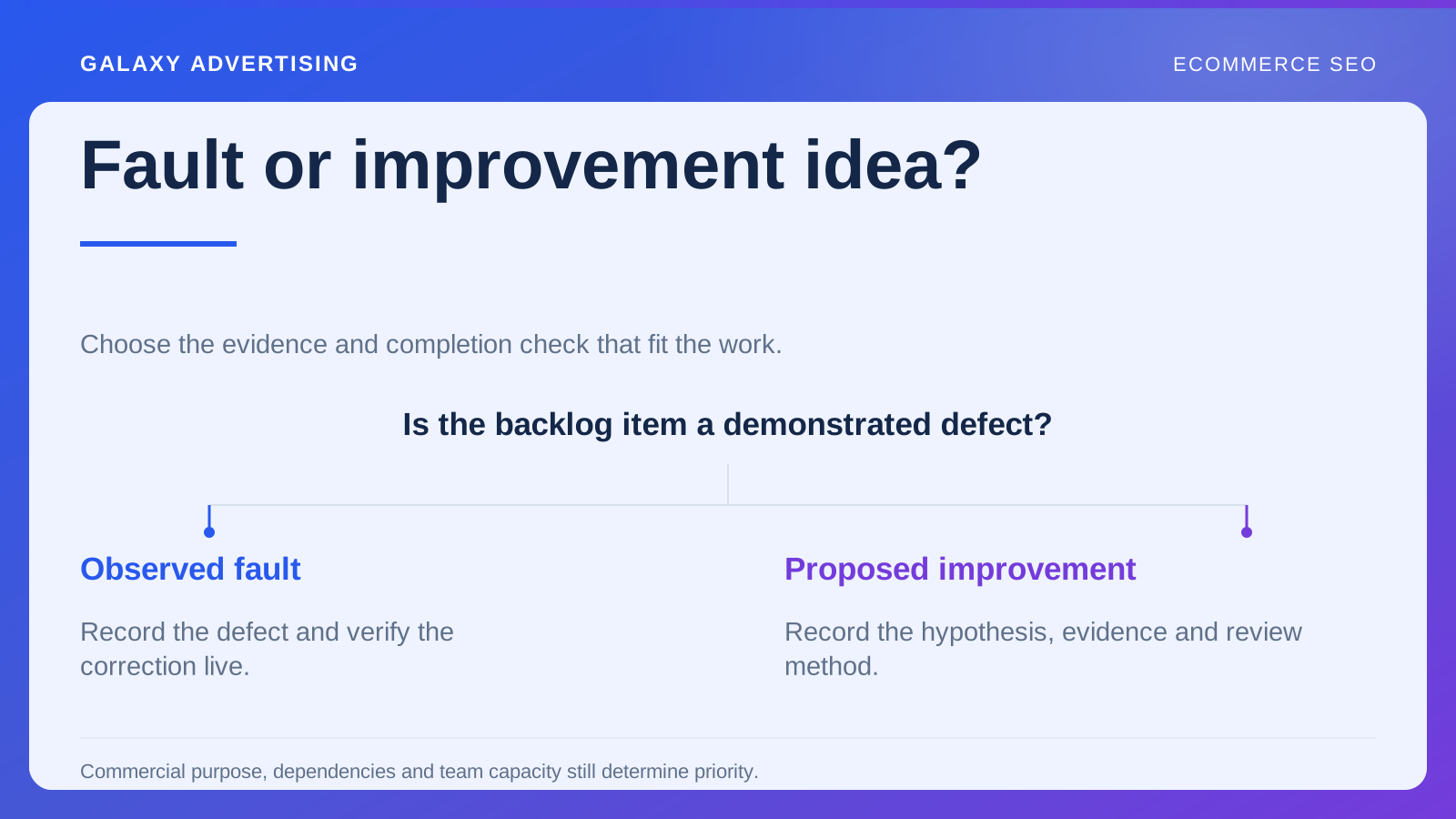
Show implementation dependencies beside the revenue scenarios. If corrected product data is assumed, name who supplies it and what happens if it is late. Changing only traffic assumptions can miss the more immediate uncertainty in delivery. This helps distinguish weak market response from a plan whose essential inputs never arrived. Neither explanation guarantees a recovery later.
Review the assumptions as well as the outcome
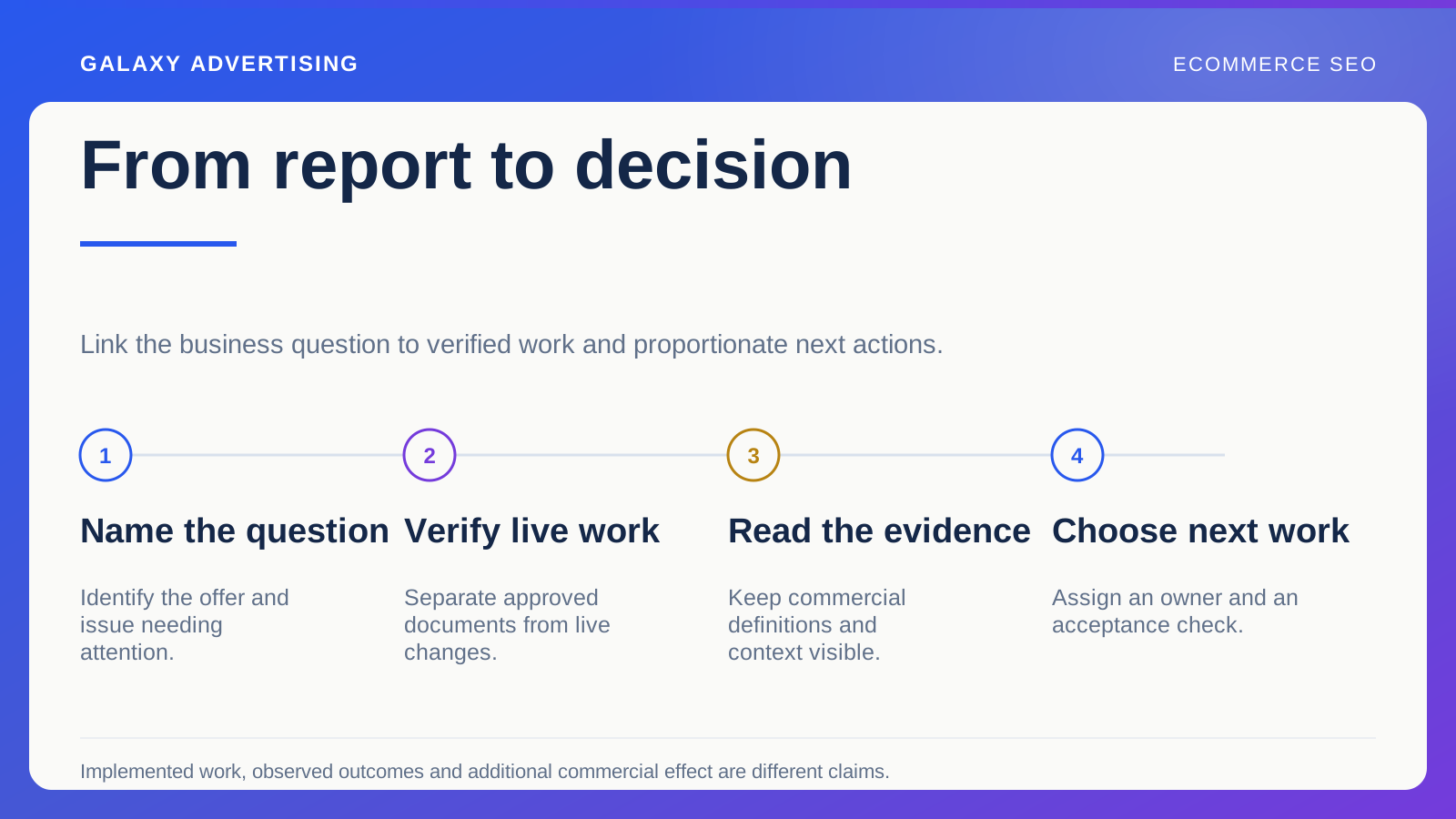
At review, compare what happened with the conditions assumed. Do not pick the most flattering scenario after the event. Explain what changed and which part of the original reasoning still helps you decide.
External uncertainty is not an explanation for everything. Delayed implementation, missing facts and an unsuitable page role can be investigated and corrected. Equally, completing agreed tasks does not guarantee the estimated result.
A strong forecast gives you a transparent way to fund uncertainty. You can see what must be true and who owns the dependencies. That gives your investment a firmer basis than a precise revenue promise resting on inputs nobody has agreed to defend.