Should “small dining table”, “oak table dimensions” and a specific model name really send shoppers to the same sort of page? They all concern tables. But one person may be narrowing a range, another checking fit and another investigating an item they already know.
A keyword plan can group the phrases neatly while missing the decisions underneath them. Start with those tasks before choosing the destination.
You cannot read somebody’s entire intention from a few words. You can give your team a sound reason for creating or improving a page, and a clear test of whether it helps.
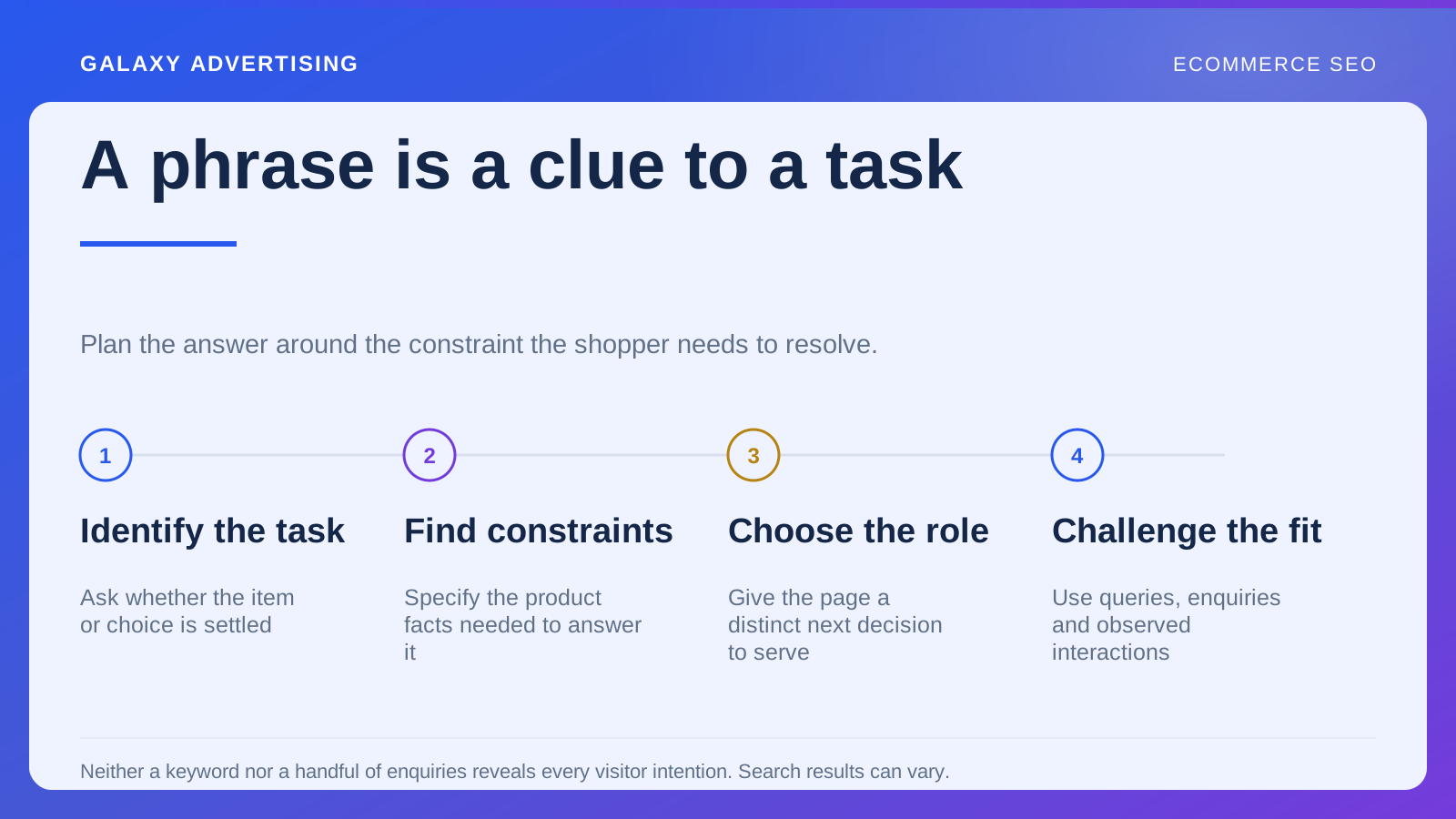
Find out whether the item is already chosen
A model reference can suggest someone knows which product they want to investigate. A broader phrase may leave size, configuration or material unresolved. Those starting points deserve different consideration when you plan the answer.
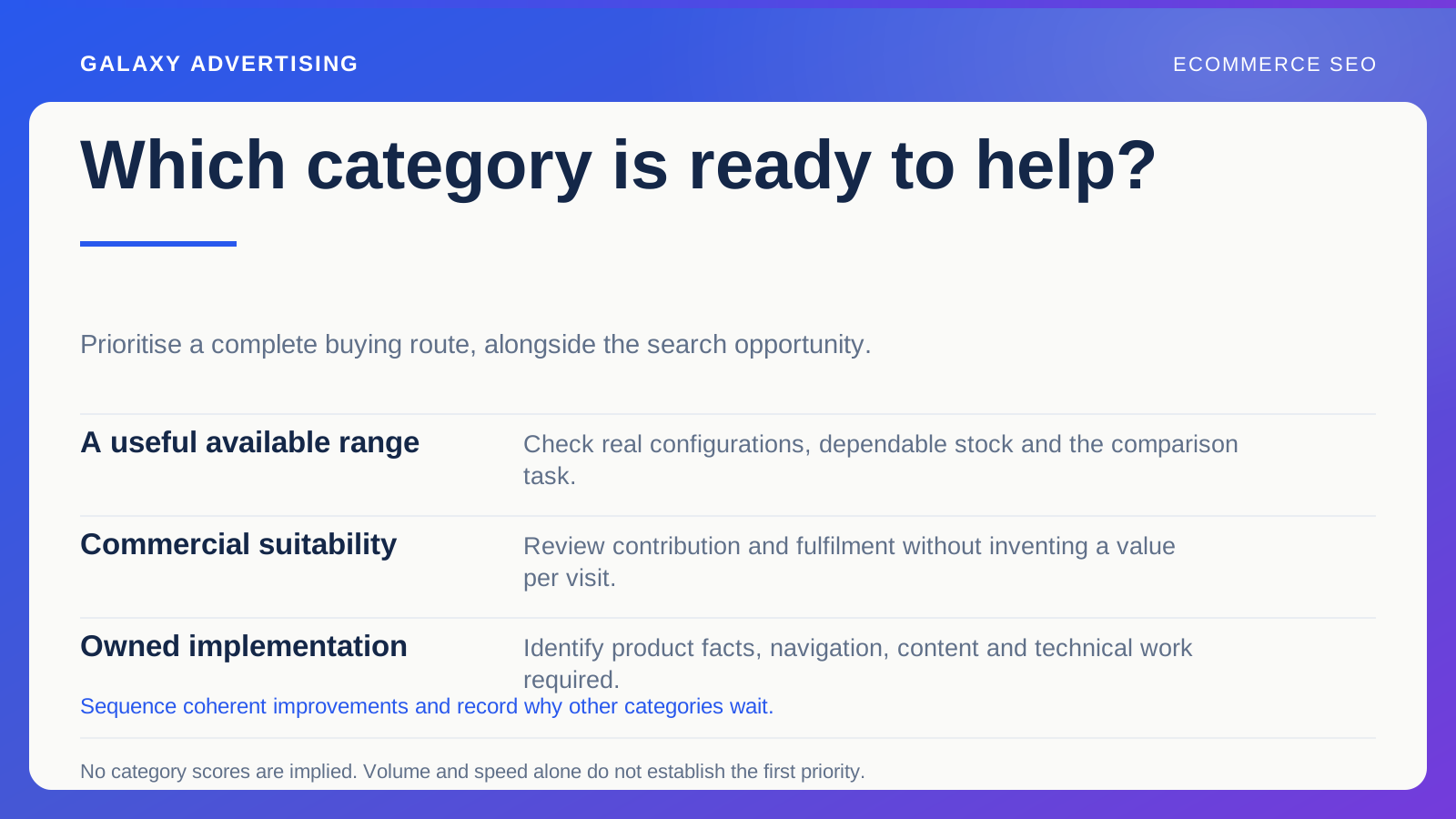
Inspect your actual range. Does the collection offer meaningful choice, or only one relevant item beneath a title implying comparison? A product page could answer an item specific question more directly. The page type needs to fit what you can genuinely offer.
Keep the distinction flexible. Search results can vary and one phrase may support several plausible tasks. This is an editorial decision about why your destination deserves to answer the question, rather than a rule about which page a search engine must display.
Treat the constraint as the real question
Words about space, use or compatibility can reveal something the product needs to satisfy. Repeating them in a heading does little if the page leaves that practical condition unanswered.
For a hypothetical compact dining range, someone worried about a small room may need accurate dimensions, a clear comparison of shapes and an explanation of configurations. Saying the products suit every space would reassure them without resolving the constraint.
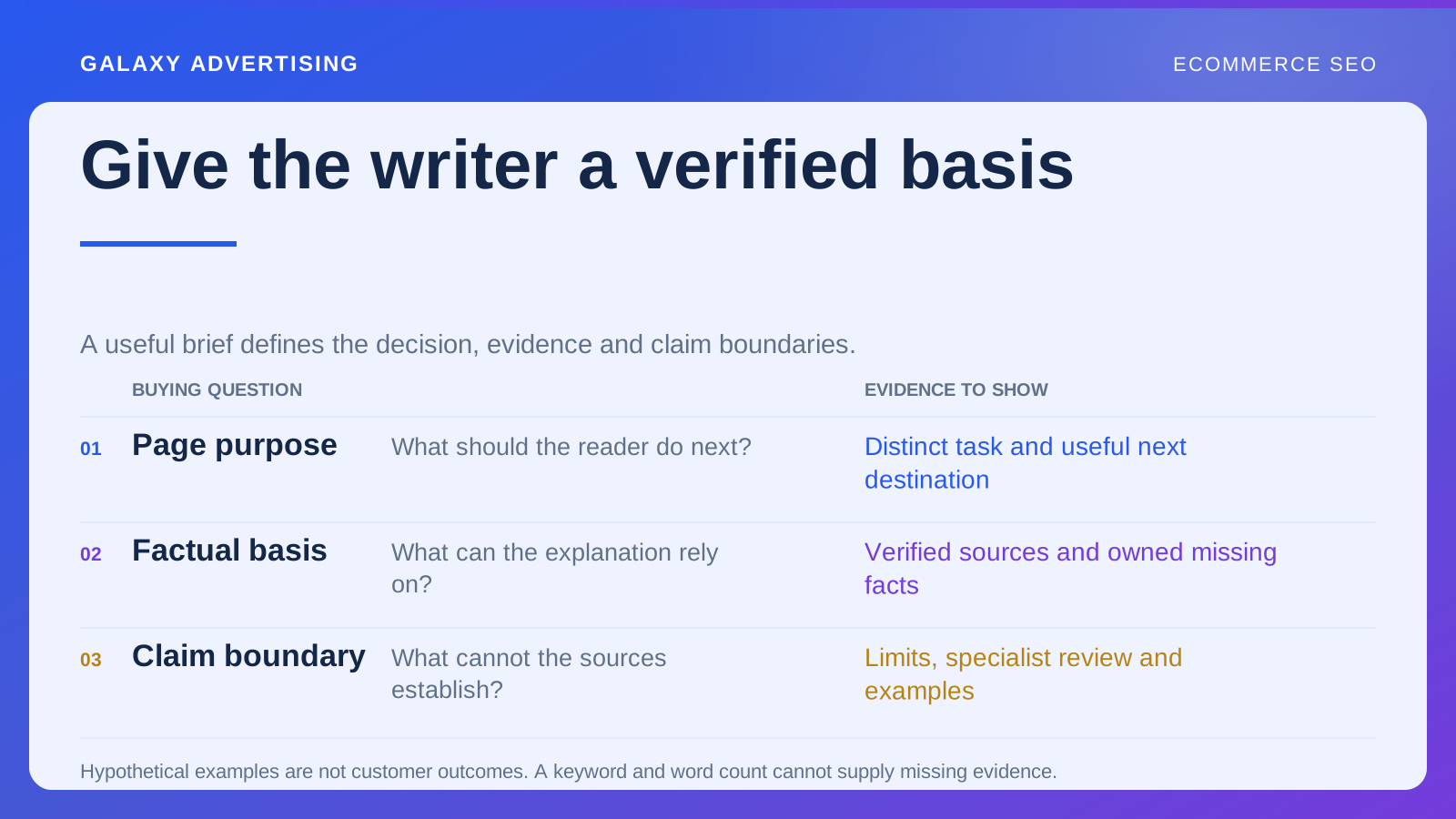
Ask which evidence your store can supply. If the necessary facts are missing, obtain them before commissioning the article. Search planning should expose gaps in product information. It should not invite a writer to bridge those gaps with unsupported comforting language.
Look at the results without borrowing the answer
Review the page types currently appearing for the question and the information they offer. They can give you context about whether the results emphasise browsing, item details or explanation. That is useful evidence to weigh.
It is not an instruction to copy competitor headings. Another retailer may serve a different range, or make assumptions your business cannot support. A familiar looking structure does not automatically give your page a useful purpose.
Record the date and research conditions internally, even if your published article has no date. You have observed a sample of search results, rather than an eternal description of the market. Keep that limit visible while making a practical choice about the page’s role.
Decide what the visitor should be able to do next
Define the action your answer should support. Someone might need to choose a suitable collection, compare relevant models or verify a particular measurement before deciding whether to proceed. Give the destination a job specific enough to assess.
Make that job proportionate to the question. A room measurement guide should lead clearly to the relevant range. It does not need to push somebody into checkout before they have chosen an item.
Equally, a commercial visitor deserves more than an interesting explanation with nowhere useful to go. Join the information to an accurately represented offer. An answer’s usefulness includes what the shopper can do with it once they understand it.
Let real enquiries challenge your interpretation
Ask sales and service colleagues which questions recur around these products. Customer language can expose distinctions a keyword grouping missed, such as the difference between an item’s dimensions and the space needed to use it.
A handful of enquiries is not a complete market survey. Use them to challenge the brief and select information worth checking. What looks straightforward in a marketing discussion may contain a misunderstanding customers express repeatedly.
With the compact dining example, distinguish the table dimensions from the complete room arrangement where needed. Use accurate product information. Do not invent a universal clearance recommendation without appropriate evidence. The brief can identify a need without turning its writer into a technical authority on every installation or use case.
Give related questions a sensible relationship
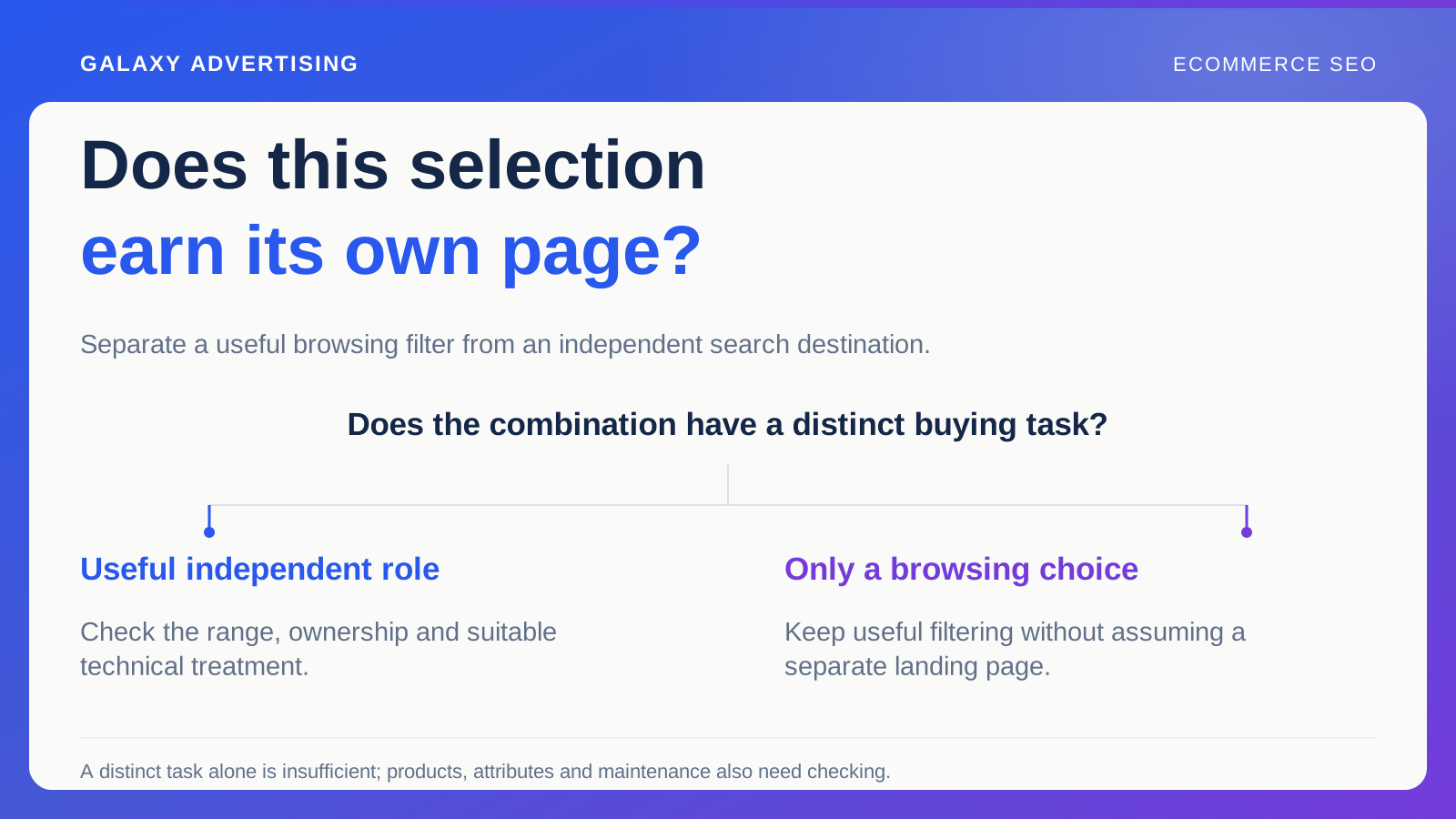
Group questions where a single page can answer them naturally and support the same next decision. Separate them where the task requires materially different information or another destination. Neither choice should follow wording alone.
A fresh phrase does not automatically justify another URL. Repeated pages need maintenance and can leave customers unsure which information is current. Forcing different tasks into one long page can be unhelpful too, making the relevant answer harder to find.
Document which page introduces the range, which explains a question spanning it and which identifies a particular item. Add links where they help movement between those tasks. Internal links should express that useful relationship, rather than decorate a keyword plan.
Keep brief reasons for rejected page ideas as well as approved ones. If an article would repeat the collection’s selection task, record why it was rejected. The next review can reconsider the evidence deliberately, instead of reviving the idea whenever a similar phrase reappears in an export.
Check whether the answer still fits the visitors
After publication, inspect available queries and page interactions alongside relevant enquiries and order evidence. Look for indications that the page attracts a different task from the one you assumed. The original brief remains something to challenge.
Those observations might support clearer information, an improved product route or a different role for the page. They cannot prove every visitor’s motive, so keep your recommendation tied to what you can observe.
The keyword remains a valuable clue. It becomes much more useful when it leads you to an unresolved decision, the facts needed to support that decision and a destination offering a sensible next step. That is the buying task your page has to earn the right to serve.