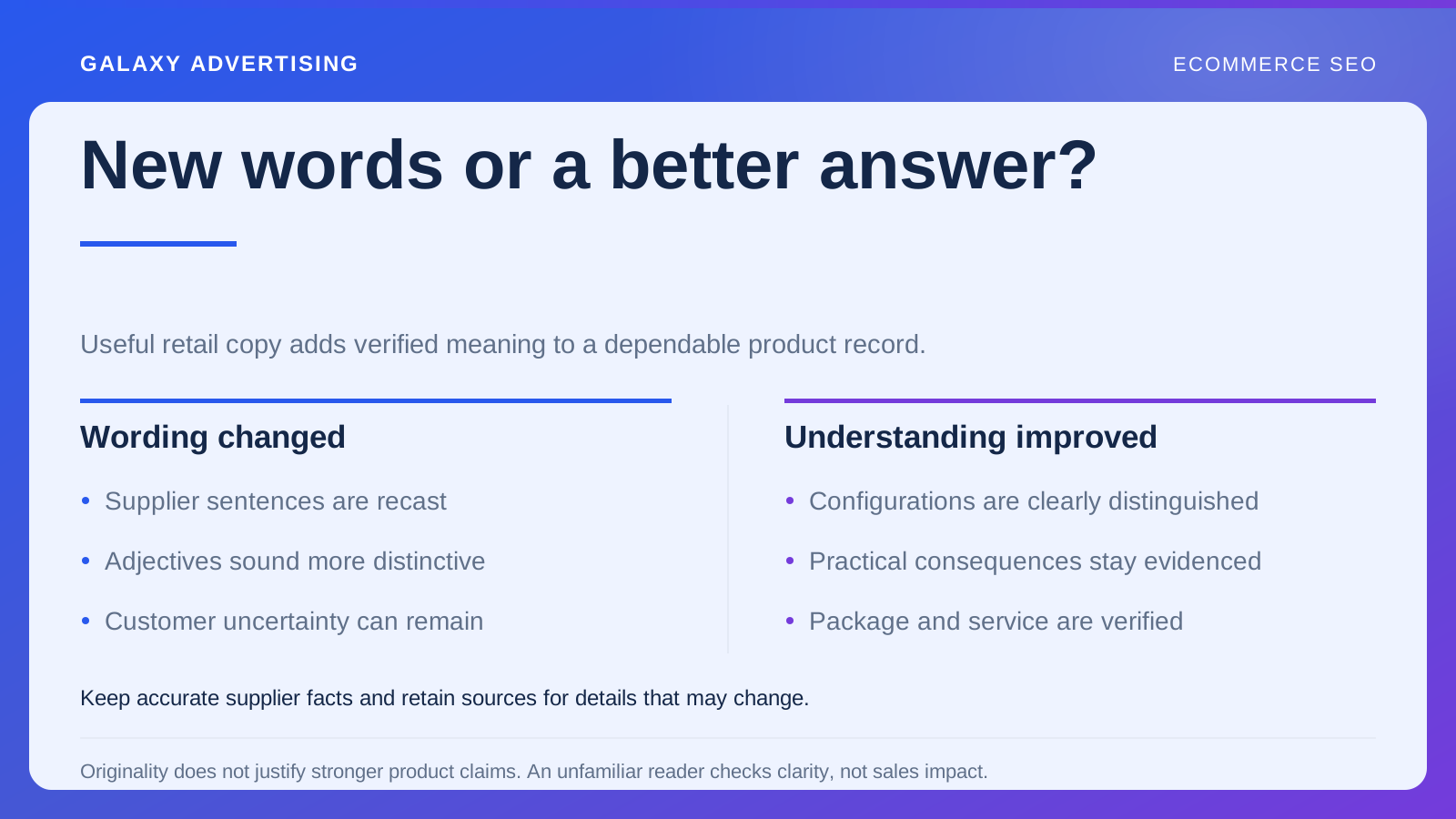
How is a customer supposed to choose when all three dining tables in your guide are “stylish”, “practical” and “perfect for modern homes”? The descriptions are positive. The difference that should affect their choice is still missing.
A useful comparison explains consequences. It can show that a product does not suit a particular requirement without criticising the product itself.
That judgement is what your article needs to add beyond the catalogue specifications. Somebody should finish better able to choose, including better able to rule an option out.
Compare alternatives connected by a real decision
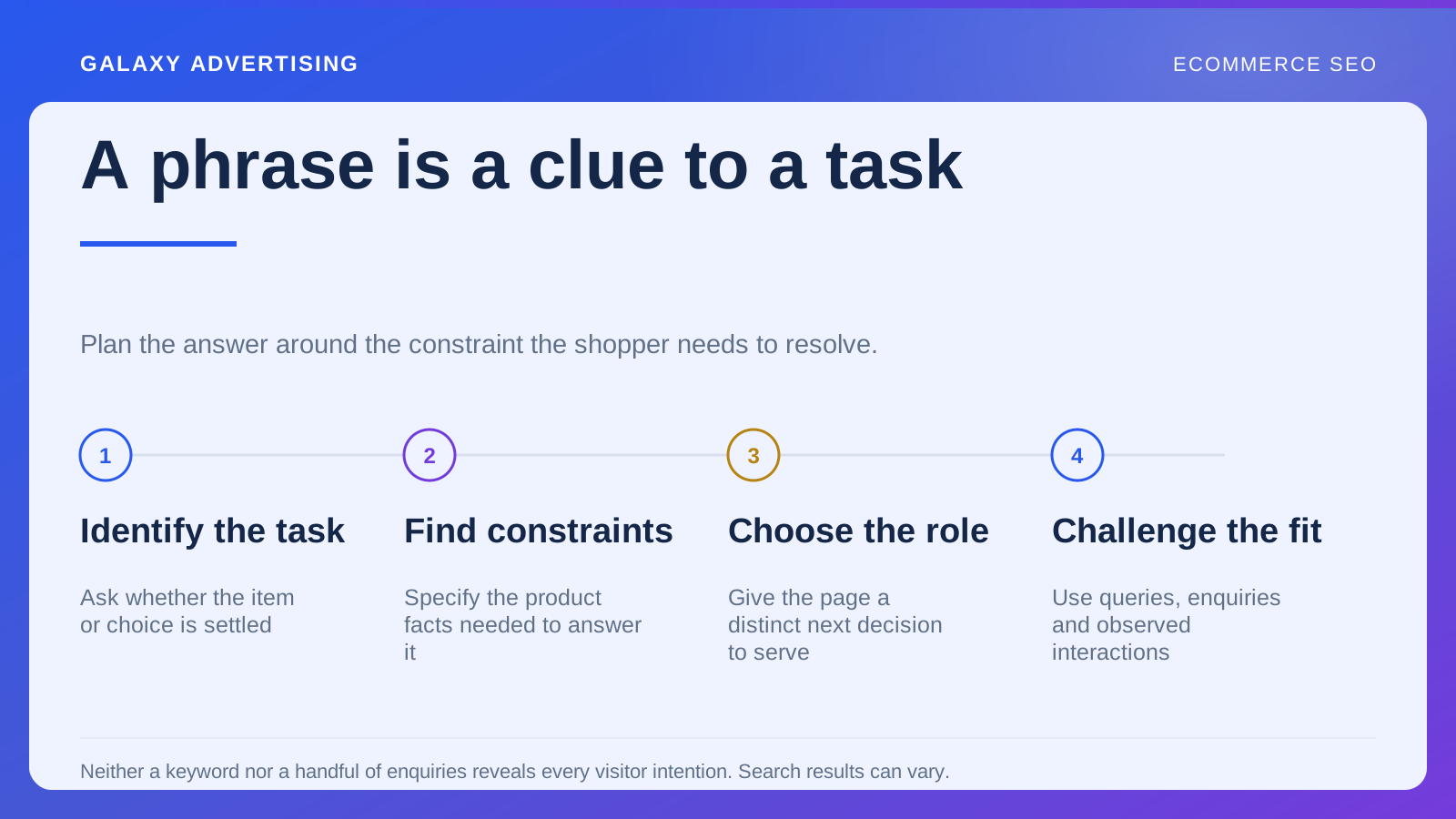
Identify the options a shopper is likely to consider and the question joining them. Fixed versus extending configurations raises a different question from finish or delivery arrangements. Decide which comparison you are making before bringing the products together.
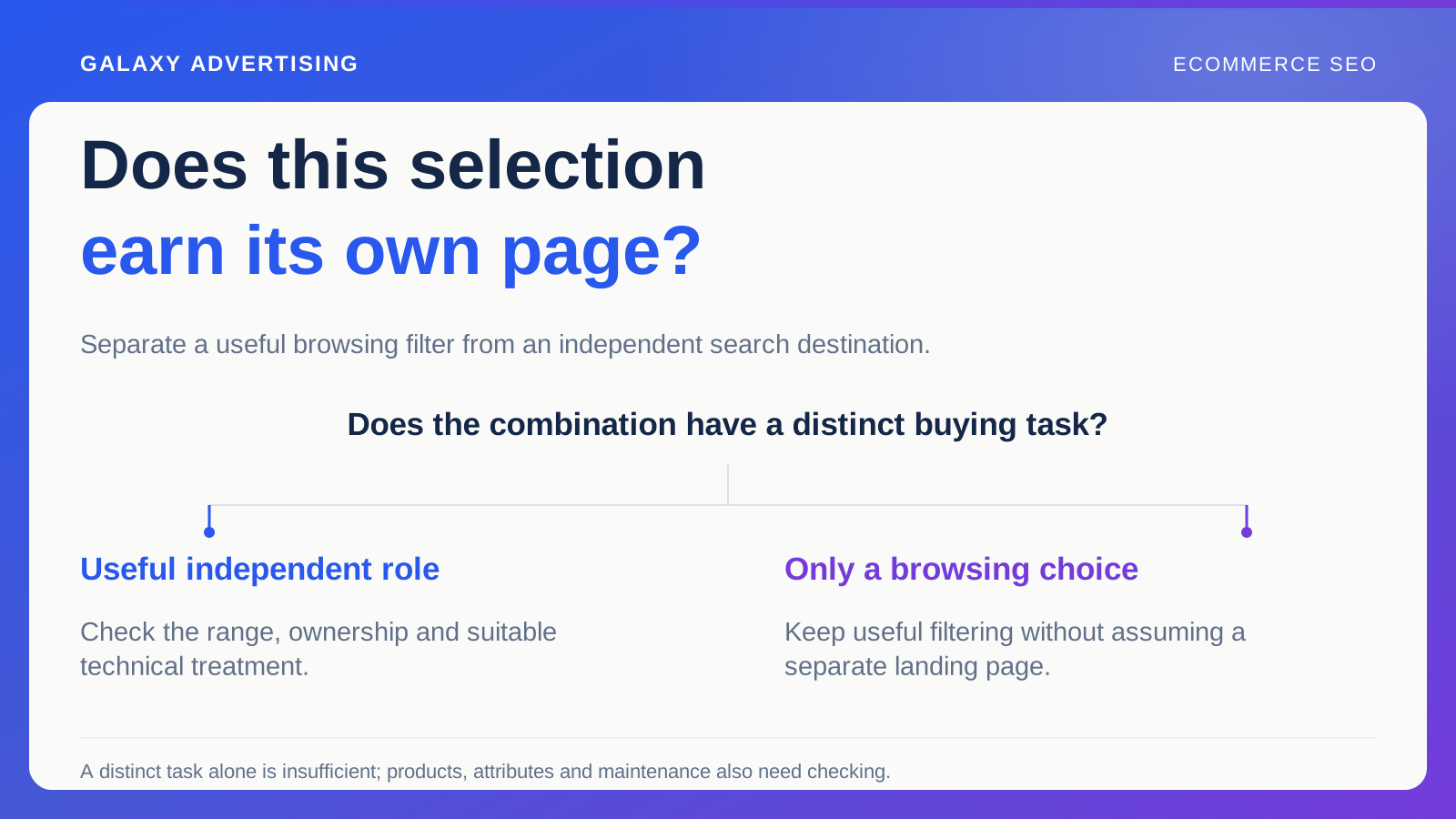
A shared broad category is not enough. If the items all serve different purposes, the supposed winner depends on a reader you have never defined. The guide becomes harder to use, however balanced its presentation looks.
Inspect the current range. Unavailable configurations can create interest with nowhere useful to buy. If the article includes broader educational examples, explain their relationship with your available offer. Do not imply every example can be purchased from your shop.
Put each option on the same factual footing
Gather relevant specifications and package details from reliable product references. Use consistent definitions. An apparent difference should come from the products, rather than from the way somebody entered the data.
In a hypothetical table comparison, identify dimensions for the fixed state and for the extended arrangement. Comparing one product at its smallest with another at its largest can mislead unless that distinction is explained. Similar looking figures are not necessarily equivalent measures.
Keep sources for important claims and assign unresolved details for verification. A neat comparison table can make an uncertain fact look authoritative. Use the layout to organise checked information, rather than conceal what the writer could not establish.
Explain what the specification means for this choice
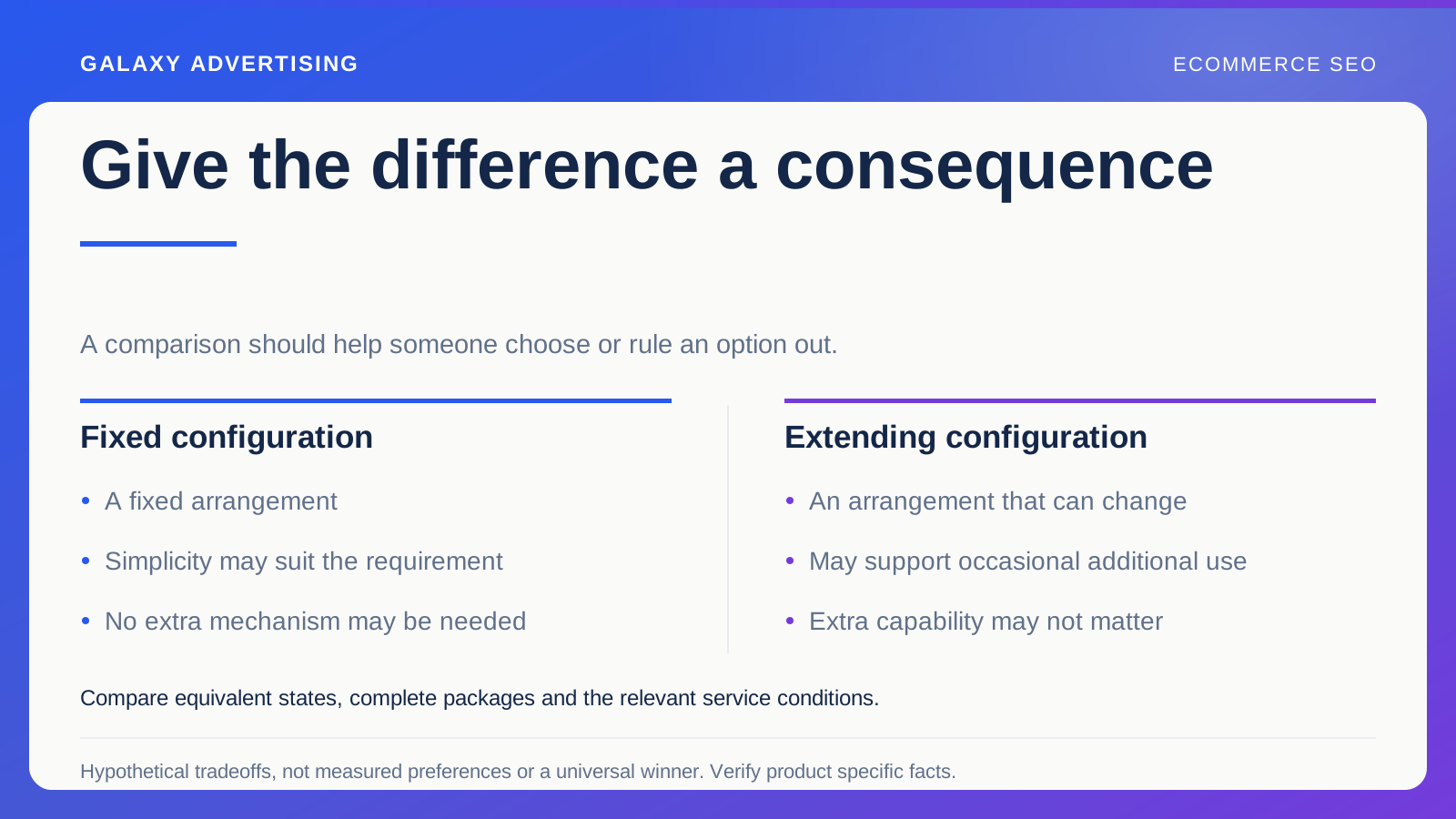
Connect the difference to the task being discussed. An extending arrangement may support occasional additional use; a fixed design offers a different kind of simplicity. Show the tradeoff instead of treating every extra feature as proof of superiority.
Keep consequences inside the evidence. A construction detail can matter without proving lifetime durability. A dimension can help someone investigate fit without showing the product suits every room of a general type. Do not stretch a useful fact into a promise it cannot support.
Where circumstances matter, tell readers what to check and where accurate details are available. A helpful general article does not have to replace product specific instructions or every professional assessment. It can make the next investigation clearer.
Say when somebody could reasonably prefer each option
Describe when a feature matters and when it may not. That gives people a way to assess relevance, rather than simply take in another set of compliments. The conditions should do some practical work.
A hypothetical customer who rarely changes a room’s use may value an additional mechanism less than somebody with another requirement. Neither customer is wrong. Nor does that difference establish a universally better product.
Keep imagined customers clearly illustrative. They demonstrate a decision process, rather than measured preferences or knowledge of what an entire demographic will choose. Their value lies in explicit assumptions the reader can assess against their own needs.
Compare the whole offer where it matters
Price becomes difficult to interpret without the configuration, included components and relevant service conditions. Establish what each quoted amount buys before placing prices beside each other as if they describe equivalent packages.
Make differing service arrangements visible. A general delivery statement might not cover every configuration. Optional work should not silently become part of the base offer simply because that makes the comparison tidier.
The cheapest displayed price is not necessarily the lowest practical cost for everyone. Explain the facts you can verify and point to current conditions where needed. A fair decision needs complete packages, rather than a comparison tilted by omissions.
Let each link continue the distinction you explained
Send readers to the correct product or focused collection for each option. The destination should identify the relevant configuration and provide the detailed information supporting your summary. A carefully explained distinction needs to survive the click.
Use link language that tells readers what comes next. Repeated generic invitations to shop make it harder to act on a specific comparison. Descriptive wording keeps the next step connected to the choice.
Check those routes after publication and significant catalogue changes. An accessible article can still feature a missing item or lead to an unrelated range. Maintaining the comparison’s usefulness is part of the work, rather than an administrative concern to remember only when traffic falls.
Include one explicit exclusion in the editorial review. Does the guide let someone recognise a requirement a featured option does not meet? If every condition is softened until everything remains suitable, restore the factual distinction. You do not need an aggressive verdict or invented ranking. You need a practical selection consequence, rather than positive language arranged in a table that leaves the customer no closer to choosing.
Ask whether someone can now make a better choice
Have an unfamiliar reader explain the meaningful differences after using the page. They should be able to identify at least one condition favouring an option or ruling it out. That is a practical test of what the explanation adds.
Look at available search, product exploration and enquiry evidence for unresolved confusion too. These observations can guide improvements without becoming a complete account of every reader’s decision. Keep the limits visible when interpreting them.
A comparison gives customers permission to choose appropriately when its facts, tradeoffs and actual offer agree. If every product is still perfect for everyone at the end, the marketing language has probably been protected at the expense of the decision. Give the differences enough consequence to help someone choose.