Selling out of a product doesn't make the customer's question disappear.
Someone saves a page while comparing options and returns to a different category with no explanation. You may have discontinued the item or run out of stock. They've lost the reference they were working from, and the website hasn't helped them understand why.
Decide how to treat the page from the actual product state, credible replacement options and information still worth keeping. A blanket rule can turn an ordinary catalogue change into an avoidable dead end.
Find out what has actually changed
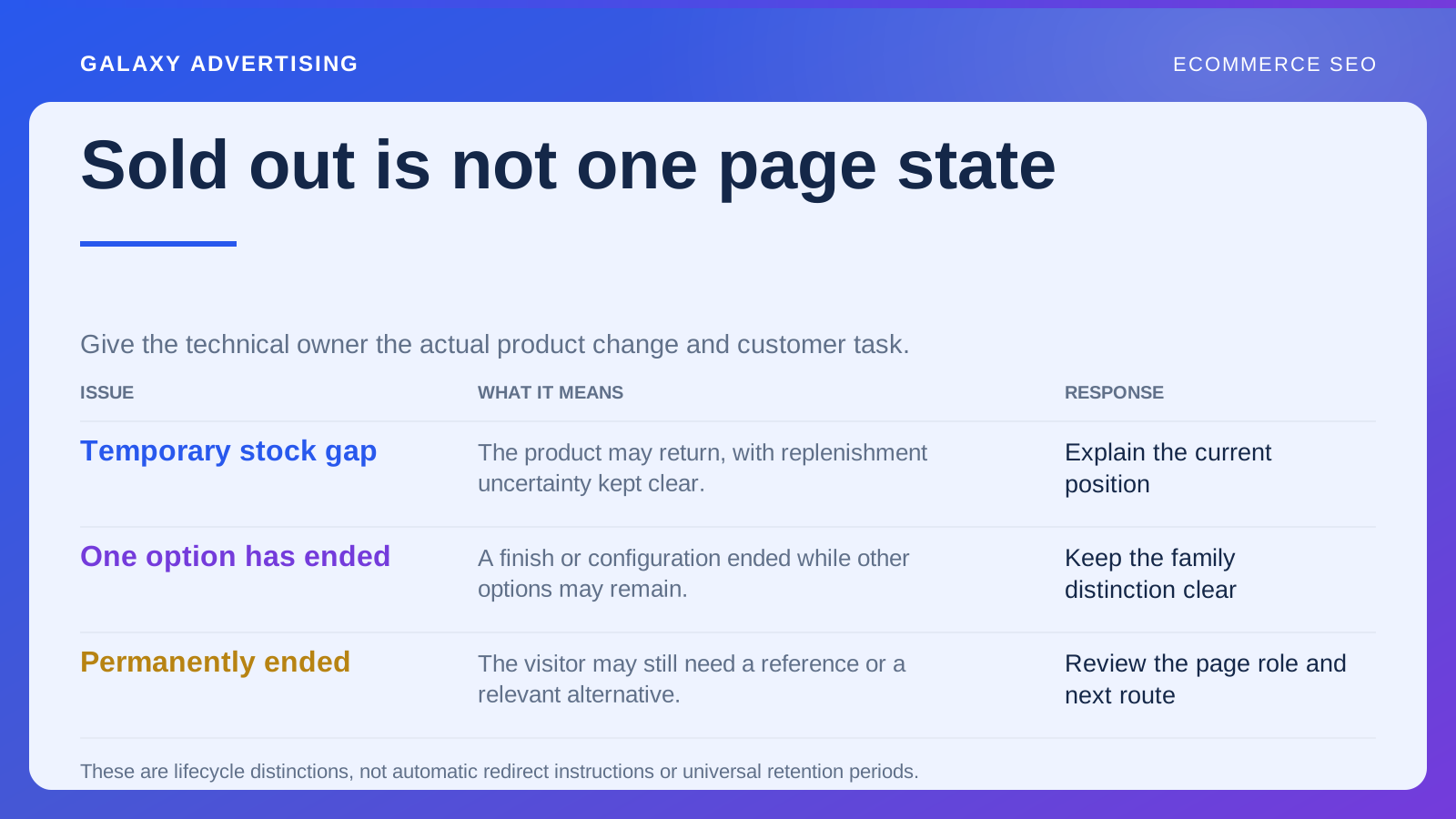
Distinguish temporary unavailability, an option that has ended and a product that won't return. The website team needs a reliable source, rather than an inference from a missing warehouse quantity.
Ask merchandising what replenishment is confirmed. Explain uncertainty honestly. An expected delivery isn't secured inventory, and an old estimate shouldn't remain on the page indefinitely because nobody owns the update. A customer needs to know what the business can support now.
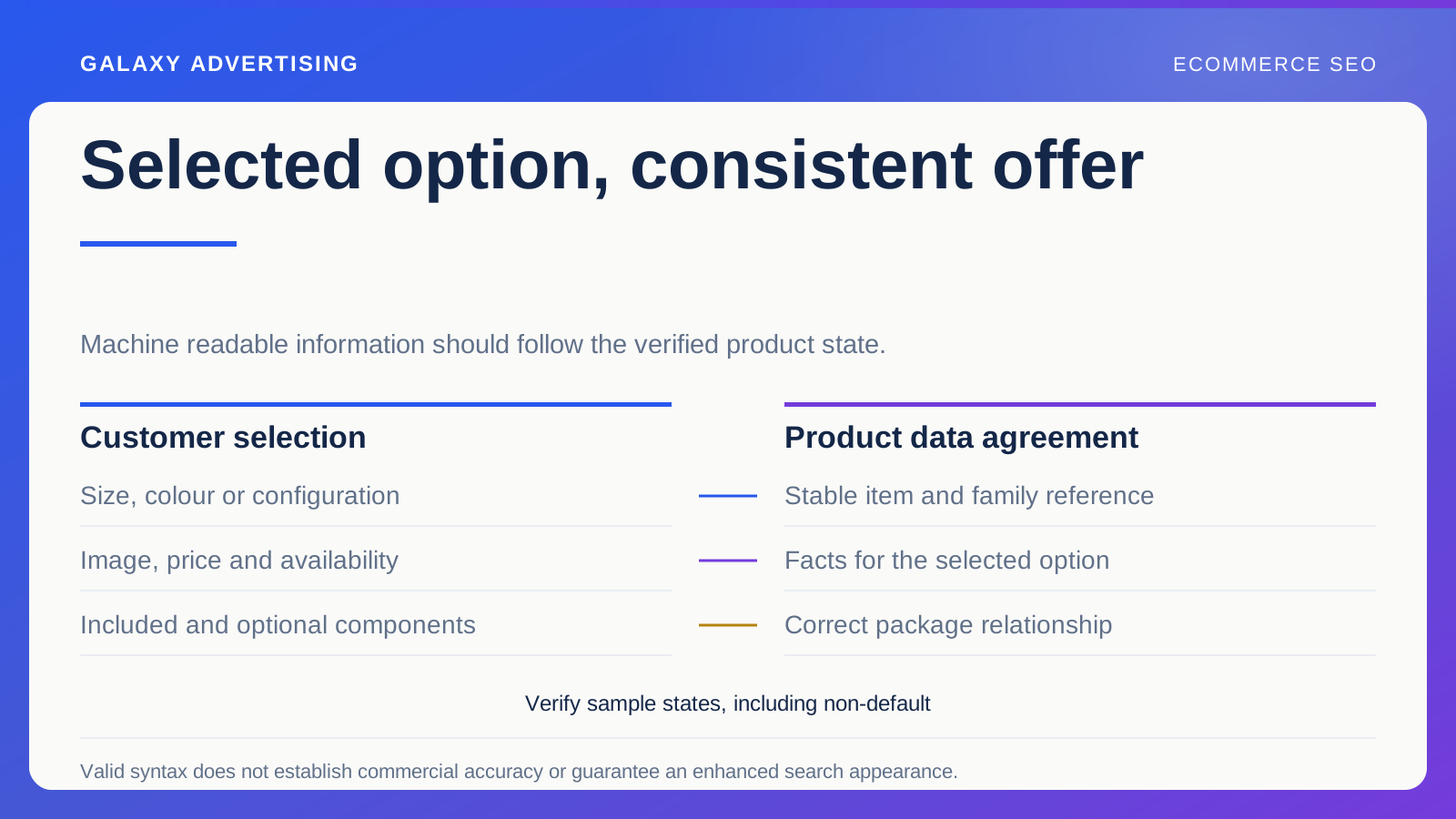
Check at configuration level. A style could still be available after one finish ends. Calling the whole family discontinued removes a useful route. Presenting it as fully available can confuse someone returning for the exact finish they saved. The explanation needs to match the part of the offer that changed.
Remember why the visitor came back
They could want to buy, confirm a specification or compare an alternative with the original. Preserve enough identity for them to recognise the product and understand the change.
A clear availability explanation can do more than an unexplained transfer to a broad page. The person arrived with a particular reference, perhaps from a search or saved link. Helping them reconnect it with the current position saves them having to investigate the change themselves.
Not all historical traffic is valuable purchase demand. Review the page's role and available observations. Some products retain useful reference information. Others have little continuing purpose. Decide from the actual case, rather than insisting every old URL must stay unchanged forever.
Explain why an alternative is relevant
A replacement could share intended use, configuration or an important compatibility requirement. A similar photograph isn't enough to establish that relationship. The customer still needs to know whether the alternative serves the original task.
Explain meaningful differences instead of calling the substitute identical. Dimensions, included components or service arrangements could need checking again. An honest alternative helps someone make that assessment rather than silently inheriting assumptions from the old offer.
Take a hypothetical desk range. A newer model with a different footprint could be useful without directly replacing the old one in a constrained space. You can responsibly offer it as an option while preserving that distinction. The customer shouldn't discover the lost suitability assumption only after following the recommendation.
Tell the technical specialist which change they're handling
Ask for an appropriate technical response to the actual page state, using current primary guidance. Temporary unavailability and a permanent move to a genuinely relevant replacement are different situations.
Google's documentation describes redirects as sending users to a new location and as a signal relevant to canonical selection, meaning the choice of representative URL. That doesn't make an unrelated destination a good answer for every discontinued item.
Keep the commercial context in the request. Has the item moved, ended or become temporarily unavailable? What should the customer understand? A list of URLs without those answers can produce technically consistent work that still leaves the visitor confused. The specialist needs the reason as well as the location.
Check the page and the other representations together
Review the page, relevant product outputs and promotional routes. An accurate unavailable message doesn't establish that every downstream representation has updated too. A visitor can still arrive carrying an expectation created elsewhere.
Trace material discrepancies to the source that owns the fact. A temporary display edit can be overwritten at the next data update, bringing the same conflict back. Fixing the relationship matters more than briefly making one label look right.
Record the expected state and verify after implementation. Include representative temporarily unavailable items, ended options and replacement relationships. Those examples challenge assumptions a straightforward change might leave hidden. You want a process that handles the exceptions your catalogue actually produces.
Keep an archive only while it has a useful job
Preserving useful information is different from keeping every old page automatically. An archive creates maintenance work and can confuse people if its relationship with the current range is unclear.
Does the page still answer a genuine task, and can you keep its remaining facts accurate? Information with no continuing purpose could need different treatment from a frequently referenced product with a relevant replacement.
Don't invent a universal retention period. The product, page and technical context matter. A reviewable policy with meaningful exceptions helps more than an unsupported number applied to every change.
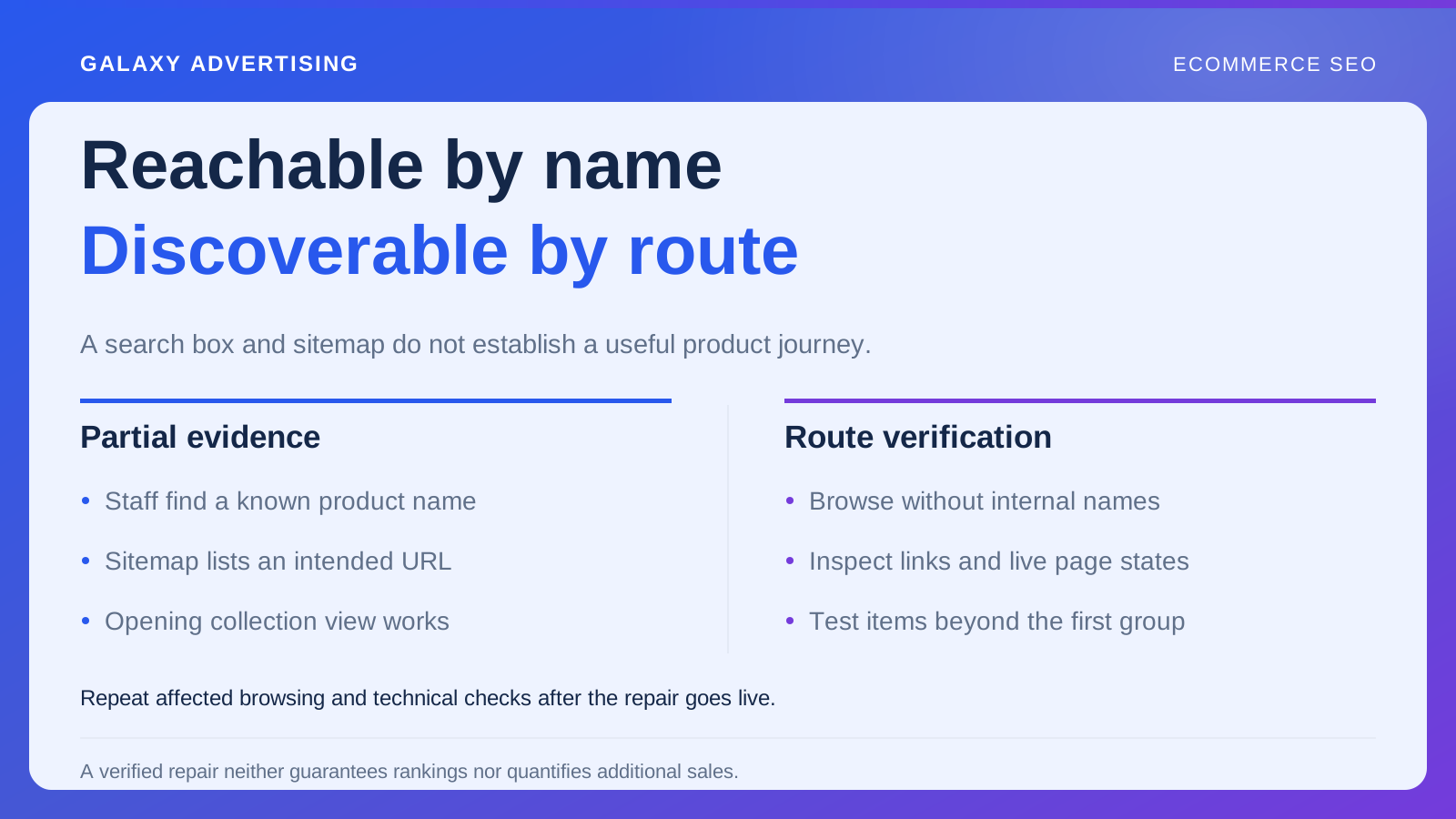
Check links from current guides and collections too. The old page might explain unavailability while an active guide still describes immediate purchase. Correct that relationship rather than treating URLs in isolation. Ownership needs to include important routes into the product, because several pages can shape what the returning customer expects.
Give the whole lifecycle an owner
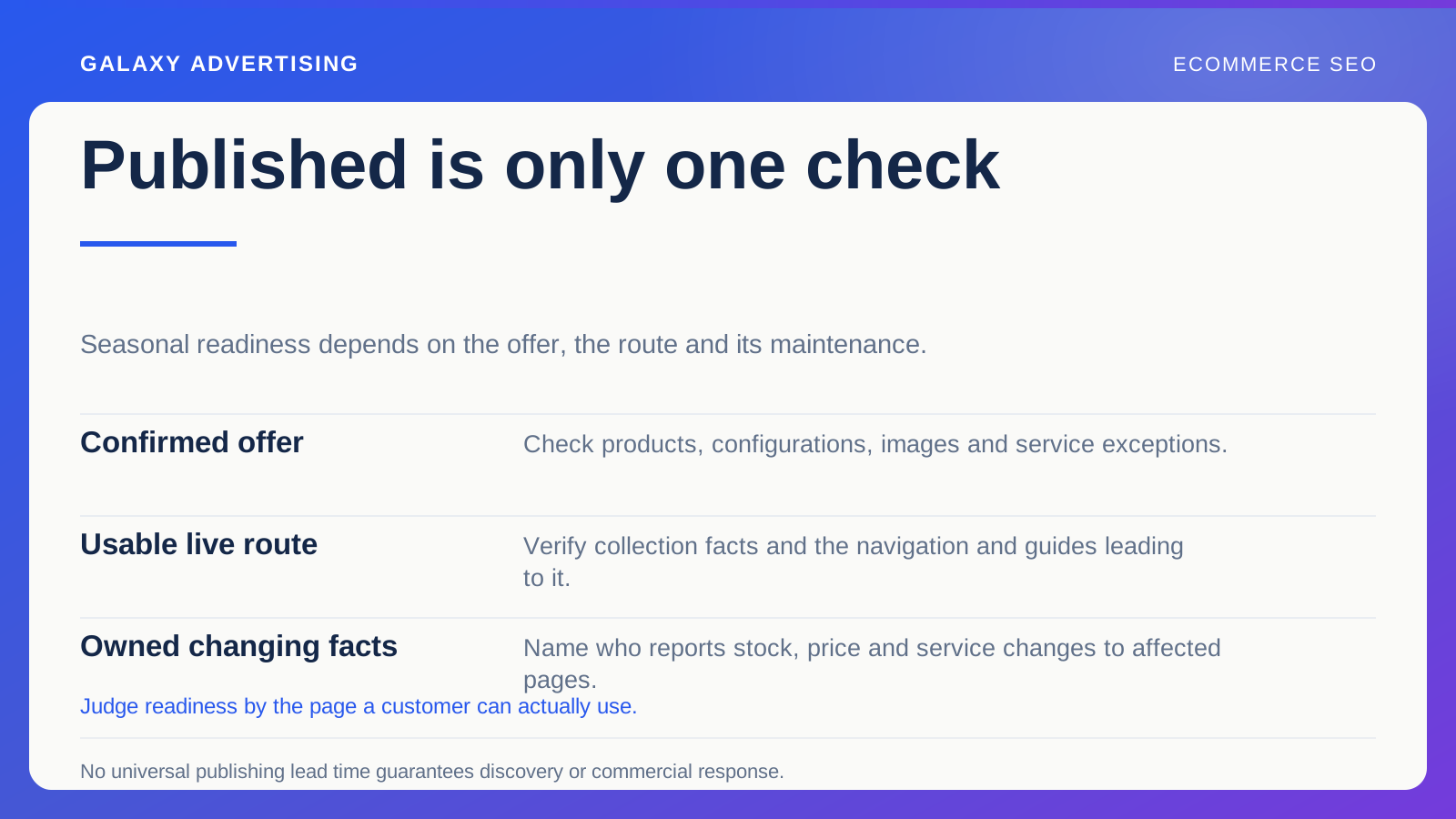
Agree who reports availability changes, chooses alternatives and verifies the customer facing result. Product lifecycle work can fall between merchandising and website maintenance, with each team assuming the other owns the final explanation.
Record major decisions and their reasons. When another colleague encounters the old URL, they should be able to distinguish an intentional treatment from an accidental bulk update. That saves the business having to rediscover why a page behaves as it does.
The customer who saved your product hasn't necessarily saved your internal stock history alongside it. An honest explanation preserves the useful thread: what the item was, what's changed and where they can sensibly go next. A redirect somewhere else is only helpful when somewhere else answers the question they brought back.