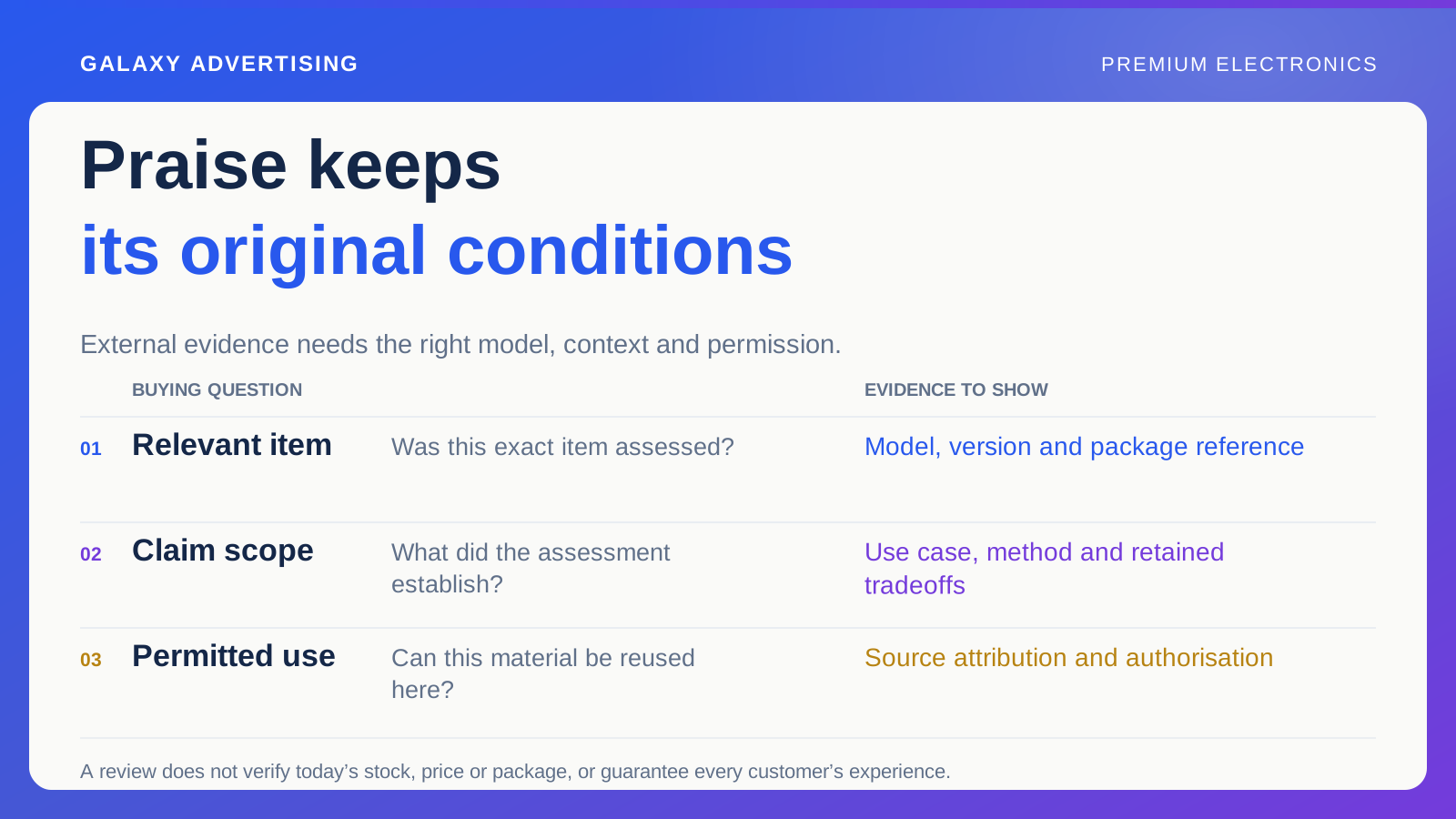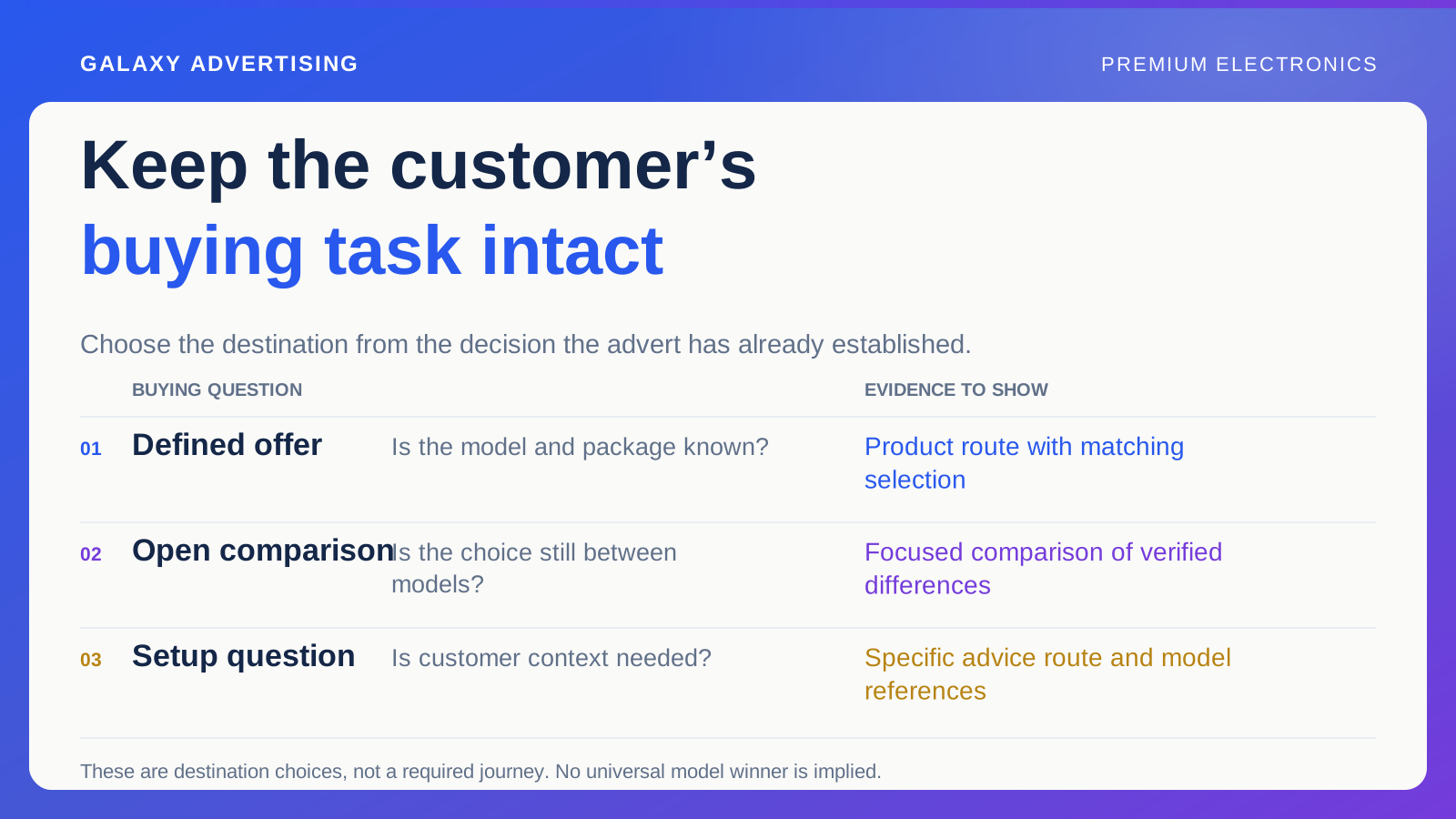
Persuasive projector footage is not automatically evidence of projector performance. Replace the screen image, leave the model unidentified and film in an attractive room unlike the buyer's likely conditions, and the advert can imply more than it establishes.
The demonstration does not have to look plain. It does need a fair relationship between what viewers see and what you want them to conclude. Before production, define what the scene demonstrates, what it cannot establish and which facts must survive every edit.
Choose one task someone can recognise
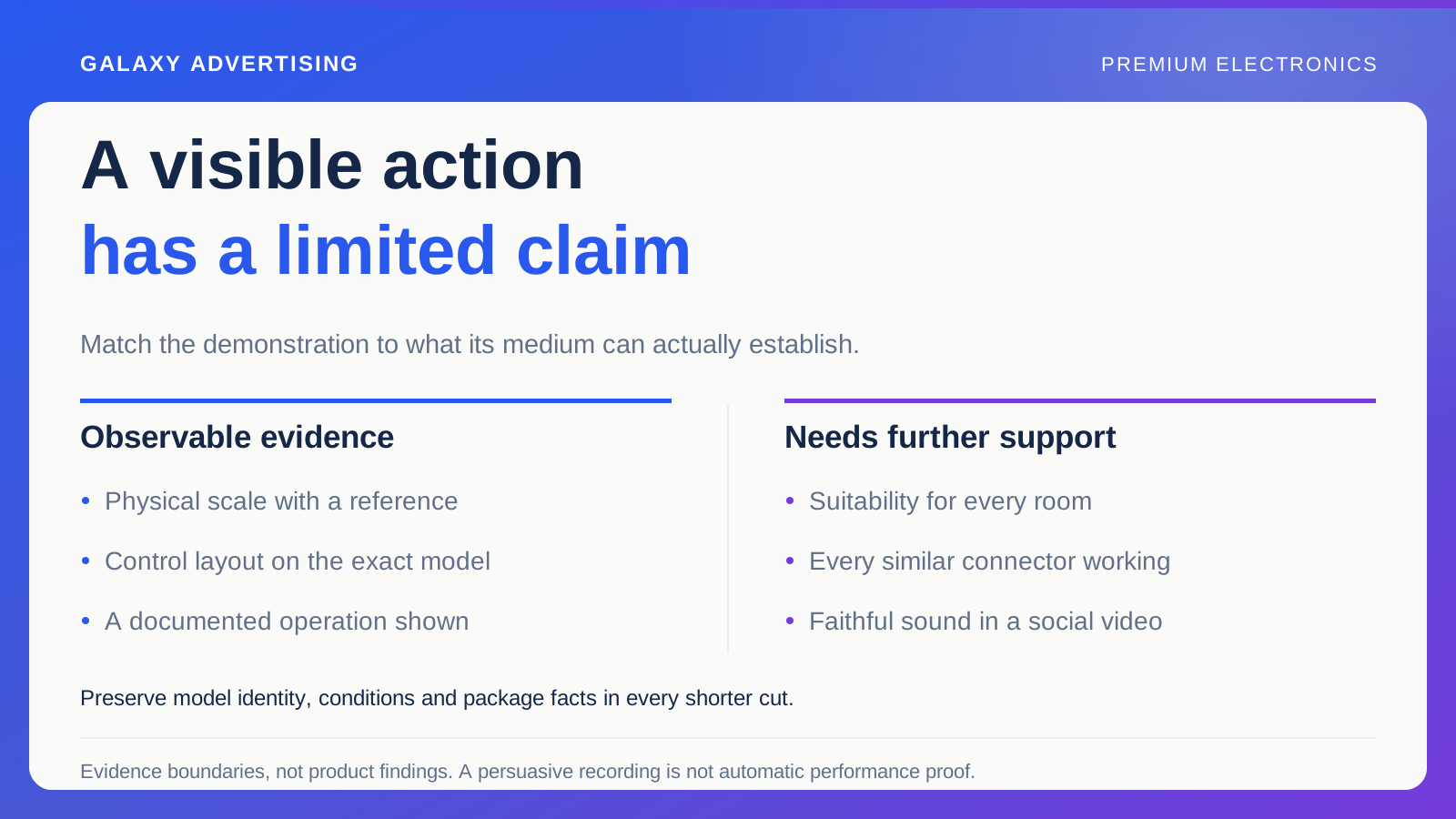
Start with an observable action relevant to the customer. They might need to judge a speaker's physical size, see how a control is accessed or identify documented connections on a specific model. Give the scene a job a viewer can understand.
Keep it narrow enough to show clearly. Trying to establish picture quality, universal compatibility and effortless installation in a few scenes can introduce several unsupported leaps at once. More promises do not necessarily make a more useful advert.
For a hypothetical compact speaker campaign, show its scale on an ordinary shelf. That needs accurate proportions and a useful reference object. It does not require claiming suitability for every room, or suggesting a social video faithfully conveys how the speaker reproduces sound. Let the visible evidence do its own particular job.
Write down what each shot establishes
Describe the observation an essential shot allows. A close view can identify control layout. A continuous sequence can show a documented operation. A wider view can establish the product's relationship to its surroundings, provided scale remains accurate.
Separate those observations from conclusions requiring another source. Filming one connection arrangement does not prove every device with a similar connector behaves identically. Supporting documentation and the customer's requirements still matter to that judgement.
Give the producer a list of implications to avoid. A compelling transition or composite can change the demonstration's meaning without changing the spoken words. Protect the intended claim in the brief, while the edit is still straightforward to revise.
Supply references for the model being shown
Include the model identifier, approved images, relevant dimensions and manufacturer information supporting the demonstrated action. Identify accessories supplied by you separately from components included by the manufacturer. The crew needs to know which item supports which promise.
Label references so the relevant detail is easy to find while filming. A folder of nearly identical models invites accidental substitution, especially when a revised version changes little externally. Familiar appearance is not a sufficient identity check.
If the scene requires a stand, cable or additional device, record its role. Do not leave the customer to assume everything visible comes with the advertised package. Decide how the creative and destination will keep that distinction understandable.
Plan the conditions around the actual claim
Use conditions appropriate to what the scene is meant to show, retaining material qualifications. An idealised environment should not imply a more general result that the product documentation cannot support. The attractive setting still has to serve an accurate argument.
Avoid enhancements that alter the feature under discussion. Replacing a displayed image might be acceptable when explaining a menu, but unsuitable as evidence of displayed performance. Decide the scene's purpose rather than adopting one blanket editing rule for every context.
Review reflections, proportions and visible controls in generated imagery or composites. A convincing picture can contain ports or accessories the model does not have. Product accuracy needs its own check, separate from whether everyone likes the image.
Check what the shorter version still says
A shorter cut can lose the context that made the demonstration intelligible. Check that model identification, important conditions and the relevant action sequence survive. The original approval cannot answer those questions for an adaptation nobody has reviewed.
Ask what someone seeing only this version would reasonably conclude. Isolating the most impressive moment can exaggerate the observation when its conditions disappear. Sometimes the fix is another cut, rather than making the qualifying text smaller.
Keep captions legible on the intended display. Essential words should support what is shown without fighting for attention. If accuracy needs several dense explanations, narrow the production idea to something the format can properly carry.
Ask reviewers for the exact frame and the claim they infer from it. A vague feeling that the video is wrong is difficult to resolve. Marking the moment with the wrong model control gives production a precise correction and the approver something specific to verify afterwards.
Give factual accuracy and clarity their own reviews
Have someone knowledgeable about the product check the facts, and a separate editor check whether the customer argument is clear. Neither substitutes for the other. A technically correct film can be incomprehensible; a clear story can show the wrong model.
Inspect a rough sequence before final finishing. Missing evidence, a wrong accessory or a misleading comparison is easier to address before multiple polished versions exist. That review needs the emerging argument, not only isolated attractive shots.
Record the approved asset, caption and destination together. Later surrounding copy can introduce a claim the footage was never approved to support. Approval should describe the complete communication in its intended context, rather than a detached file.
Use the response to sharpen the next brief
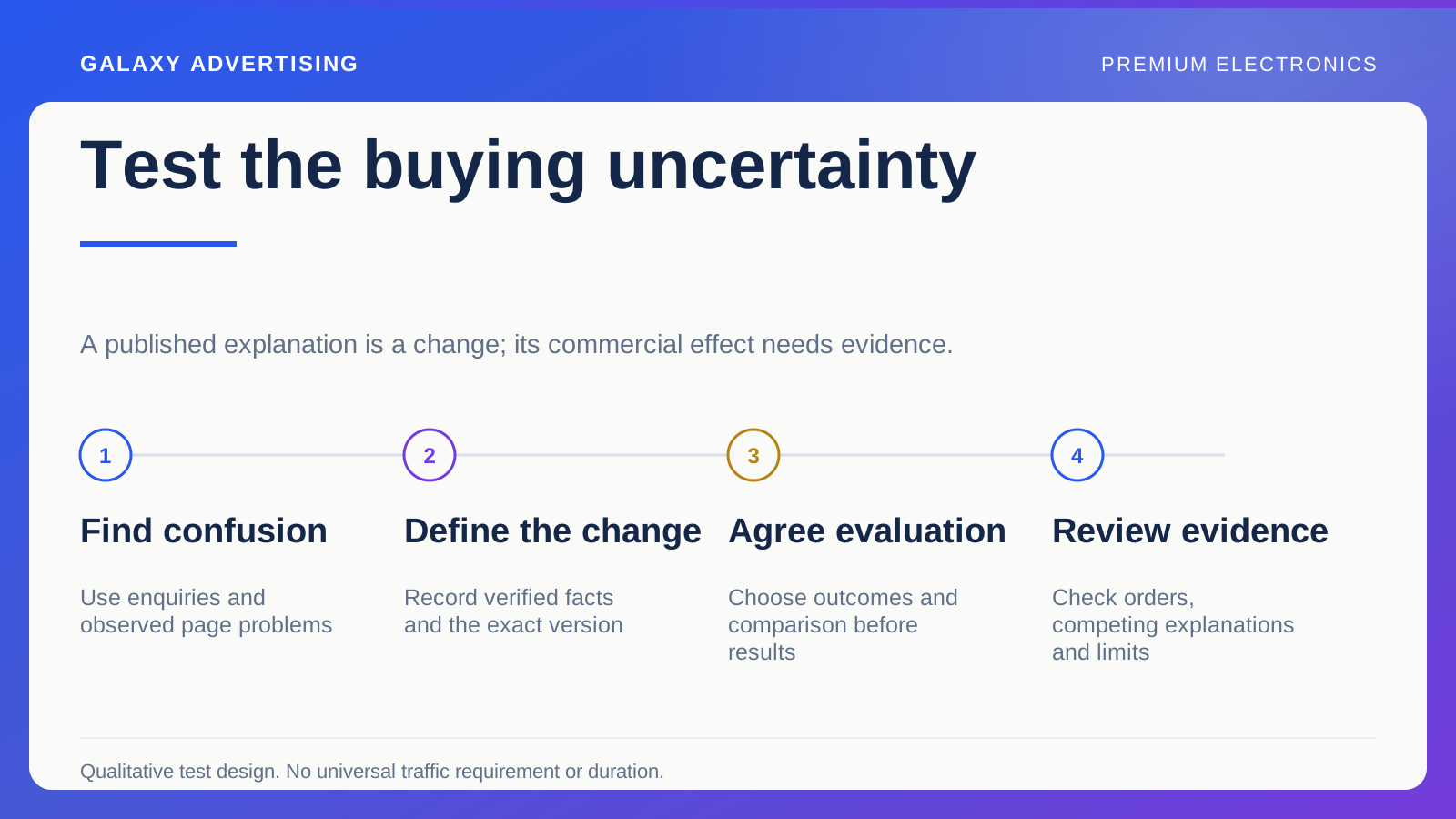
After launch, examine associated questions and product exploration beside the available campaign evidence. Did viewers reach the correct model? Did enquiries concern the use case the film was meant to explain? Those observations help identify what to develop next.
They do not prove the film alone caused resulting orders. Preserve attribution limits and account for other changes in availability, price or destination information. Useful creative learning can remain useful without a larger causal claim.
A worthwhile demonstration makes one technical decision easier to assess through an observable action and a supported conclusion. Ask the next production to show a missing detail, clarify a condition or investigate another customer task. Asking it merely to make the product look more powerful leaves the most important thinking undone.