 TikTok Ads
We can mistake handing over product photographs for handing over a usable TikTok brief. The images arrive, ideas start flowing, and the agency still does not know which configurations you can supply or who can approve what it films.
Nor does it know how you calculate contribution, the money left after the costs included in your calculation. “Make TikTok work” leaves quite a lot for an external team to infer.
A better handover gives the agency a decision to support and facts to work with. Be specific enough to reveal dependencies while leaving room for professional judgement about the tactics.
Be honest about what you want to find out
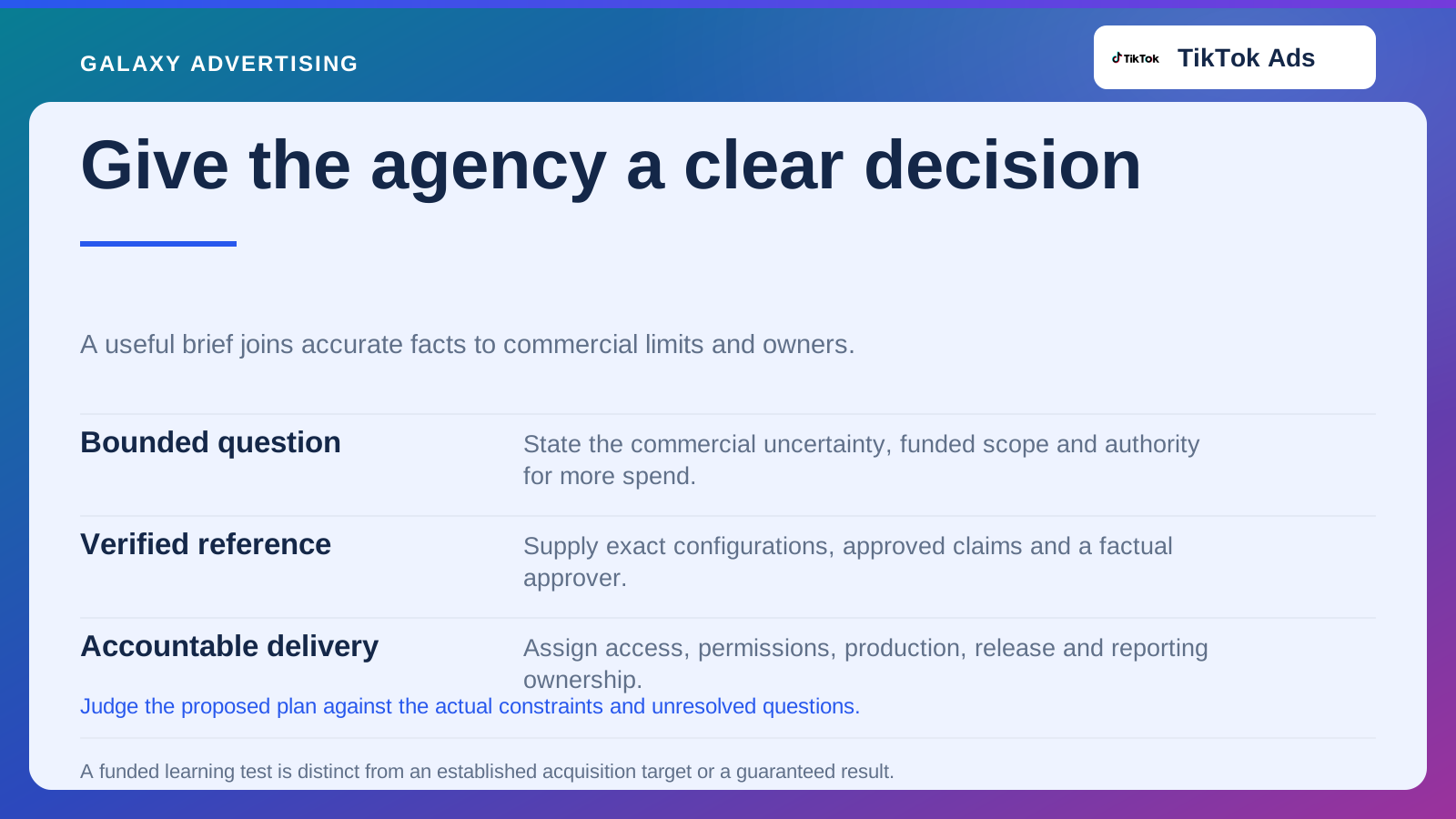
Describe the commercial question and what remains unknown. Testing whether demonstrations can attract suitable buyers for a range is different from demanding a guaranteed acquisition cost before anybody has examined the offer.
Explain why you chose that range. Stock, margin, how clearly the product can be demonstrated and its strategic importance may all matter. Say which reasons are established and which assumptions you would welcome the agency challenging.
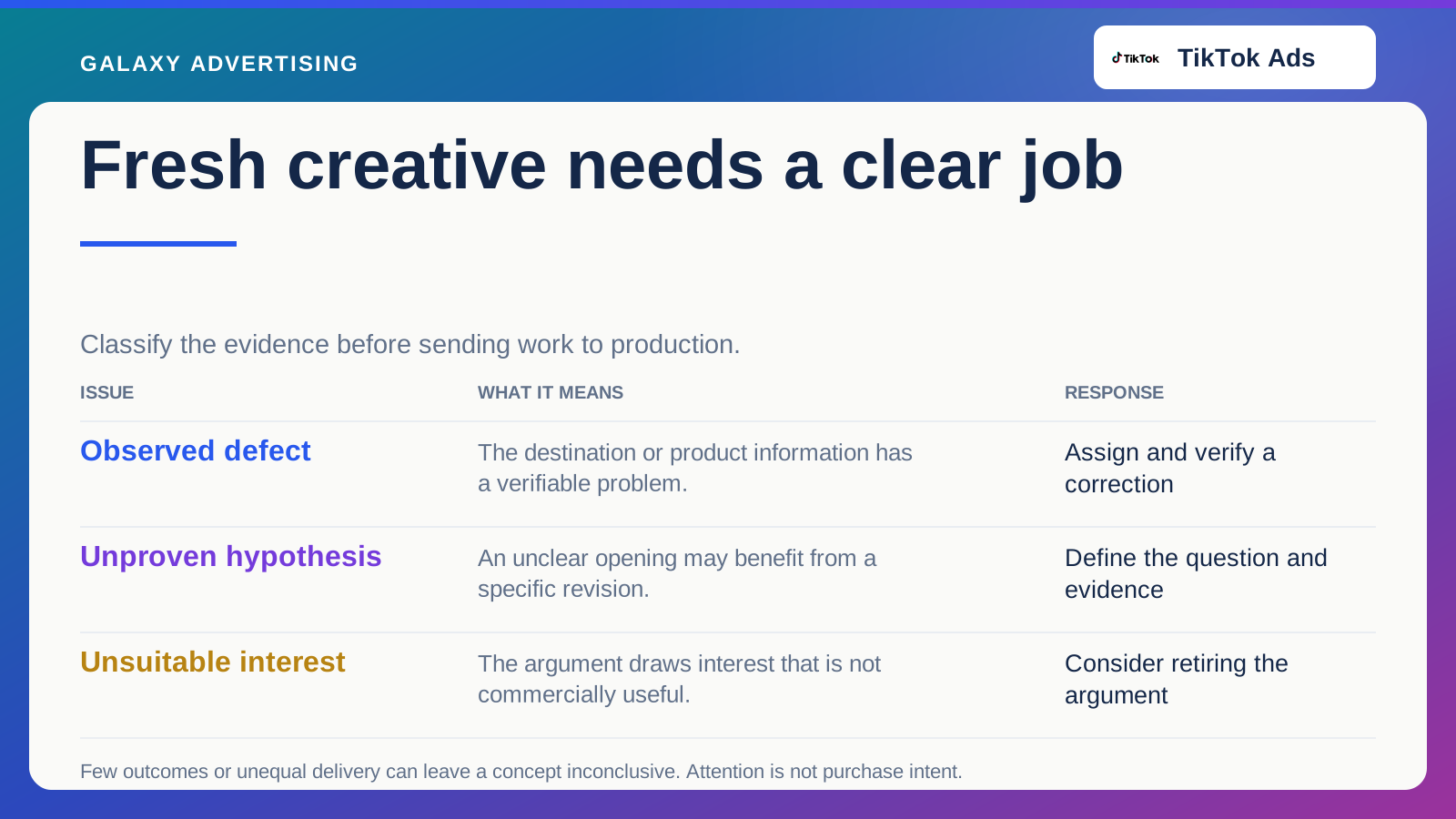
Include previous attempts and their limitations. A weak result with an unclear destination or unsuitable asset does not settle TikTok’s potential. It does provide history worth preserving, rather than paying another team to rediscover the same lesson through an avoidable test.
Give them a product reference they can trust
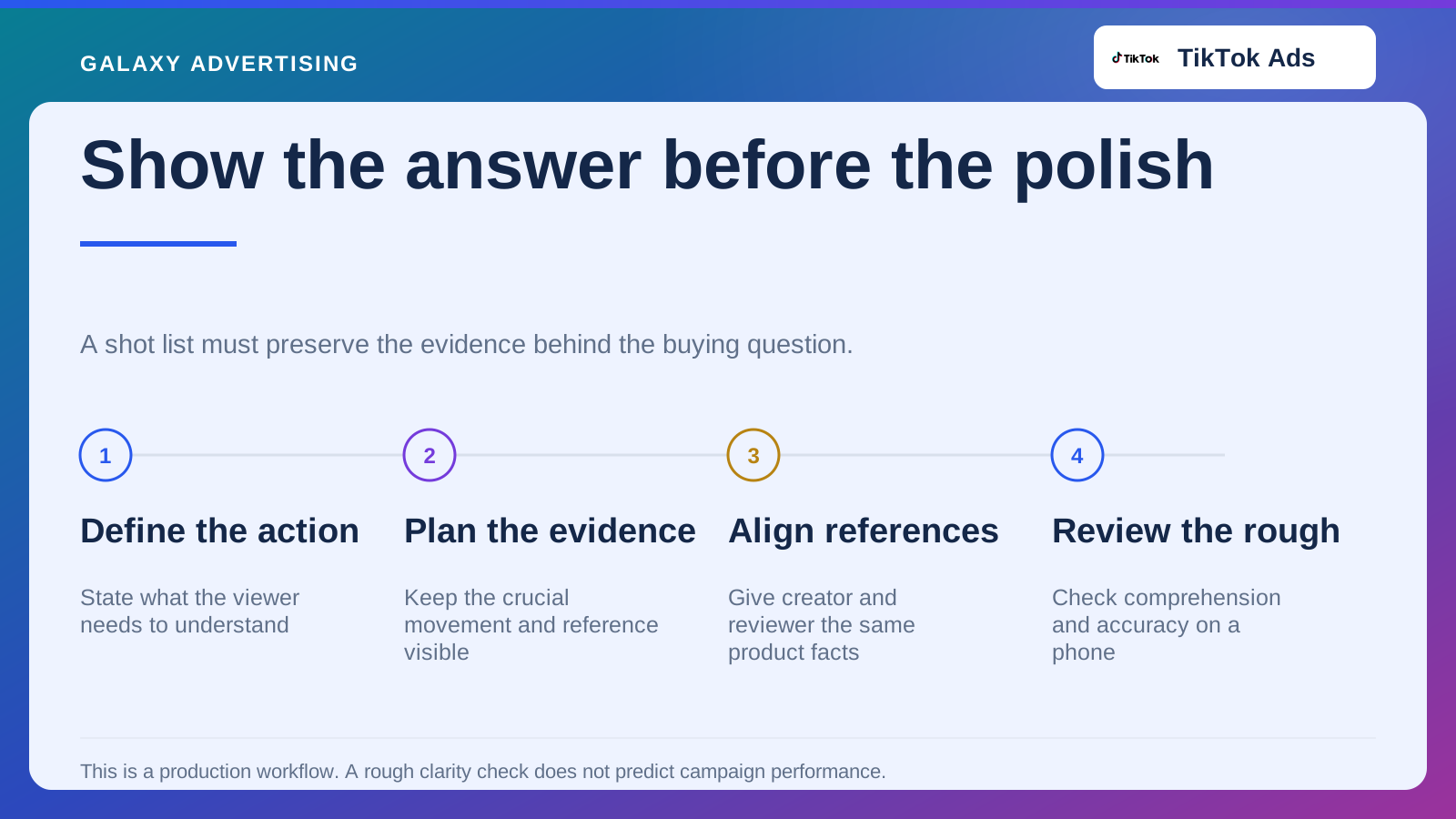
Identify the exact models and configurations available to promote. Supply current photographs, essential specifications, package contents and relevant manufacturer documentation. The agency needs to know what it is actually representing.
Separate approved claims from language you would like to use. Define the factual boundaries for scripts and demonstrations, including what edited or generated imagery must preserve. A visually appealing asset still needs to describe your real product.
Make product questions easy to resolve promptly. A large folder is little help if nobody knows which file is current or whether a proposed demonstration shows documented use. Name the factual approver and the circumstances in which another specialist needs to be involved.
Explain which economics the plan has to respect
Share consistent revenue and cost definitions for the acquisition discussion. Include relevant product, payment, packing and fulfilment costs. Label estimates so neither side mistakes an assumption for a measured cost.
If the case depends on repeat purchases, supply the evidence for that expectation. A future order you hope to receive is not guaranteed contribution the agency can safely treat as available for today’s advertising.
Distinguish a funded learning test from an established operating target. You may accept a bounded cost to investigate an uncertain route. State that authorised scope and who can release more investment. That provides a commercial constraint without expecting a confident proposal to make uncertainty disappear.
Settle access and ownership before launch
List the relevant advertising accounts, website systems and measurement routes. Establish business ownership and provide the access required through the supported processes. Permissions should match the work.
Shared credentials are a poor replacement for clear permissions. Identify who can authorise and remove access, and where the important production and campaign records will stay.
Check ownership and permitted uses of the assets you supply too. Previous use in another context does not establish permission for every new use. Give the agency a responsible contact for restrictions instead of assuming everything in a shared folder can be repurposed indefinitely.
Put a name against each production job
Agree who sources the product, briefs contributors, checks facts, edits and approves release. Clarify whether the scope covers the revisions and adaptations needed for the intended placements. “Production included” leaves room for different expectations.
Build the schedule around real dependencies. Transporting and assembling the product, finding creator availability and allowing the approver time to respond all take work. An ambitious launch date does not remove those jobs.
Keep the approved asset, caption and destination together. Otherwise a video can be approved for one offer and later paired with a different claim without review. Your release record should identify the version customers actually encounter.
Agree what reporting will help you decide
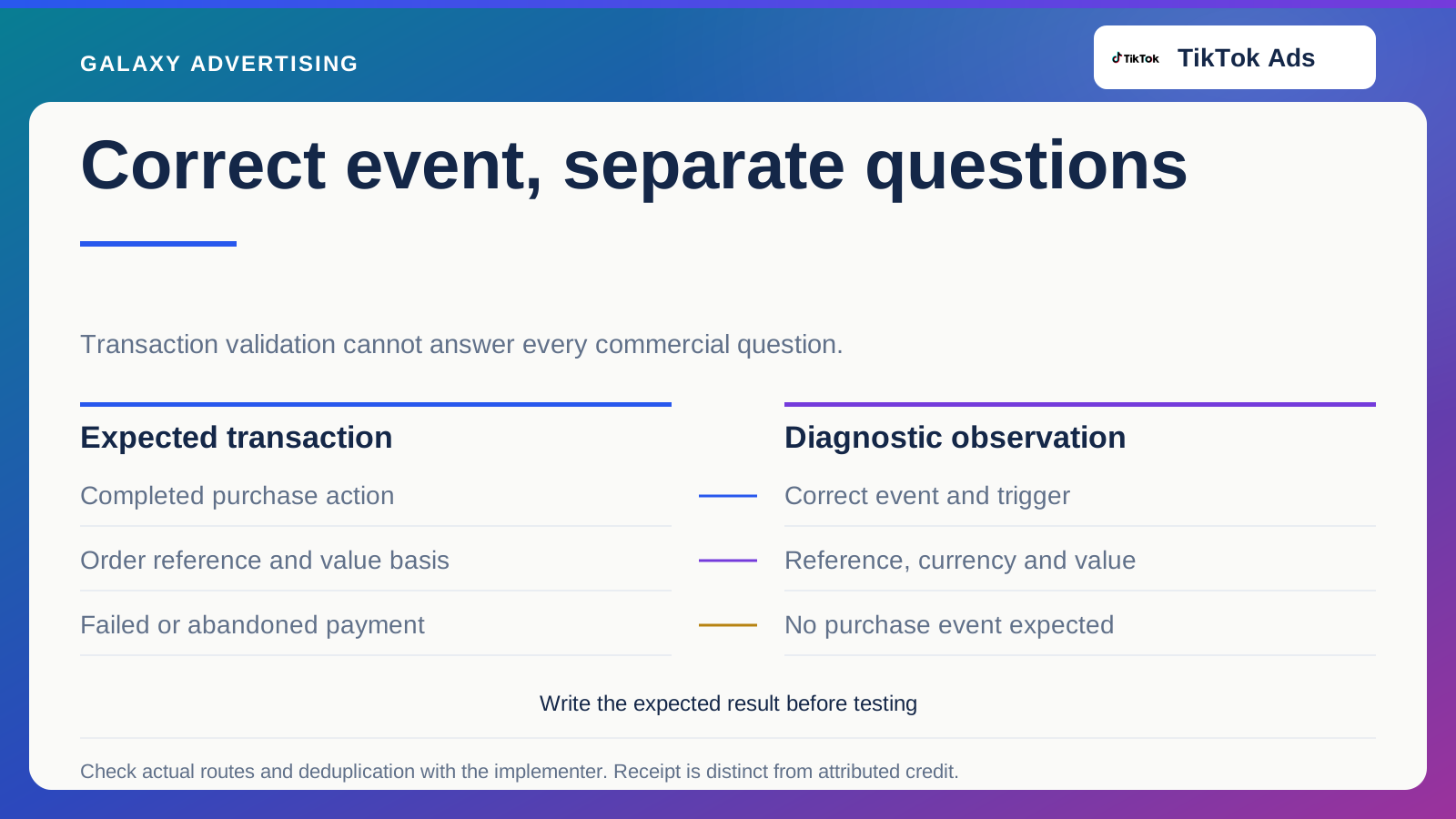
Ask what observations the agency expects and what they will support. Attention, exploration of products, attributed purchases and actual contribution address different parts of the commercial question. They should not quietly become interchangeable measures of success.
Agree how technical measurement will be checked and material discrepancies investigated. Understand the reporting basis before figures start being used to justify another allocation.
A useful report explains completed work, observed results, material limits and the proposed next decision. A large dashboard or favourable screenshots cannot do that job alone. Narrowing or stopping an unsuitable test can be a sound recommendation, rather than evidence that the agency has failed to deliver.
Include a route for urgent factual changes. If a featured configuration becomes unavailable, who reports it, which assets are affected and who approves an alternative? A contact list does not establish that process. Rehearse a realistic exception during handover to expose missing responsibility before launch. This is especially useful where different organisations handle merchandising, production and media.
Make the decisions survive a change of team
Keep the reasoning behind major product, creative and investment choices. Preserve failed hypotheses and unresolved questions alongside successful assets. The learning matters even when it does not make an attractive showcase.
Specify how source footage, approvals and campaign history will be kept and transferred when responsibilities change. Another editor or account manager should be able to see what was verified without depending on the original decision maker’s memory.
A strong brief gives professional judgement something solid to work with: accurate facts, accountable people and a bounded commercial question. You can then assess the proposal against your actual constraints, rather than the confidence with which someone promises activity before understanding them.