 TikTok Ads
The production invoice is spread across several planned TikTok media rounds. Then a configuration changes, permissions need review and one demonstration no longer matches the product you're selling. The cost per round looked economical because the videos were expected to remain useful longer than they did.
The filming price isn't the whole commercial question. Your continuing advertising programme has to fund the usable creative it actually requires.
A return based on media alone and an operating view including production answer different questions. Both can be useful, provided you keep their cost boundaries clear and don't let assumed reuse make future work disappear.
Be clear about the asset you're costing
Keep the approved concept, final file, relevant source footage and permitted use connected. Several crops of one demonstration don't automatically create independent ideas with separate useful lives. The shared argument and source material still matter to the allocation.
Identify factual dependencies: a configuration, price, service promise or seasonal context. Continued accuracy matters as much as a file opening correctly and retaining good picture quality. A usable file isn't necessarily a usable advert for today's offer.
Record who can confirm a material change. The media manager shouldn't discover that an accessory disappeared from the package only after the asset has kept spending against its earlier promise. Maintaining the asset record makes the financial allocation more defensible because it connects the cost to something you can actually use.
Separate the first invoice from the next requirement
The original invoice records work already obtained. It doesn't tell you how much new production the next media round needs. You may have reusable footage, a missing demonstration or an entirely different buying argument to investigate.
Describe the next output precisely. Recutting accurate footage can require less work than filming another product action. Putting a new background around the same argument can add execution variety without supplying the evidence for a different customer question. Neither task should be costed simply by calling it another asset.
Don't repeat the first invoice automatically in the next budget. Review the remaining library and current offer. Fund the actual gap, instead of assuming either unlimited free reuse or complete replacement every time. Both shortcuts can detach the budget from what production needs to deliver.
Make the allocation assumption visible
Explain how shared production is assigned to the activity under review. Choose a basis that suits the decision and keep it visible. A convenient cost per file shouldn't conceal how the underlying investment is being treated.
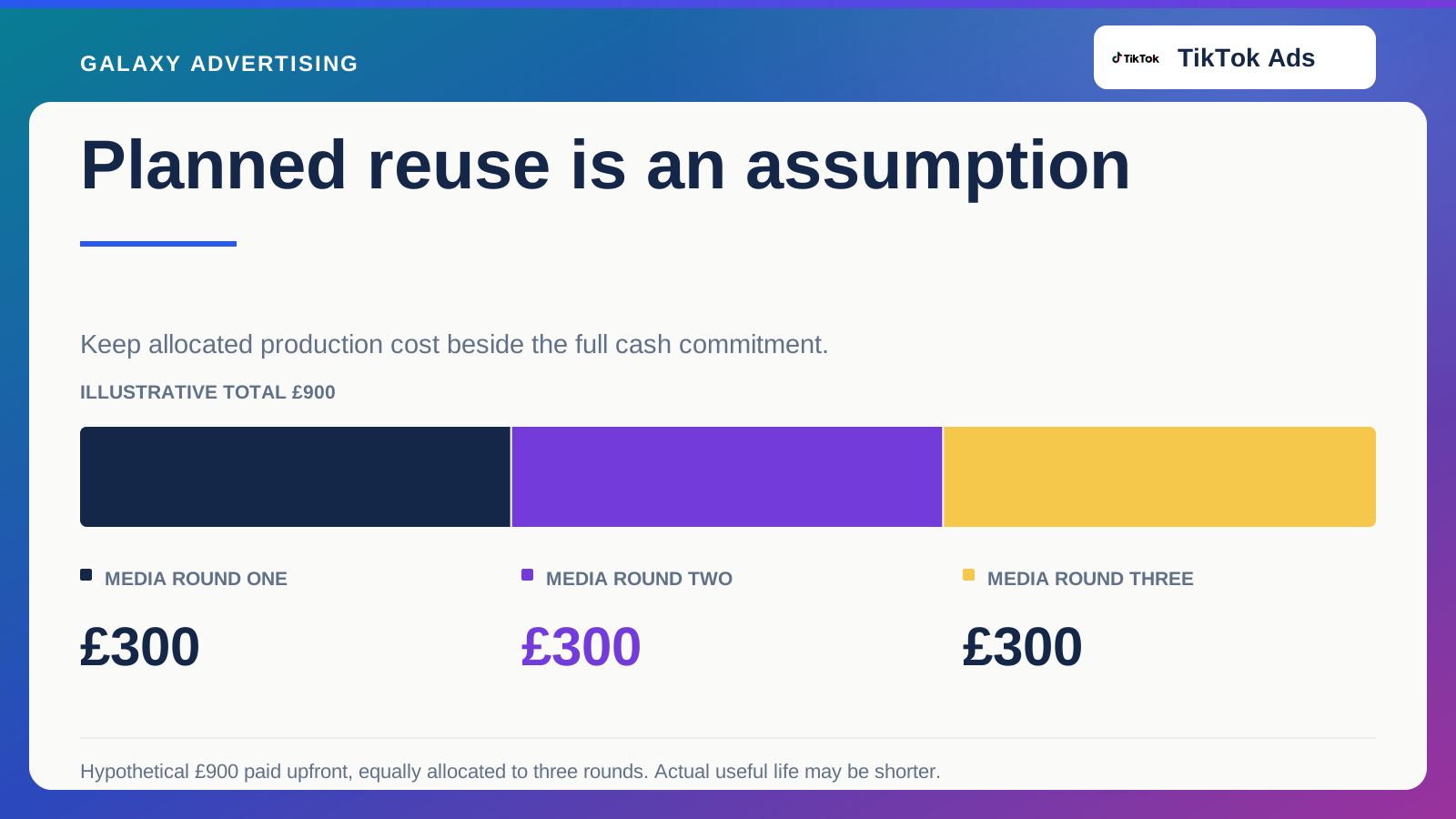
Suppose, hypothetically, you invest £900 in production expected to support three media rounds. A simple equal allocation assigns £300 to each. That's a planning assumption. It doesn't prove the assets will remain suitable for all three rounds or that each round benefits equally.
Show the full cash commitment alongside that allocation. Paying £900 upfront and assigning £300 to one round describe different aspects of the same investment. An economical allocation doesn't change when the business actually committed its money. Keep both views available to the person making the decision.
Know why a video needs retiring
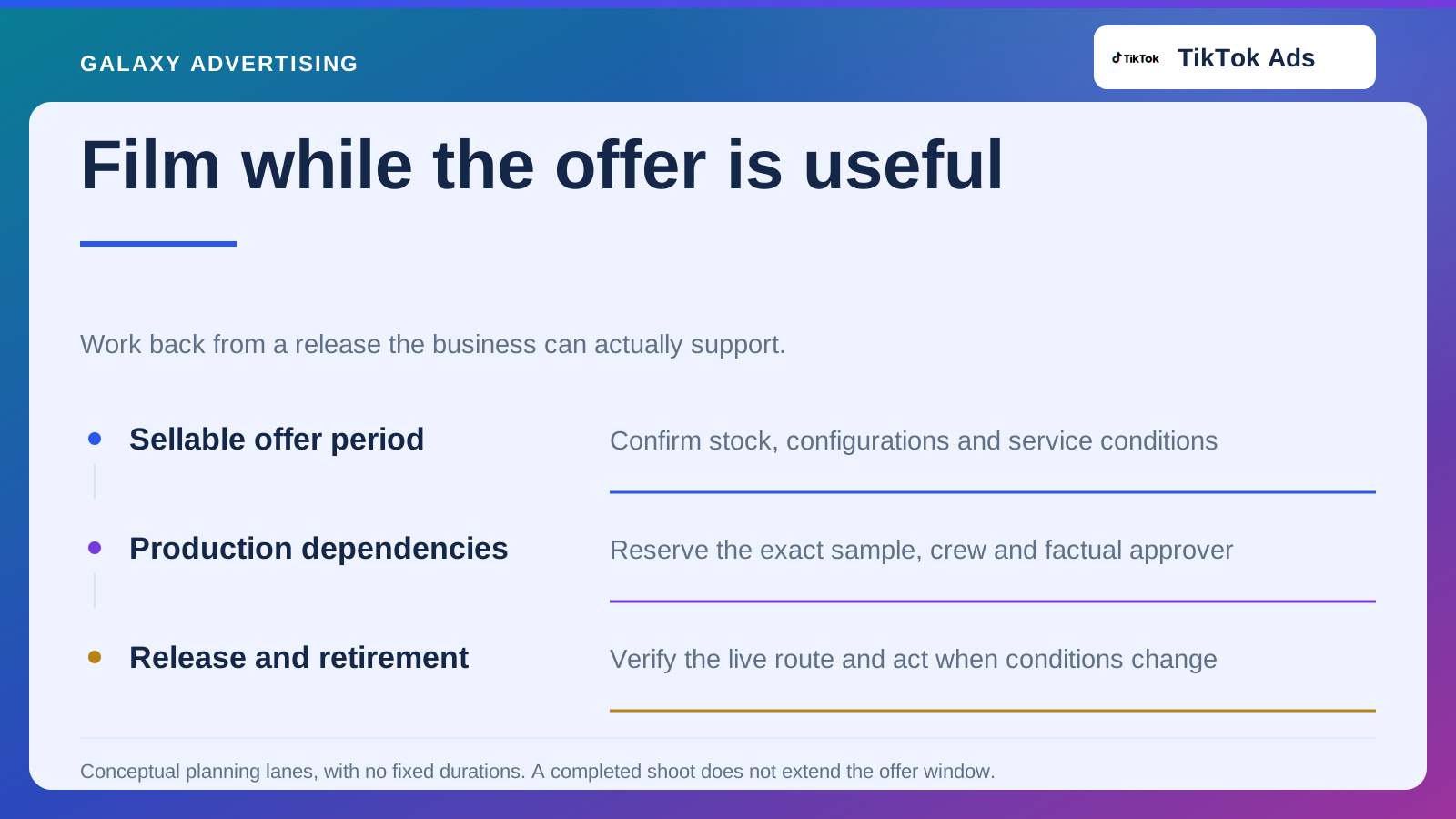
Product or package changes can make previously accurate footage unsuitable for today's offer. Permission boundaries can limit later use. A seasonal promise can expire while the product itself remains available. Each is a reason to examine continued use independently of performance.
Keep those reasons separate from creative fatigue. A weaker response doesn't automatically prove the audience is exhausted. Equally, an inaccurate package shouldn't remain advertised just because the reported result still looks attractive. Accuracy isn't conditional on the campaign looking weak.
Record the retirement reason and whether any source material remains usable. An editor might preserve an accurate detail while replacing an obsolete package scene. That affects replacement cost and deserves a more precise explanation than marking the entire folder old creative.
Update the allocation when the useful life changes
If the hypothetical £900 production supports only one suitable round rather than three, the original plan no longer describes the work's actual role. Show that change. Don't keep presenting the original per round amount without an explanation.
It doesn't automatically follow that production was poor value. The offer might have changed unexpectedly, or learning might have justified moving to another argument. Explain how the change happened before assigning responsibility. The shortened life needs interpretation as well as accounting.
Use that experience in the next estimate. Frequently changing packages may call for a different production approach from a stable demonstration. Designing footage and approvals around real dependencies can have commercial value beyond negotiating a cheaper price for each export.
Include the burden of keeping the library accurate
Put media performance beside the relevant production allocation and likely cost of maintaining an accurate library. Use your agreed commercial definitions to judge whether the resulting orders justify continued activity. The cost boundaries should remain understandable throughout the review.
Previously paid footage may mean little immediate additional production cost for a round. That can be a valid account of the immediate decision. It isn't a complete model for a programme that will eventually need new material. Don't make future production vanish because this round uses existing work.
Don't charge every shared cost to one convenient campaign either, when the work genuinely supports other approved uses. Show the allocation and work allocated elsewhere, or not allocated, so the budget owner sees the complete commitment without counting it twice.
Fund the next useful gap in the library
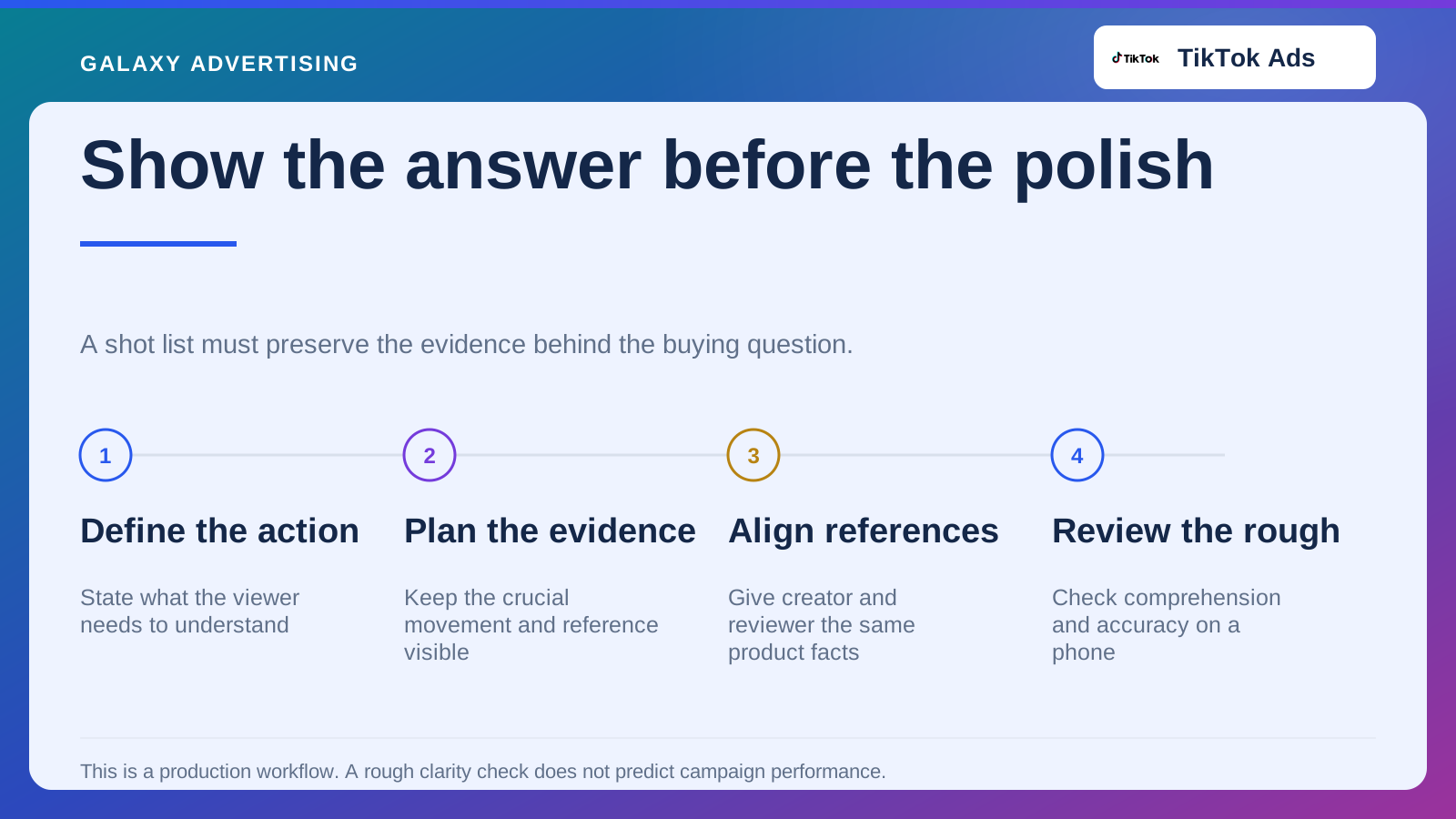
Before authorising another round, identify usable material remaining, the specific production gap and changes that could shorten the new asset's role. Agree what review will establish that the planned output remains accurate and relevant. That gives the estimate a basis somebody can revisit.
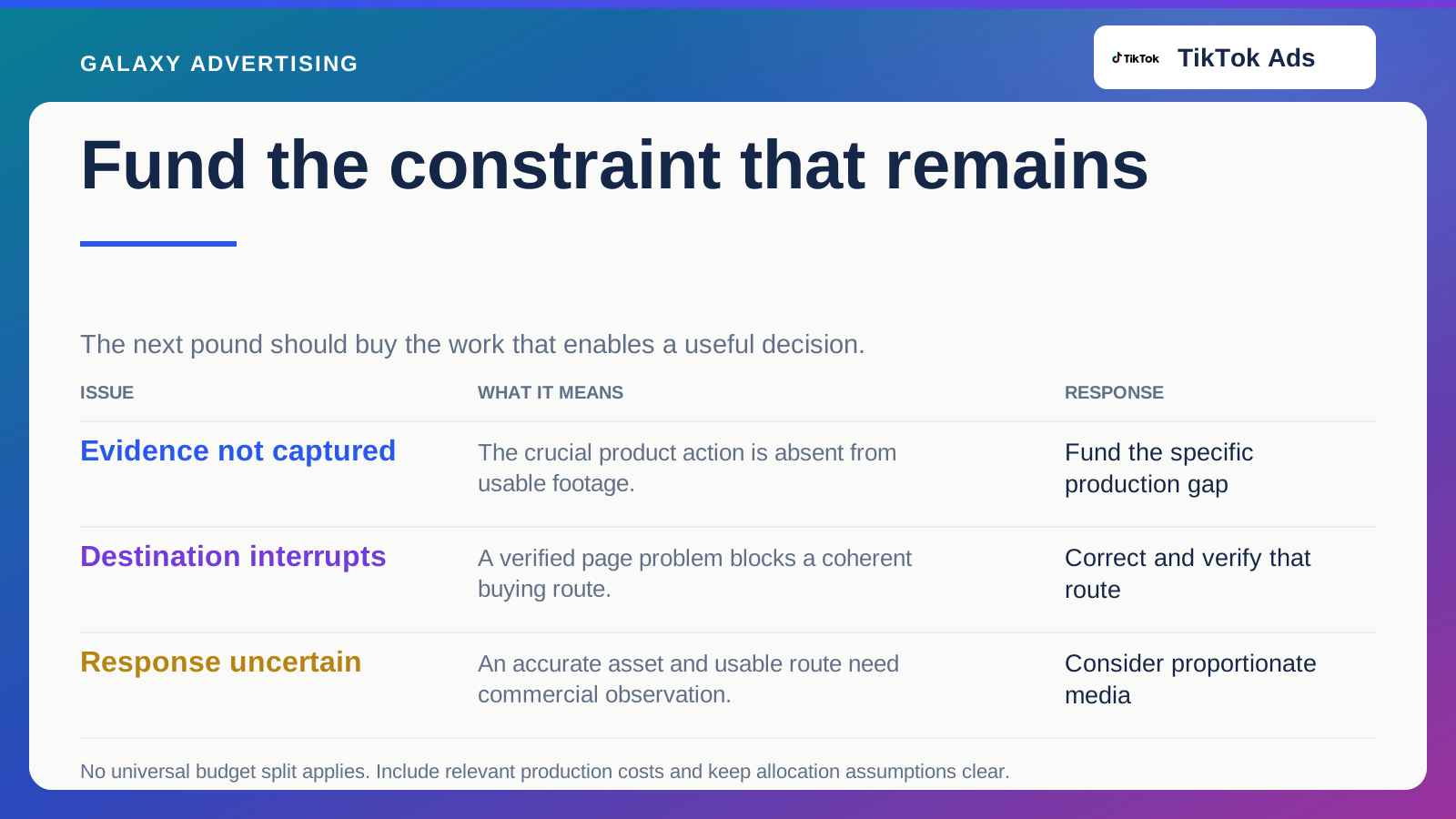
Choose a bounded commitment you can evaluate. A new concept, targeted reshoot or legitimate adaptation can each make sense in different circumstances. None is the automatic answer to every performance movement.
Creative investment enters, supports and eventually leaves the operating cycle. Keeping cash paid, management allocation and future replacement needs distinct gives you a stronger commercial view than a media ratio resting on videos whose continued usefulness nobody has checked.