 TikTok Ads
The advert receiving most of your TikTok spend hasn't automatically won a fair test. Launch two desk videos and one may record several purchases while the other gets little delivery and none. That doesn't establish that customers reject the second argument.
Keeping the asset currently producing useful activity can still be sensible. The practical decision and the explanation need different levels of evidence.
Set that distinction out before results arrive. You can make an operational choice while remaining honest about what the campaign has, and hasn't, taught you about the buying argument.
Choose a question that changes the next brief
Describe the competing ideas in terms useful to production. Compact storage and easier daily adjustment offer different reasons to consider a desk. Two versions with different background music may instead test execution. Both can be legitimate questions, provided the conclusion matches the comparison.
The trouble begins when an execution comparison becomes evidence about broad customer motivation. Decide what you want to learn and describe the proposed inference accurately. A different soundtrack doesn't, on its own, isolate a different reason to buy.
Identify what stays constant where practical. Configuration, offer and destination all influence interpretation. When several change together, the result may still help a commercial decision. You'll have less basis for attributing it solely to the creative argument, and that limitation should stay visible in the brief and review.
Say what ordinary delivery can tell you
Observe each asset under its actual campaign conditions. Record spend, available responses and relevant commercial outcomes. Don't assume the delivery process has provided equal opportunities simply because both files entered the campaign.
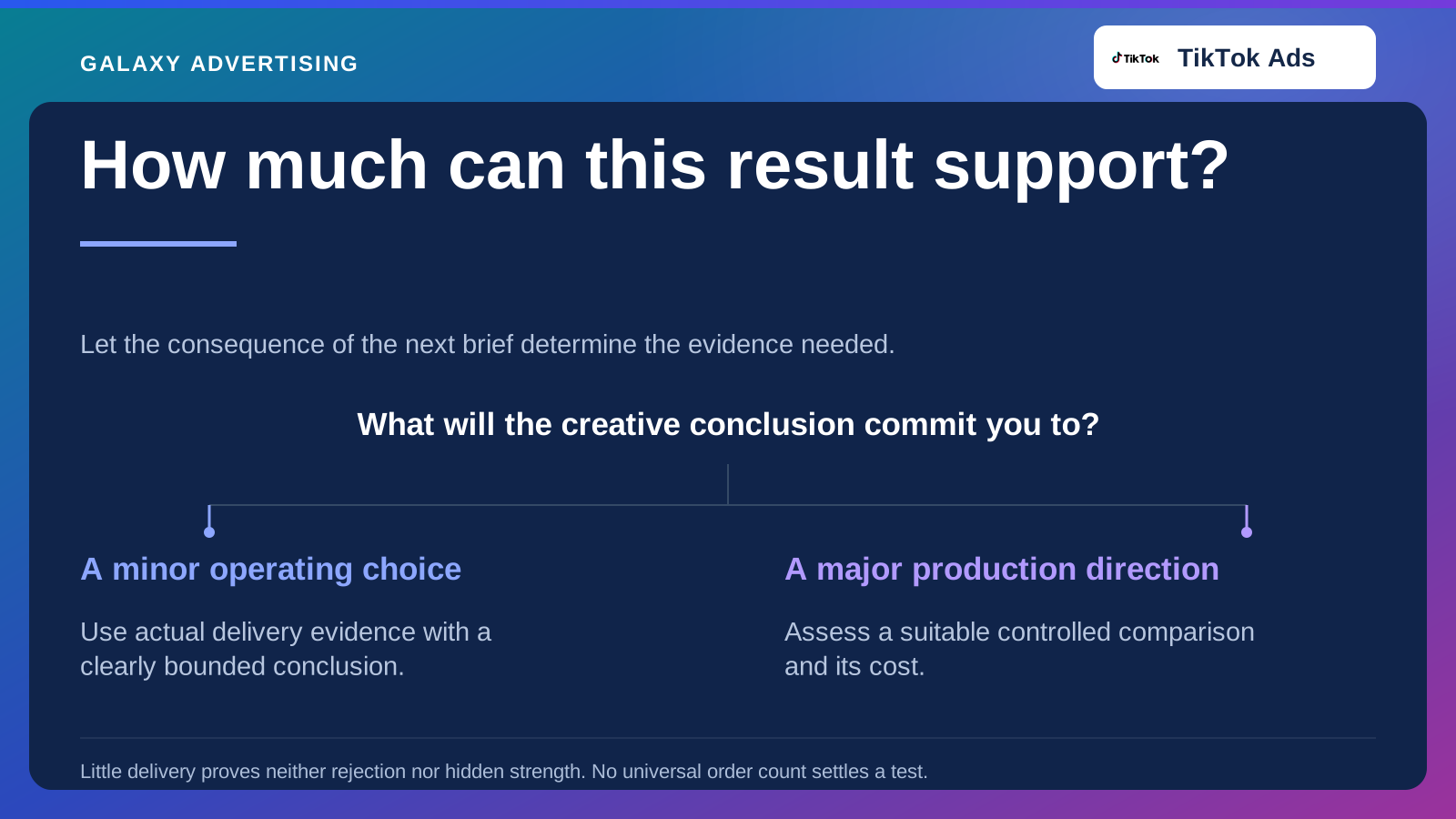
Little delivery can leave too little evidence to judge an argument. That's a limitation, rather than proof the neglected concept is secretly strong. Keep both possibilities open. Replacing one overconfident verdict with its opposite doesn't improve the evidence.
Ask the campaign manager to explain the decision the observation supports. Retaining an asset for current use can be reasonable while broader learning remains tentative. A report can say both without making the operational recommendation indecisive. Clarity about uncertainty helps you choose the next commitment rather than preventing a choice altogether.
Is a controlled comparison worth the effort?
If the answer has meaningful future consequences, ask about experiment tools and configurations actually available to your account. A planned comparison may be worth doing before an entire production programme is built around a supposed customer motivation. The importance of the decision gives the evidence its practical value.
Have the specialist explain which ambiguity the design reduces and how. A feature called a test doesn't automatically answer your business question. Product differences, changed destinations and small outcome samples can still weaken interpretation. The design needs a reason beyond its label.
Keep the cost proportionate. A minor edit may not deserve an elaborate experiment. A conclusion redirecting substantial creative spending needs stronger evidence. Additional control is useful according to what you intend to do with the answer, rather than as a ritual attached to every comparison.
Define the outcome before seeing it
Choose a main observation that fits the question and explain its limits. Attention can diagnose whether a premise is understood. Purchases and contribution, the money left after the relevant included costs, address another part of the commercial route. They aren't interchangeable ways to call something successful.
Don't change the outcome definition because another measure looks better afterwards. Supporting observations can add context without quietly replacing the original criterion. Keep the review accountable to the decision you set out to inform.
In a hypothetical desk comparison, you might investigate whether a storage argument attracts commercially suitable exploration of the folding model. Relevant enquiries can help interpret that activity. A few comments cannot establish every resulting buyer's motivation. The conclusion needs to stay within the evidence available to you.
Keep a short record of meaningful changes
Log material stock, price, destination and operational changes during the comparison. An asset can appear weaker when its configuration becomes less available or a page develops a fault. Without that context, a product or website problem can masquerade as a creative result.
Record material investment or setup changes made by your own team too. A tidy chart without operating history can invite an explanation the underlying evidence doesn't support. The account actions belong alongside the external conditions when interpreting movement.
Keep the log manageable. Capture changes capable of altering the decision rather than every routine action. Its purpose is to make relevant alternative explanations visible, not create another report nobody reads. A concise useful record is the aim.
Agree what an inconclusive result will mean
Decide how you'll respond if little useful evidence emerges. You might improve clarity, narrow the question, extend an appropriate comparison or stop an unsuitable test. Agreeing those possibilities gives uncertainty an operational consequence instead of leaving the team to improvise a verdict.
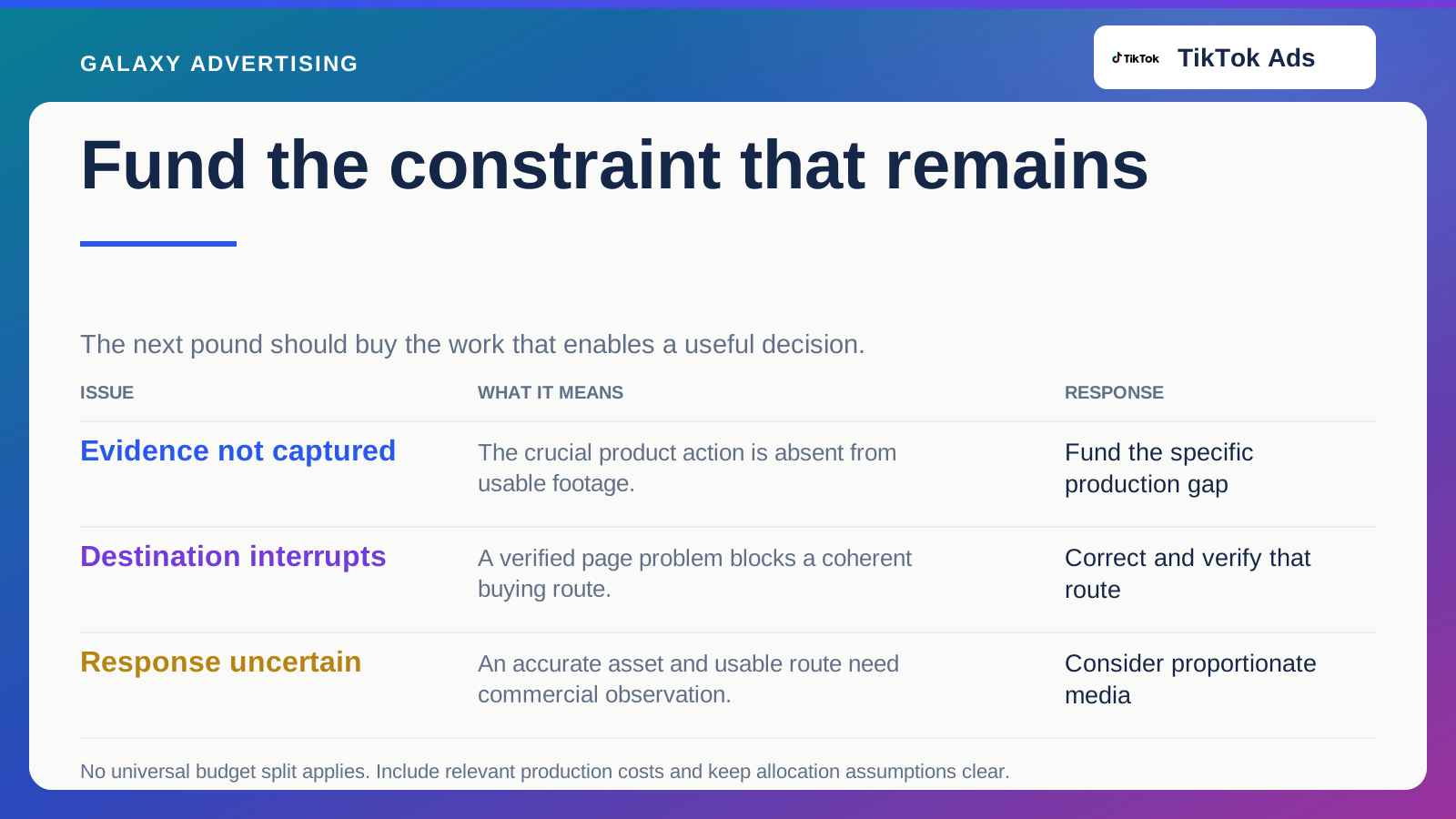
No universal spend amount or order count resolves every creative question. Required confidence depends on the consequence of acting and variability of evidence. Ask the analyst to justify the design in context rather than borrow a threshold from an unrelated account.
An inconclusive result isn't automatically wasted work. It can reveal an overly broad question, an unstable product route or a comparison the business couldn't afford to fund properly. Those constraints can make the next plan more realistic if you retain them honestly.
Record the decision separately from the headline
At review, separate observation, interpretation and action. Asset A receiving most delivery is an observation. Its argument being preferred by all relevant buyers is a much stronger interpretation. Writing them separately makes that difference harder to overlook.
Explain why the next action is proportionate. You might retain Asset A while commissioning a clearer second concept, choose a controlled comparison for an important strategic question or retire an argument with weak evidence and relevance.
A useful test reduces uncertainty about a real production decision. It earns its value through the connection between evidence and recommendation, rather than producing a dramatic winner on demand.