 TikTok Ads
A beautiful room doesn't explain what a premium price buys. Your chair video can look immaculate, use a confident voice and describe the product as premium while leaving somebody unable to say why it costs more than familiar alternatives.
They may appreciate the setting. The buying question remains open.
The task is to make a relevant distinction understandable through accurate evidence. You don't need to apologise for the price or attack cheaper products. You need a difference connected to a customer decision that the actual offer can support.
First establish what they're comparing
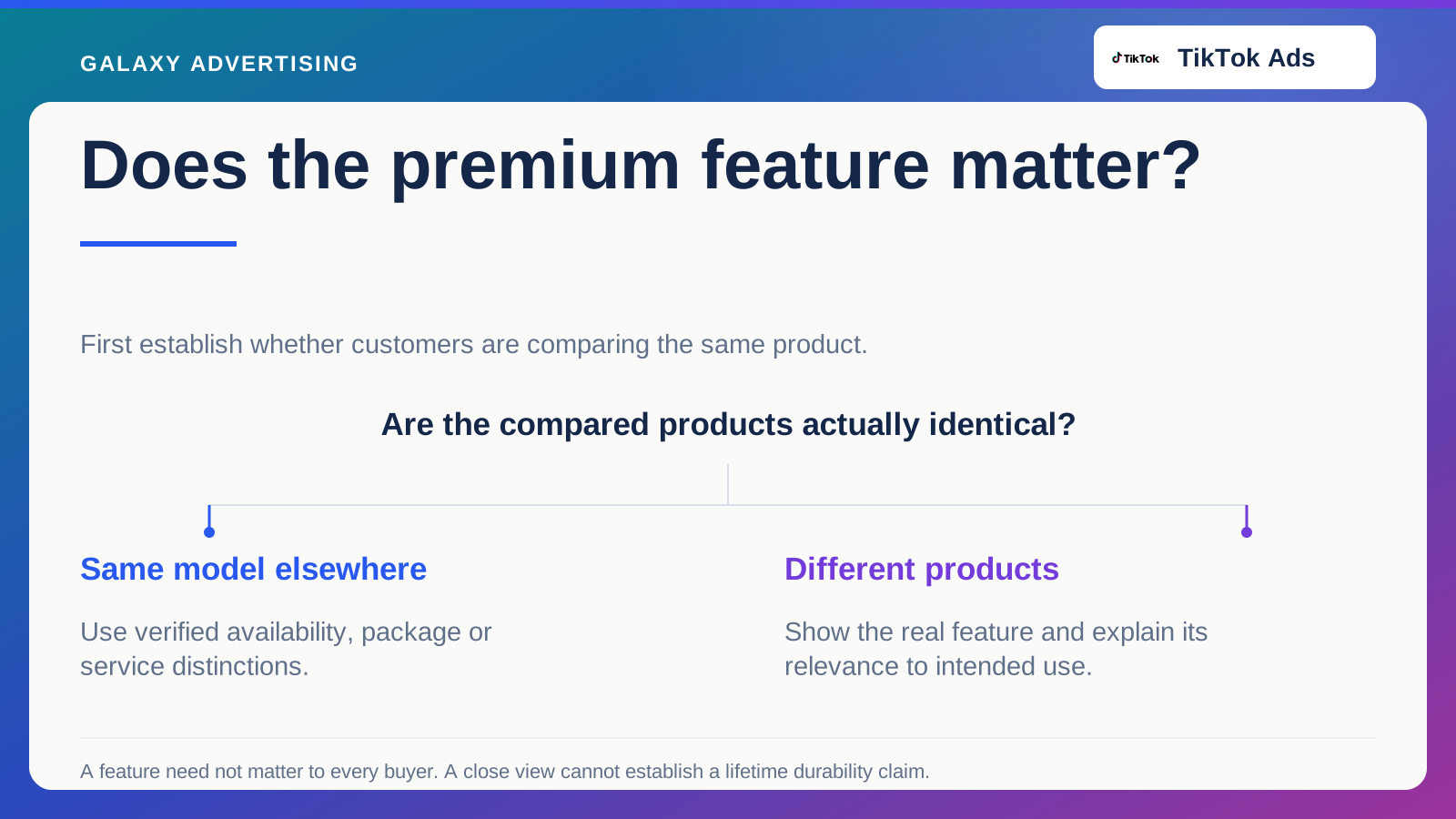
Are customers comparing the identical item sold elsewhere, or materially different products? Those situations need different arguments. Settle that before choosing what the video is supposed to prove.
If another retailer sells the same model, inventing a manufacturing advantage isn't a responsible distinction. Look instead at verified availability, package contents or a service your business actually supplies. The difference needs to exist in your offer, rather than in the adjectives around it.
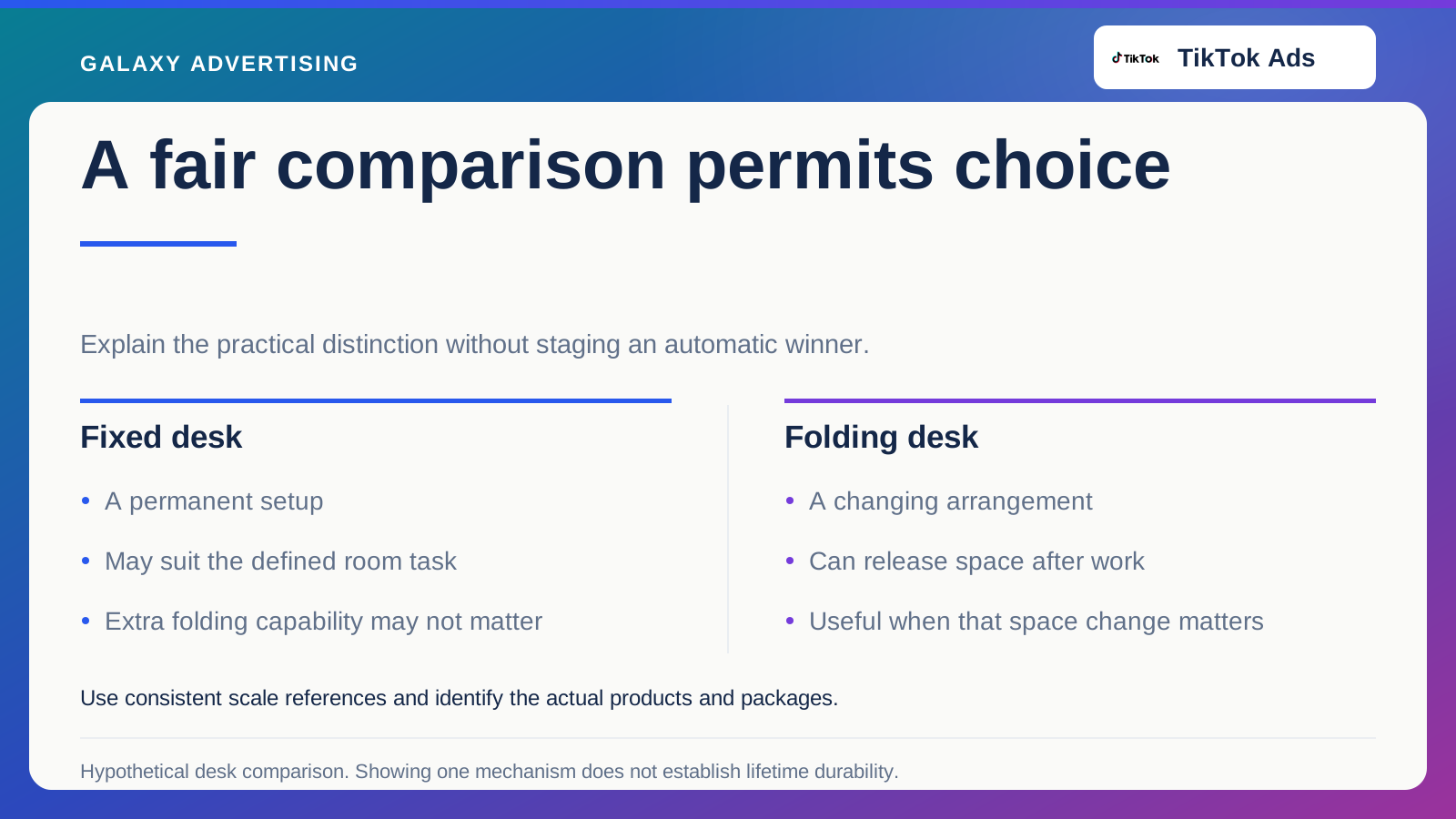
If the products differ, identify what affects intended use. A hypothetical chair with a documented adjustment mechanism might suit a need that the simpler alternative doesn't address in the same way. That gives the demonstration a specific job. Announcing that one chair is more luxurious doesn't provide the same help with the comparison.
Show a distinction somebody can assess
Choose an argument a short video can show or explain clearly. Demonstrate the real adjustment, relevant detail or package difference instead of hiding it in decorative shots. Give the viewer something concrete to judge.
Keep claims within what the footage supports. A material close up can identify appearance. It doesn't prove every possible durability claim. One successful movement cannot establish a lifetime performance guarantee. The evidence has a boundary even when the scene feels persuasive.
Ask the product owner which references support the claim and keep them with the brief. A creator's confidence isn't evidence for an unverified specification. The premise should still make sense if you remove the music and prestigious room. Atmosphere can support an argument without supplying the missing facts.
Explain what the feature changes in use
Connect the difference to a consequence under the conditions you're discussing. An adjustment can change how the chair is used. A package can include equipment another offer treats as optional. Explain the consequence so somebody can decide whether it's relevant.
More features don't make better value for everyone. Somebody who doesn't need the capability may reasonably prefer the simpler product. A specific proposition can acknowledge that limitation without losing its usefulness. It becomes clearer about who should care.
You can illustrate a hypothetical use without claiming it represents all customers. Make the conditions clear through the scene and explanation. Let viewers recognise whether the distinction fits their circumstances, rather than telling every discerning buyer that the premium choice is the only sensible one.
Make the price and package belong together
Check that the displayed price and pictured product describe a coherent package. Does the footage contain optional accessories or a larger configuration than the caption's amount covers? Those differences affect what the viewer thinks the offer includes.
If the relationship needs explaining, do so before asking them to investigate further. A small qualification cannot reliably repair a main visual that continues to imply a different package. The overall impression matters alongside the wording.
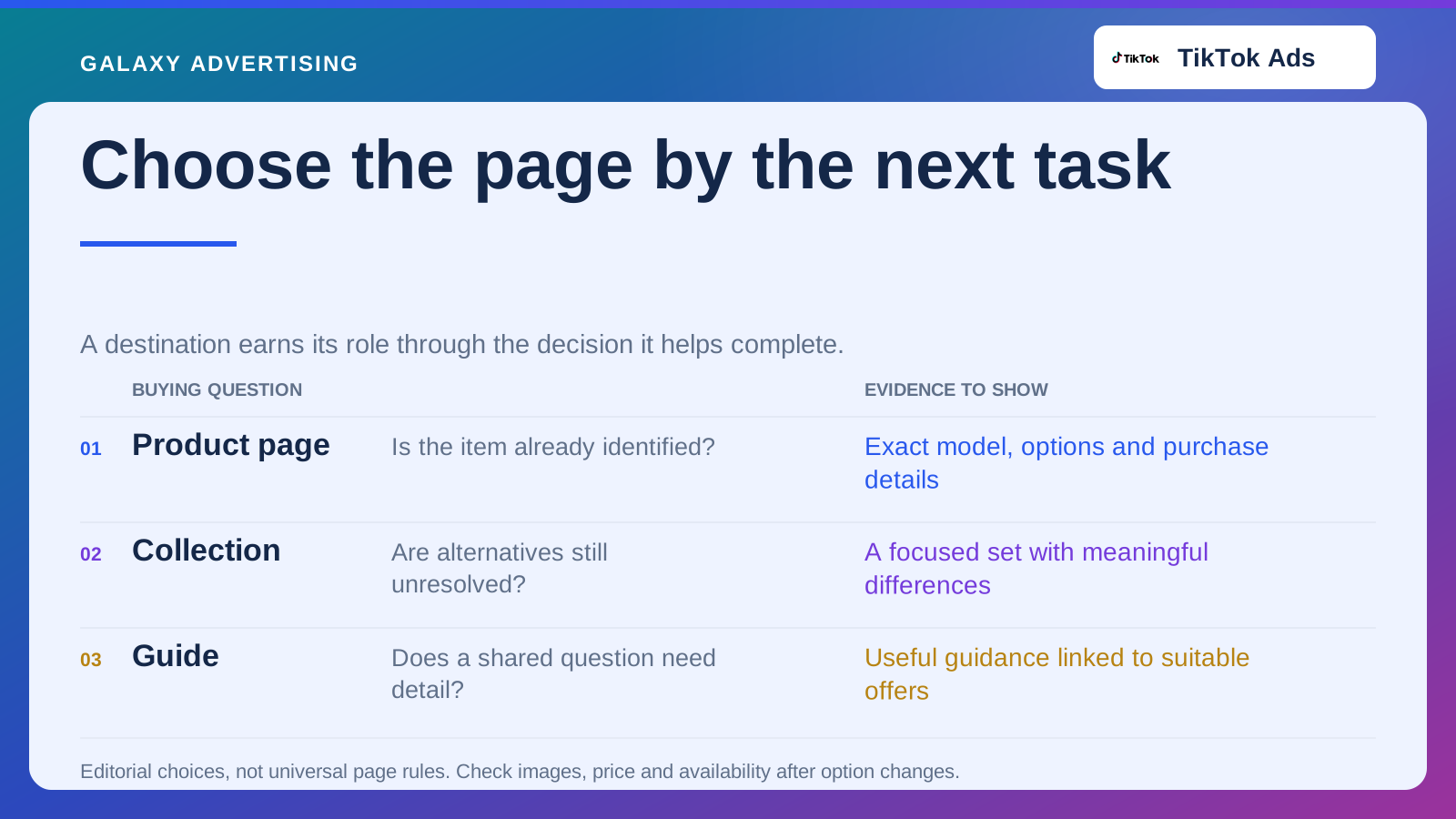
Review the destination with the asset. Visitors should find the demonstrated item, understand the selected configuration and inspect relevant comparison conditions. Premium positioning loses practical value if the next step is a puzzle about which product they were shown. The price argument needs somewhere accurate to continue.
Match the contributor to the claim
A founder can explain why the business selected a product or service. A creator can demonstrate an observable difference. A customer can describe their own purchase experience. Those sources aren't automatically evidence for the same claims.
Choose the voice around the question. Personal endorsement cannot independently verify a technical specification. A founder explaining a decision shouldn't be presented as external validation. The contribution needs to be identifiable for what it actually establishes.
Keep speech and supporting images consistent. If someone discusses a specific material, show the actual finish rather than a generic product picture suggesting another option. Precise footage can matter more than adding another enthusiastic sentence. The explanation should become clearer, rather than simply more emphatic.
Check understanding before polishing it
Show a rough version to somebody unfamiliar with the brief. Ask what difference they understood and which product and package they think the displayed price concerns. Their account can expose a gap that familiarity has made invisible to the team.
It doesn't forecast market performance. It checks for an unclear premise or inaccurate impression while you can still revise the explanation without commissioning an entirely new shoot. Keep that purpose clear when discussing the feedback.
If they remember only adjectives, reconsider the evidence. More elegant language may not solve the problem. The asset should make a useful fact easier to judge, with atmosphere supporting the presentation rather than replacing a reason to consider the offer.
Share the factual explanation with customer service too. If the people answering enquiries can't explain the advertised distinction consistently, the proposition can break in the next conversation. Approved product references help them continue the same argument instead of relying on a customer remembering a persuasive but incomplete scene.
Look at the interest the explanation creates
Read product exploration, enquiries and orders alongside campaign reporting. Are people finding the configuration shown? Do their questions concern the intended distinction, or expose confusion about what's on offer? These observations help assess the proposition rather than just the production.
A price enquiry isn't automatically failure. An informed shopper may ask a useful question before choosing. Compliments about the room don't prove commercial meaning either. Check resulting product mix and contribution on your agreed basis, including the relevant costs.
The aim is a difference suitable customers can understand and a purchase you can explain and fulfil responsibly. That gives the next creative decision something firmer than another attempt to make an unsupported claim sound exclusive.