 TikTok Ads
What if the cheaper desk in your comparison were properly assembled and shown without the clutter? Your premium desk might still have a useful advantage. The viewer would have a better chance of understanding what that advantage actually changes.
A deliberately awkward substitute creates an easy winner. It doesn't help somebody choosing between credible options.
Begin with a fair customer decision. Explain differences relevant to a particular use, provide evidence to assess them and leave room for the cheaper or simpler option to be suitable. That judgement can give your comparison more credibility than an exaggerated contest.
Choose a task both products could reasonably serve
Define the use before picking the comparison: a compact work area, occasional dining or accessible storage, for example. A premium product pitched against a bad product is a production device. It doesn't, by itself, create useful buying information.
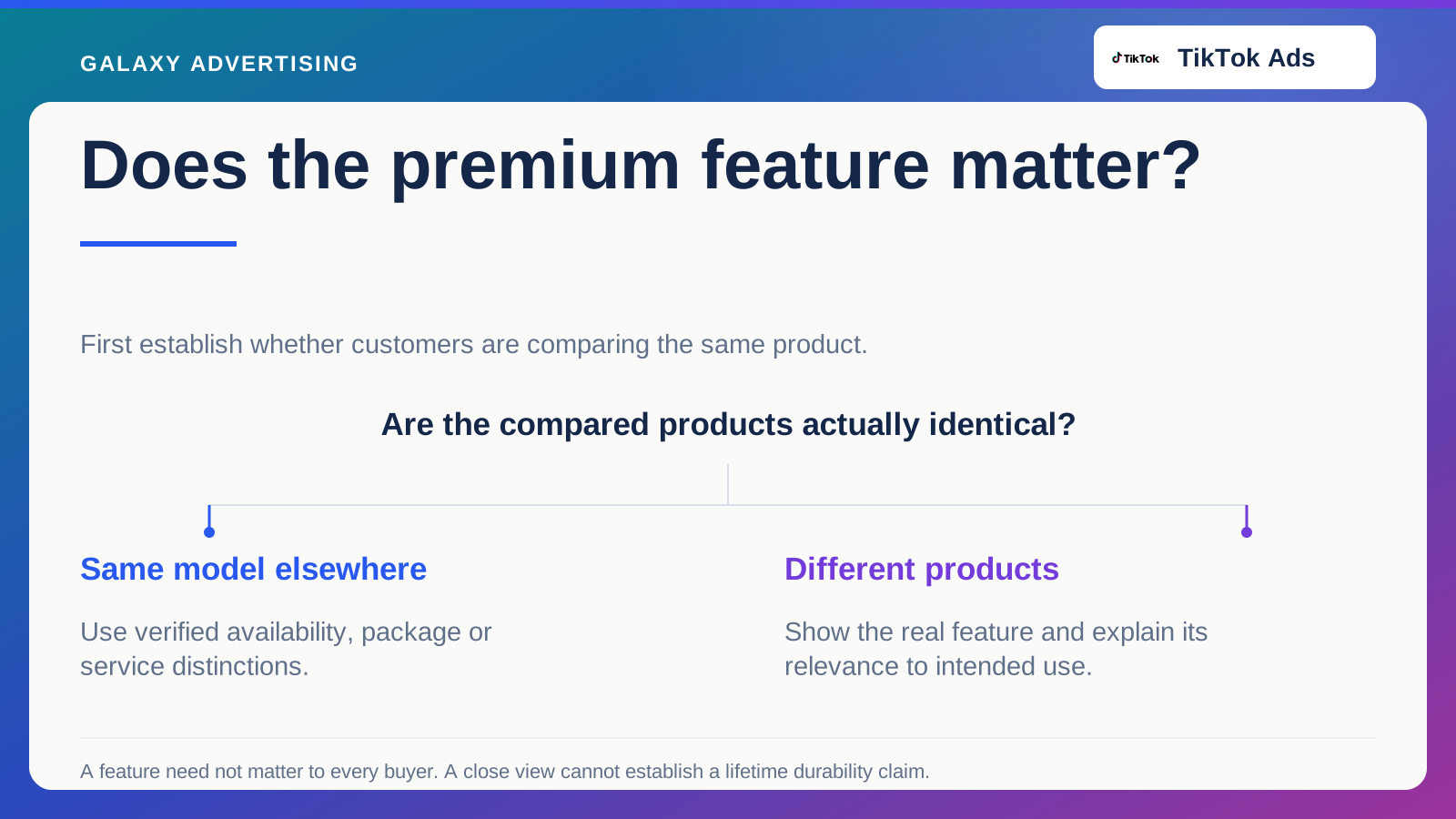
Check that the alternatives are genuinely relevant. Similar looking products can differ substantially in size, included components and intended use. Explain those distinctions before presenting the price gap as a direct comparison. The viewer needs to know what each amount actually buys.
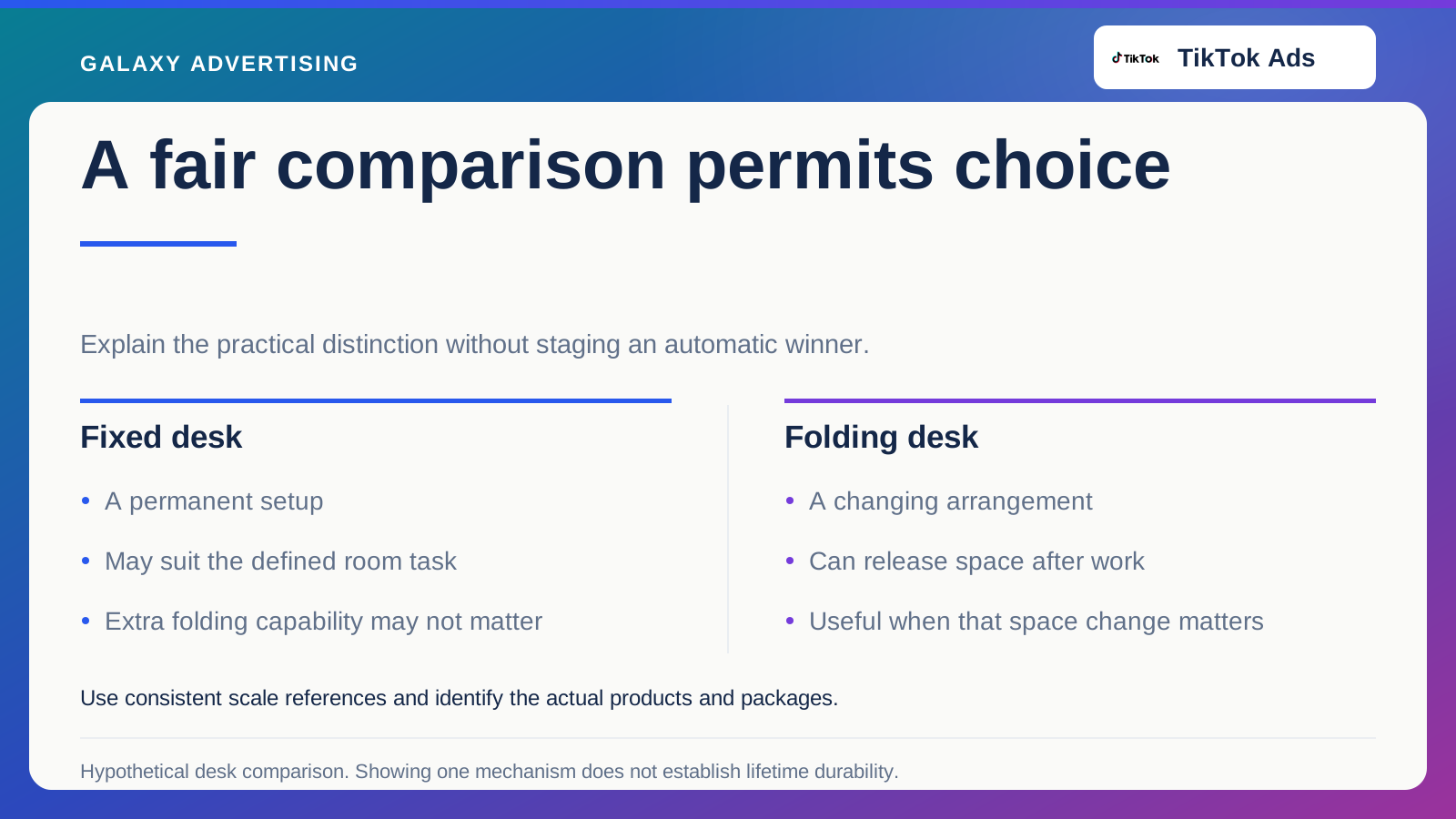
For a hypothetical desk retailer, the task could be working in a room with another purpose. A fixed desk and folding desk may both be reasonable options. The useful question is what each arrangement lets someone do with the available space, rather than which product the retailer wants to crown.
Make the conditions easy to see
Use equivalent conditions where the demonstration calls for them. For footprint, show both products against a consistent reference. For storage, explain the arrangement in which each is measured. The comparison should be intelligible from what you show.
Avoid angles that exaggerate one item's scale or hide another's useful feature. A dramatic camera position can turn a small difference into an apparently substantial one without explaining its practical consequence. Consistency helps somebody judge what matters without having to correct for the production choices.
Keep supporting facts available at the destination. A short video can introduce the choice, but exact product identity, dimensions and relevant package details need somewhere a researching shopper can inspect them. The demonstration and written information must describe the same items. Otherwise, the explanation can change just when someone starts looking closely.
Explain what a specification changes
A dimension matters because it affects fit or use. An adjustment matters because it enables an arrangement. Explain the consequence, rather than expecting a bigger number to establish better value. The useful distinction is tied to what someone needs to do.
In the desk example, folding can release space after work. A fixed desk can provide a different permanent setup. Show both outcomes without declaring one the right answer for every household. Their relative value depends on the use you've defined.
Keep claims within the evidence. Showing a mechanism once doesn't establish lifetime durability. A quiet demonstration in one room doesn't prove performance in every environment. The comparison's strength comes from a useful observation, rather than the breadth of the claim added to it. Give that observation room to stand on its actual merits.
Explain why a sensible buyer might choose the alternative
Ask what makes the other option reasonable. Someone may not need the extra feature, may prefer a simpler arrangement or may have a room where the distinction adds little value. Those are legitimate conditions in the buying decision.
Acknowledging them doesn't abandon your proposition. It identifies who should care about the difference. You can explain the advantage more specifically when you also explain when it matters. That helps suitable buyers place themselves in the comparison.
Don't treat price sensitivity as a failing. Someone may reasonably decide a feature isn't worth the cost in their circumstances. Your comparison should support that judgement rather than imply premium buying proves better taste or intelligence. A fair decision allows a different answer from the one your own product offers.
Be clear about demonstration and endorsement
If a contributor appears, establish what they've personally observed and what information comes from the retailer. Confidence on camera doesn't independently verify everything in the script. The source of a statement remains relevant however naturally it's delivered.
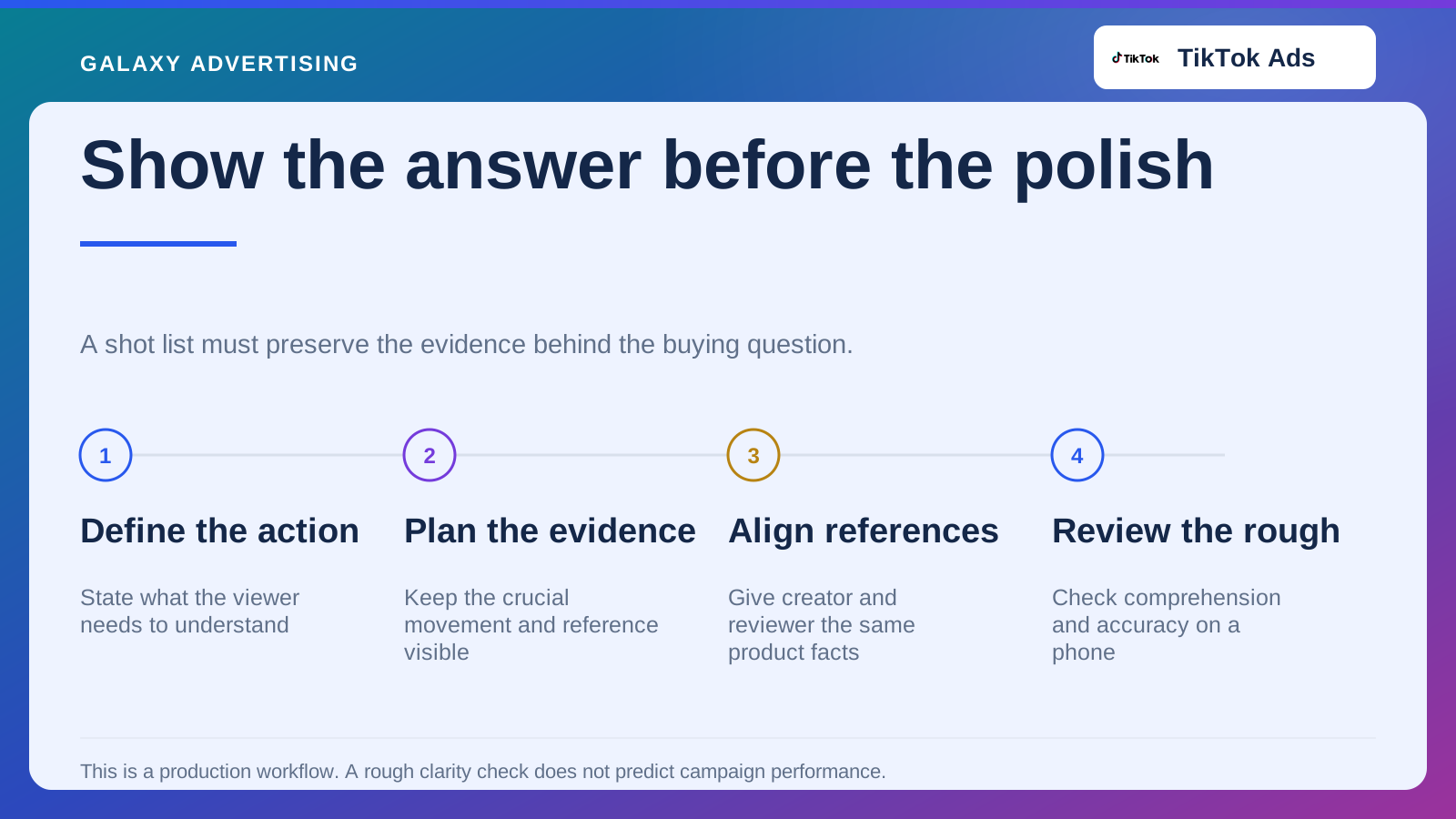
Keep approved references for specifications and descriptions. The editor should distinguish factual statements, the contributor's experience and hypothetical illustrations. Blending them can make an energetic video sound more authoritative than its evidence allows. The factual boundaries need to survive the edit.
Before release, have the responsible people check permissions for material and third party references. This article doesn't establish the legal position of any particular comparison. The practical task is to know what you're using and who has verified the relevant conditions. Don't let an assumed permission become another unexamined part of the production.
Let the destination preserve the choice
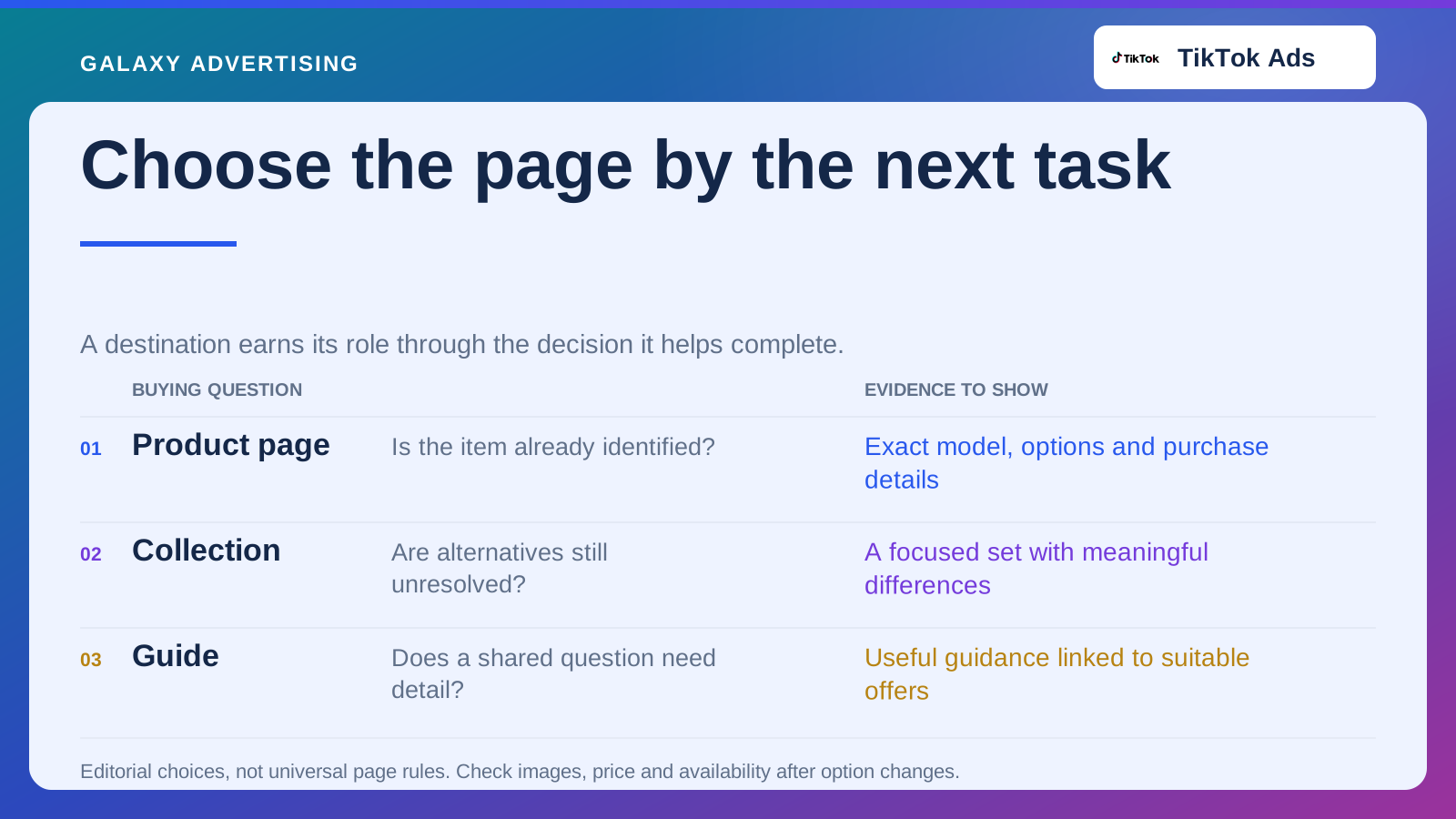
Link to the demonstrated product or a focused comparison page containing the actual options. An unrelated collection asks people to reconstruct the comparison from memory. It interrupts a decision the video has just helped them begin.
Use the same terms to explain distinctions on the page. If the advert discusses footprint and storage, make those facts easy to find. Add important purchase information the short demonstration couldn't cover, including configuration and relevant delivery conditions. The destination should deepen the choice rather than change its subject.
Make the next action fit the decision. Someone who understands the difference may need to select a size or check an arrangement. A broad invitation to explore the whole store can disrupt that progress without providing useful information. Give the viewer a route consistent with the question you've answered.
Review the confusion as well as the viewing figures
Read available comments, enquiries and product interactions for misunderstanding. Are people assuming equivalent products when packages differ? Are they missing the condition that makes the premium feature useful? Those observations can point to the next correction even when viewing figures look encouraging.
They don't represent every customer's reasoning. Keep that limit visible rather than presenting a complete market verdict. Use the evidence to choose a correction or another demonstration that answers the actual uncertainty.
A fair comparison lets you explain a meaningful advantage while recognising when another option is adequate. That makes a more useful commercial conversation than repeatedly staging a contest your preferred product was guaranteed to win.