The temptation is to reach for “timeless” and “exceptional” when the harder job is explaining the price. Put two loafers using the same luxury language beside each other, and a shopper can like both photographs without knowing what the extra money buys.
Your premium proposition needs a meaningful difference and evidence that fits it. You don't need to prove the most expensive pair is right for everybody. Make the actual offer understandable, so a suitable shopper can judge whether its differences matter to their purchase. That's a stronger argument than another polished adjective.
Establish what the customer is comparing
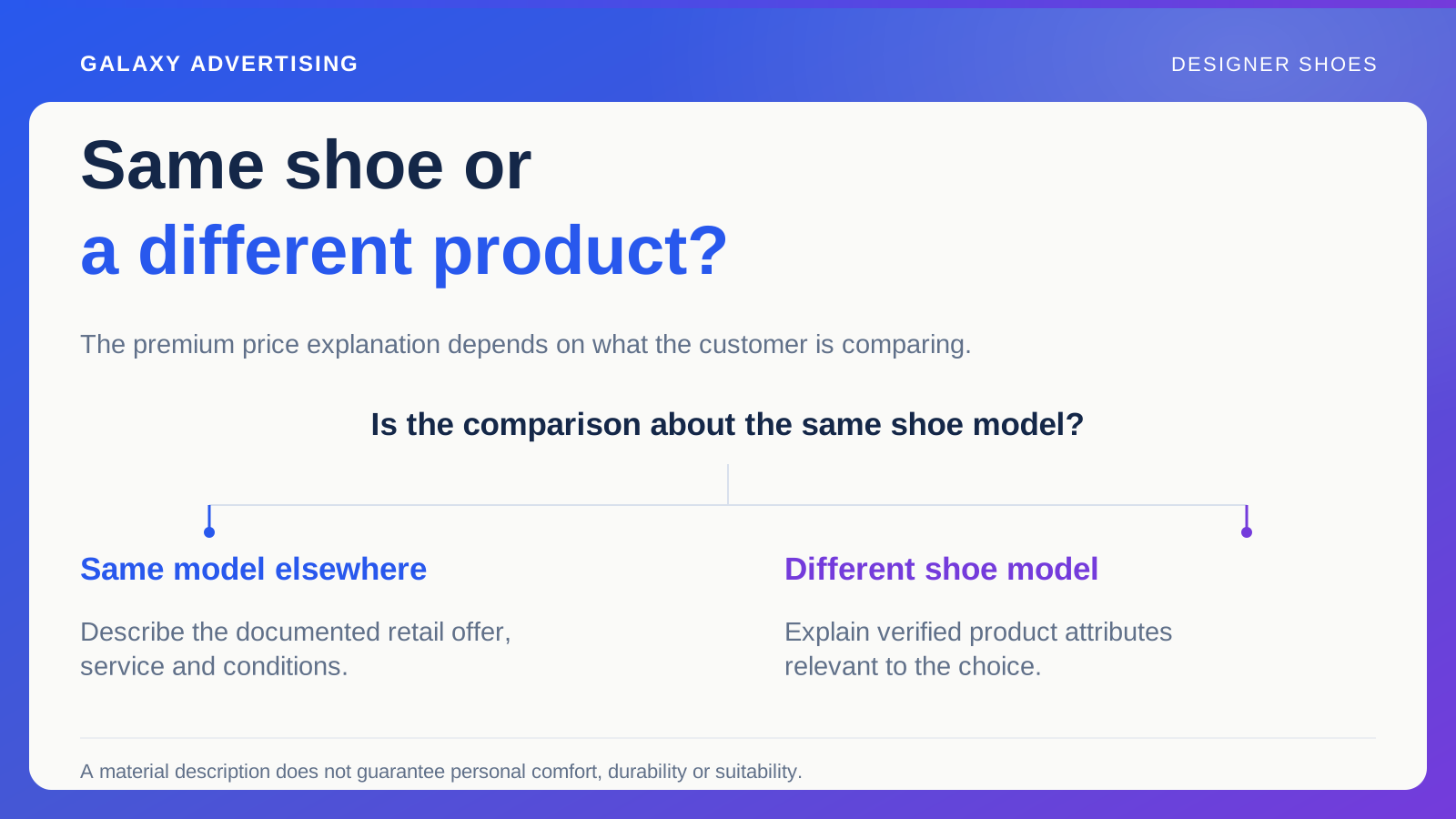
Ask which alternatives people actually mention. The same model at another retailer creates a different comparison from another shoe with a similar appearance. In the first case, the question may concern the complete retail offer. In the second, the product characteristics may be what needs explaining.
Don't invent a manufacturing advantage when the model is identical. If the real difference is service, describe documented facts and applicable conditions. “Superior care” doesn't explain the service by itself, however reassuring it sounds. Give the customer something they can actually evaluate.
For different shoes, choose relevant attributes from verified information. A technical distinction earns prominence when it helps someone understand a choice. It doesn't deserve the headline just because a supplier's terminology sounds prestigious. Ask what the term contributes to the buying decision before featuring it.
Explain the consequence without promising too much
Translate a documented feature into what it changes, keeping personal outcomes within the evidence. A material description can identify the item. It doesn't automatically establish comfort or durability for every customer. The distinction needs to survive the move from technical fact to conversational explanation.
A hypothetical comparison could concern a visible finish and how it supports a particular styling preference. That's more bounded than claiming the shoe improves every outfit or remains suitable indefinitely. The first argument gives someone a difference to judge. The second asks them to accept a much wider promise.
If you can't explain a term plainly, obtain clarification before giving it a starring role. Technical decoration can make a page feel sophisticated without resolving the decision. The explanation should remain intelligible even when you take away the luxury setting and soundtrack. The product needs to carry the argument.
Match each claim to the right evidence
Use accurate detail photography for visible characteristics. Keep colour, shape and proportions faithful and the model identifiable. A close view should explain the feature, rather than provide an attractive texture behind a slogan. More visual detail isn't automatically more product evidence.
For service differences, show the actual offer and conditions. Elaborate packaging in a photograph doesn't establish a delivery or support process. Those claims need their own appropriate sources. Don't let one appealing part of the presentation lend unsupported authority to another.
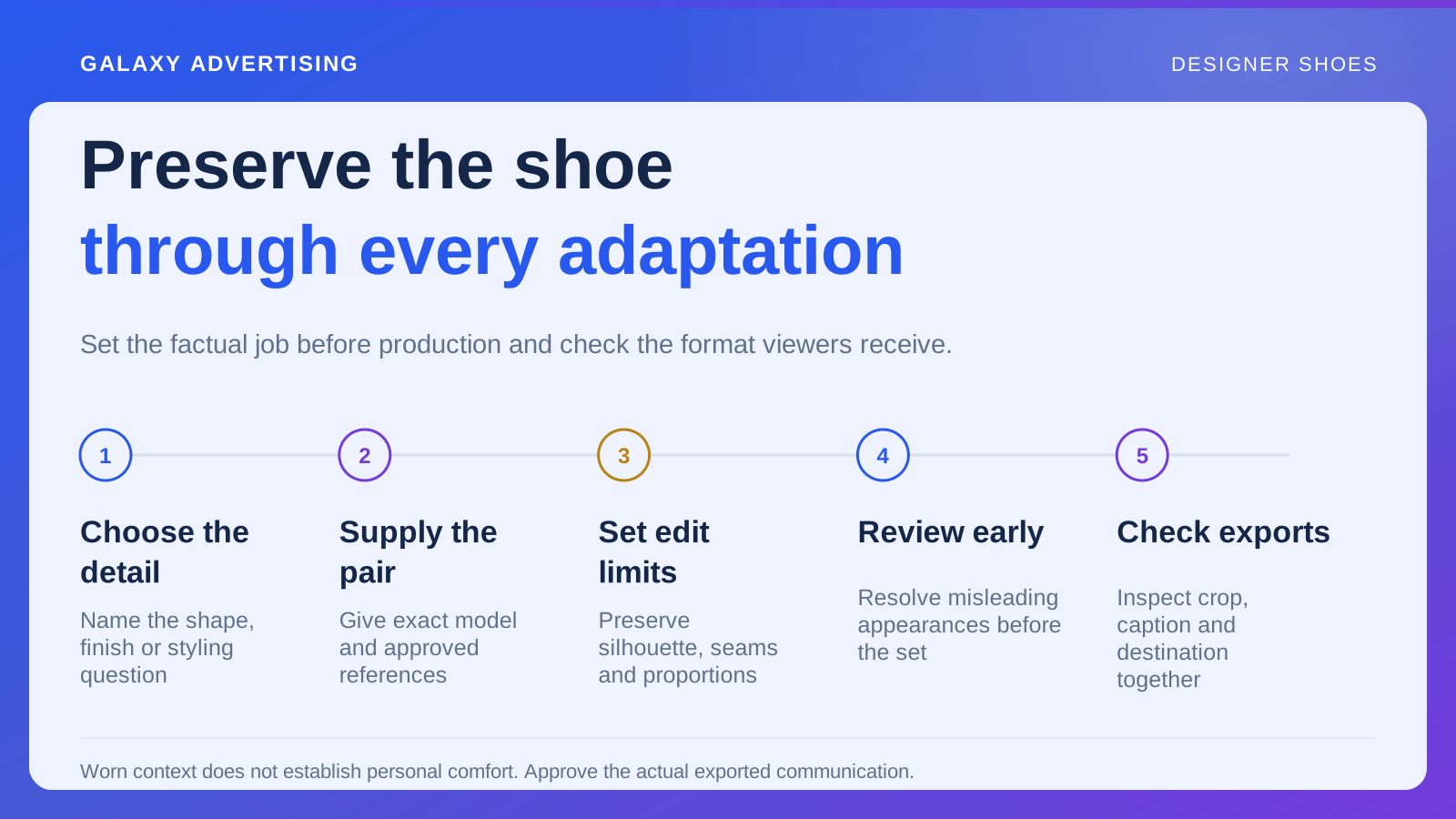
Keep approved references with the creative brief. Check later edits for stronger wording or substitution of a similar looking model. Consistency matters as much as visual quality: the product the customer receives should be the one the evidence represents. An attractive adaptation still needs that factual connection.
Compare the whole offer fairly
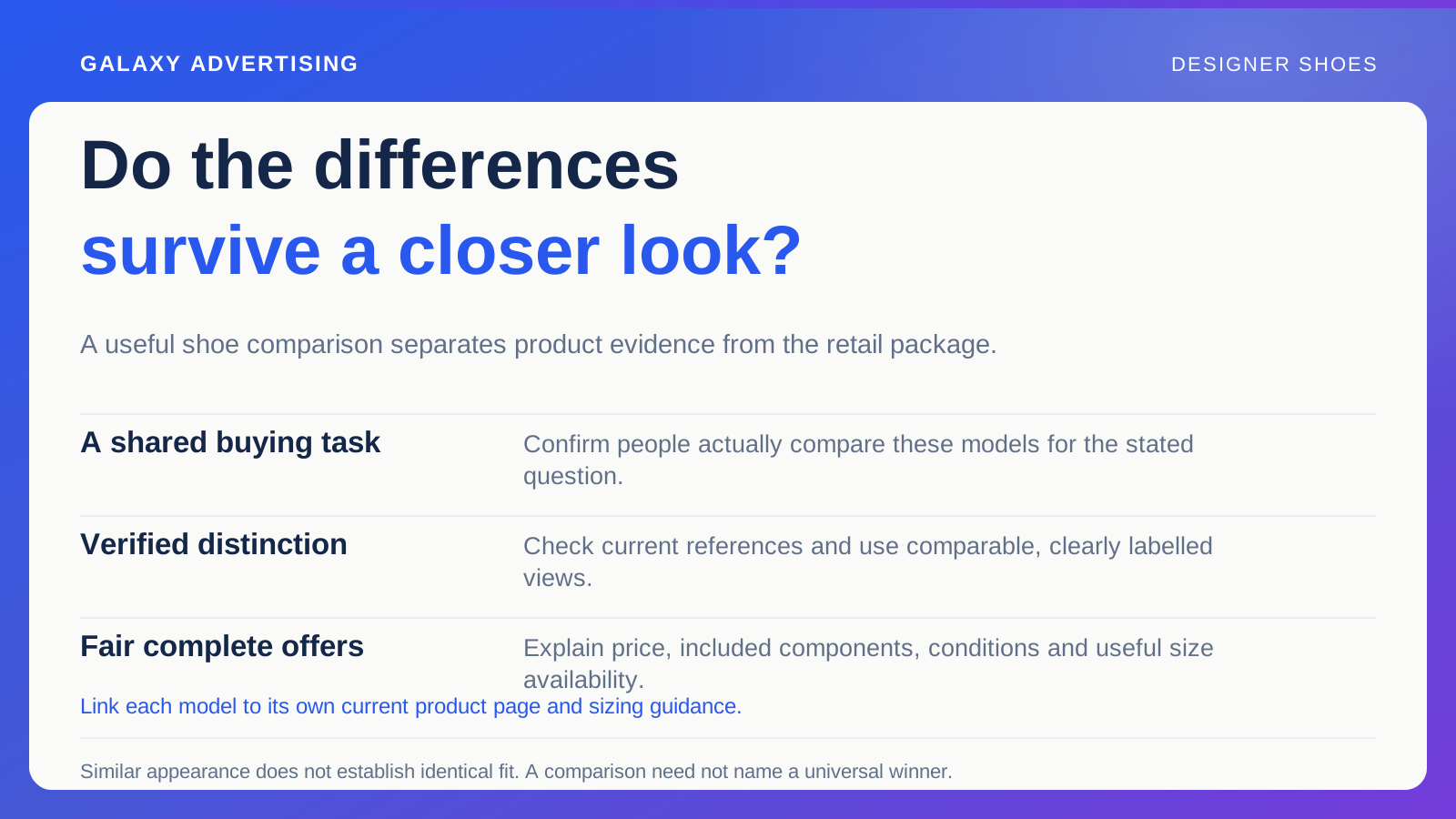
Check configuration, included accessories, price and relevant purchase conditions. A branded care kit beside the shoe could be included, optional or a styling prop. Those possibilities describe different offers, and the customer shouldn't have to infer which one you mean from the photograph.
Don't announce better value from unequal packages without explaining the difference. Someone comparing product prices could reasonably change their view once delivery or an optional service enters the calculation. A fair comparison makes those conditions visible rather than relying on the most flattering subtotal.
Use arithmetic only with defensible assumptions. Dividing price by an invented number of future wears produces an appealing daily cost, but can hide unsupported assumptions about lifespan or usage. A clear account of what's sold is usually more helpful than a precise looking calculation built on guesses.
Let the destination stand up to inspection
Link to the relevant model and finish. Put the important distinction where the visitor can find it alongside the information needed for the purchase. An unrelated brand history shouldn't stand between a shopper and the product facts that support your argument.
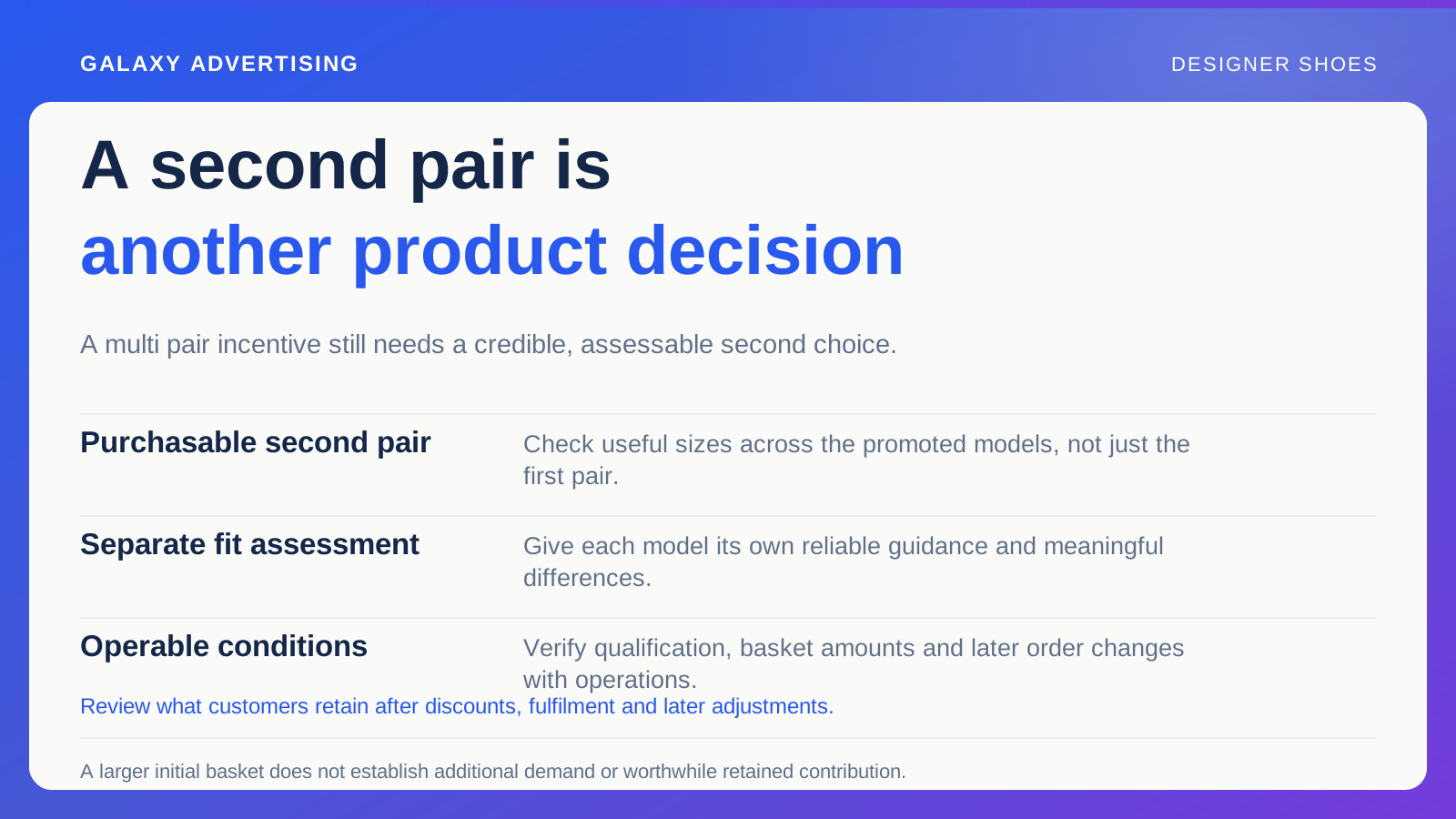
Keep reliable size information accessible. A clear premium story doesn't remove the need to select a purchasable option. Check the unavailable size route as well as the ideal journey. The proposition needs to remain understandable when the person's first choice isn't there.
Explain material limitations and conditions using approved guidance. A shopper should be able to scrutinise the offer rather than meet repeated praise intended to discourage comparison. Showing what the proposition includes and where it has limits gives the argument a more credible basis.
Answer the price objection in the customer's terms
The reasonable objection is simple: they like the model, but can't see whether the additional cost buys something relevant. Answer that distinction instead of questioning their taste or budget. It's your explanation that needs inspection, not their willingness to agree with it.
Recognise that a feature may not matter to a particular preference. Someone can understand the offer and choose another pair. That's different from failing to explain it. Ask an unfamiliar reviewer to describe the difference and evidence they remember. This checks clarity, not future results. If they recall only adjectives, improve the information before commissioning another version.
Keep evidence attached as claims change format. A detail photograph from a long page may need a clear label when cropped into a short advert, especially beside another model. Review the adaptation independently; its viewer won't necessarily see qualifications left on the source page.
Read commercial results beside the appeal
Use available enquiries, product exploration and order history to examine what the proposition appears to attract. Are people investigating the promoted model and asking informed questions about its documented difference? Those observations can help assess whether the explanation is reaching the intended decision.
Connect purchases to retained contribution on your agreed basis, meaning the money left after the costs included in the calculation. An appealing story can still produce an unsuitable mix or too little after acquisition and fulfilment.
When the price difference is understandable, the shopper can judge it fairly. That's a firmer premium position than a vocabulary every competitor can copy without changing a single product detail.