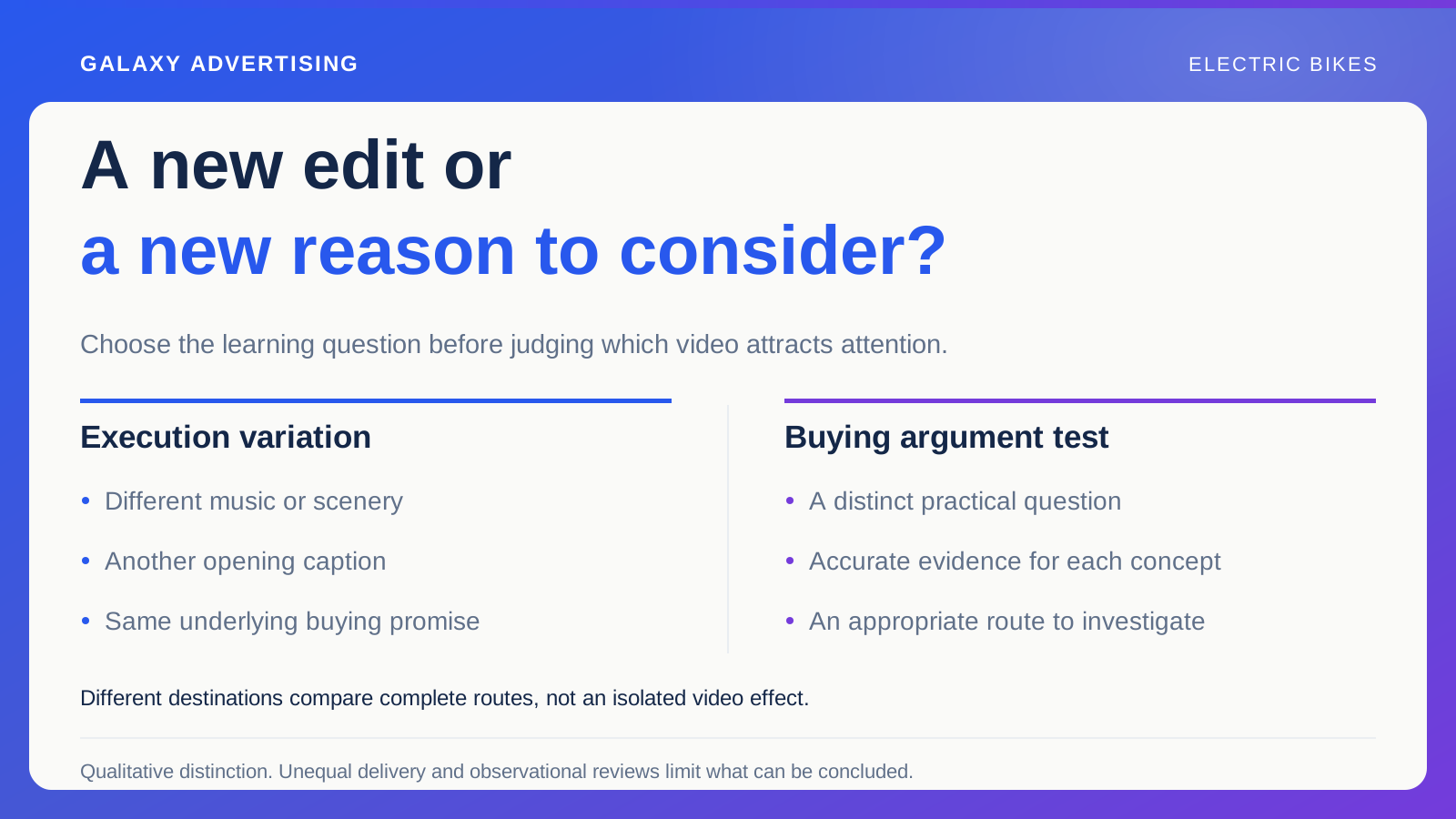
More journey videos don't automatically mean more useful creative learning. You can change the music, scenery and opening captions while asking every customer to consider exactly the same promise. The extra assets may offer execution choices, but they don't necessarily explain why a different kind of buyer should care.
Start instead with a specific uncertainty. Perhaps people understand the model's appearance but not its equipment package. Perhaps a storage argument could attract more relevant questions than a general leisure scene. Give the test a difference you can investigate and a credible way to read what follows.
Write the question before judging the videos
State the proposed connection between the buying argument and the response you want to understand. Finding the best video is too vague. It lets the review choose whichever favourable measure appears first and call that the answer.
For a hypothetical campaign, compare a concept explaining the actual carrying package with one addressing a documented storage consideration. You're examining different reasons to consider the bike, rather than different aesthetic treatments of the same promise. Keep that distinction visible in the brief.
Explain why the question matters commercially. You may need more suitable model exploration, clearer enquiries or worthwhile orders from a particular offer. Tie the learning to a real decision, so the result has a practical use beyond deciding which edit everybody likes most.
Give each concept a fair chance to explain itself
Both ideas need accurate product references, a clear explanation and an appropriate destination. Comparing a polished concept against one missing its essential demonstration because production ran out of time doesn't give the arguments a fair hearing.
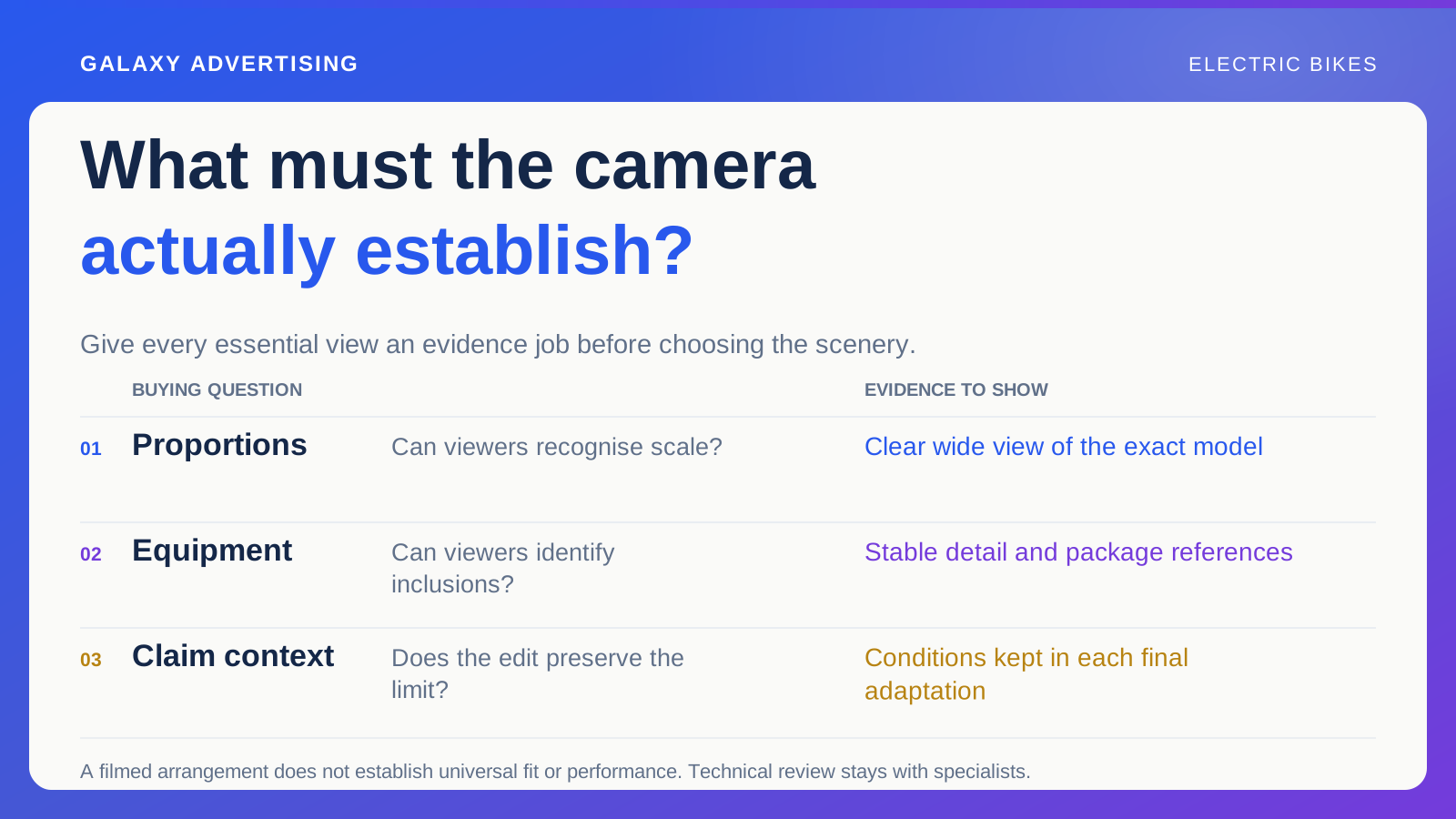
Record what each asset should establish and its relevant limitations. A scene can show one arrangement. That doesn't make it evidence of universal suitability or an unconditional performance result. Keep the intended observation and its boundary together.
Retain important qualifications even if removing them would make the comparison look cleaner. You're testing credible communications about a real offer. A more exciting but misleading version isn't a useful winner to reproduce across the range. The test needs to reward something your business can responsibly use again.
Record what else could change the result
Identify the product, package, price and destination conditions that affect interpretation. If you're comparing arguments, avoid changing several unrelated commercial variables without recording them. Otherwise, you won't know what the apparent difference concerns.
You don't have to freeze the business indefinitely. Stock and offers change. Document the event and consider whether the comparison remains useful under the new conditions. The record should reflect reality rather than pretend it stood still.
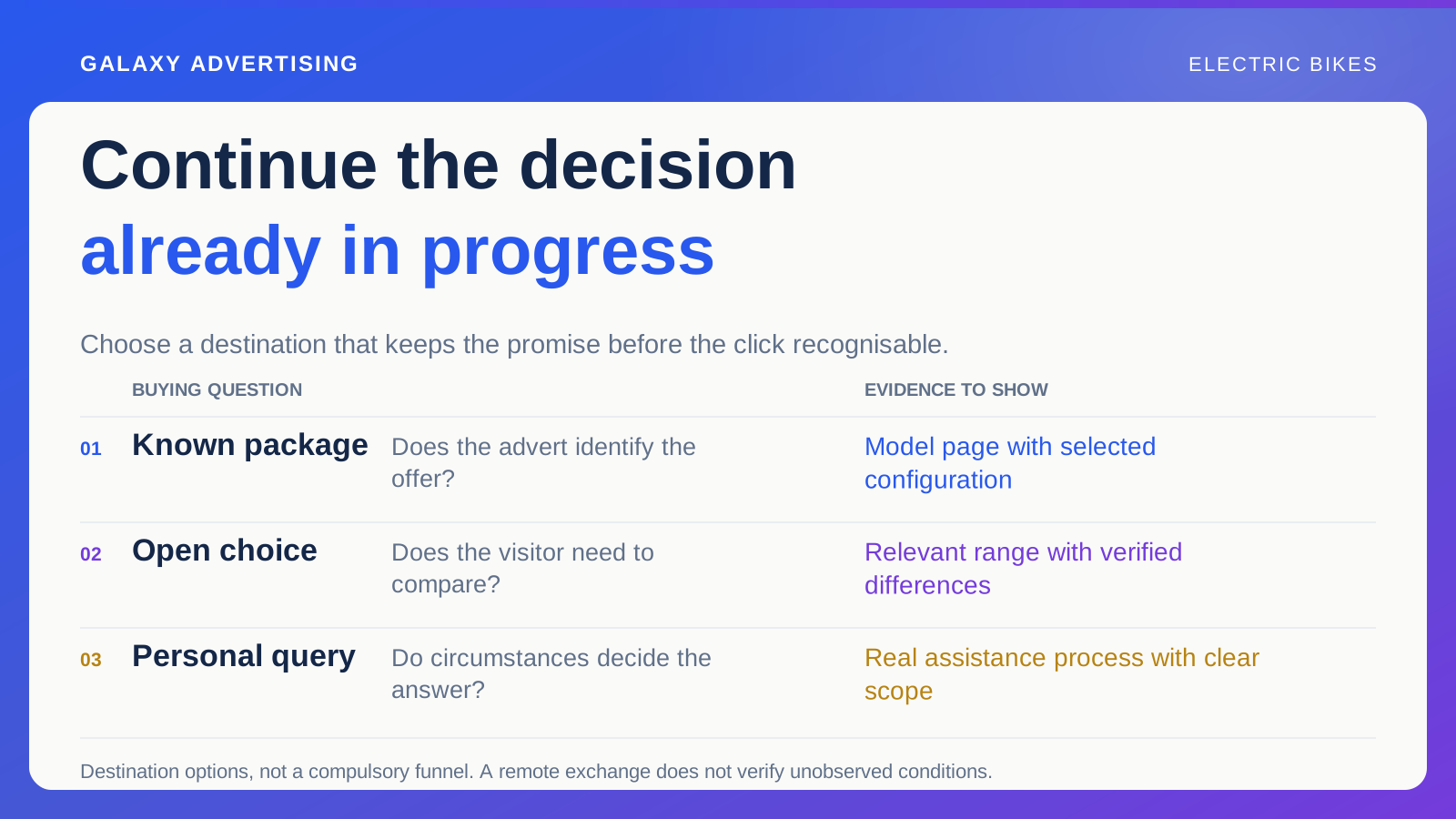
Check whether the arguments genuinely need different destinations. If so, describe a comparison of complete routes. Don't claim you've isolated the video's effect. Choosing a practical customer journey can still be valuable even when the available evidence can't separate every component's contribution. A useful decision doesn't require a broader claim than the comparison supports.
Choose evidence that answers your question
Select the main outcome and supporting observations before launch. Views and reactions describe attention. They don't establish whether resulting demand is suitable or commercially worthwhile. Give each measure a job it can actually do.
Model visits, customer questions and actual orders offer different evidence. Explain what each can and cannot show. Opening a specification section could mean useful engagement or difficulty locating an answer. The action alone doesn't settle the interpretation.
Include observations that could challenge your idea. An argument repeatedly attracting questions the model cannot address matters, even if comments are enthusiastic. Let the review recommend revision when the consequence of attention is unsuitable interest. Popularity isn't the only evidence a sensible test needs permission to notice.
Use a comparison your conditions support
Choose a suitable arrangement for your account, traffic and learning question. Get qualified assistance where statistical design requires it. There isn't a universal budget, visitor count or duration that every retailer should copy regardless of circumstances.
Take unequal delivery seriously. More exposure for one concept doesn't automatically prove its argument is universally better. The account's system and available controls shape the evidence you receive. Your interpretation needs to recognise those conditions.
If you're making an observational review rather than a controlled comparison, say so. Record material differences and bound the conclusion. Honest uncertainty still leaves room for judgement; it stops a narrow observation becoming a confident claim about every future customer or campaign. Be clear about the decision the evidence can support now.
Walk the buying route before rejecting the argument
Follow each advert on a phone to its actual model and configuration. Check the image, price, included equipment and practical information relevant to the argument. Make sure the route lets someone investigate what the creative introduced.
A broken or misleading destination can make a promising question look weak. Fix demonstrated faults before using the result to reject the buying argument itself. Otherwise, you're learning about a failure in the route while crediting the concept with the failure.
Read ordinary enquiries alongside aggregate measures. A storage concept producing specific, answerable questions may do a different job from a general scene receiving broad compliments. Neither proves additional sales alone, but the distinction can inform what to clarify or investigate next.
Ask the sales team to assess the argument without seeing which asset won the most attention. Have them consider the relevance and answerability of the questions, rather than endorse an apparent winner. This doesn't replace appropriate test design. It adds a practical challenge that may expose a gap between an attractive creative result and the offer you're ready to support.
Turn the finding into the next piece of work
Keep the original question, versions assessed, material conditions and evidence. State the decision: continue a coherent route, improve missing evidence, investigate a destination or retire an argument attracting unsuitable interest.
More near identical edits of a favourable asset aren't automatically more learning. Execution variations can have a role, but another production brief needs to identify its new question.
The useful result is a reason for the next piece of work. When a test clarifies which proposition deserves attention and what buyers still need to know, it gives production something stronger to pursue than another change of scenery.