An advertising campaign can generate relevant enquiries while your promoted configuration becomes scarce and replies take longer. Increasing spend might still be attractive. But the next decision now reaches beyond the media budget, because somebody must supply the offer and handle the interest it creates.
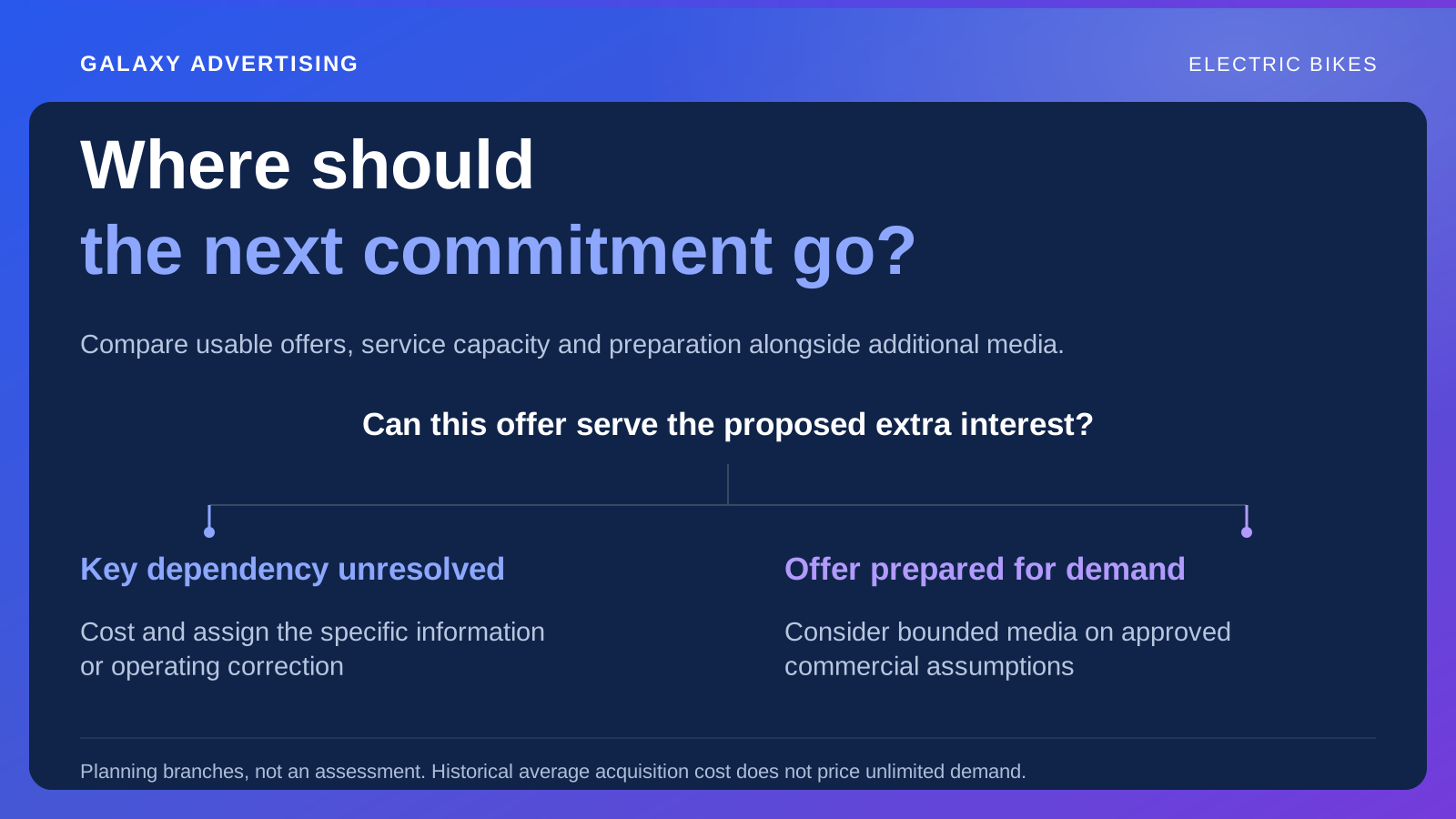
Think about what your next commitment should make possible. Sometimes that means more advertising. Sometimes it means a clearer destination, a better factual handoff or a resolved operating constraint. Give each option a purpose and an owner before deciding which deserves the money.
Describe what the extra commitment buys
Name the proposed increment of activity. More attention for an established offer is different from introducing a range, developing another argument or funding a bounded learning exercise. You need to know which decision you're being asked to approve.
The total monthly budget won't tell you that on its own. Look at the additional resources: which opportunity receives them and which assumption makes that allocation sensible? Keep the marginal decision, meaning the next commitment, visible beside the overall spend.
Write down realistic alternative uses. You might continue a prepared model campaign, improve information for another configuration or make the appointment route clearer. Compare work your business could actually undertake. An abstract choice between spending more and doing nothing hides useful options that deserve a fair commercial hearing.
Inspect the offer receiving that demand
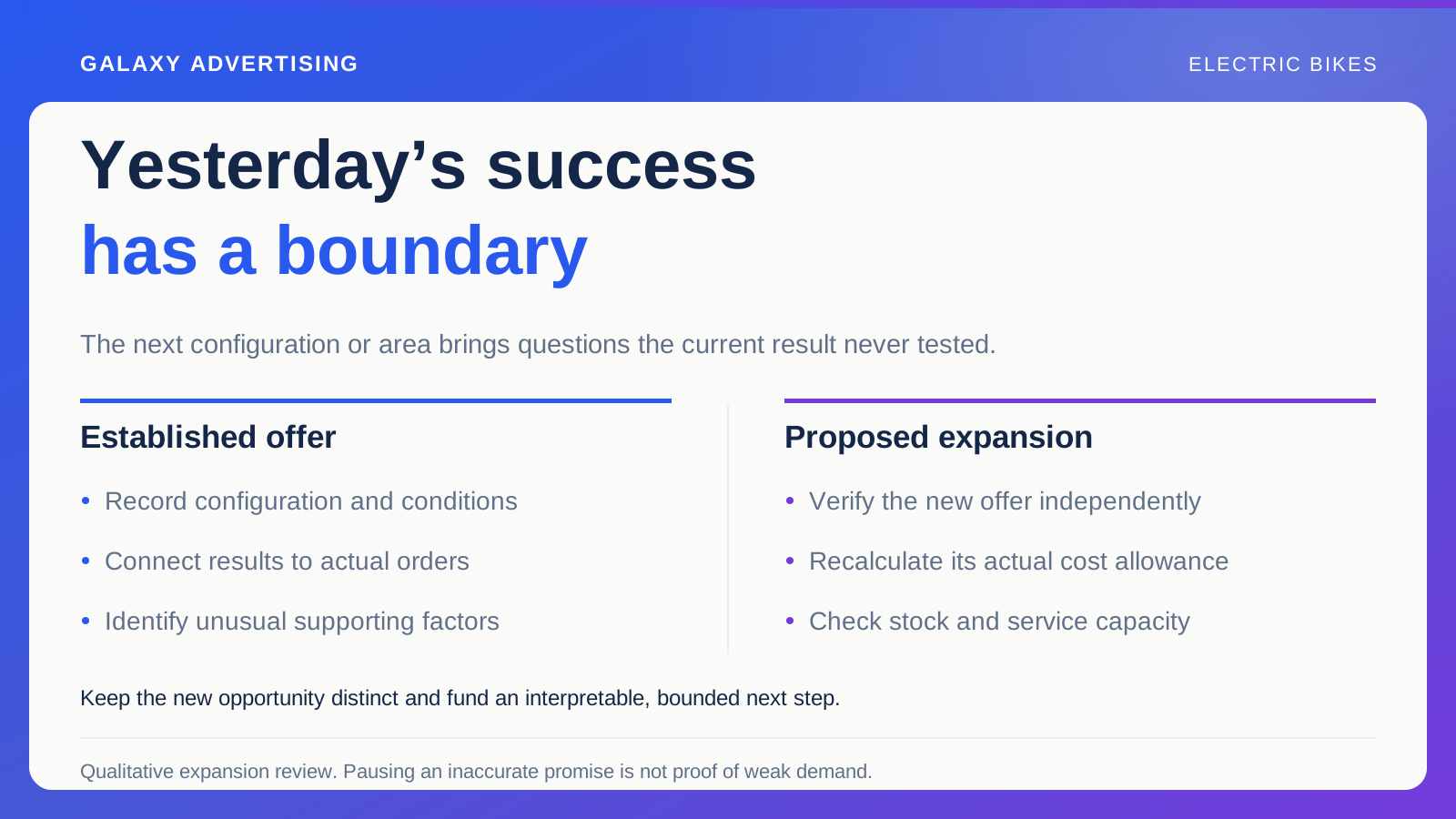
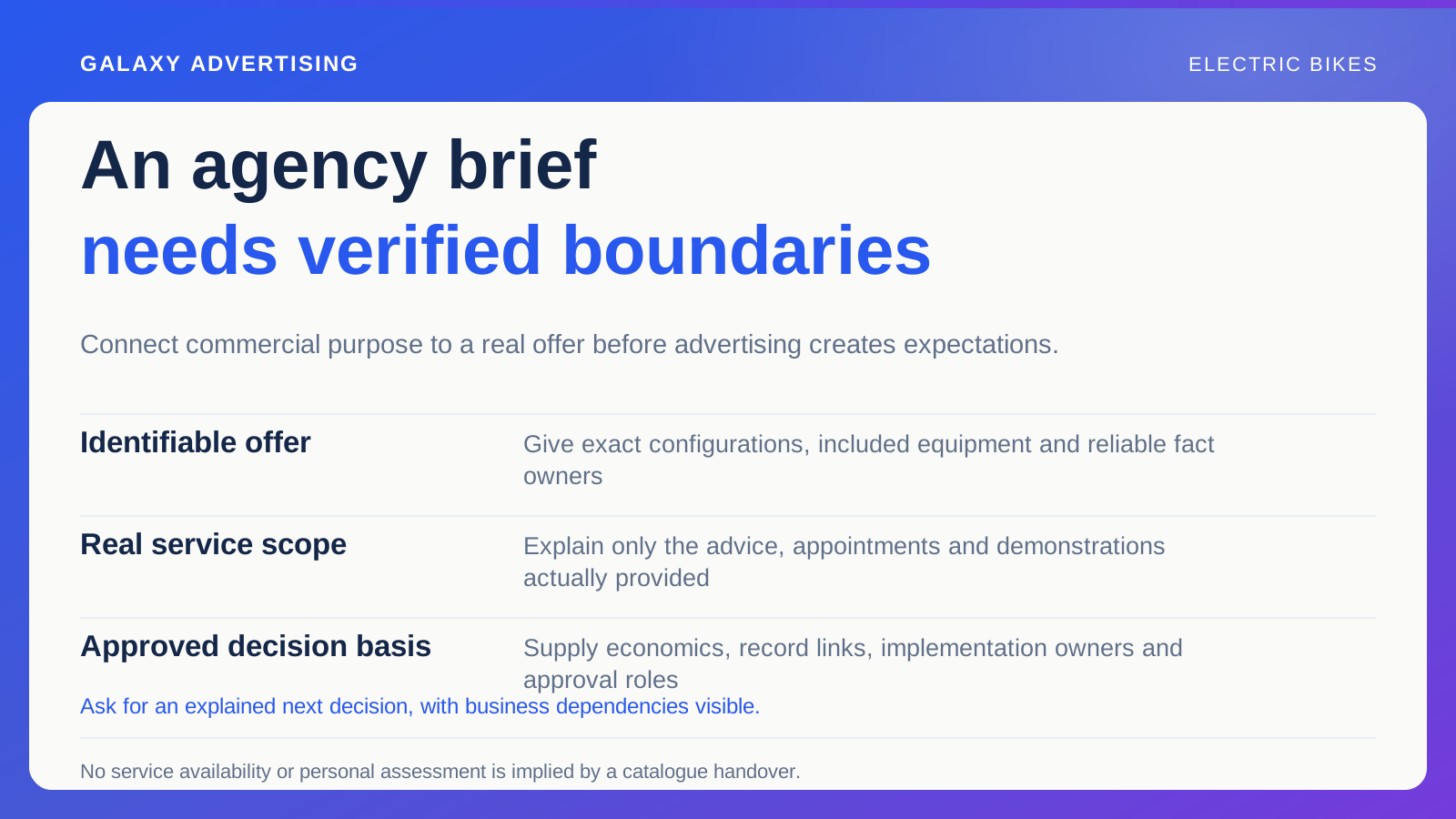
Verify the exact model, configuration and service arrangement. A broad category stock figure doesn't establish that you can supply the advertised package as intended. The relevant availability is the availability behind this proposal.
Review the destination and product references. If people can't identify included equipment or find a necessary documented detail, additional visits could expose an information gap you already have enough evidence to repair. You don't need more traffic to establish every known problem again.
Keep preparation proportionate. Focus on facts and operating conditions that materially affect an accurate buying decision. Distinguish a consequential unresolved dependency from a minor content preference that can improve without delaying coherent activity. Requiring perfection can obscure the priority just as easily as ignoring a material gap.
Check the service capacity behind the offer
Where enquiries or appointments form part of the offer, ask how the team would handle more. Capacity concerns the ability to provide an appropriate response. It's more than how many messages fit into an inbox.
Identify questions needing review by someone with product knowledge or another internal handoff. Extra volume can expose an unclear process even when everyone is working hard. You need to understand the handoff before assuming the answer is simply greater effort.
Keep the public promise aligned with the real arrangement. If you can't maintain a stated response or access expectation, correct it. Funding more demand against the wrong assumption can enlarge the operating gap while the report presents extra enquiries as uncomplicated progress. Your service conditions are part of what the budget is backing.
Compare the commercial room for acquisition
Use consistently defined revenue and relevant costs for each proposed offer. A larger price or a higher reported return doesn't automatically make the next increment more attractive. The commercial basis needs to support the comparison.
Include material service and fulfilment assumptions approved by the commercial owner. If the additional burden is uncertain, label it. Consider what a bounded test could establish instead of allowing an estimate to masquerade as a settled cost.
Don't assume historical average acquisition cost will stay unchanged as you expand. The next customers, product mix or operating conditions may differ. You can still authorise the commitment. Just recognise the uncertainty rather than treating a previous average as a guaranteed price for unlimited future demand. An average describes what happened under those conditions, rather than pricing every opportunity ahead.
Make preparation answer a commercial problem
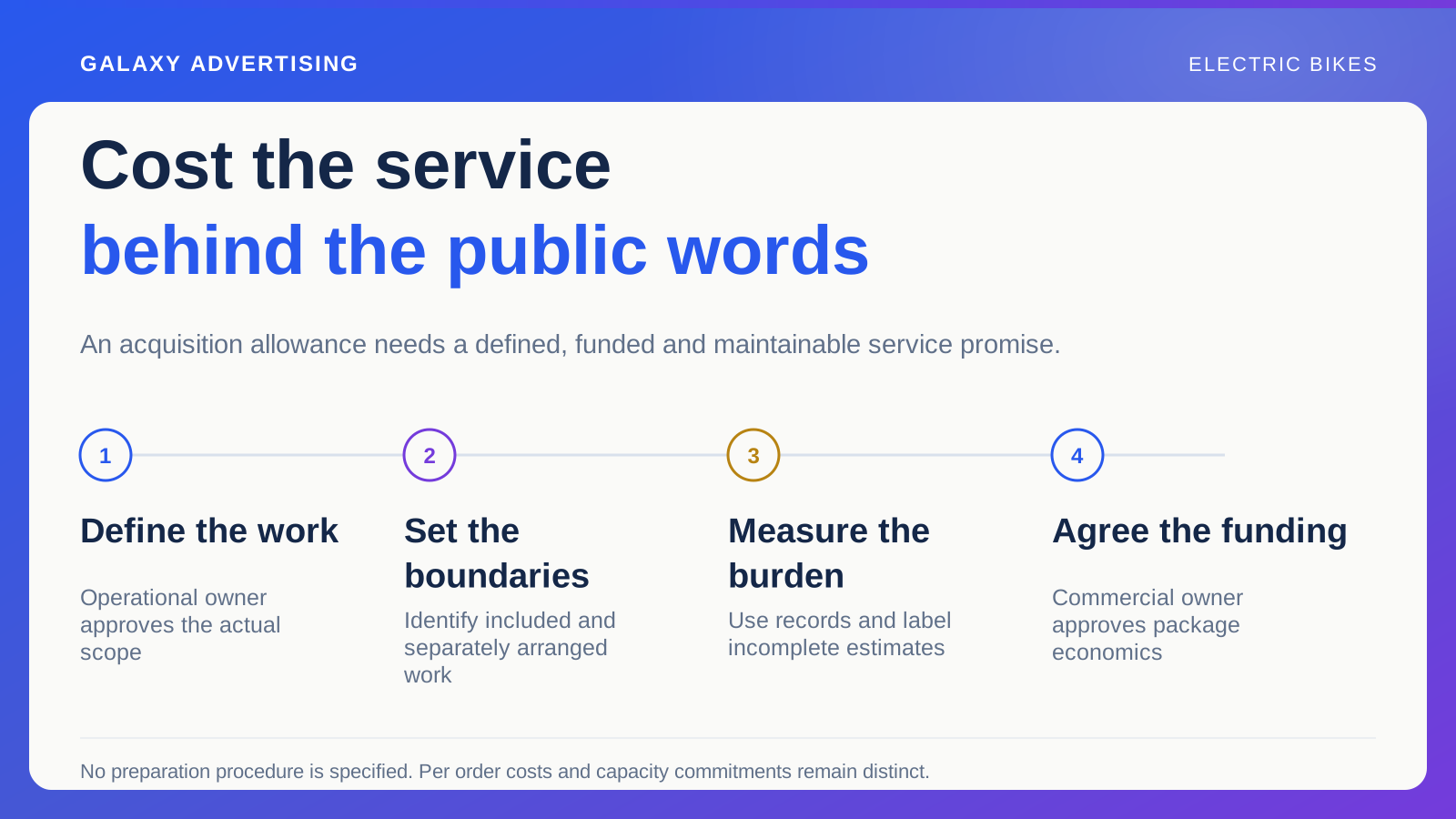
Identify the constraint a proposed information or production task removes. A general request to improve the website is too loose to compare properly with another investment. Specify the work and the reason it matters.
For a hypothetical package campaign, that could mean identifying supplied carrying equipment clearly and linking the advert to the correct configuration. The task then has a release condition somebody can verify. You know what completion should establish.
Keep the cost visible beside media spend. Apparent campaign efficiency can hide substantial supporting work when the review counts advertising alone. Include production and the practical cost of learning whether a new offer deserves continuing attention in the full proposed commitment.
Consider a small process correction before buying more traffic. If staff repeatedly search several systems to identify the promoted package, a clearer reference handoff could make existing enquiries easier to handle. State the work and the evidence of the constraint. Don't promise a productivity improvement you haven't measured. Media and preparation both need a cost, a purpose and a reason to expect a better next decision.
Put a boundary around what you don't yet know
Agree an investigative scope you can afford and the evidence required before committing again. A test can be commercially responsible without promising immediate scale. Its learning purpose and limits need to be explicit.
Separate urgent corrections from the wider performance review. An unavailable configuration or misleading package affects the integrity of the offer. It isn't just a disappointing metric to leave until the next review.
Assign owners to dependencies. Your account manager needs to know who confirms stock, approves facts or resolves a destination issue. A budget approval can otherwise authorise activity while its supporting work remains indefinitely unfinished. Give the commitment a practical route to becoming a coherent offer.
Review what the investment changed
Look at suitable enquiries, actual orders and contribution alongside operating exceptions. Contribution means the money remaining after the costs included in your calculation. Faster spending doesn't establish progress towards your commercial objective.
Did the investment answer its original question? If uncertainty remains, identify the information that would alter the next decision instead of automatically repeating the commitment.
The next pound needs a useful job. Put it towards making the offer usable or acquiring demand you're prepared to serve, with a clear reason for choosing that role now.