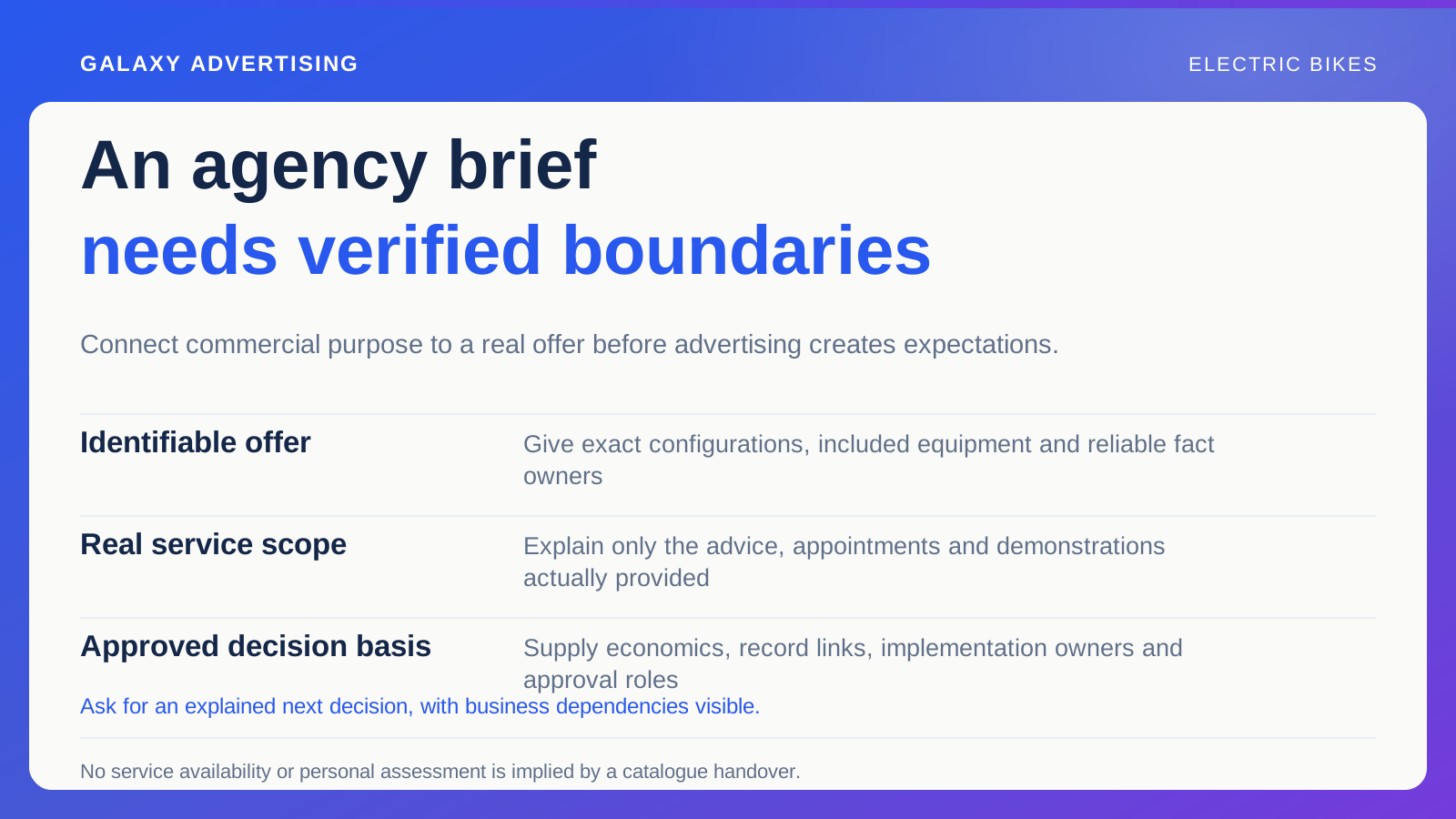
We can mistake a catalogue handover for a finished agency brief. Prices, stock labels and advertising access are all there. The distinction between an appointment invitation and a purchase offer, unresolved configuration questions and the service your staff can actually explain may still be missing.
Those details can change the campaign. Connect the business purpose to the real offer and its operating boundaries before an advert creates expectations you never intended. Give the agency room to recommend tactics, with the context to make those recommendations useful.
Begin with the decision you need help making
State what the engagement should improve or help you decide. You might want worthwhile first orders, suitable appointments for an available range or a bounded investigation of another practical use case. Give the work a commercial purpose first.
More traffic or enquiries doesn't complete the objective. What activity can you serve, and which commercial outcome makes it worthwhile? That separates useful demand from a bigger total without a meaningful next step.
Share the reasoning behind earlier campaigns, including their limits. Previous activity may have answered a narrow stock question without establishing an ongoing acquisition route. Pass that distinction on. A favourable headline and instructions to repeat it at greater scale would ask the new team to extend a conclusion the earlier evidence never supported.
Give them a record of the actual offer
List the exact models and configurations proposed for attention. Identify the source responsible for product facts. Separate included equipment from optional additions and objects used only to style the lifestyle image. Everyone should recognise the promoted package.
Explain important availability exceptions and who confirms them. A general in stock label may say little about the selection available for the customer situation your campaign addresses. Describe it precisely where that changes the decision.
Give uncertain claims an explicit status. An agency shouldn't settle conflicting supplier descriptions by choosing the strongest sounding wording. Provide a reliable route to someone with appropriate product knowledge who can verify the information before the claim travels into several assets. Resolve the fact first.
Explain the service behind the invitation
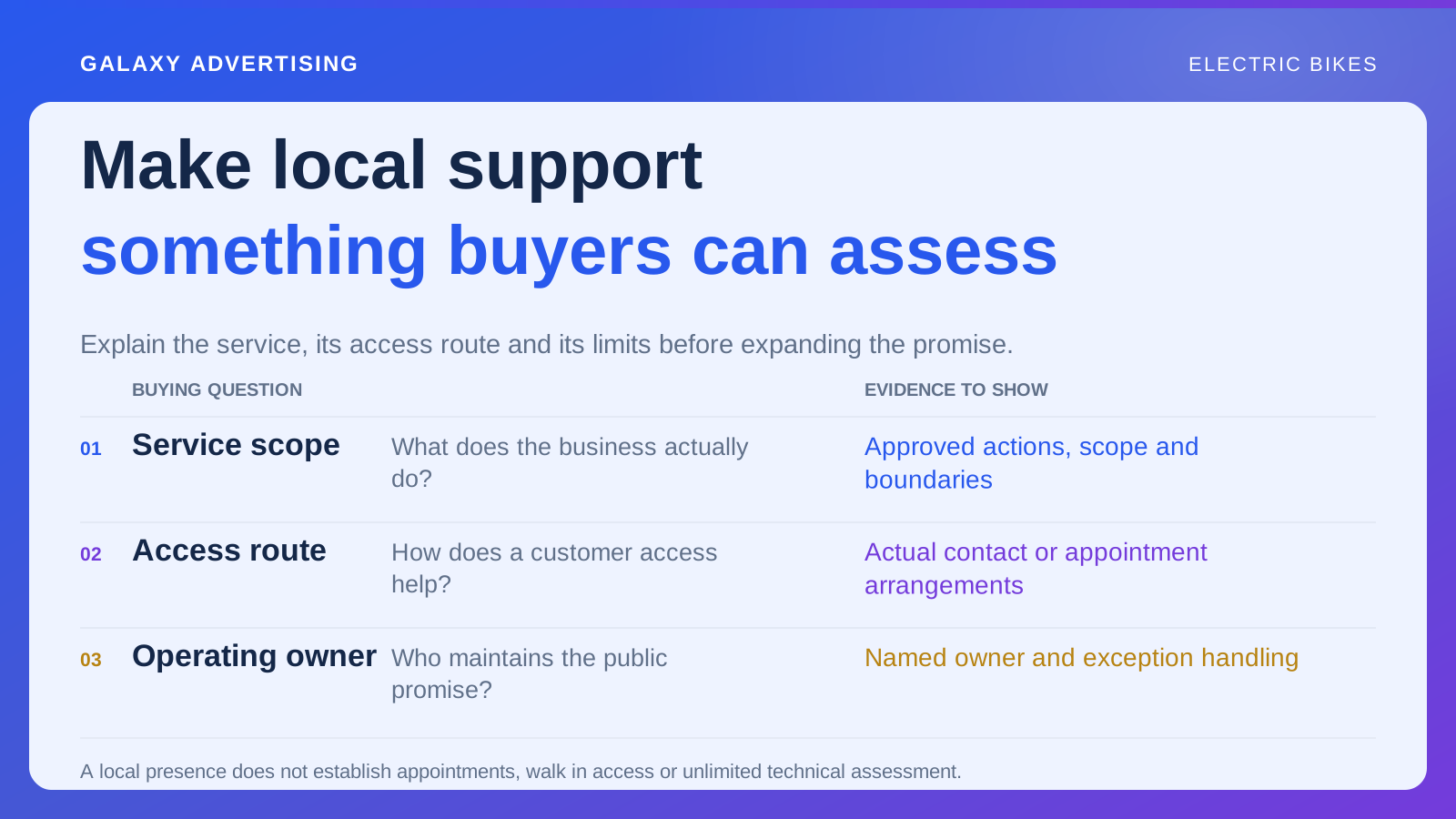
Describe advice, appointments and demonstrations only where you actually provide them. Show how customers gain access and what the process can reasonably establish. Match the campaign step to that service.
Keep individual and technical assessments within appropriate expertise and documentation. A generic invitation shouldn't imply a short remote conversation verifies circumstances nobody has observed. That boundary belongs in the brief before someone writes the reassurance.
Include operational limits affecting the promise. If an arrangement needs confirmation, identify who handles it. The agency needs to know before producing copy, rather than after colleagues begin receiving questions about something the advert appeared to include. An accurate description keeps the offer coherent.
Agree the economic basis before setting targets
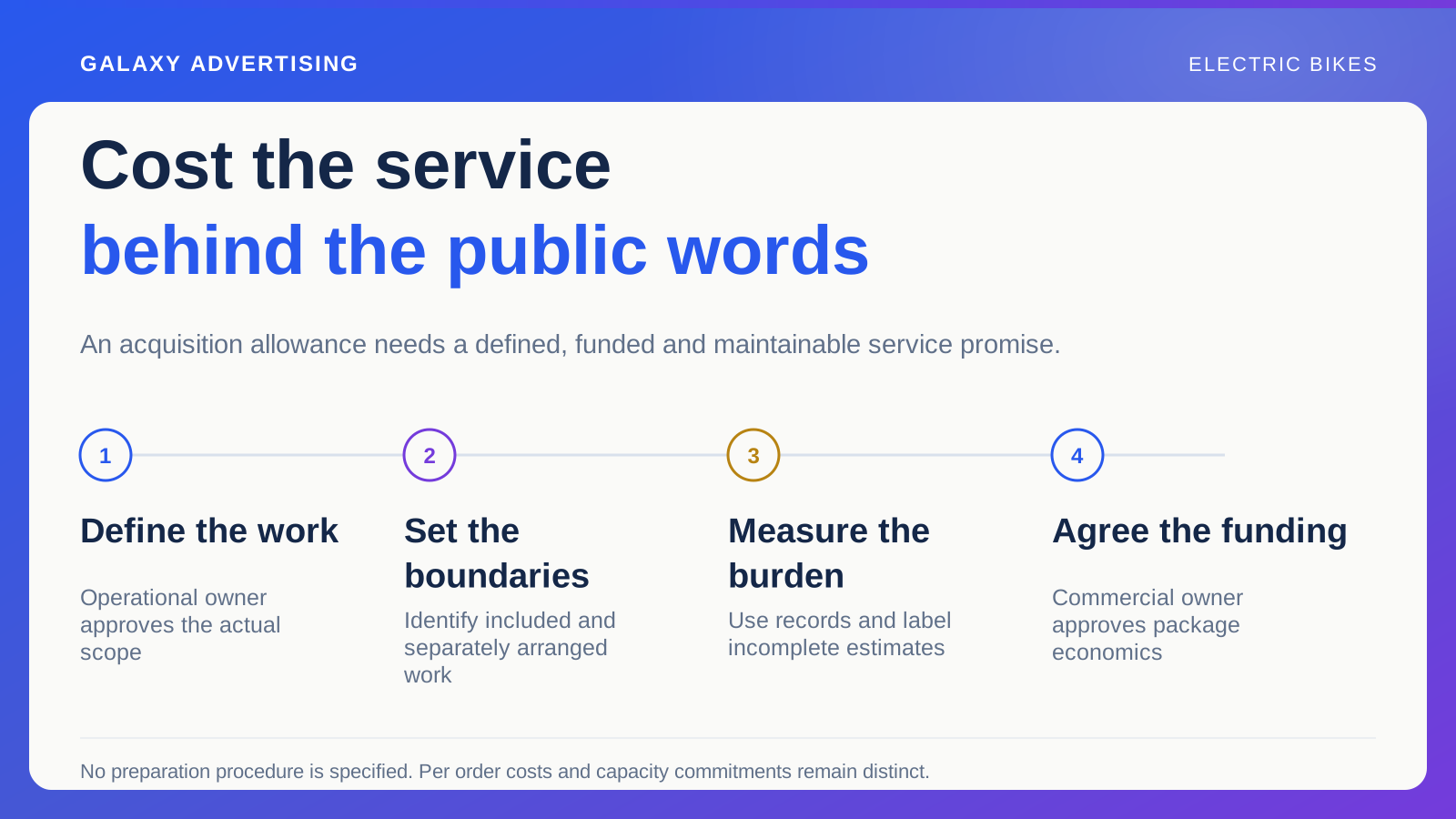
Supply the revenue definition, relevant cost assumptions and retained contribution requirement used to judge offers. Contribution is money remaining after the costs included in the calculation. Explain how material order changes and adjustments enter your records too.
Don't expect an external team to infer your margin policy from public prices. They can organise the calculation and challenge inconsistencies. The commercial owner still needs to approve its underlying basis. A spreadsheet calculation is not automatically an agreed policy.
Distinguish established allowances from learning assumptions. Another model or route might deserve a bounded test without a proven acquisition cost. Naming that uncertainty gives both parties a more honest agreement than an ambitious target whose definition changes when the first results arrive. Distinguish learning from existing approval.
Show how enquiries become orders in your systems
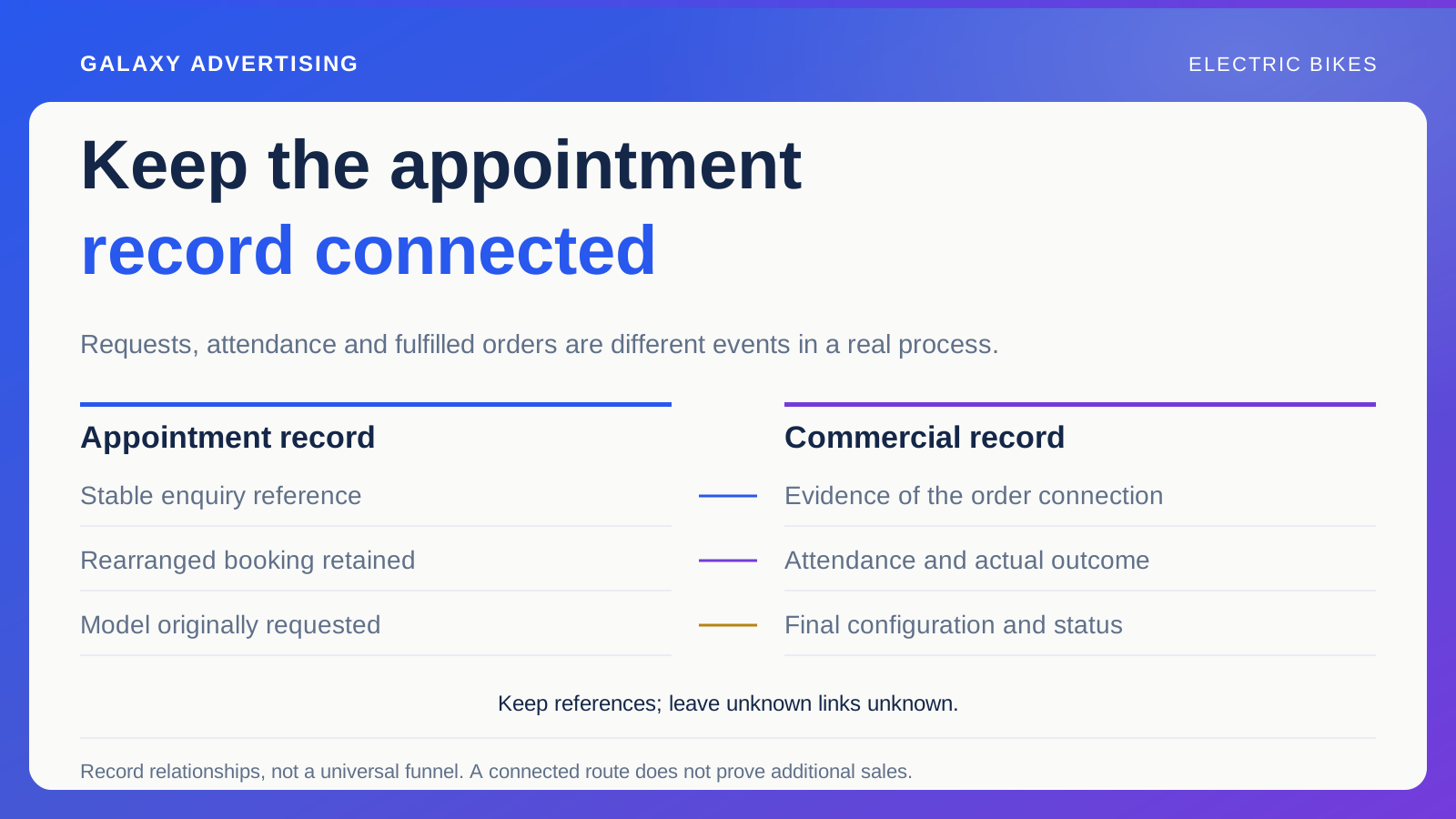
Walk through the route from a question or booking to a transaction where your systems record it. Identify stable references and known gaps. The agency needs to understand what can actually be connected, rather than assume every stage has a reliable link.
Explain who updates outcomes, handles rearrangements and connects orders where supported. Show which observations can be reported directly and where evidence remains incomplete. Those responsibilities affect reporting credibility.
Keep a request distinct from a sale. The campaign team may need early indications while you assess fulfilled orders. Both have a role when labelled clearly. Don't silently turn each submitted form into a commercially qualified opportunity or an additional purchase. An early signal needs no inflated description.
Give creative work a practical checking process
Supply approved model references and facts relevant to the intended scene. Name the people checking product accuracy, service promises and the final communication. Give verification a route before late problems appear.
Review asset, caption and destination together. Accurate footage can become confusing when accompanied by another package's price or a broader promise added afterwards. The customer sees their combination, so the approval needs to cover that combination.
Use version control simple enough for the team to maintain. Final approval should identify what was approved and what changed. A long thread discussing several similar files isn't a dependable substitute. A clear record supports later corrections and reviews without requiring you to dictate every creative choice.
Make access and implementation somebody's responsibility
Keep business ownership of relevant accounts and assets. Grant access appropriate to the work, and agree permission reviews when colleagues or suppliers change. Make those arrangements part of the working agreement.
Assign website, product information and campaign implementation explicitly. A recommendation shouldn't stay unfinished because everyone assumed someone else could make the change. Give the action an owner who can complete it.
Agree handling for urgent offer faults within authorised scope. An unavailable configuration or inaccurate destination needs a practical response. That lets routine work continue while preserving commercial approval for decisions genuinely requiring your judgement.
Require an explanation of the next decision
Ask reporting to distinguish completed work, observed results, commercial interpretation and recommended action. Task lists and polished dashboards still need to explain why the next investment is appropriate.
Keep your own dependencies visible. Missing stock or cost updates are information needed for the decision, rather than gaps allowed to weaken advice quietly.
A useful brief gives the agency the business it must actually work with. When the service, offer and economics are in view, the team can apply judgement to something more substantial than a simplified catalogue.