A shopper reads that their electric bike will arrive prepared, with helpful aftercare from your team. Inside the business, the price has been approved using supplier cost and a familiar trading margin. The extra work implied by that advert still has no agreed scope, operating owner or place in the commercial plan.
That's more specific than an ambitious acquisition target. You may be advertising a service package you haven't defined financially. Before asking for more demand, establish what accepting the offer requires you to do and how you'll maintain it.
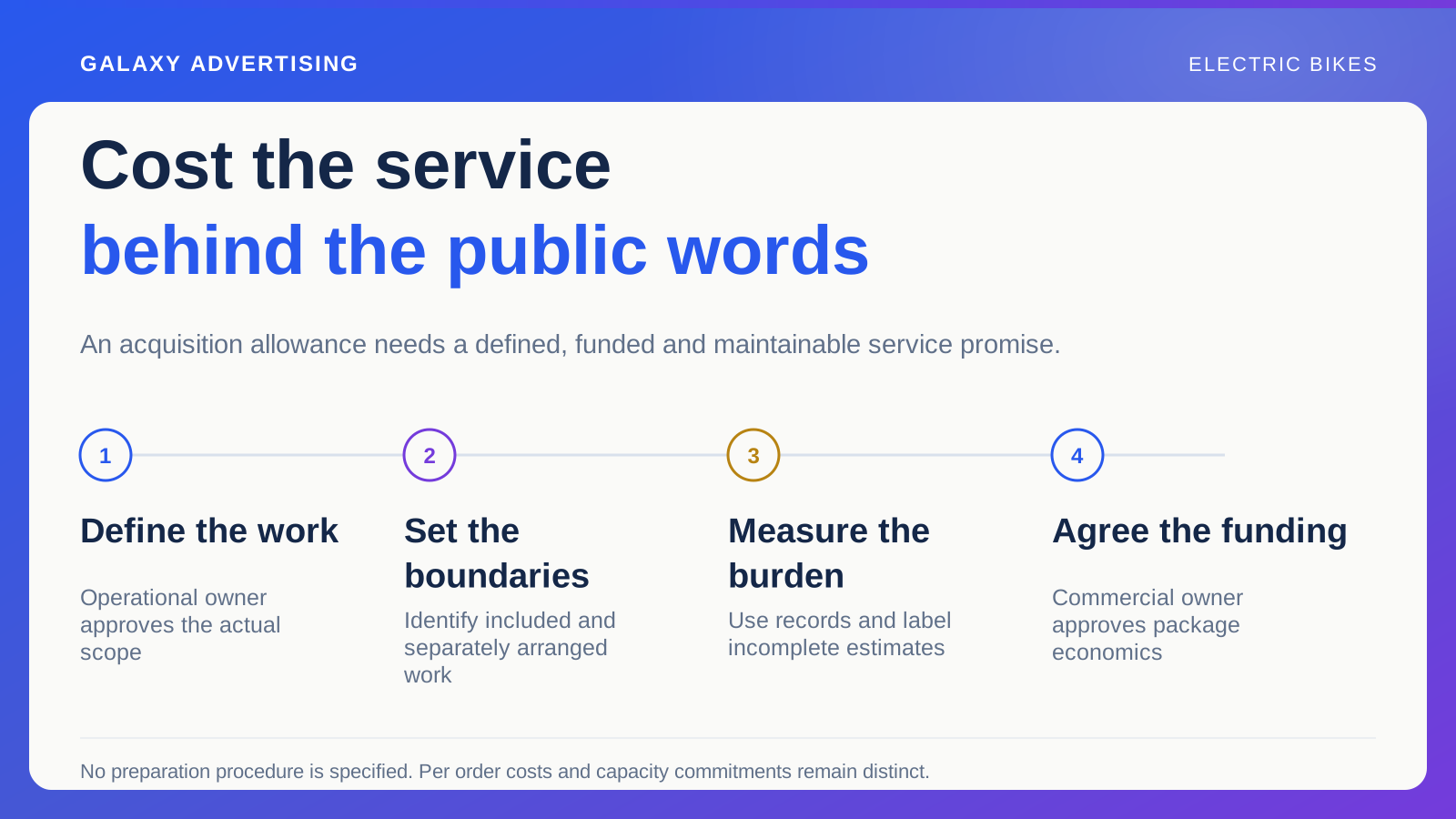
Turn the public words into an actual task
Gather the exact wording from adverts, product pages and sales conversations. Prepared, ready and supported can mean different things to colleagues and customers. Familiar words can conceal quite unfamiliar expectations.
Ask the responsible operational person to describe the work provided under each phrase. Marketing should record the approved description. It shouldn't invent a mechanical procedure or make technical assurances it cannot verify simply to make the offer sound complete.
Separate manufacturer information supplied with the bike from work your retailer adds. Receiving a document isn't necessarily the same service as an individually arranged conversation or a documented preparation process. The public offer needs to identify what your business has actually authorised, rather than letting those different things blur together.
Say where inclusion starts and stops
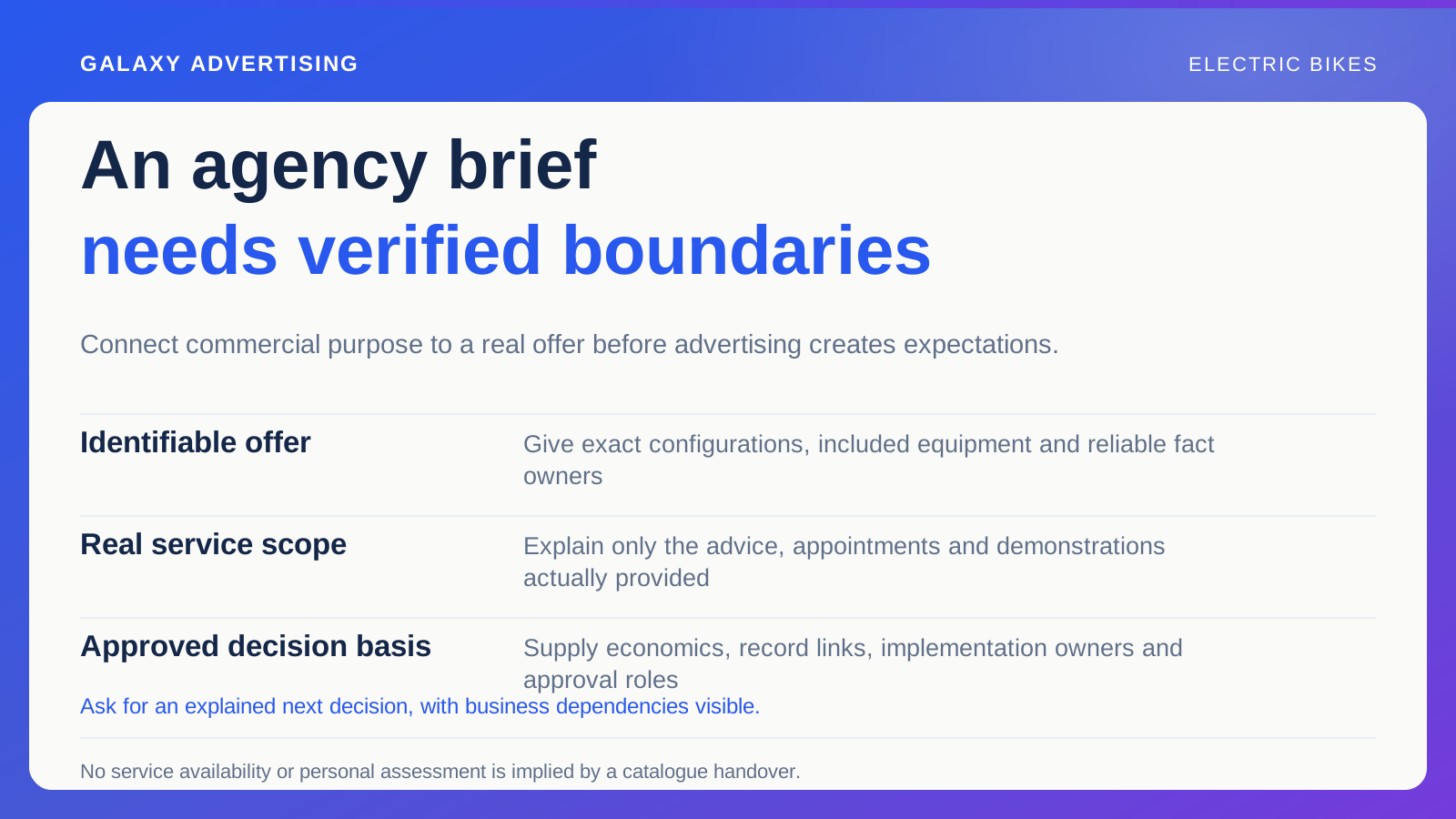
Establish what's included with an order, what requires a separate arrangement and what you don't provide. Check whether the boundaries change by product, delivery route or another real condition. The same phrase may not describe every offer accurately.
A broad reassurance in an advert and a restrictive explanation elsewhere don't automatically create a coherent package. Help customers recognise the relevant distinction before they commit. They shouldn't have to reconcile two different impressions themselves.
Ask an unfamiliar colleague to read the offer and tell you what they think you'll do. If their understanding differs from the operating arrangement, clarify the wording. Assuming future customers will infer the intended limit more accurately leaves the same problem waiting for the next order.
Measure the work before choosing an allowance
Use your own process records or proportionate observation of ordinary orders to understand the work involved. Include exceptions that materially affect service. Looking only at the smoothest orders gives you an incomplete basis for the decision.
Don't select a convenient standard allowance because it preserves an attractive acquisition figure. Where evidence is incomplete, label the estimate and name whoever will compare it with actual experience. An honest gap is something you can investigate.
Separate costs incurred with each order from capacity commitments made over a period. Both can matter, but they answer different management questions. Dividing every overhead by an arbitrary sales forecast doesn't turn the result into a precise marginal cost. Keep the calculation faithful to what you're trying to establish.
Attach the obligation to the right offer
Connect the service record with the exact product or package. A promise appropriate to one arrangement shouldn't spread across your catalogue because the homepage uses a general reassuring phrase.
For a hypothetical retailer, one advertised package includes a specifically defined preparation arrangement, while another follows a different fulfilment route. They need separate verified descriptions, even if photographs make the main model look similar. The customer is buying the package as well as the pictured bike.
Give marketing a clear exception list and a source owner. An account manager shouldn't have to guess operating differences from supplier names. Nor should the first explanation arrive when a customer asks why the advertised service wasn't available for their order.
Ask whether the team has the capacity
What extra commitments can your team maintain without changing the public promise? A service can look affordable in a narrow calculation for each order and still create a scheduling constraint. Those aren't contradictory findings.
Identify when another qualified resource, a different arrangement or a revised scope would become necessary. The responsible operational people need to make that decision. It isn't a technical instruction for the advertising team to improvise.
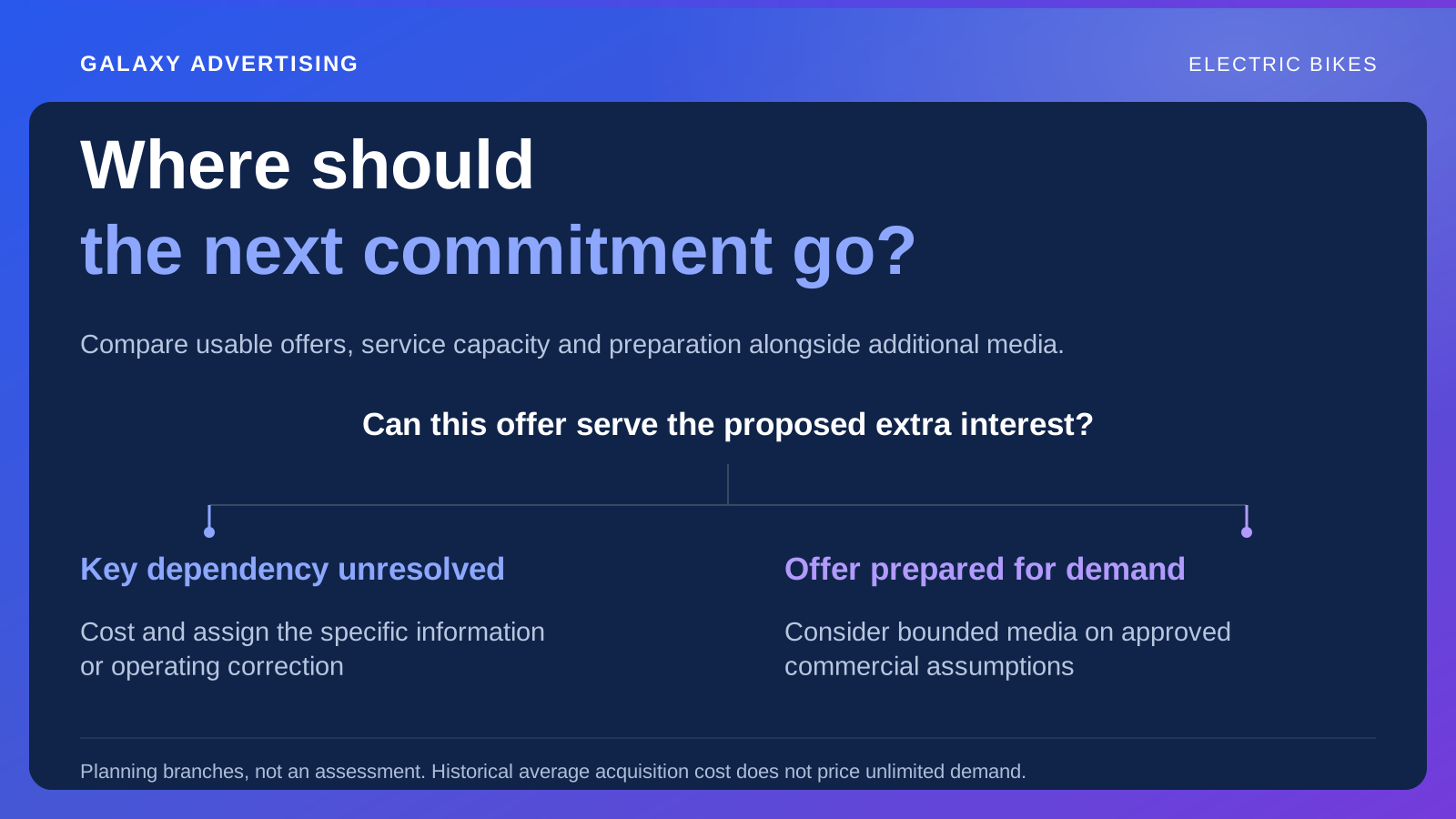
Connect the dependency with campaign planning. If you can't currently provide the advertised service under its stated conditions, increasing spend isn't simply a test of acquisition efficiency. First decide how to restore an accurate offer that the business can support. The campaign needs a deliverable promise to bring people towards.
Decide how the service will be funded
Have the commercial owner decide how the included work appears in the package economics. That could involve the product price, a separately described service or another approved arrangement appropriate to your business.
A cost doesn't disappear because the customer sees no separate line item. Equally, every useful conversation doesn't necessarily need its own charge. The decision is about the defined package and its commercial purpose, rather than imposing the same answer on every interaction.
The contribution principle still applies: assess the money remaining after the costs included in your calculation. But first establish this previously ambiguous obligation. Once its relevant cost and limits are understood, acquisition reviews can use an approved basis instead of silently treating the service as free capacity.
Keep marketing informed when the arrangement changes
Assign ownership of the service description and the information marketing uses. Staffing, fulfilment and supplier changes can alter what you can maintain while the product title and price stay exactly the same.
Create a practical notification route. The service owner should know which public claims rely on the arrangement, and the campaign team should know who verifies revisions. Both sides need the connection to be visible.
After a change, inspect the live offer, captions and reused creative. Updating a policy page doesn't prove an older advert has stopped implying broader support. Reach the communication that creates the expectation, rather than assuming the revised explanation will do all the work.
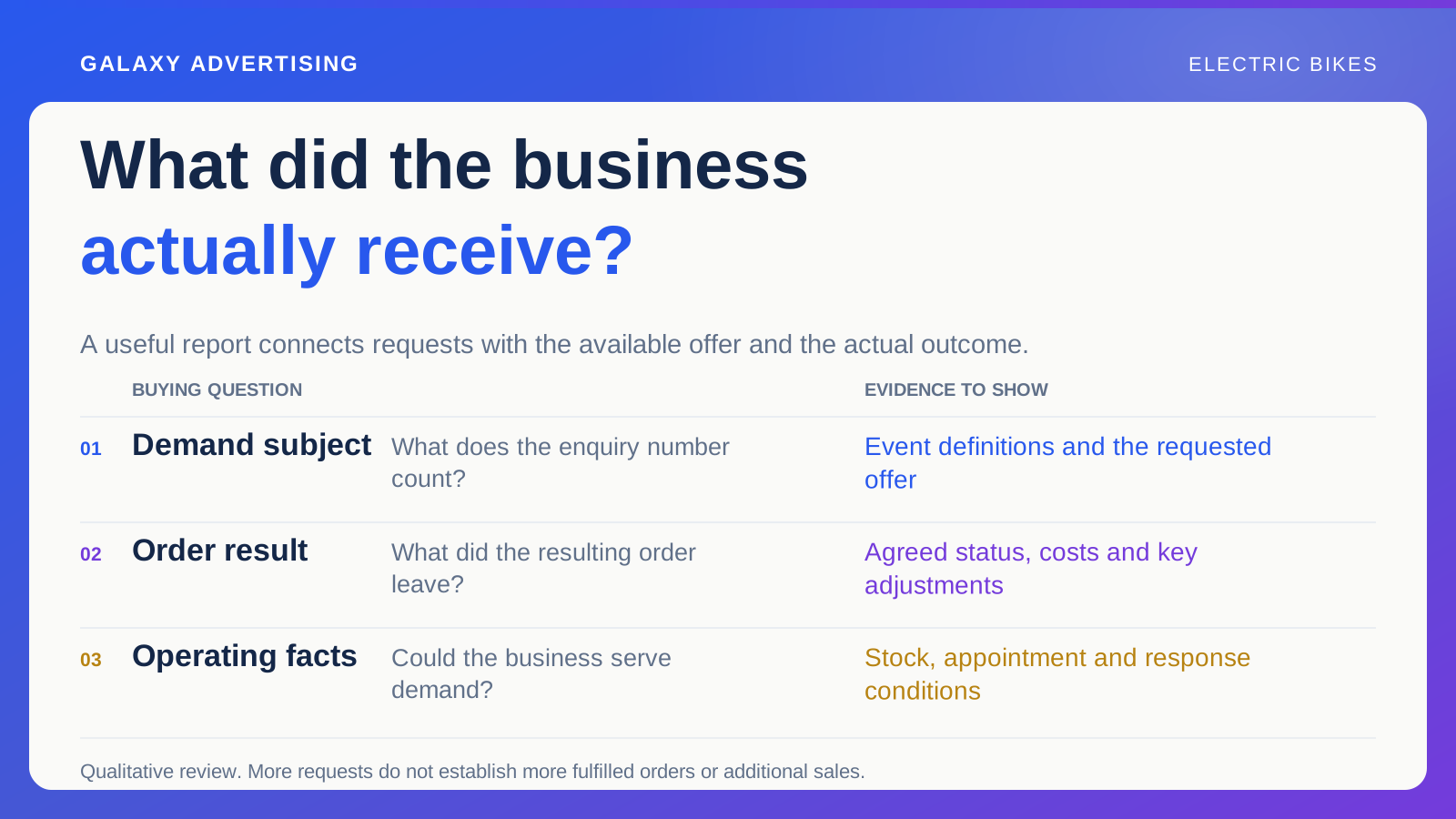
Check whether you delivered what you promised
Review whether customers received the stated service under its approved conditions, and which exceptions needed more work. Use the findings to improve the package definition and commercial assumptions.
Separate unsuitable requests from misunderstandings your wording created. Repeated questions about an excluded service can reveal an expansive impression that needs correcting.
Included support can give a buyer a valuable reason to choose you. Make it a real, funded and maintainable arrangement first. Then the next acquisition decision rests on an offer your team understands, rather than an optimistic ratio attached to work nobody has costed.