Are you promoting the electric bike people talk about most, or the configuration they can actually assess and buy? A well known model can take the biggest advertising role while available options are limited, the page doesn't identify the version shown and customers keep asking for configurations you can't supply.
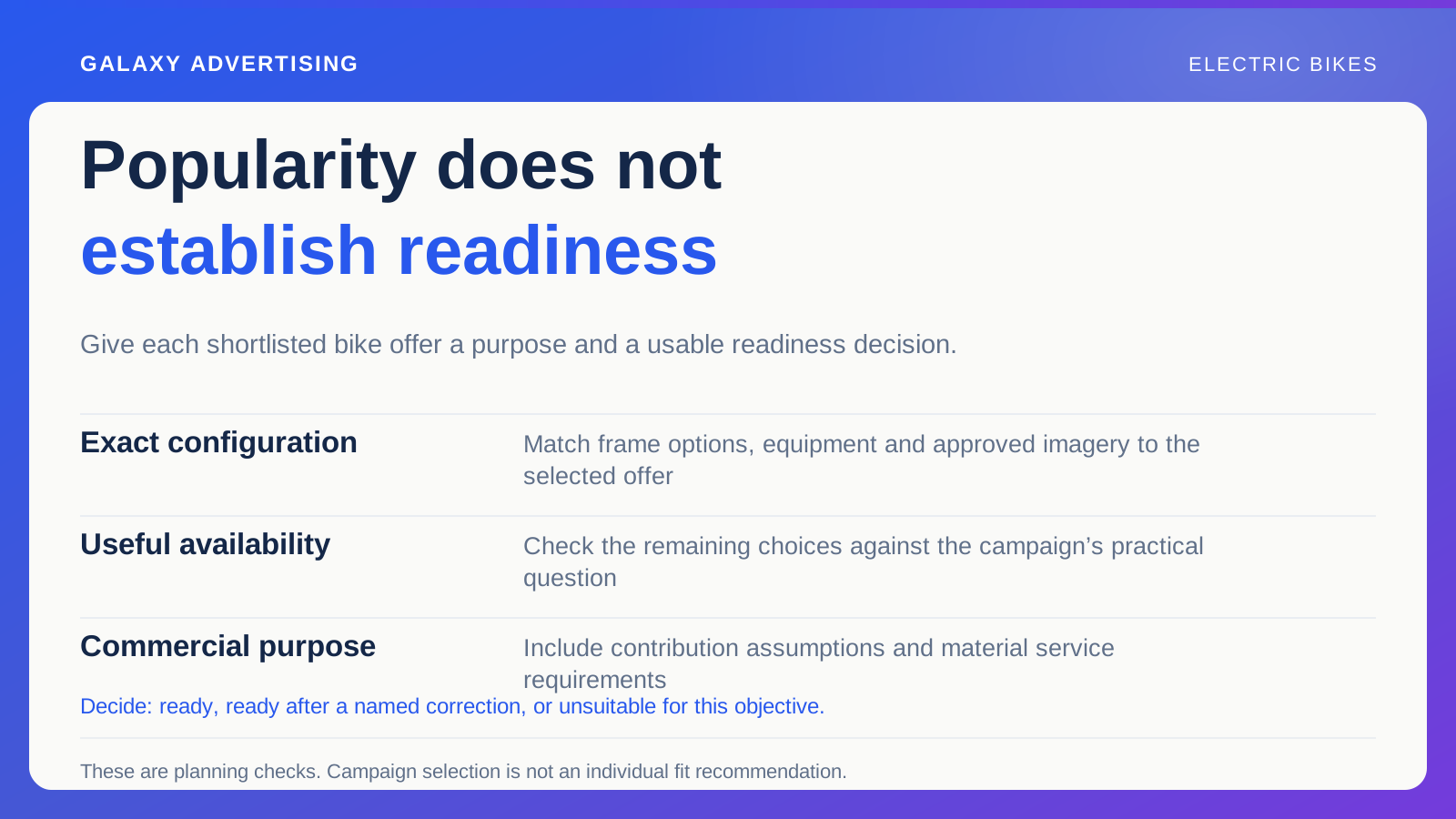
Popularity tells you something. It doesn't establish readiness. Your shortlist needs to join the rider's question to a purchasable, accurately described offer and a commercial reason for promoting it. That means looking beyond the model family name.
Give the shortlist a job
Decide what the next advertising activity should achieve. You might want worthwhile first orders, an introduction for a prepared range, progress against a stock objective or a bounded investigation of a particular rider use case.
Keep those purposes distinct when you review results. A limited stock campaign can be legitimate without proving anything about your future acquisition programme. A new model test can deserve funding before its efficiency is established. Describe the decision you're actually making.
Write that objective beside the selected offers. When somebody proposes another product, ask which part of the objective it serves and what work it would displace. Otherwise, the shortlist can quietly become an unranked copy of the catalogue. That's a list of possibilities, without much help choosing between them.
Inspect the version you're putting in front of people
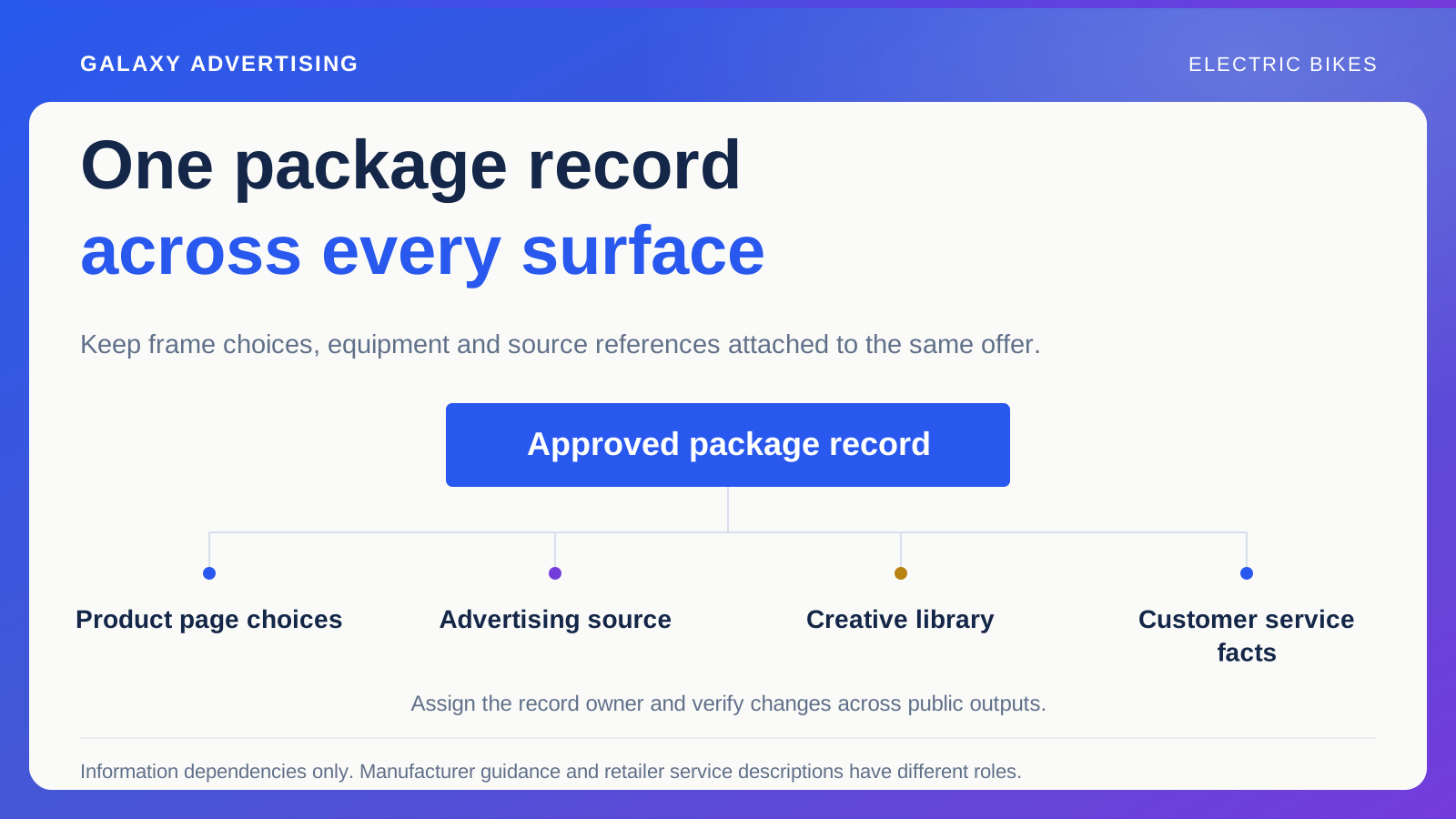
Identify frame options, the equipment package and other distinctions that matter to the offer. Use exact item references and documented manufacturer information. A familiar model name doesn't establish that two configurations are equivalent.
Check the version shown in creative against the version initially selected at the destination. A customer shouldn't discover that the attractive photograph depicts an option missing from the quoted price. They need to understand what they're being asked to consider.
Don't use a broad marketing label to make individual fit recommendations. The shortlist can identify available options and routes to relevant information or assistance. It shouldn't turn campaign planning into an unsupported judgement about somebody's requirements. Keep the decision within what your evidence and role can establish.
Read stock at the level that changes the choice
A family can be labelled in stock while only a narrow selection remains. Ask whether that selection still supports the customer task the campaign addresses. General availability and a useful practical choice aren't always the same thing.
Name whoever maintains the stock source and explain how material changes reach the account team. If marketing receives only a category stock figure, it can keep promoting an increasingly restricted offer without realising what has changed underneath it.
Choose an explicit response when a configuration becomes unavailable. Offering an alternative may help, provided you identify it as another option and preserve the relevant differences. Silent substitution makes the offer harder for a buyer to follow and subsequent behaviour harder for your team to interpret. An alternative needs an explanation, not just a replacement link.
Check the information before committing spend
The destination should identify the model, included equipment, relevant dimensions and documented specifications. Make further detail accessible without sending the buyer through unrelated promotional material. The next practical check should be easy to find.
List unresolved questions before adding the item to your promoted range. A useful model may deserve preparation before advertising spend. That's a planning outcome, rather than a judgement that the product itself is poor.
Consider a hypothetical commuter campaign. The page might need clearer information about supplied carrying equipment and storage dimensions. Those omissions can undermine the intended use case even while the title, price and purchase button all work. Technical page functionality alone doesn't establish that a customer can assess the offer.
Compare the economics, not just the ticket price
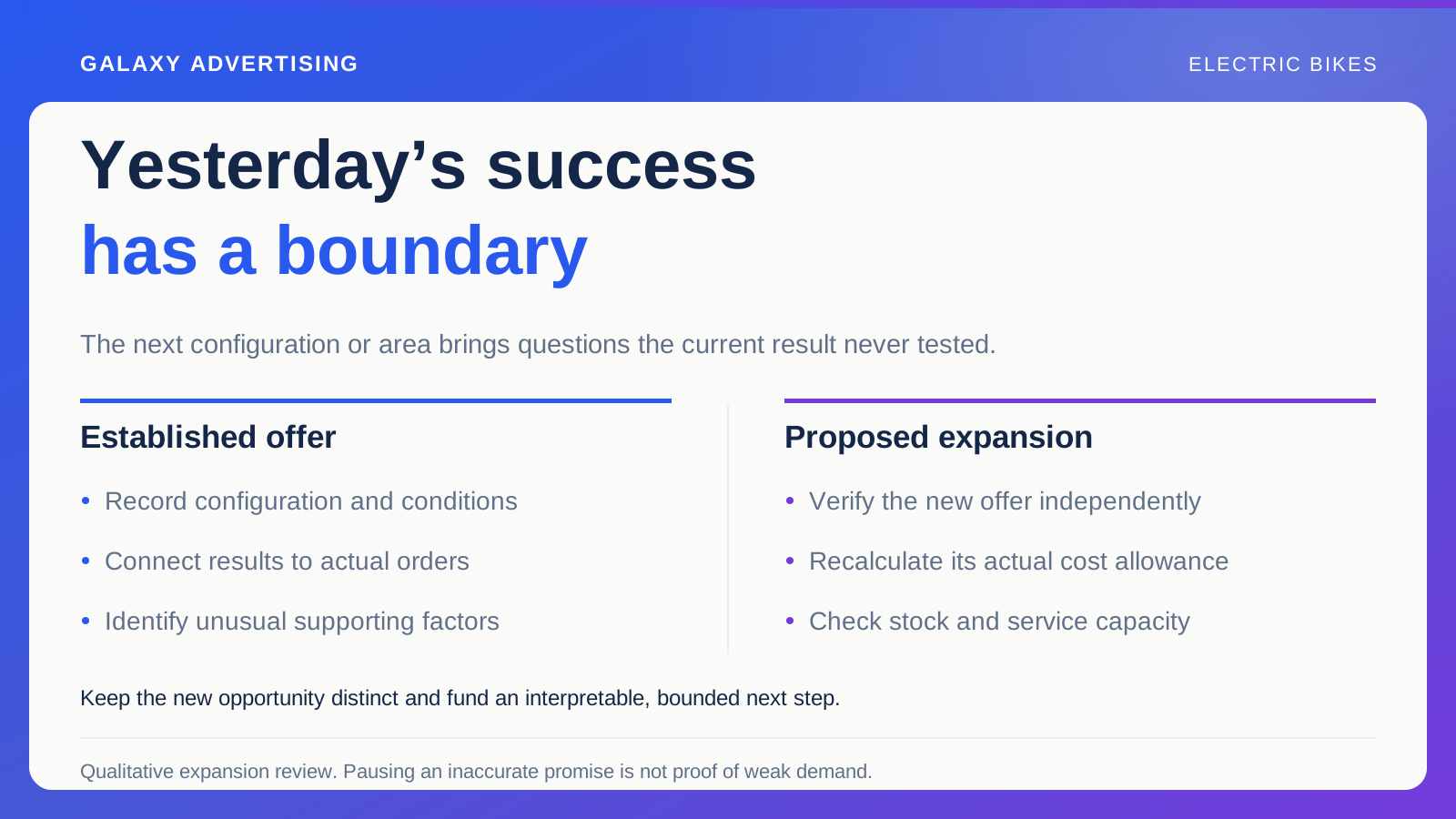
Use your agreed contribution assumptions for each offer, meaning the money remaining after the costs included in your calculation. A higher ticket price doesn't automatically leave more room for acquisition when the relevant product or service costs also rise.
Include operational burdens that materially affect the decision. Label estimates honestly. A model shouldn't look more attractive simply because nobody has included its service requirements in the calculation. An overlooked obligation still needs an owner and a commercial place.
Don't choose solely on historical advertising revenue either. Established demand may make one model easier to sell, while a different purpose justifies a bounded investigation of another. You need to see both the evidence and the reason for committing the money.
Check the creative references alongside the range. A supplier photograph showing another equipment package can introduce a mismatch before anyone reviews the destination. Identify approved imagery for the promoted configuration and who can verify replacements.
That's particularly helpful where models look alike in a small image. You're asking the business to supply the correct references before persuasive production starts. You're not asking marketing to infer technical distinctions from the photographs and hope it has understood them correctly.
Give each offer a usable readiness decision
Choose an outcome such as ready to promote, ready after a specific correction or unsuitable for this objective. Explain why, and name the owner of any preparation. A clear decision helps the next person act.
Keep the correction narrow enough to finish. A request to improve the product page is difficult to verify. Asking the page owner to identify equipment included in the advertised configuration creates a clear task and a release condition for marketing.
You don't need perfect information before taking any action. Prioritise facts and operating conditions that affect an accurate purchase decision. Proportionate judgement is the point. A permanently unfinished audit of the whole range won't help you select the next sensible offer.
Let the selection move with the business
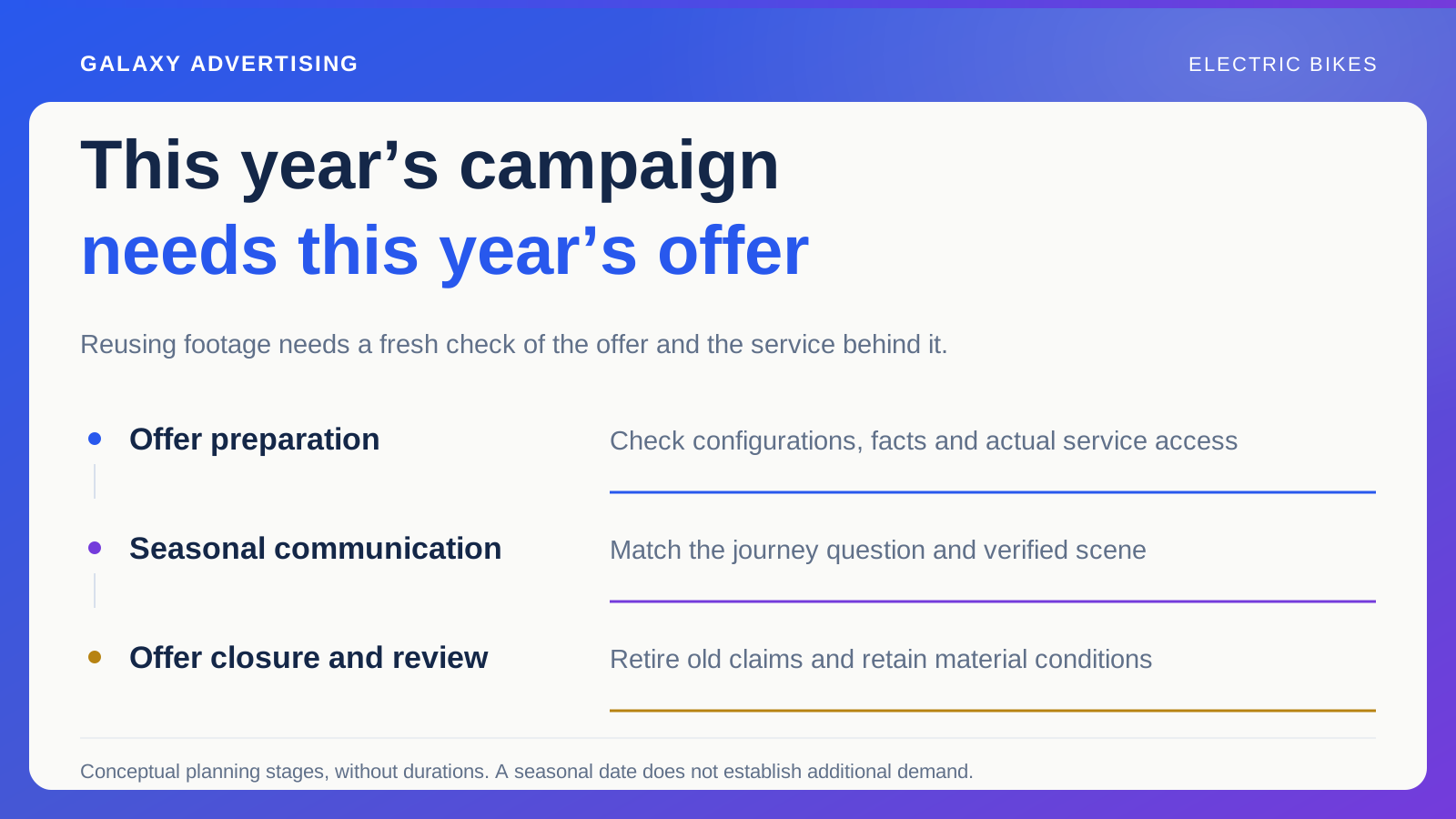
Review the shortlist after material changes to availability, supplier information, pricing or service arrangements. A bike can remain a good product while no longer serving the campaign's immediate purpose.
Keep the decision history explaining why each offer entered or left the list. That stops familiar models being proposed repeatedly without reference to earlier limitations or unfinished preparation.
You may end up promoting a smaller range. If it's a range your business can supply, support and evaluate credibly, that's a firmer commitment than allowing popularity to choose for you.