Local support isn't a complete service promise. A prospective electric bike buyer can like the reassurance while having no idea whether you mean help choosing a model, a separate service appointment or assistance with a bike bought somewhere else.
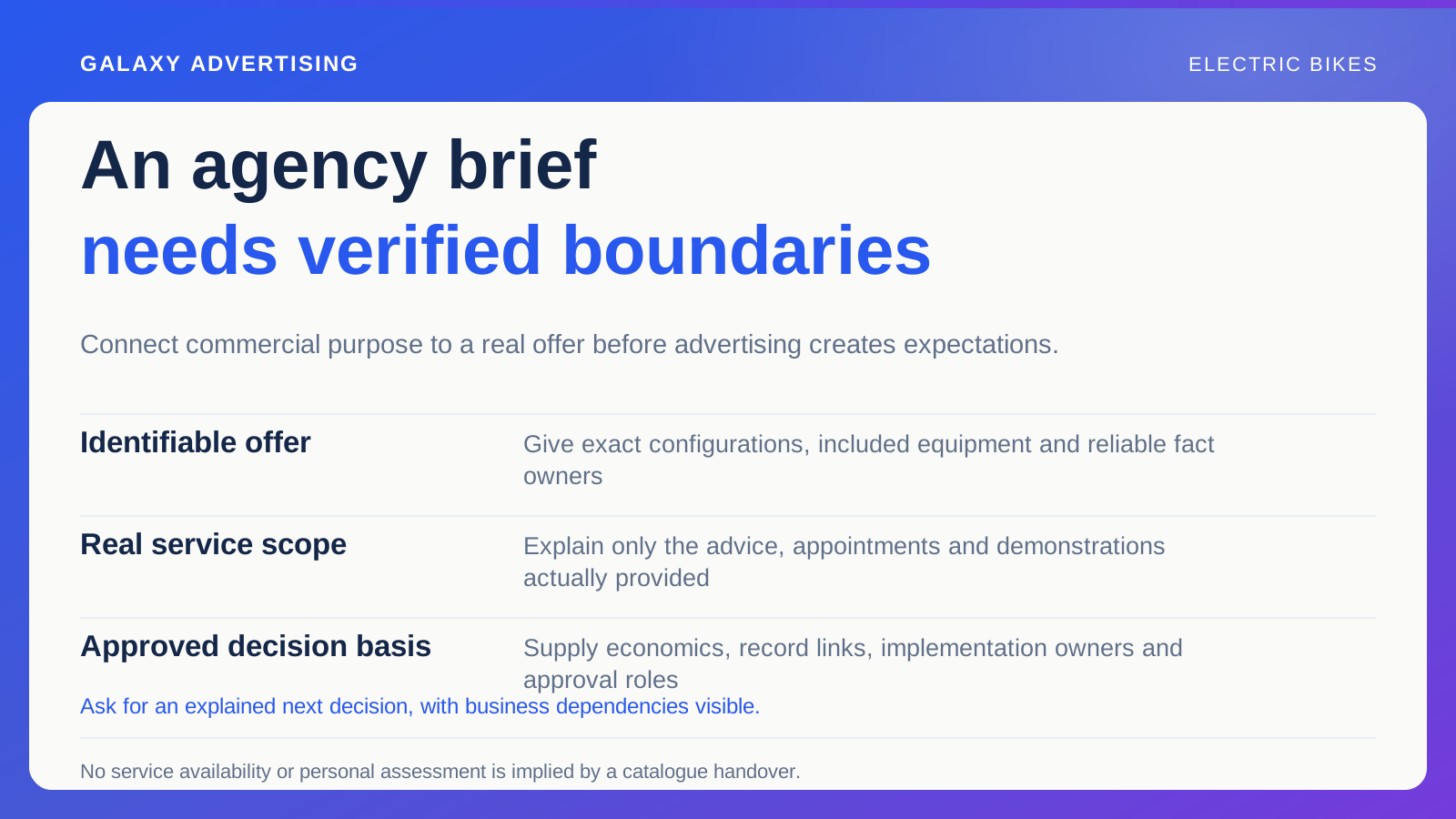
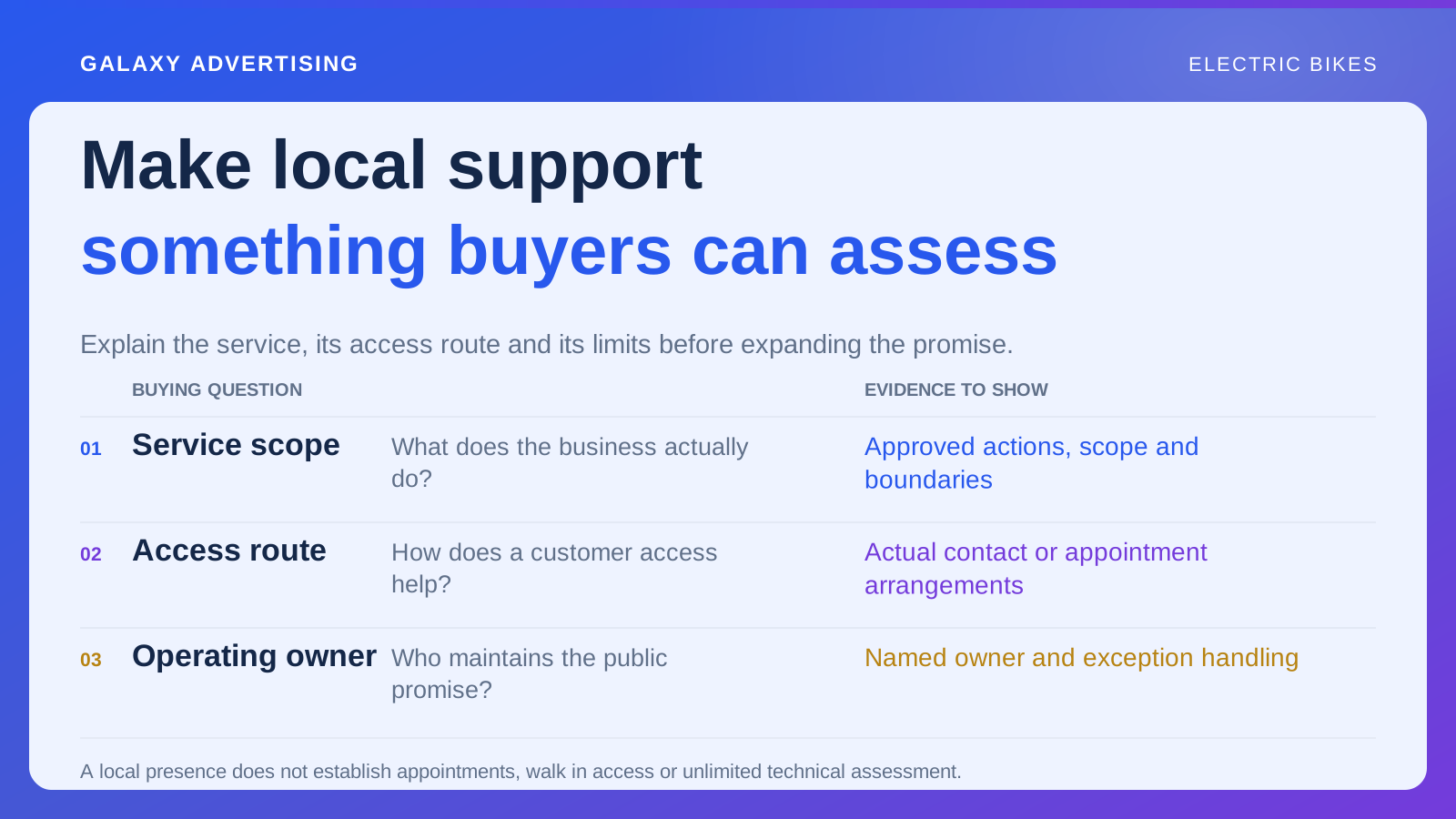
The phrase sounds valuable. Its meaning is still doing a disappearing act. Give a suitable customer something practical to value: what you provide, who it's for and how to access it. You don't need a service contract in every advert, but the relevant conditions should be clear before ordering.
Which uncertainty does your support resolve?
Ask your team which questions they regularly help answer. Perhaps customers need to choose between documented options, understand included equipment or find the appropriate route for an ownership question. Begin with something your service actually does.
Choose a question the business can answer consistently. If the promise depends on a colleague being available informally, it could become difficult to maintain when demand grows. Useful service needs a supportable arrangement behind it.
Peace of mind describes the feeling you hope to create. It doesn't explain the service. State the action you perform and the decision it helps someone make. Let the emotional value grow from that credible practical explanation. Otherwise, the reassuring phrase leaves your customer and team to supply their own definitions.
Separate help before, during and after the order
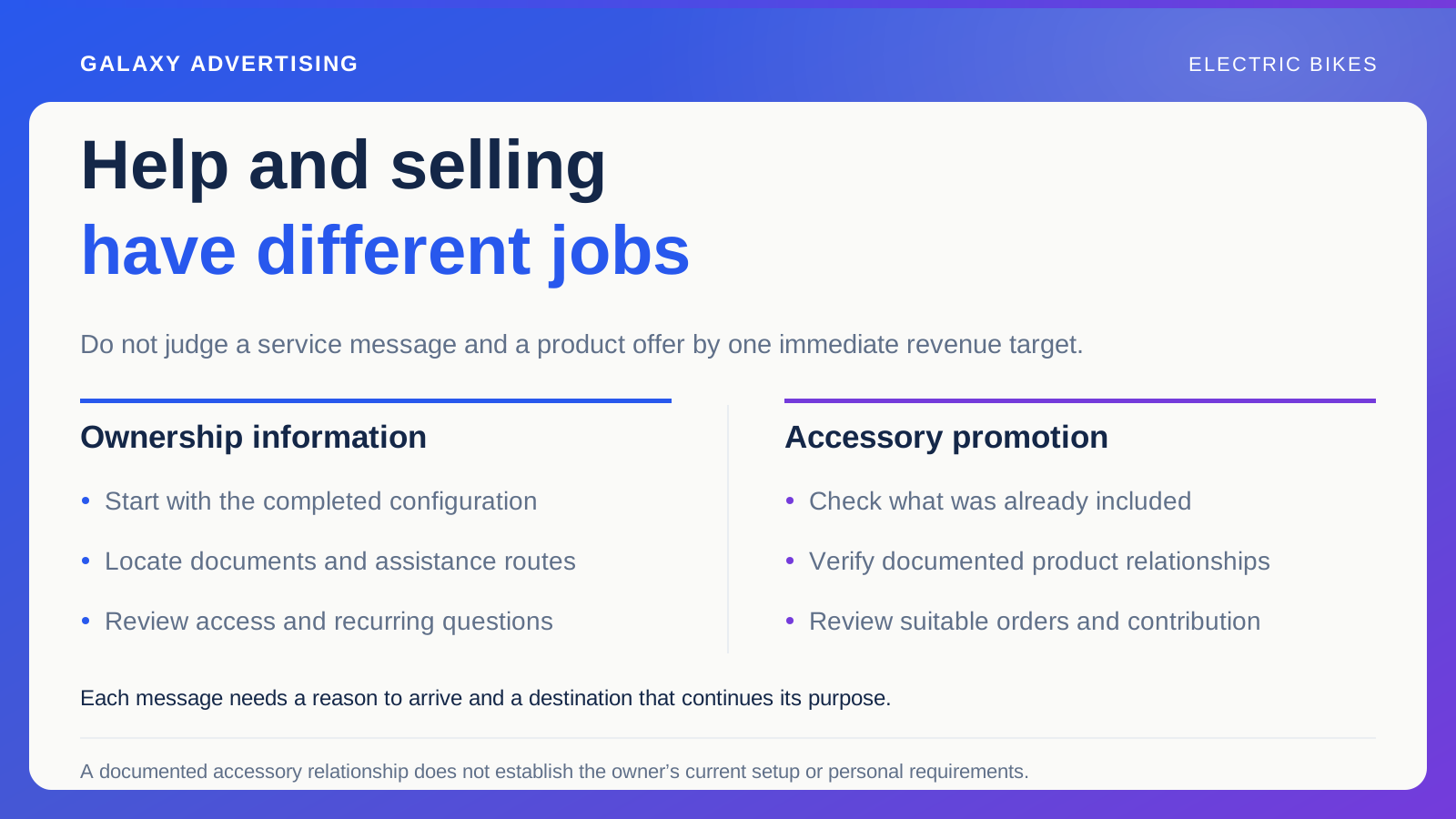
Guidance before purchase, information provided with an order and help available afterwards can have different scopes, contact routes and conditions. Make those stages distinguishable. Their connection doesn't make them the same service.
Explain what is included and what requires another arrangement. Someone shouldn't have to guess whether a sales conversation means every later task will be provided without a further decision. Show the relevant boundary while it can still inform their purchase.
Keep technical and individual assessments within appropriate expertise. A short remote enquiry doesn't establish suitability in circumstances your team hasn't observed. A clear process for reaching appropriate assistance can be a useful promise in itself. You don't need to imply an unlimited answer to every possible concern to make the service worth choosing.
Make the route to help understandable
Show how to start a conversation and what information helps you respond. Depending on the service, that could mean a model reference, order reference or description of the question. Make the request fit the task.
Keep basic factual information available without demanding an excessive form first. The support route should reduce uncertainty. It shouldn't become another obstacle between somebody and ordinary product details they reasonably need to read.
If you offer appointments, demonstrations or another service in person, describe the actual arrangement and keep availability current. A local presence doesn't automatically mean a walk in experience or unlimited capacity. Make sure the customer can distinguish the service you operate from the experience a broad phrase might suggest.
Show a genuine piece of the process
Creative can demonstrate part of your real service using an approved example and the correct product references. A short explanation of how the team locates relevant information can say more than friendly faces with no identifiable task.
When you can't appropriately share an actual customer experience, use a hypothetical scenario. Label it as illustrative and show a process consistent with what you provide. That gives you a way to make the service visible without borrowing somebody's experience or inventing one.
Don't let the scene imply technical outcomes it cannot establish. An adviser looking at a bike doesn't prove every future performance or ownership claim. Help viewers understand the service without making a complex assessment appear effortless because that feels reassuring on film.
Give the promise an operational owner
Assign responsibility for the public description, contact handling and material exceptions. Whoever produces your advertising needs a reliable source when the arrangement changes. A service promise shouldn't depend on whichever description they happen to find first.
Check what happens when the relevant colleague is unavailable or an answer needs verification. Include a route for unresolved questions. Assuming every enquiry can receive an immediate answer leaves out a real part of the process.
Use recurring factual questions to improve the website where appropriate. Good support shouldn't rely on hiding ordinary information until people contact the store. Accessible basic answers can leave colleagues more room for decisions that genuinely need attention.
Connect feedback from service colleagues with the wording customers saw. Repeated requests for something excluded from the offer warrant checking the public promise before assuming people ignored your conditions. A small phrase or image can overpower the detailed explanation elsewhere.
Correct that impression where necessary. The next conversation can then begin from a clearer shared understanding, rather than requiring your team to dismantle an expectation created by its own advertising.
Understand the work the promise creates
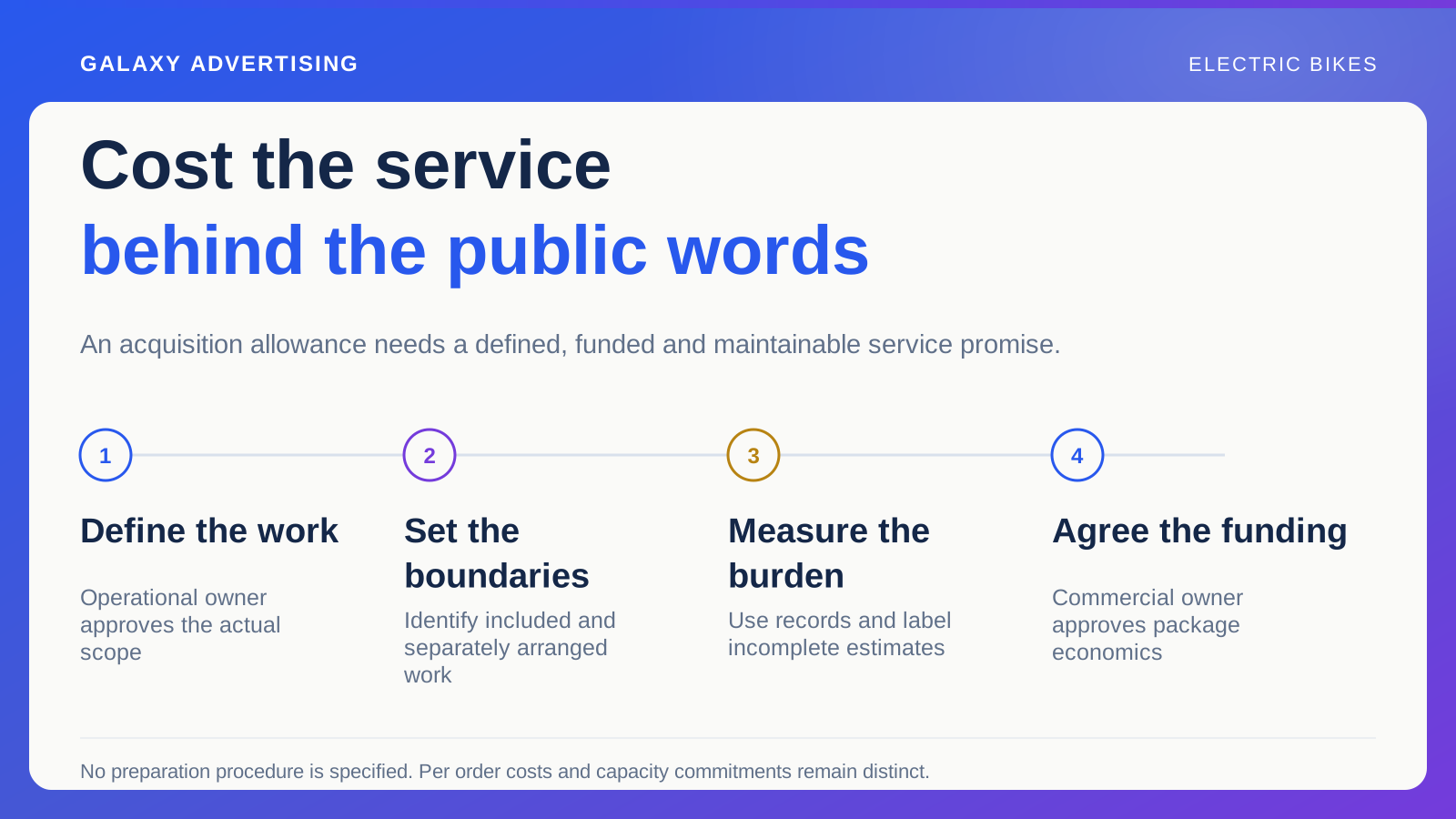
Your commercial review needs to consider how the service is funded and the work it generates. The proposition can attract useful buyers and increase demands on your team at the same time. Both belong in the decision.
Use your own records to assess the relevant burden where possible. Label assumptions instead of inventing a precise value for every conversation. That gives the commercial owner a clearer basis for deciding whether the scope and product emphasis remain appropriate.
Immediate conversion isn't the only useful outcome. An accurate answer might help someone realise the promoted model isn't suitable. That can matter to order quality even without a sale there and then. Keep that possibility visible when judging the work.
Read the offer through a customer's eyes
Ask someone unfamiliar with your internal process to read the advert and destination, then explain what they think is included. They may spot ambiguity that your knowledge of the service makes difficult to notice.
Compare their interpretation with your real arrangements. Correct wording, imagery or access instructions before expanding the campaign. The whole route communicates the promise; a policy page in the footer can't carry the responsibility alone.
Specific support gives a buyer something they can assess and your team something it can maintain. That's a stronger reason to choose a local retailer than reassurance whose meaning changes with whoever answers the next enquiry.