A successful electric bike campaign doesn't automatically establish that another configuration or service area will behave the same way. Your existing offer may produce suitable orders. The next opportunity can bring different service arrangements, product questions and conditions your current result never tested.
Expansion means explaining and fulfilling another offer. Establish what made existing activity workable, what applies to the next opportunity and what needs preparation. The commitment needs to make sense under its own conditions.
Explain the success you're starting from
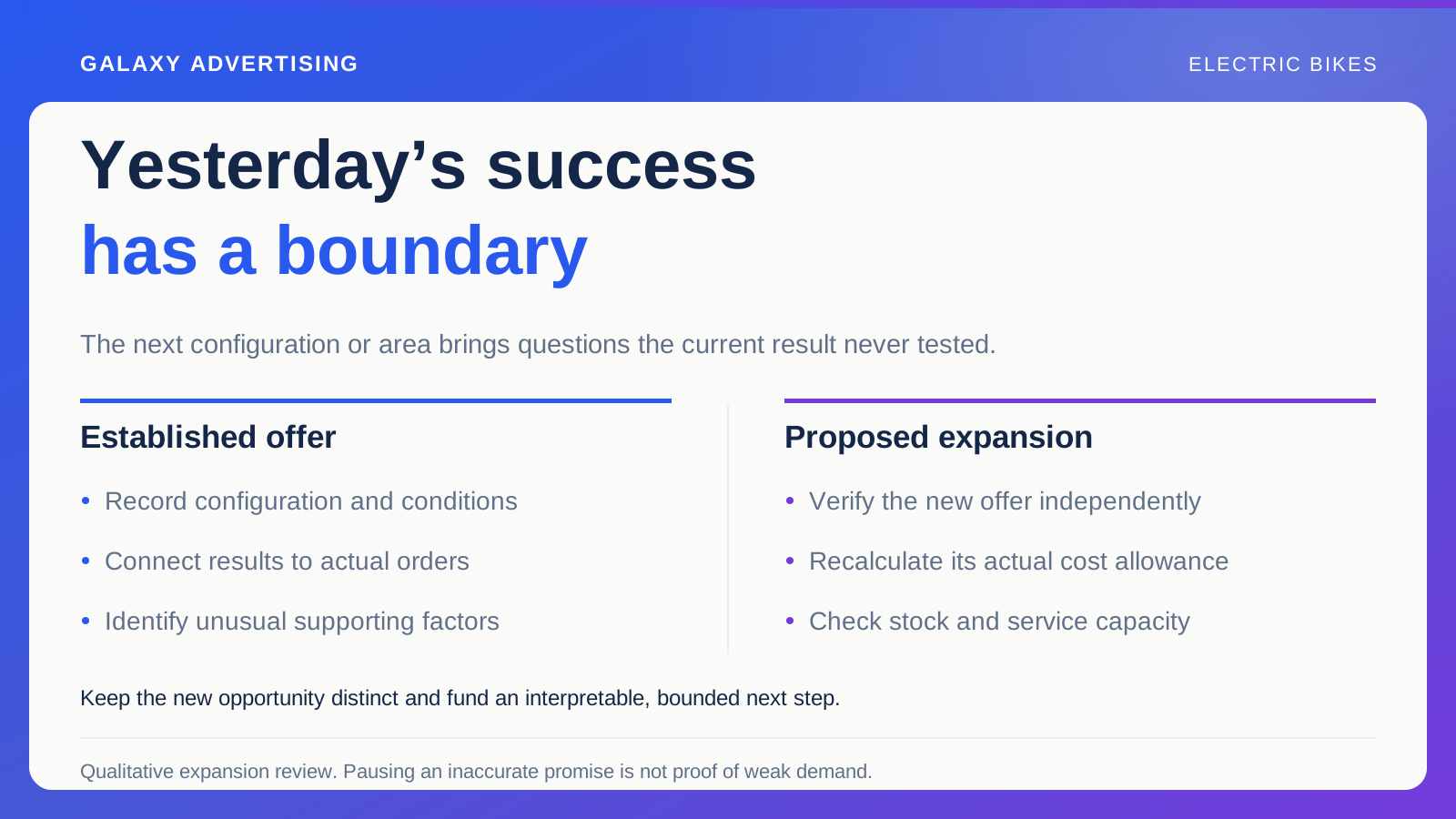
Record the model, configuration, price, availability and relevant service conditions behind the result. Keep important promotions and changes beside the performance evidence. Those details help explain what worked, rather than leaving the account average to speak for every offer.
Connect reporting to actual orders on your agreed contribution basis. Contribution is the money remaining after the costs included in your calculation. A favourable advertising ratio can encourage you without containing the full economics of each purchase. Make that link before extrapolating the result.
Identify unusual circumstances. Perhaps the model already had demand, unusually clear information or an operating arrangement unavailable elsewhere. None invalidates the success. Each helps you see what the expansion assumes can repeat and which assumptions need further evidence. Understanding the starting point gives you something concrete to compare with the next offer.
Describe exactly what you're expanding
Are you adding configurations, another range, a different practical use case or another service area? Each introduces its own questions, even on a familiar advertising platform. Name the actual change instead of treating expansion as a single uniform activity.
A smaller coherent selection can provide clearer learning while exposing fewer unresolved dependencies together. Choose a scope the business can prepare and interpret, rather than letting the whole catalogue become the automatic next step.
Write the purpose beside the proposal. You might seek worthwhile first orders from a prepared offer, or fund a bounded investigation of another opportunity. Know whether you're committing on demonstrated readiness or buying an affordable way to reduce uncertainty. Both can be legitimate when their different grounds are clear.
Review the new offer on its own merits
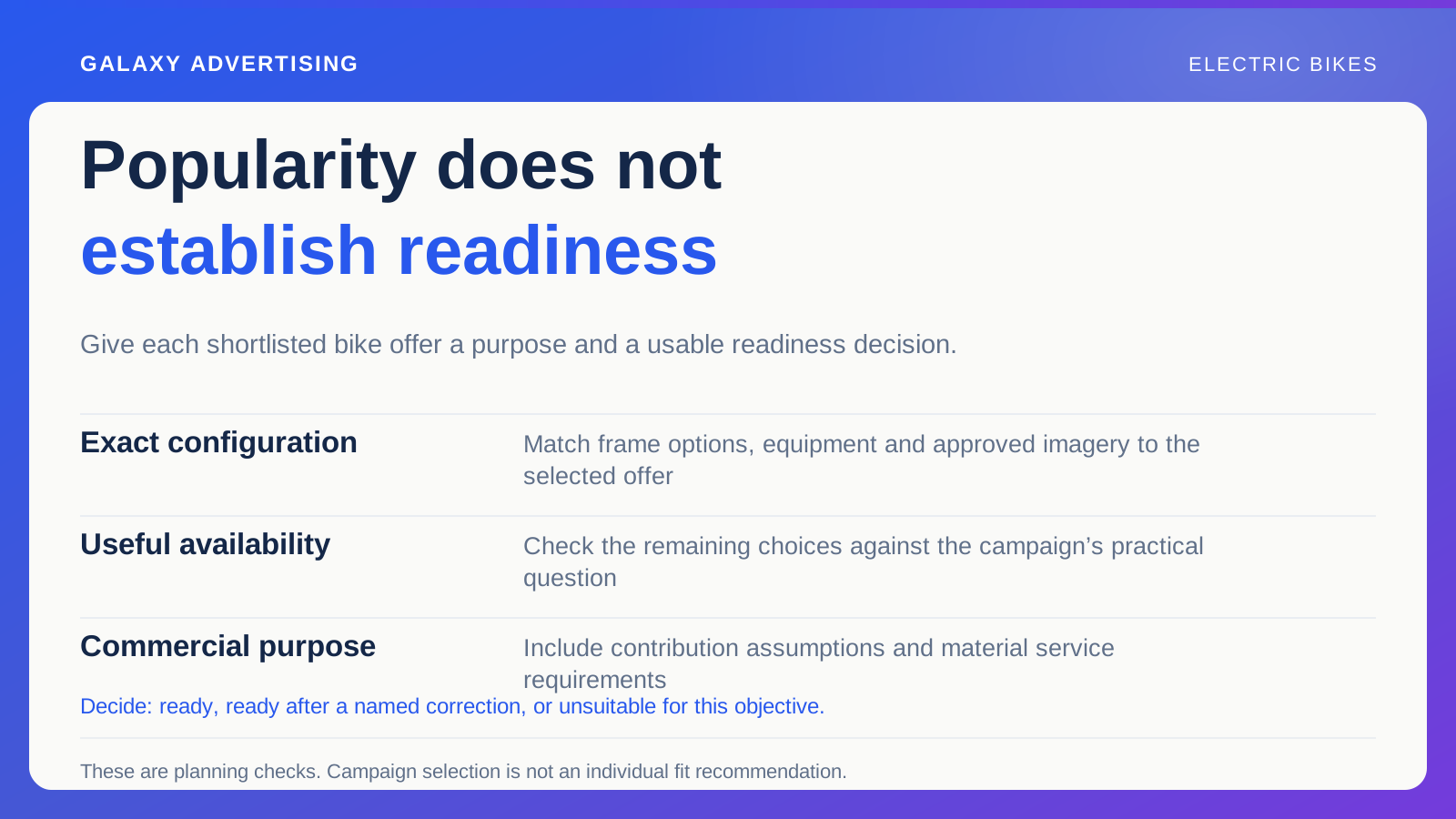
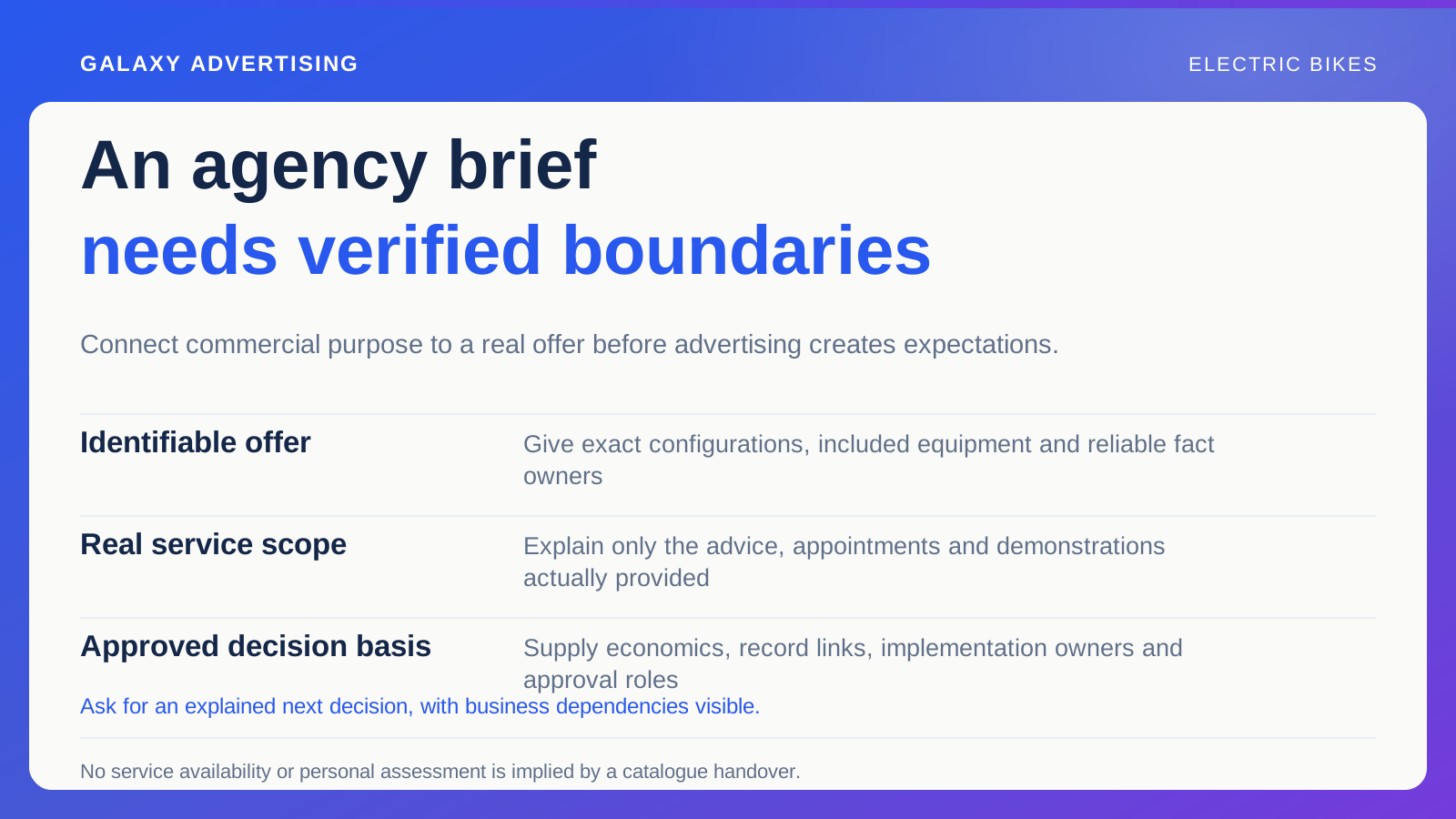
Verify exact model references, available options, included equipment and relevant manufacturer information. A well prepared performing range doesn't establish that the proposed range is equally complete. The new offer needs its own factual check.
Start from the proposed campaign entry point and follow the destination. Keep the selected configuration, imagery and important conditions coherent throughout the route. Customers will experience that complete communication rather than the preparation records behind it.
List unresolved work with clear owners. One offer might be ready, another need a factual correction and another require a commercial decision. Selective readiness is more useful than approving everything together or blocking the whole expansion for every minor content preference. Let the significance of the dependency guide what can sensibly move forward.
Recalculate the allowance for the new purchase
Keep definitions consistent while allowing actual costs to differ. Another range or arrangement can bring different product, fulfilment and service requirements. The same calculation basis doesn't mean copying the same result regardless of those changes.
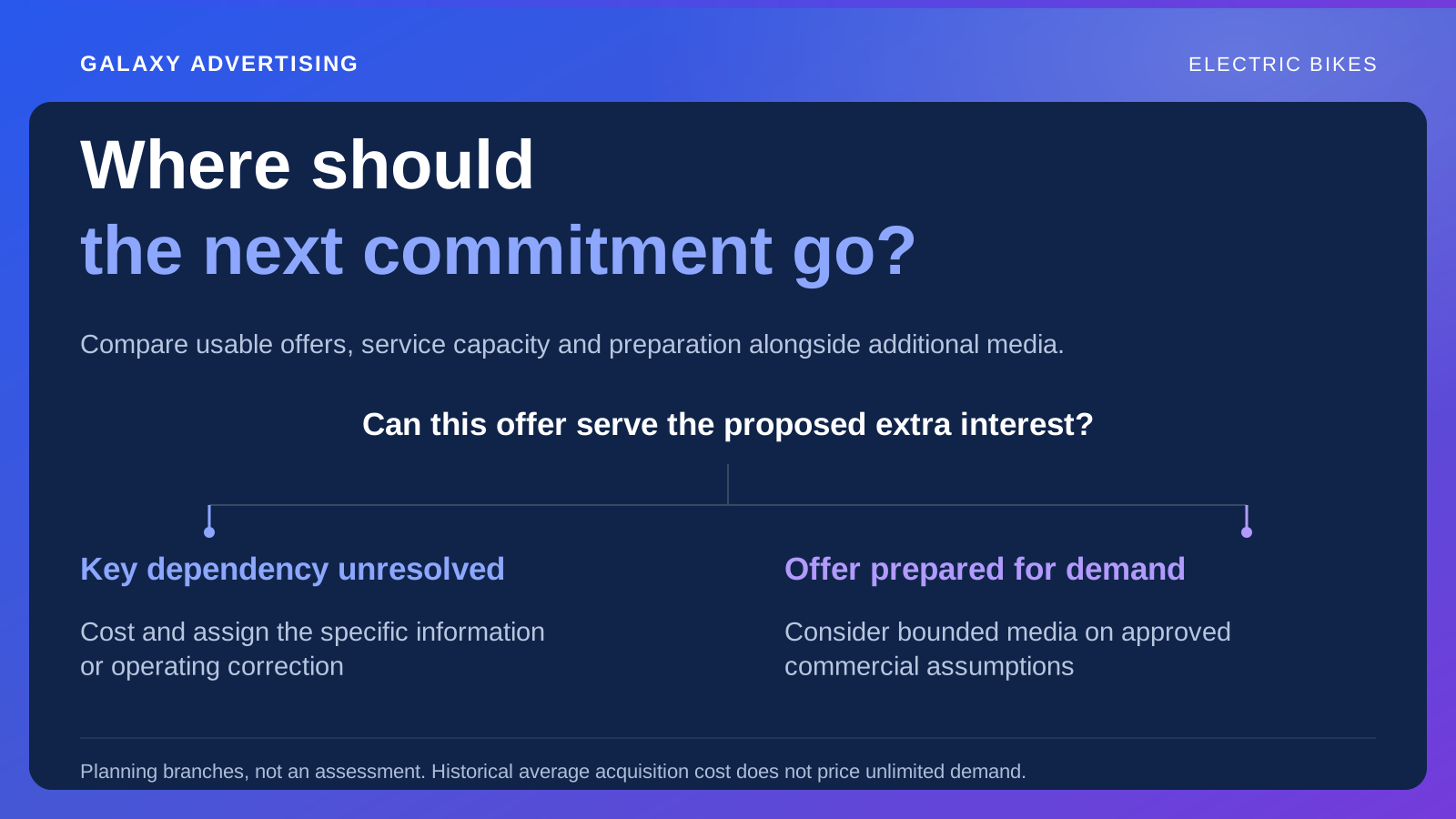
Label uncertainty instead of borrowing the established model's allowance because it makes the proposal easier to present. A new offer can merit a learning commitment. You should still understand what you're funding and which assumptions remain open before approving it.
Historical average acquisition cost doesn't price unlimited future demand. Your next audience and order mix may differ. Expansion is a decision under particular conditions, rather than a promise that each extra pound reproduces the existing dashboard ratio. Keep that uncertainty part of the proposal, where it can inform the size and purpose of the commitment.
Check whether the service can grow with it
Where advice or appointments support the proposition, ask responsible colleagues how extra activity will be handled. Capacity includes appropriate assistance, alongside available slots or the volume of messages. The service needs to remain useful at the proposed level of demand.
Prepare references that help staff identify promoted configurations and resolve ordinary factual questions. Give colleagues the context to recognise the invitation and continue its explanation.
Specify a route for questions needing verification. A handoff manageable informally at low volume can become a growth constraint. Address it before delays arrive, rather than later interpreting every lost opportunity as a poor quality lead. The operating process is one of the conditions behind the result you're trying to extend.
Plan for stock and operating exceptions
Review the stock and equipment package supporting the investment. A model family label can conceal a restricted selection that changes the buying route. Check availability at the level relevant to the offer you're promoting.
Agree who tells the account team about changes and who can authorise a response. Don't make performance decline the campaign manager's first signal that an operating exception has appeared. Connect the information source with the people managing demand.
Distinguish pausing an inaccurate promise from rejecting the opportunity. Temporary information or stock issues can interrupt a plausible test. Record the reason so a later review doesn't mistake the interruption for a clear finding about customer demand. You need to preserve what the activity did and didn't get a fair chance to establish.
Make the next step interpretable
Fund a bounded expansion with a clear learning question and practical review. Seek qualified support when evaluation requires experimental or statistical expertise. Choose an investigation the business can understand, rather than implying certainty from ambition alone.
Record material changes. If model selection, price and creative change together, the evidence concerns the combined route. Don't later isolate whichever component makes the strongest narrative without an appropriate basis for that conclusion.
Keep established activity and the new opportunity distinguishable. Otherwise, one can conceal the other's result inside a reassuring total. You need to see whether the expansion produces suitable orders under its own conditions, alongside understanding how the established work is performing.
Keep readiness connected to operating changes
Revisit assumptions when suppliers, service arrangements or product information change. An attractive offer can still need more preparation before receiving additional attention. Readiness is a continuing judgement about current conditions.
Keep the reasons for limits and approvals so future proposals inherit the learning when people or priorities change. Ask which dependency would change your expansion decision first, and focus monitoring on that consequential assumption.
Successful activity gives you a valuable starting point. The next offer earns its own commitment when you can explain, supply and assess it, without asking yesterday's result to answer questions it never encountered.