A connected advert, booking and electric bike order doesn't prove the advertising created the whole purchase. A customer might discover a model through an advert, research online, arrange an appointment, visit and later return to buy another configuration. Your systems each hold observations, rather than necessarily holding a complete causal explanation.
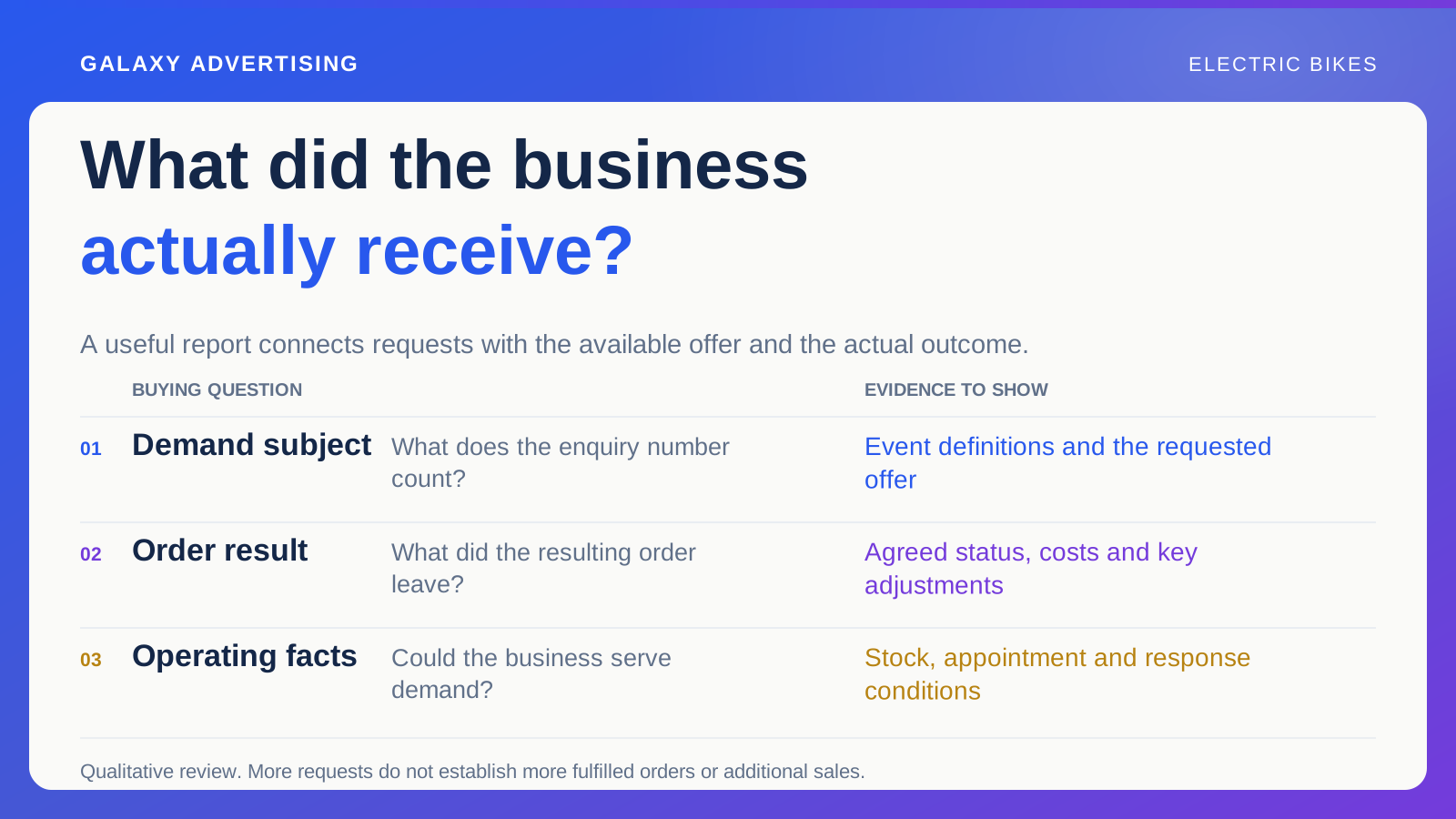
You still need an investment decision. Start with one commercial transaction, identify the evidence and distinguish the observed route from additional demand. A useful decision doesn't require a precise share for every influence.
Establish which transaction you're discussing
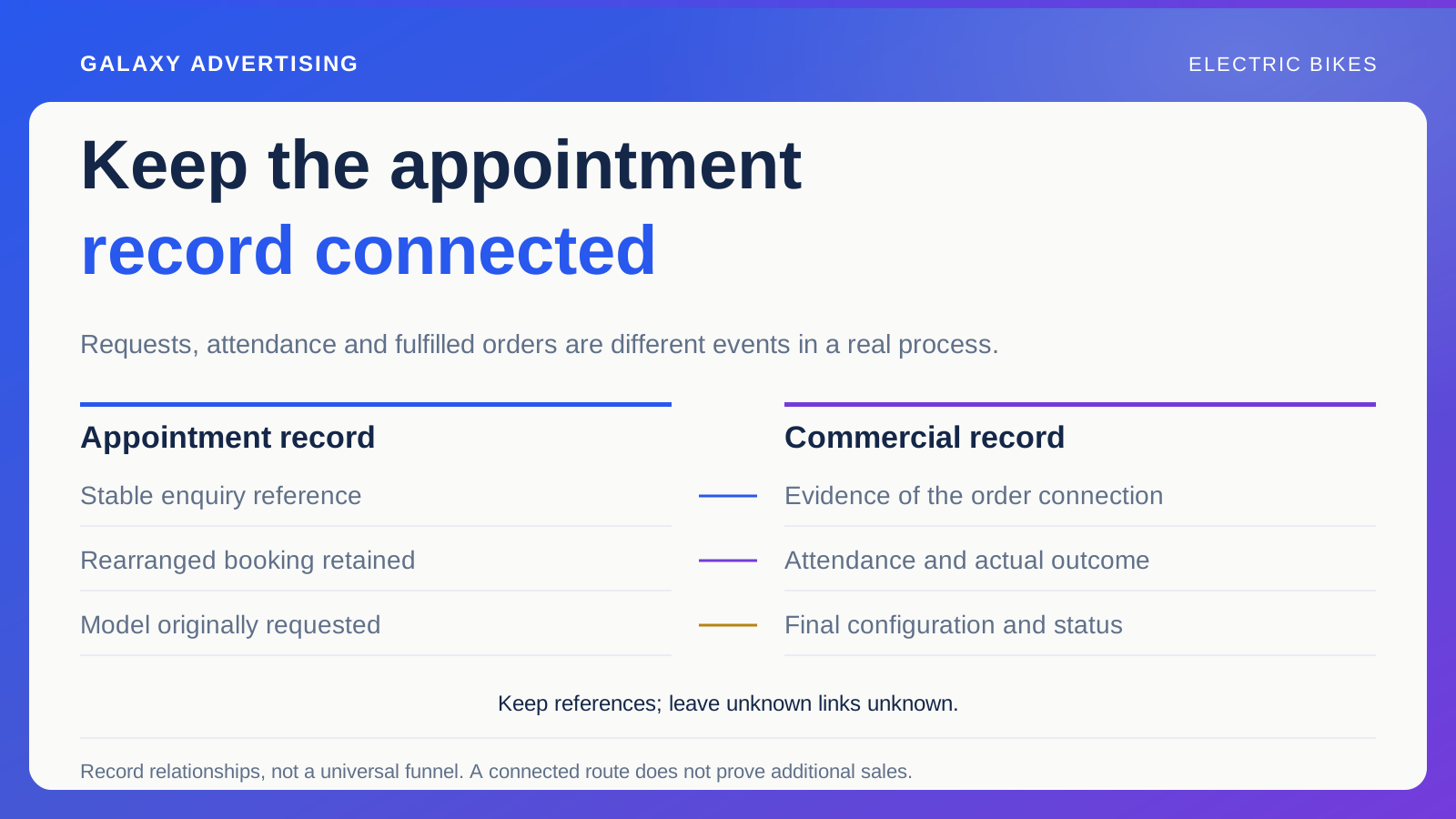
Use your agreed order reference, status and revenue basis. Preserve relevant changes if the final model or package differs from the initial enquiry. The review needs to follow the purchase that actually happened, including material alterations.
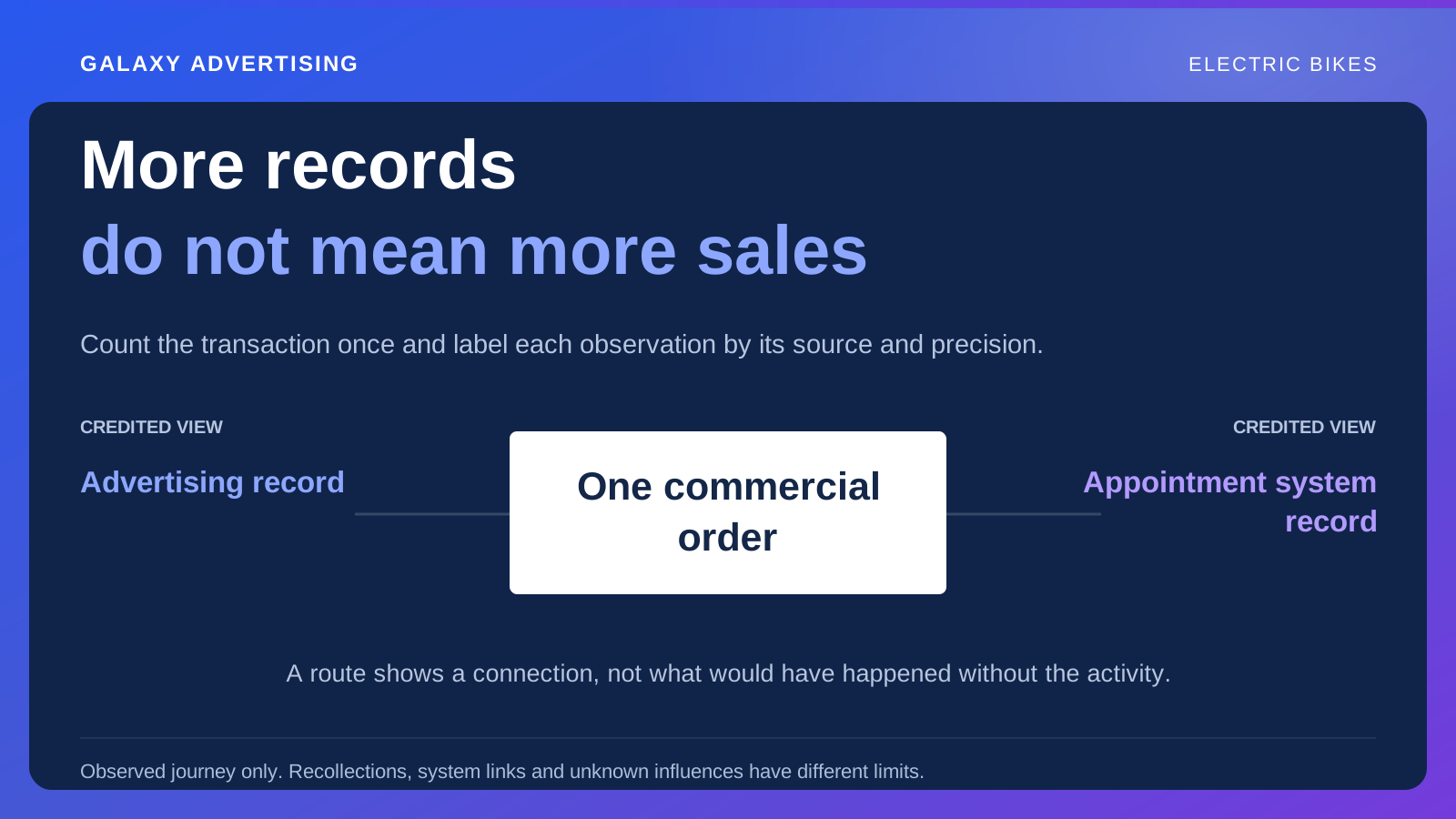
Count it once in the commercial view. An advertising account, booking system and store record can each describe a role without representing separate purchases to add together. More records of a sale don't make more sales.
Check how store and online orders enter your records. A later manual entry may be hard to connect with an earlier appointment unless the existing process preserves a reliable reference. Identify that limitation before expecting the report to reconstruct a journey the records don't support. A practical recording gap deserves a practical explanation, rather than a more confident attribution story.
Label the evidence by where it came from
Distinguish a recorded campaign interaction, booking reference, attendance record and customer's recollection. Each can offer context. Their precision and meaning differ, so make those differences visible in the review.
A direct system connection needs a different label from an adviser remembering that somebody mentioned seeing an advert. You don't have to discard the recollection. Keep its limits attached so it doesn't quietly acquire the certainty of a directly recorded relationship.
Show unknowns plainly. The customer may have researched elsewhere or discussed the decision with someone whose influence you cannot observe. Missing evidence doesn't prove those influences were absent. Nor does it justify allocating unexplained sales to whichever campaign the team most wants to defend. The unknown part of the journey should stay unknown until evidence changes it.
Separate the route from the alternative outcome
A connected appointment and order can establish that the route was used. It doesn't tell you what the person would have done without the appointment or original advert. That's a different question, even when your diagram includes every recorded step.
A return through branded search may continue an existing decision too. The observation doesn't prove the final search activity was unnecessary, and it doesn't establish that it deserves all the credit. Both interpretations go further than the event alone supports.
Choose language that reflects the evidence. An order associated with a recorded appointment describes a connection. Saying the activity generated an additional sale makes a causal claim. That needs a suitable basis for considering the alternative outcome, beyond a more detailed account of what happened. Precision in the wording helps you keep precision in the decision.
Investigate differences that matter to the recommendation
Take a manageable sample of material discrepancies between reporting sources. Check whether you're comparing the same order, period, status and value basis. An apparent disagreement may begin with unlike definitions rather than a defective system.
Look for ordinary explanations. The customer could have changed configuration after advice, rearranged the booking or received a later adjustment absent from an earlier report. Check those possibilities before declaring one source wrong.
Record the explanation and repair actual faults. If the figures answer different questions, preserve their definitions instead of forcing a match. That helps prevent the same apparent conflict consuming later reviews. It also makes it clearer which result matters to the decision you're currently being asked to make.
Use the imperfect journey to improve the experience
Incomplete attribution can still reveal process problems. Customers might repeatedly seek package information before booking, or contact you again because a model reference wasn't carried into the appointment. Those observations can have a clear practical use.
A better destination or handoff can be justified without calculating each channel's precise sales contribution. Keep the action proportionate to what the records support. The evidence doesn't have to answer every investment question to improve a specific part of the route.
Don't treat every observed interaction as a reason to buy more of it. A popular guide may compensate for a basic fact missing from the product page. Repairing the omission could be the useful investment, rather than promoting a workaround nobody meant to make essential. Ask what job the interaction is doing before funding more attention to it.
Specify what stronger investment evidence would involve
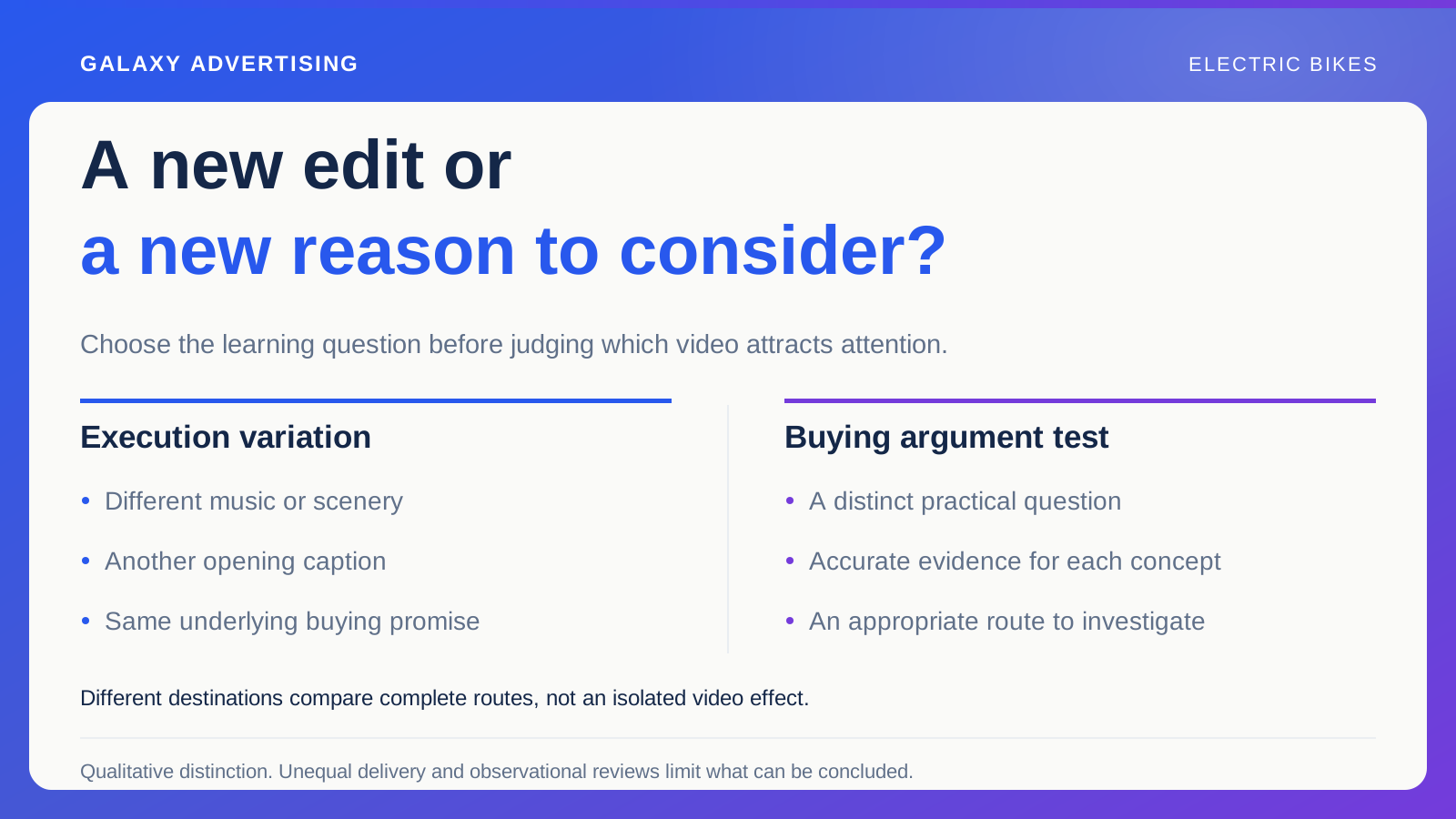
If you need to know whether extra advertising creates additional suitable demand, consider an appropriate evaluation. Ordinary attribution doesn't settle that question alone. Be clear about what further judgement the proposed commitment depends on.
Method depends on scale, service process and the practical question. Involve suitably qualified people where experiment design or statistical interpretation needs that expertise. Don't invent one budget or duration for every retailer and every decision.
Retain operating context: availability, appointment access, model changes and promotions can influence outcomes. Evidence about one offer under particular conditions shouldn't become a permanent conclusion about every model or an entire channel. Keep the size of the claim matched to what was investigated.
Judge the order as well as its recorded route
Review attributed orders against your agreed economics, including relevant fulfilment and service assumptions and material later changes. Advertising credit doesn't establish that the order was commercially suitable. The final purchase still needs that assessment.
Check whether the configuration attracted appropriate interest. Plenty of connected enquiries can point towards an offer you cannot supply consistently. That's a practical concern even if the recorded connections themselves are technically sound.
Keep suitability distinct from channel credit. You need to understand both the route your records show and whether the activity serves the commercial purpose. A sophisticated attribution view doesn't replace that basic evaluation of the offer and resulting order.
End with an action you can defend
Recommend a reference repair, a clearer booking handoff, a bounded campaign continuation or stronger evidence before expansion. Name the uncertainty affecting that choice.
A reasoned, bounded decision can acknowledge unobserved motivation. One actual purchase and several possible influences are a useful picture when honestly labelled. They become less useful when false precision makes the story look finished before the evidence is.