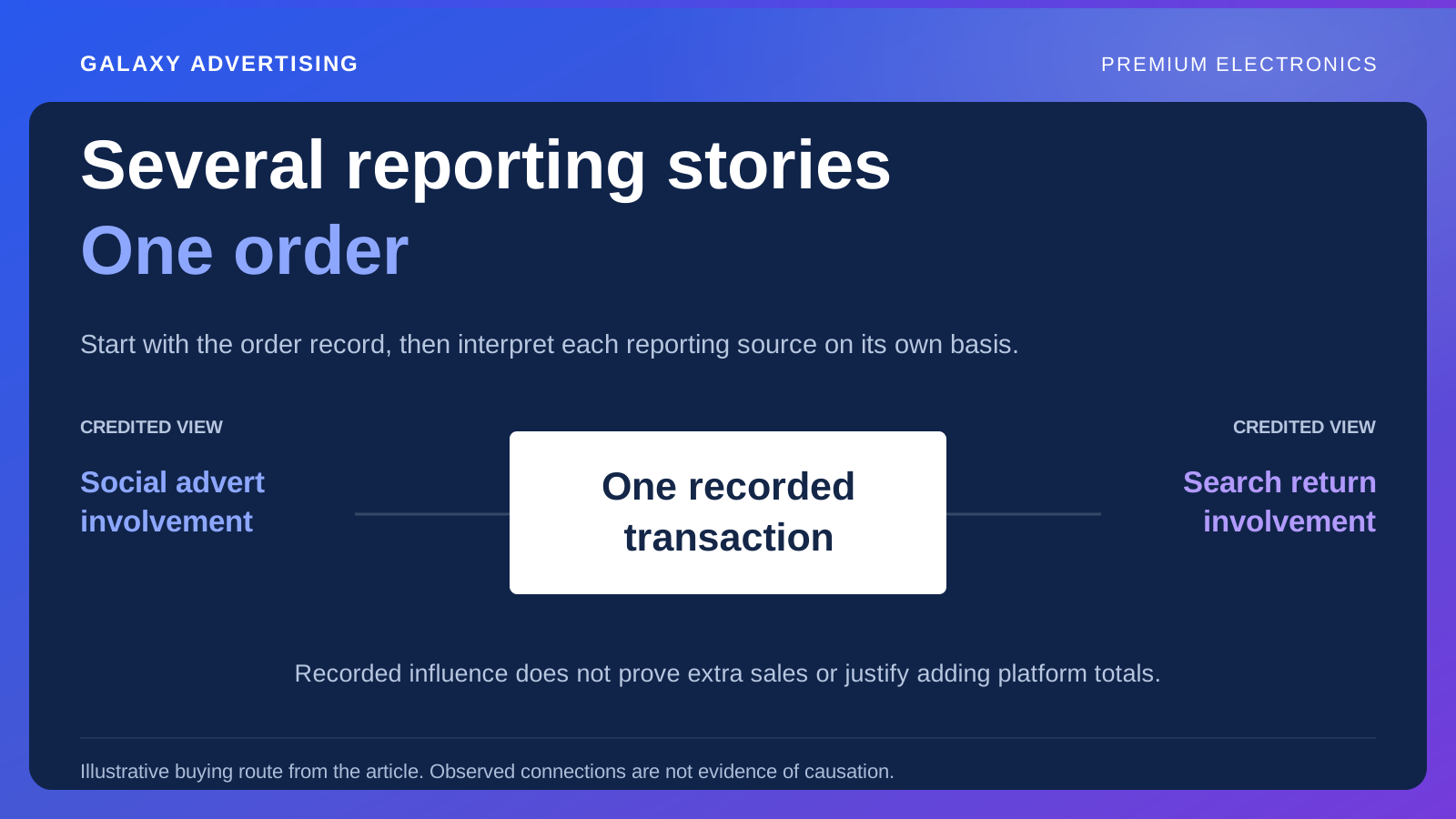
A customer sees your social advert, reads a projector comparison, comes back through search and phones to place the order. Now several systems have something to report, and several teams can point to their involvement. You still have one transaction to understand.
Attribution assigns credit using particular reporting rules. It does not automatically tell you what would have happened without each interaction. When research, advice and the order happen in different places, keeping that distinction clear makes your next investment decision more useful.
Start with the order, and count it once
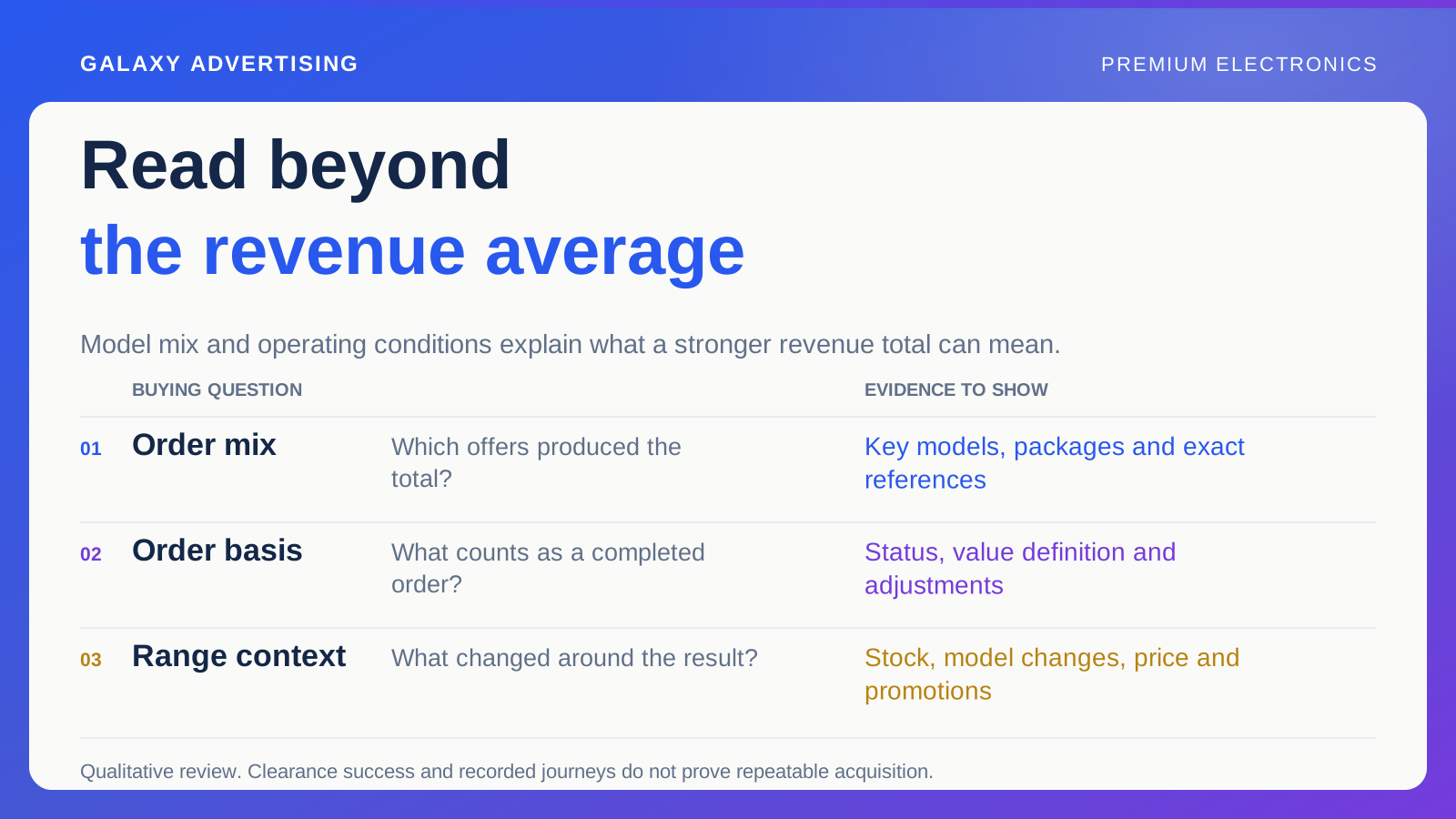
Use your agreed order record, status and revenue basis. Keep cancellations, refunds and package changes linked to that reference. You want to review the eventual commercial event, rather than several versions of the same purchase.
Do not add sales attributed by different platforms together and call the total store revenue. Each system can claim involvement in the same transaction under its own definitions and available observations.
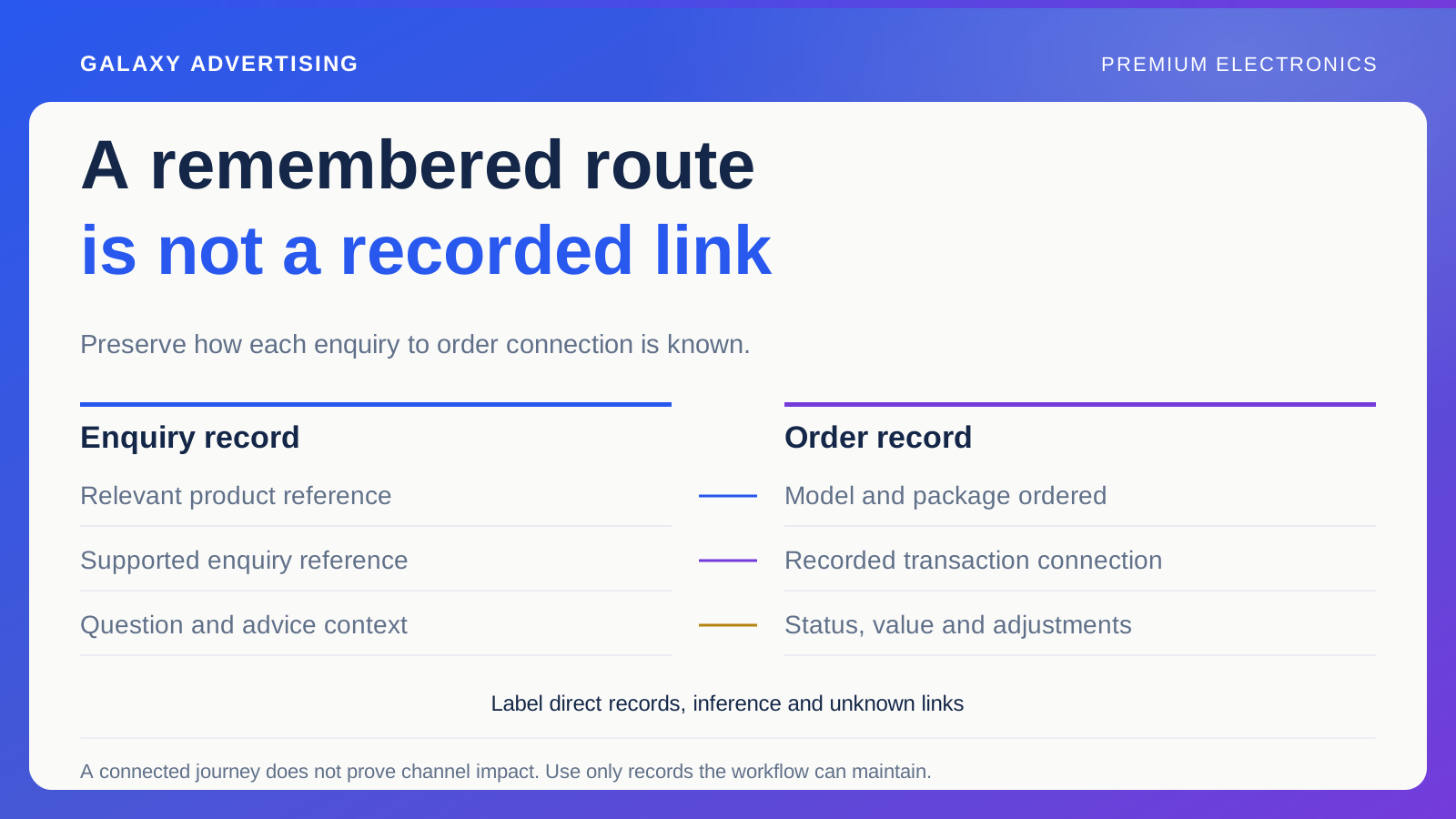
If the phone order and website enquiry sit in separate records, establish whether you can reliably connect them. A recollection can be useful context. It should not suddenly become as precise as a direct recorded reference just because that makes the report easier to finish.
Explain what each source actually records
For each reporting source, state what its figure represents and which settings or rules affect it. Check current documentation and your account's actual configuration. Assuming every platform means the same thing is a shortcut to a misleading comparison.
A recorded click, viewed placement, enquiry and matched transaction are different kinds of observation. Each can help describe the route. They do not all carry the same evidential weight.
Leave unknowns visible. If you cannot observe earlier research, your explanation has a gap. That gap gives you no basis for assigning all unseen influence to a favourite campaign. Equally, it does not prove those missing interactions played no part. You can acknowledge both without making the report useless.
A sequence is not the same as a cause
Where records support the connection, you can say someone read a guide before ordering. You cannot conclude from that alone that the guide created the purchase. It might have helped a customer who already intended to buy.
The same applies to a return visit through branded search. It can belong to a wider decision without proving the search activity was unnecessary, or that it deserves all the credit.
Make your wording carry that distinction. An order connected to a recorded enquiry is an observed link. An additional order generated by the activity is a different claim. That needs evidence about the alternative outcome, rather than an increasingly detailed account of the route that occurred.
Investigate the disagreements that affect spending
Choose discrepancies large enough to change the proposed investment. If a campaign result will not reconcile with order values, investigate. A small difference caused by a known reporting basis may simply need an explanation.
Trace a sample using stable product, enquiry and order references where available. Check whether advice changed the package, whether order status changed later, and whether both figures use the same period and value definition.
Record what you find. Repeated arguments about which dashboard deserves trust can miss that the systems answer different questions. Fix genuine recording faults, then retain the relevant distinction in your review. You should not have to spend the next meeting rediscovering the same apparent conflict.
Use the route to improve the buying experience
Even an incomplete account of the journey can reveal recurring questions. Perhaps people repeatedly consult compatibility information or ask advisers what the package includes before placing suitable orders.
That pattern may justify a better explanation without establishing the precise additional contribution of each channel. Let the evidence support the practical action it can reasonably support.
Nor does every observed touchpoint justify more funding. A guide might get visits because the product page is incomplete. Repairing that destination could be more useful than expanding promotion of the guide. Attribution should inform scrutiny of the route, rather than protect every existing task.
Treat a vivid individual story with the same care. A detailed account can explain one purchase and suggest useful questions. It cannot establish the typical journey or prove a campaign's additional contribution. Keep its limits attached, however memorable the story feels.
Ask what evidence your investment question needs
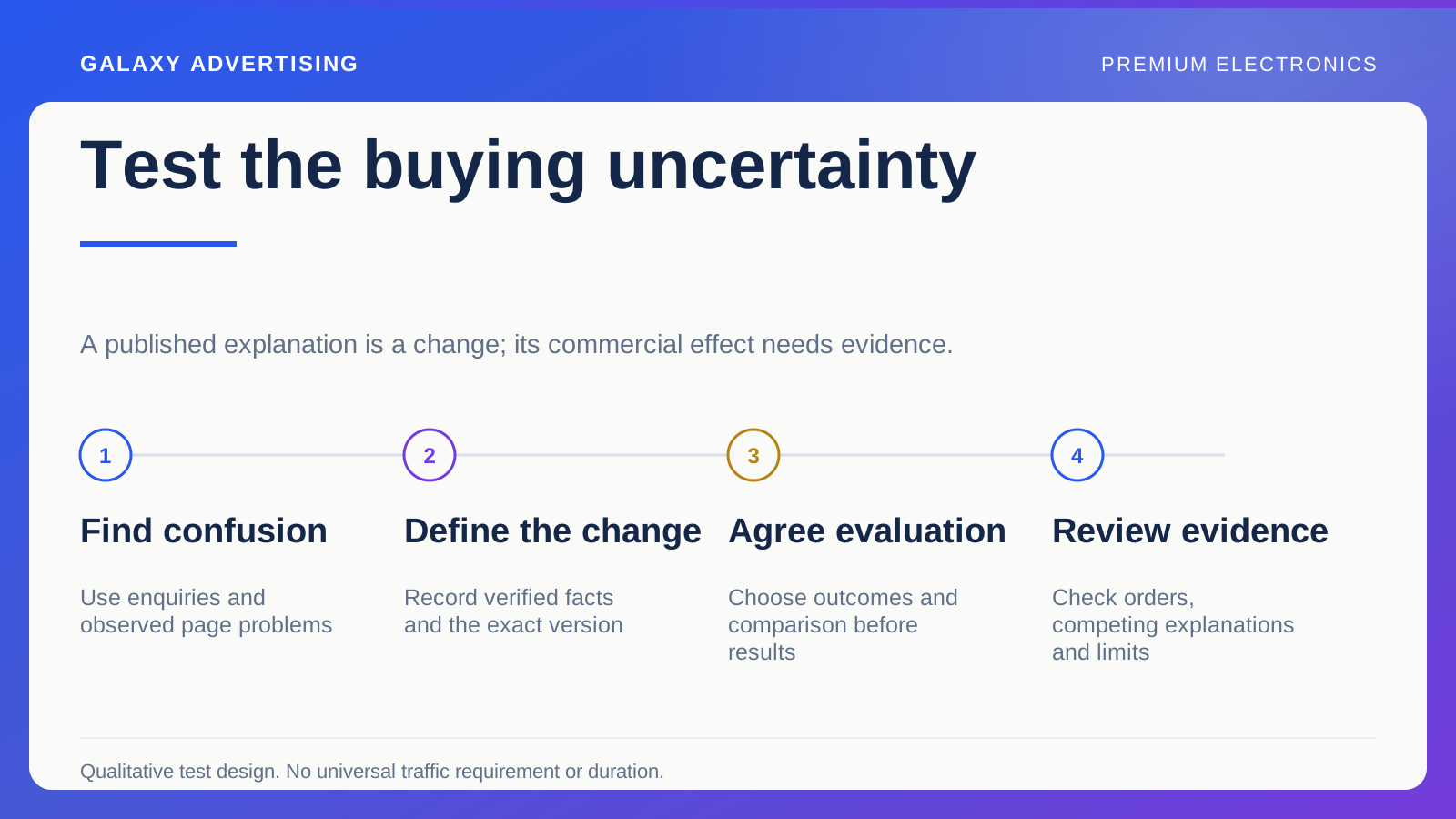
If you want to know whether new advertising creates additional suitable demand, plan an appropriate evaluation. Ordinary attribution cannot be expected to settle that question alone. Your business, available scale and operating constraints shape the method.
Bring in suitably qualified people where experimental design or statistical interpretation requires that expertise. There is no universal test size or duration that fits every electronics retailer.
Retain the commercial conditions in the evaluation. Stock, model changes, prices and service arrangements can change the outcome. Evidence about one package under one set of conditions should not quietly become a claim about the entire category or a channel's permanent value.
Make a decision without manufacturing certainty
Say what changes next. You might fix a recording fault, improve a key explanation, continue a bounded investment or seek stronger evidence before a consequential expansion.
Explain which parts of that conclusion are well supported and which remain uncertain. You can recommend action without claiming complete knowledge of someone's motivation. The owner needs reasoned judgement, rather than precision the records cannot deliver.
One real order can support several descriptions of influence. Keeping them distinct makes the report a little less tidy and the decision a good deal more credible. It leaves room to improve a complicated buying route while keeping claims about additional sales within what your evidence can actually show.