A discounted model nearing the end of its range can account for most of your additional electronics orders. Revenue rises, the acquisition ratio stays steady, and the headline looks encouraging. Meanwhile, another package receiving heavy promotion produces enquiries and few fulfilled purchases.
Both stories can disappear inside the average. Your report needs enough product and operating context to explain what happened. More metrics aren't automatically the answer. You need the commercial story that helps you choose the next investment, repair or product priority.
Put the decision where you can see it
Ask for the main recommendation early. You might continue an established offer, prepare another model family, reduce attention to an unavailable package or investigate a measurement discrepancy. The report should tell you which action the evidence supports.
Connect that action to the observations that matter. You shouldn't have to work backwards through pages of charts or a list of account changes to discover what your team proposes.
Keep the size of the conclusion sensible. Evidence supporting a bounded continuation doesn't necessarily justify broad expansion. A report can acknowledge uncertainty and still tell you what to do now. It should also explain what further evidence would make a larger commitment reasonable. Clear judgement doesn't require pretending every question is settled.
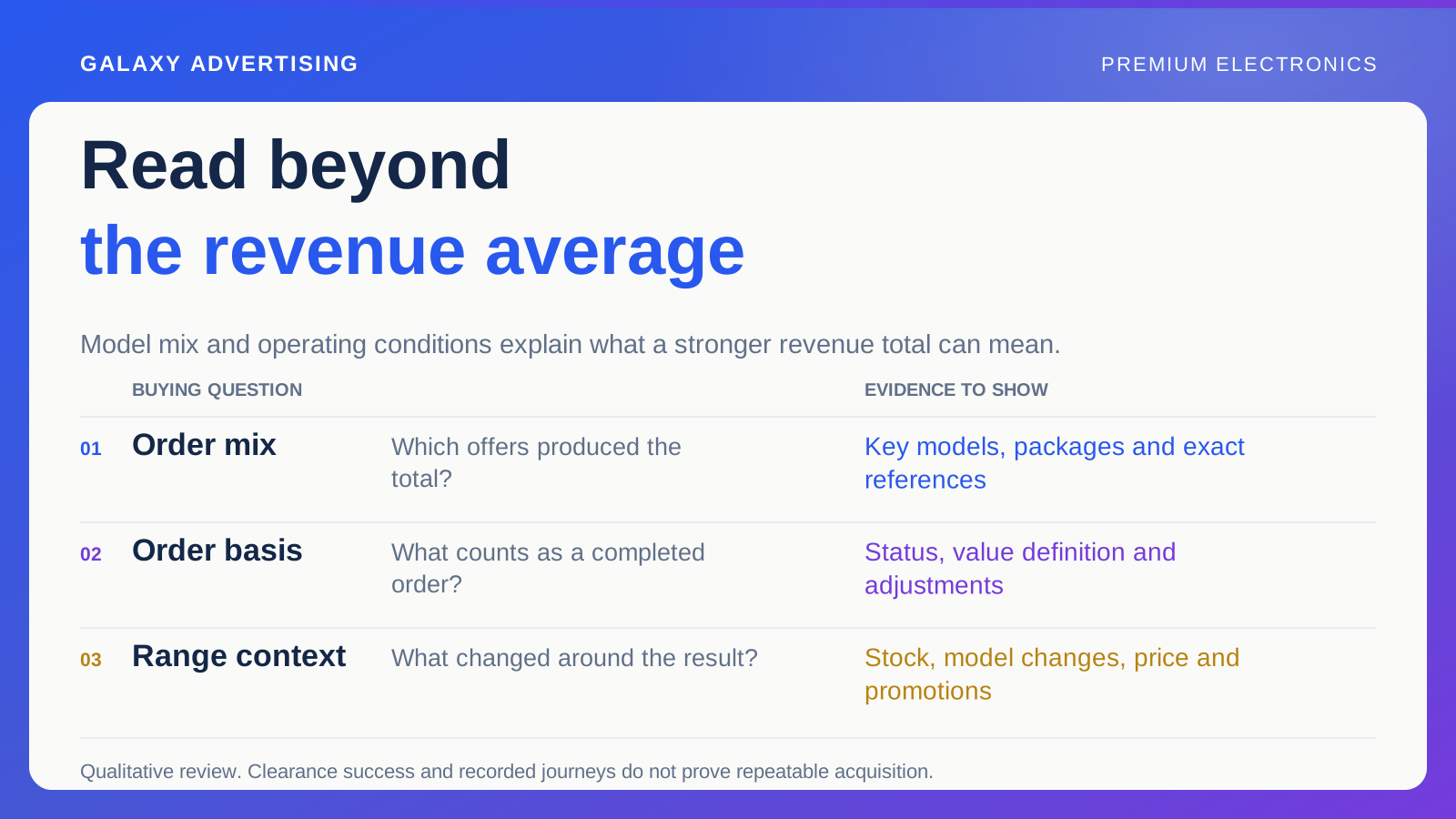
Which offers actually produced the total?
Break results into the product groups that change their commercial meaning. Material differences in model, package and availability matter more here than whether products happen to share a marketing category.
Use exact references for important exceptions. A familiar public product name can cover several configurations. You need to know which configuration received the spend or generated the orders before you decide whether to back it again.
Resist the temptation to make the table enormous. Start with the products that materially affected the decision, and keep supporting records accessible. You want meaningful differences to stand out, along with an explanation of why they deserve attention. A table that hides the story through sheer detail hasn't solved the reporting problem.
Be precise about what counts as an order
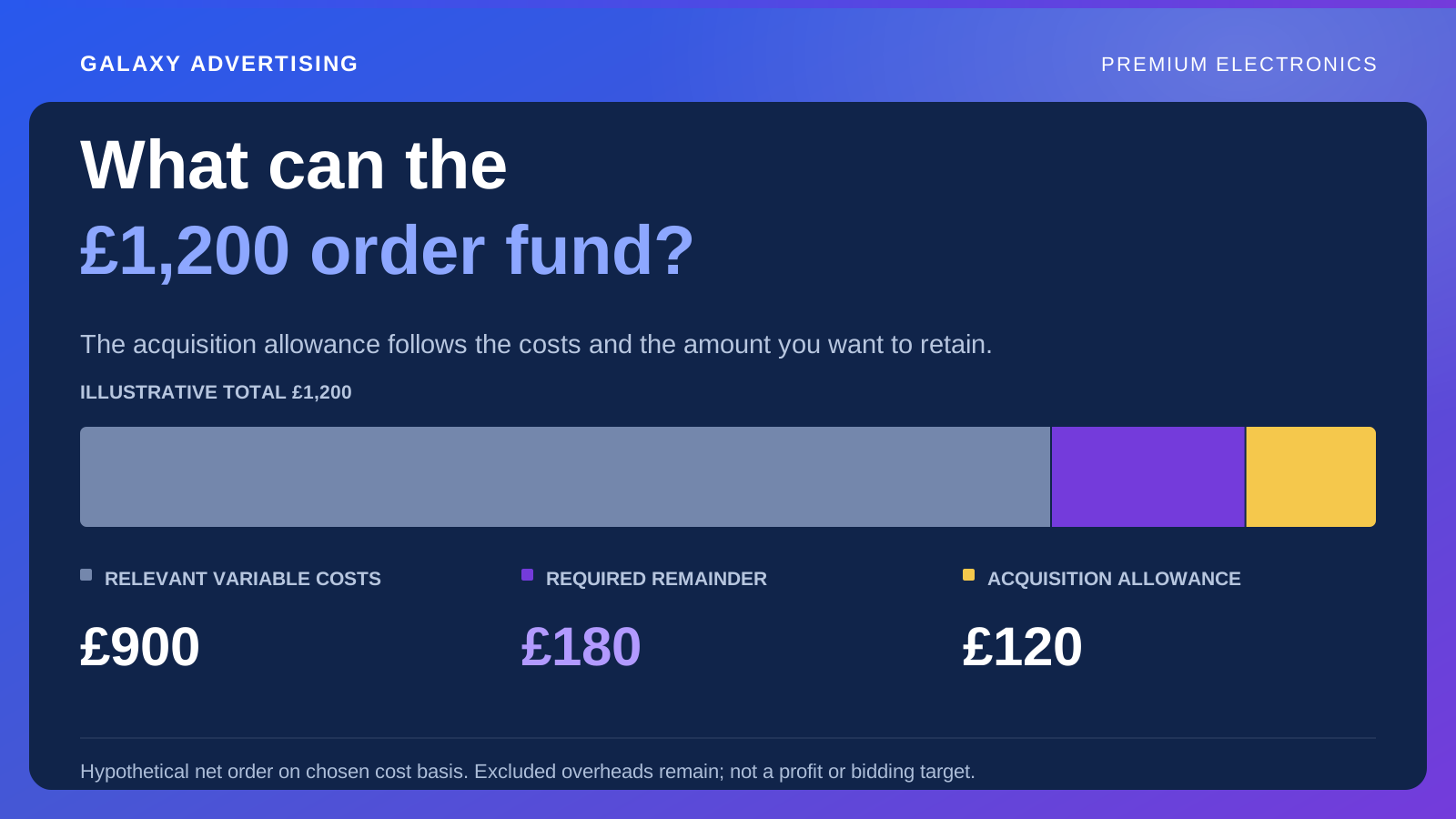
State whether the figures cover placed, paid or fulfilled orders. Explain how relevant adjustments are treated, and use the same revenue definition as your business's contribution calculation. Contribution is the money remaining after the costs included in that calculation.
Show cancellations, refunds and package changes when they materially affect the interpretation. An order changing configuration after advice can change its economics without anything having been recorded incorrectly. The report needs room to explain that distinction.
When information is incomplete, use estimates openly. Separate measured figures from assumptions. An apparently precise contribution figure built on unexplained approximations can inspire more confidence than your records warrant. That's a shaky basis for approving the next investment, however neatly the number fits in a dashboard.
Explain what was happening to the range
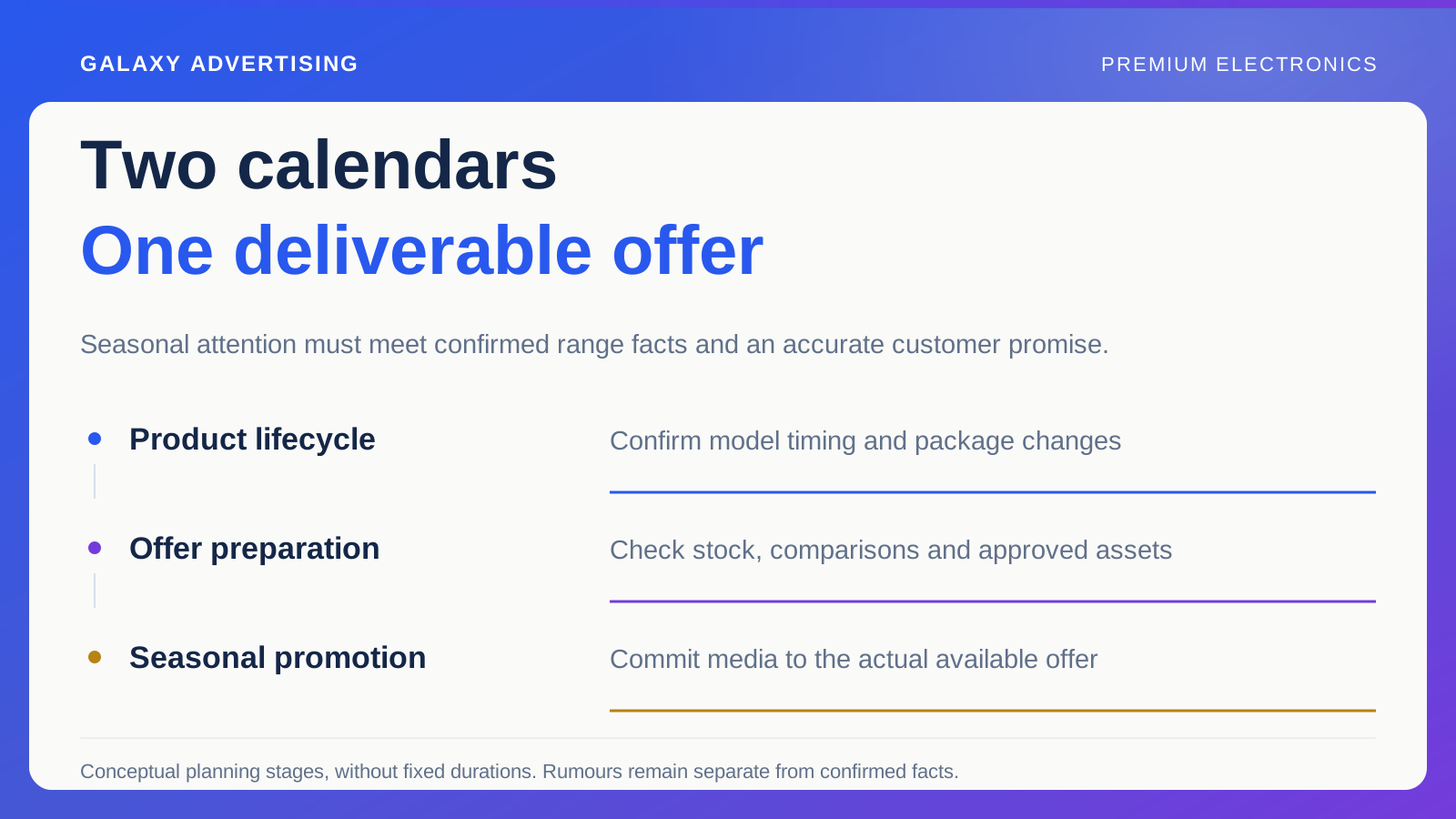
Record availability changes, model replacements, supplier updates and significant promotions. Those conditions shaped the offer customers saw. They deserve a place in the story even when results improved.
Keep clearance success separate from evidence of a repeatable acquisition route. Selling remaining units can be valuable. It doesn't prove you can replenish the model, change the price and expect the same result again. You can recognise the success without asking it to establish something else.
Describe periods when the advertised configuration couldn't be supplied as intended. A weak result might concern demand, an unclear proposition or an operating exception. Each calls for a different response. Putting them all under a general request to optimise the campaign leaves you no nearer the right one.
Bring customer questions into the review
Include relevant enquiry patterns and adviser observations. Where you're using a sample, keep it manageable and explain what it covers. Focus on questions that change the buying route, rather than filling the report with disconnected anecdotes.
Repeated questions about package contents could support clearer labelling. Compatibility enquiries could show that the destination needs a better explanation, or that the customer's intended setup needs individual assistance. Those observations can make a specific repair possible.
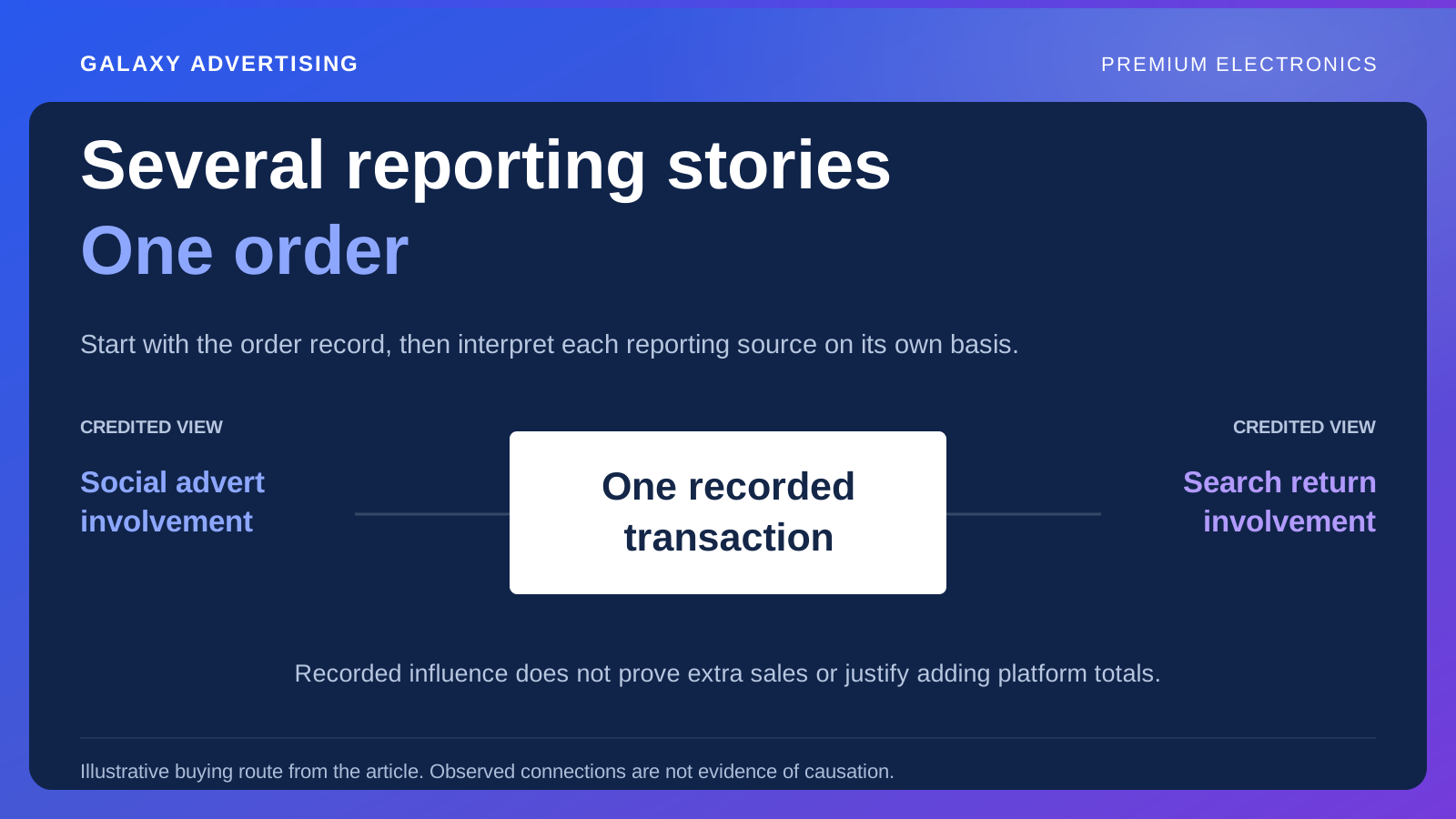
Keep the limits clear. Connecting an enquiry with an order helps illuminate the route; it doesn't prove which interaction created that purchase. Use the information to improve the experience while preserving that boundary. Helpful evidence doesn't have to become a causal claim to earn its place.
Separate doing the work from learning something
Record significant changes, their purpose and their status. A corrected feed, published comparison or delivered video establishes that the task happened. It doesn't, by itself, establish a commercial effect.
Then explain what the observations say about the original question. If the answer is still inconclusive, identify the missing evidence and why it affects the next decision. Delivering the planned task isn't permission to call incomplete learning a success.
Show implementation dependencies too. If another team still owns a recommended product correction, name the owner and explain the consequence. That keeps unresolved work visible without making the report a blame exercise. It also stops the same obstacle reappearing every month without explanation.
For significant recommendations, include the strongest reasonable alternative explanation. If a model improved while its price fell, are you seeing a response to pricing or better campaign effectiveness? The distinction matters when you decide what to repeat.
You don't have to resolve every ambiguity. Explain why the proposed action still makes sense despite the competing explanation, or specify the evidence needed before committing more. That lets you inspect the team's judgement instead of accepting confidence as evidence.
Give the next action an owner
Finish the recommendation with an owner, an approved scope and a review condition. A promise to keep improving performance doesn't give you enough to assess progress later.
Keep a decision history explaining why products entered or left the advertising shortlist. It becomes useful when stock changes, an agency takes over or somebody proposes a familiar idea without checking the earlier evidence.
Revenue matters. But model mix, service demands and offer accuracy explain what that revenue means for your business. Your report earns its place when it helps you choose the next move, rather than leaving a reassuring average to make the decision for you.