What if your projector customer researches online, asks a detailed question by phone and buys after a recommendation, but the records never connect? Advertising has the visit, the adviser remembers the conversation and the store has a sale. Everyone has a piece; nobody can explain how the pieces relate.
Giving the order to whichever channel speaks most confidently does not solve that. Define the records needed to understand the route, trace known connections and label gaps. Collect what the service and review need, while keeping claims within what the evidence establishes.
Agree what counts as the order
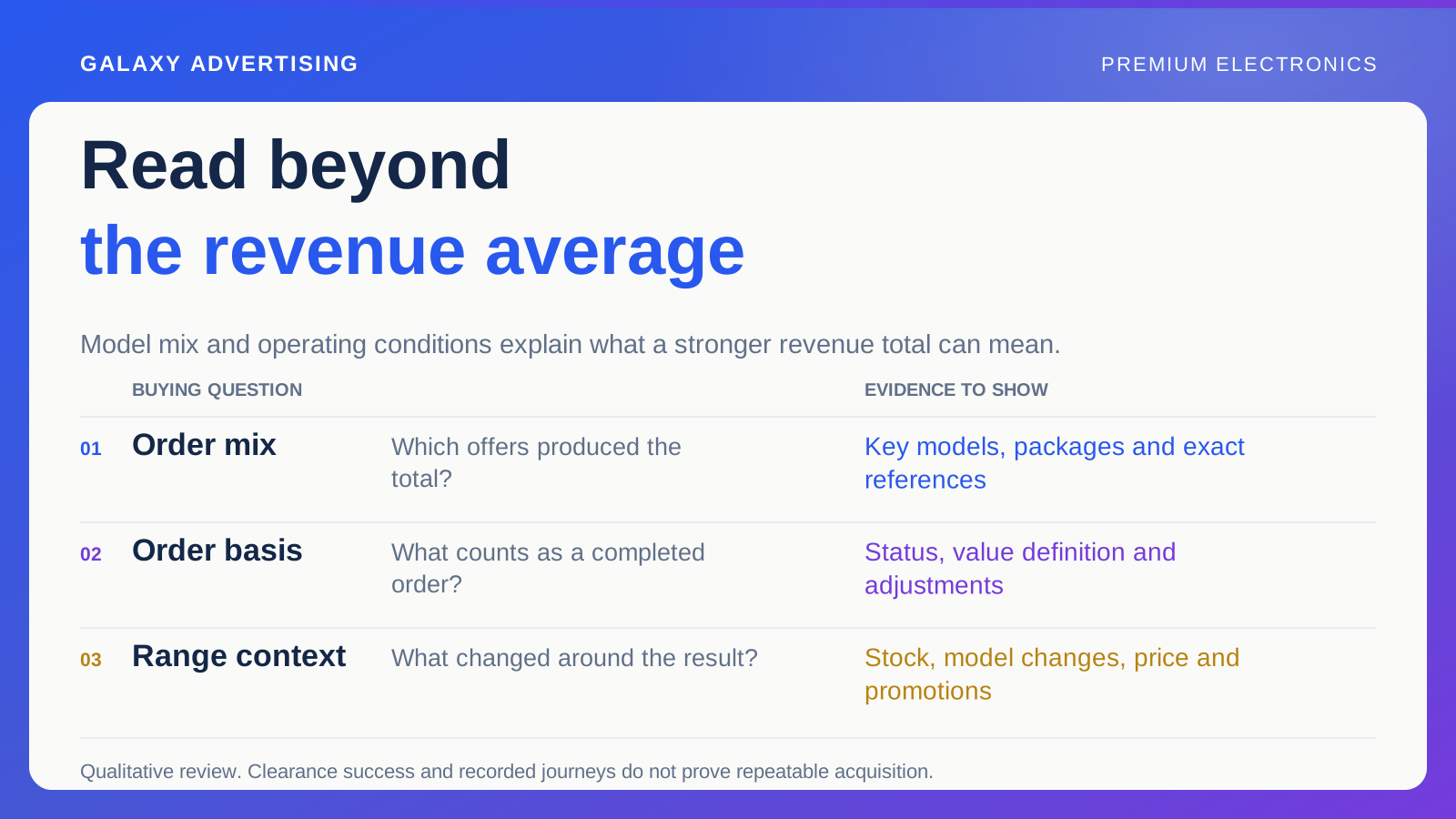
Choose the status used for the review: placed, paid, fulfilled or another clearly described event. Electronics orders can change after an adviser checks the intended setup. The first basket value can therefore differ from the eventual transaction without anything being recorded incorrectly.
Use a stable order reference and preserve the treatment of cancellations, exchanges and refunds. You need to distinguish a real purchase adjustment from a measurement discrepancy. A change in value alone does not tell you which happened.
Agree the revenue basis and apply it consistently. Quoted package value, gross payment and net fulfilled revenue are different observations. Comparing them without explanation creates apparent disagreement where the real problem is definition. Resolve that ambiguity before building the report.
Give enquiries a structure people can maintain
Record the question category and relevant product reference. Model selection, connection questions and package contents are concise distinctions with practical value. An unstructured note saying interested customer leaves the next reviewer with much less to work with.
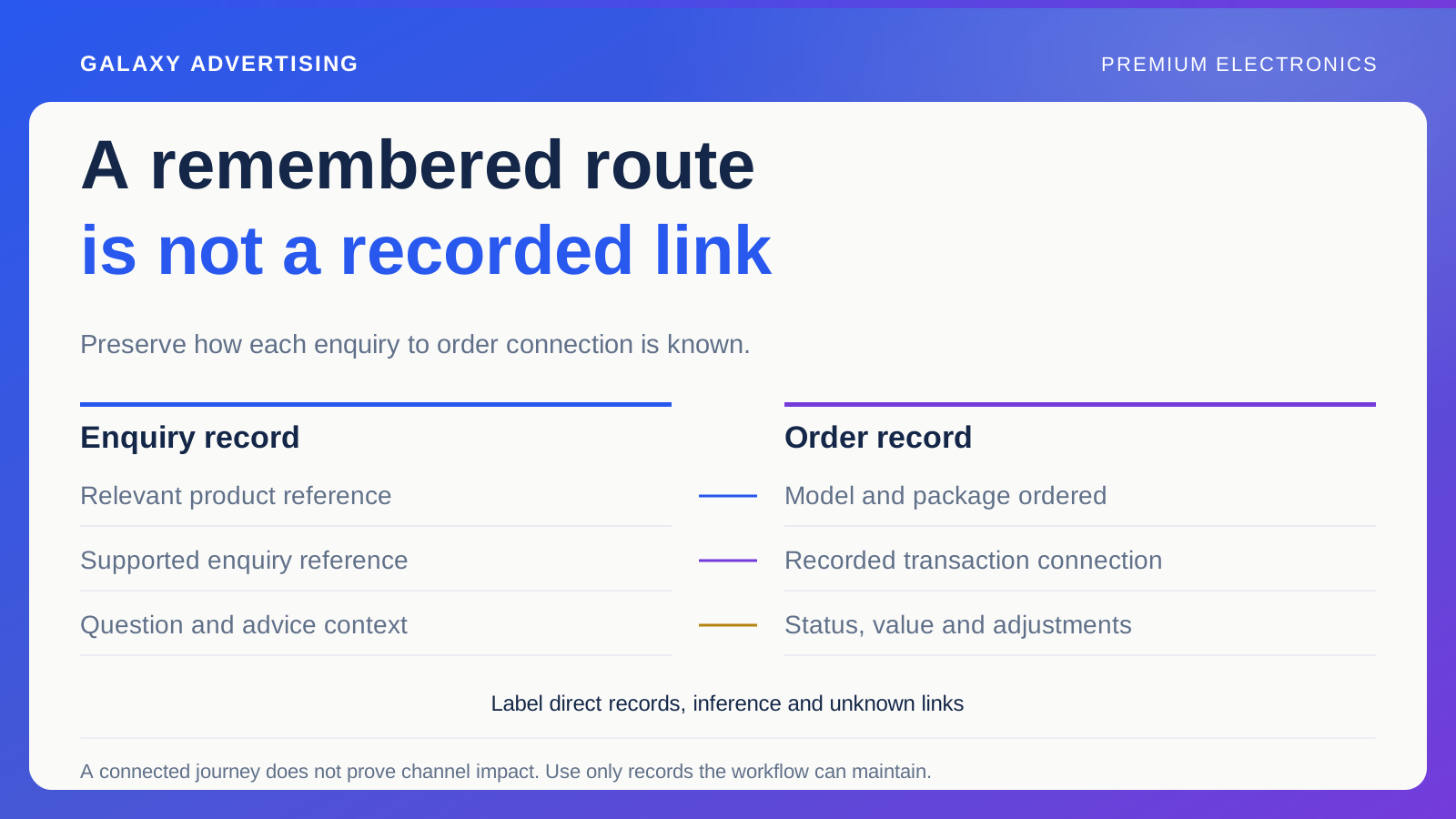
Include an enquiry reference where the existing system supports one. The aim is to link the work with a later transaction when appropriate. Avoid creating a parallel database that staff cannot realistically keep current alongside their ordinary jobs.
Do not demand excessive information before answering a product question. A recording process can damage the buying route it is supposed to illuminate if asking for help becomes difficult. Use records needed for the service and the agreed review purpose.
Show which connections are recorded
Distinguish a direct recorded link from an adviser's inference. An enquiry reference carried on an order gives different evidence from a colleague remembering the customer mentioned an advert. Both can contribute without being equally precise.
Label the source of the connection, leaving uncertainty visible where records are incomplete. Otherwise a plausible account of the purchase can quietly become an apparently verified path when it reaches a presentation. The report should retain the difference.
A hypothetical review could match several fulfilled orders to enquiries about a particular model while leaving some initial acquisition sources unknown. That is informative. You do not need a fully attributed journey before the observation can support a better product information decision. Keep the useful connection and the unresolved gap together.
Keep the route separate from channel credit
If a record shows someone visited a guide before speaking to an adviser, it establishes an observed sequence. It does not establish what would have happened without that guide or the advertising associated with it. A sequence alone cannot answer that alternative question.
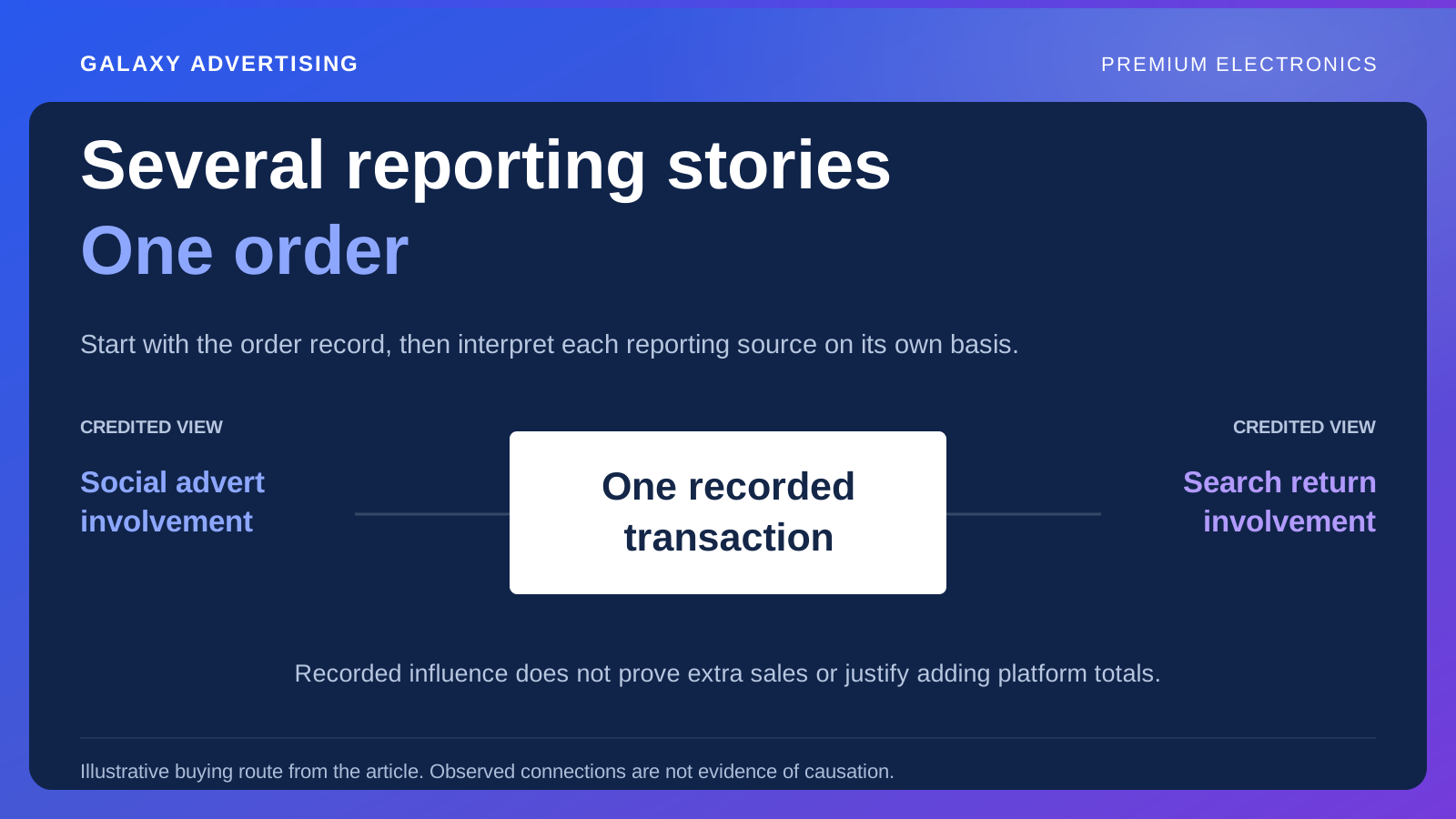
Keep platform attributed results on their stated basis. Do not add them as though every platform describes a different store purchase. Your commercial records should count one transaction once, even when several systems describe a role in it.
Use journey evidence to ask practical questions: what model information people seek, where a destination leaves uncertainty and which enquiries lead to suitable orders. Claims about additional sales need their own evidential basis. A more elaborate diagram of the observed route cannot supply it.
Test a manageable sample against the records
Choose orders and enquiries that materially affect the decision under review. Trace item references, statuses, values and available journey connections. Include ordinary cases and exceptions rather than selecting only the cleanest successes. The awkward records can expose the useful gap.
Investigate disagreements before declaring a system wrong. An adviser might have recommended another model, the buyer might have changed packages or a later refund might be absent from an earlier report. Establish what happened before choosing the correction.
Document the explanation and any correction required. Sampling tests the definitions behind the summary. It should not become permanent manual reconstruction of every purchase where a maintainable process can address the underlying problem instead.
Before using the process in a management report, test an ordinary example. Ask an adviser to enter a realistic enquiry, then follow its reference through a later sample order. This checks whether proposed fields work in the business's actual workflow, rather than only on the measurement plan.
Name the people who can resolve a gap
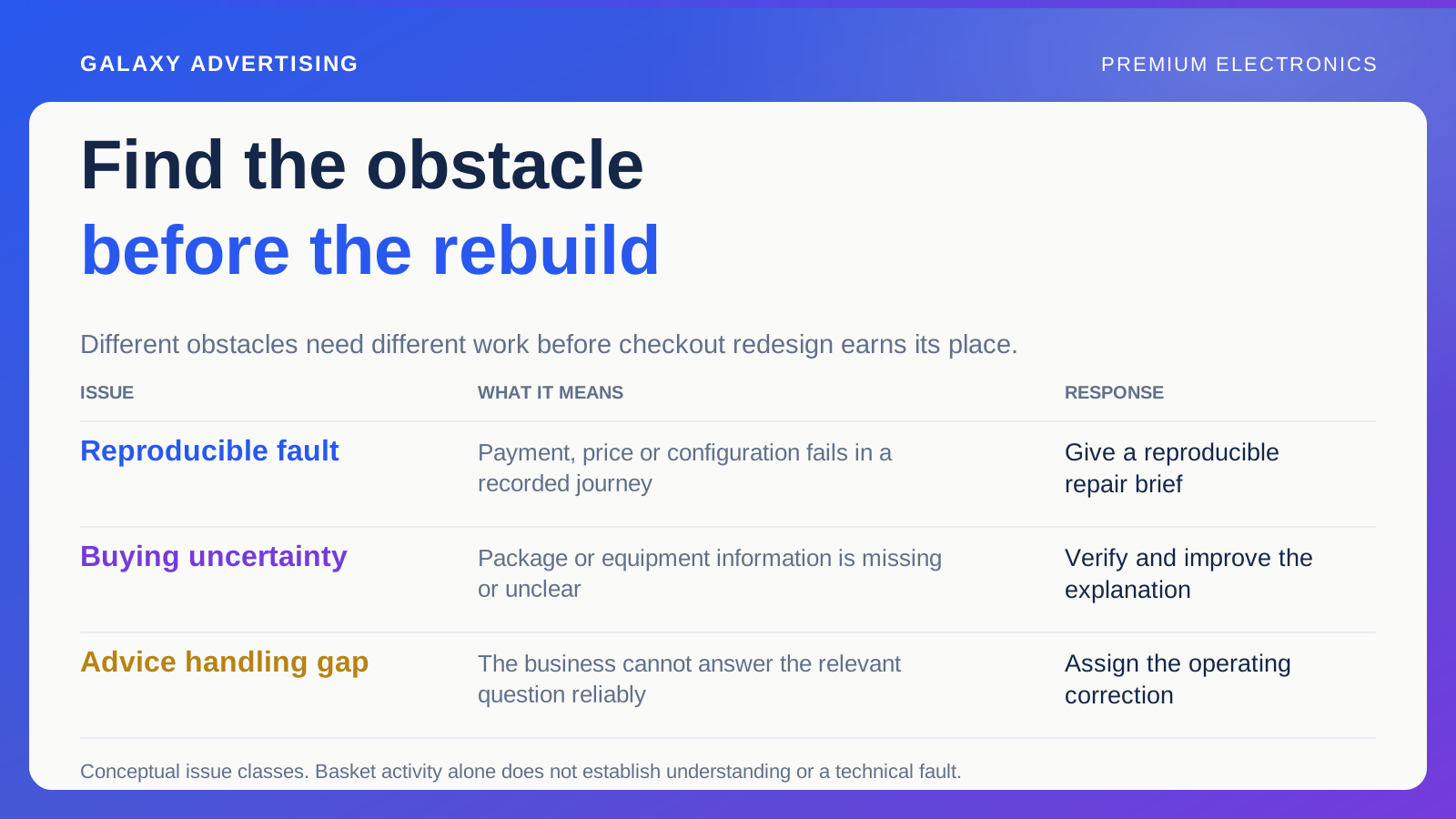
Assign responsibility for website events, enquiry records and transaction data. The account manager should know who can explain a value or recover a missing reference. Repeatedly asking several colleagues for the same export is a poor substitute for ownership.
Make the specification understandable to those entering the information. If advisers cannot explain a field's purpose, they may complete it inconsistently or abandon it when work gets busy. The process needs to remain workable under ordinary pressure.
Agree how material system changes will be communicated and recorded. A new enquiry form or checkout can change what reporting observes while customer behaviour remains similar. Preserve that history so a measurement discontinuity is not mistaken for a commercial trend.
Give the evidence a decision it can support
Finish with an action the records justify. You might improve a recurring compatibility explanation, repair a missing enquiry reference or investigate a model needing substantial advice without generating suitable orders. Choose according to the gap actually observed.
Put the limits beside the conclusion. Unknown acquisition sources do not erase all useful journey evidence, but they constrain claims about which channel deserves credit. Honest boundaries make the recommendation easier to assess.
Marketing, sales and operations need a shared basis for following real buying decisions. A recorded route, an attributed result and a demonstrated additional sale can each matter. Your measurement plan becomes more useful when everyone can tell which one they are looking at.